TL;DR: If a car suddenly stops in front of you, brake smoothly and stay in your lane. In California, the rear driver is often presumed at fault, but the front driver may share responsibility if they stop without a valid reason or violate a traffic law. Photos, witnesses, and video often decide liability.
Highlights:
- Brake smoothly and stay in your lane if a car stops suddenly.
- Call 911 if anyone is hurt, and move out of traffic when safe.
- Report the incident to the police and file an SR-1 form if needed.
- Preserve evidence like photos, witness statements, and traffic footage.
- Understand California’s comparative fault laws for liability assessment.
- Consult a lawyer to navigate complex rear-end accident claims.
Tip: Document your injuries and medical progress to strengthen your claim.
Table of Contents
If a car suddenly stops in front of you, brake smoothly, stay in your lane, and move to safety when possible. In California, the rear driver is often presumed at fault in a rear-end crash if they follow too closely (Vehicle Code 21703). In some cases, evidence shows the driver in front contributed to the crash.
“SUDDEN STOP” accidents are usually treated as rear-end collisions, but fault can shift if the front driver created an unsafe hazard.
Under California’s comparative fault laws, courts assess both parties’ share of liability. If you sustain an injury because a driver in front of you suddenly stops, you may pursue legal action. Insurance disputes often focus on whether the rear driver exercised reasonable care.
What To Do Immediately After A Sudden Stop
If the car in front of you suddenly stops, you can still avoid a crash. However, prioritize your safety if a rear-end collision occurs. Afterward, exchange information with the other driver and report the accident.
Here are a few steps you can take to prevent a rear-end accident after the car in front of you stops suddenly:
- Brake firmly and smoothly to maintain control and avoid a skid.
- Stay in your lane. Swerving abruptly may cause you to hit other vehicles.
- Use your hazard lights if you must stop so other drivers can react.
- Pull over when it’s safe to do so.
However, rear-end collisions may be unavoidable in some cases. If you crash because you don’t have enough time to avoid hitting the car in front of you, here’s what you can do:
- Check for injuries and move to a safe spot away from traffic. Call 911 if you need emergency assistance.
- Try not to leave the scene. The state requires all drivers involved in an accident to exchange insurance and contact information.
- Report the accident to local police or the California Highway Patrol.
- You must submit an SR-1 form to the California DMV if the crash resulted in:
- Injuries, no matter how minor.
- Fatalities.
- More than $1,000 in property damage.
If fault is disputed, document the scene immediately, save any dashcam footage, and request preservation of nearby traffic or security camera footage.
Can You File A Claim For A Sudden-Stop Car Accident?
After a sudden-stop car accident, you can file a claim if you can prove that the other driver contributed to the accident. Though evidence can support your case, it can be challenging to obtain. For instance, traffic cameras regularly overwrite footage. You may need to send preservation letters to get visual proof of the crash.
Here are some things you can do to file a claim after a rear-end collision:
- Notify your insurance provider. Your policy may cover urgent expenses as you pursue compensation.
- Gather evidence and interview witnesses to support your case.
- Follow your doctor’s orders and document your healing progress.
- Consider consulting car accident lawyers about your case. They can explain your rights and eligibility to seek damages. They can also help you file and pursue a claim.
Understanding Liability In A Sudden-Stop Car Accident
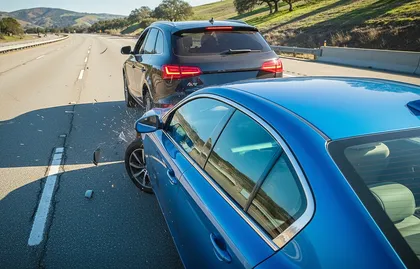
The California Vehicle Code requires motorists to maintain a safe following distance. Since rear drivers are more likely to cause accidents if they tailgate, they’re usually at fault for sudden-stop car accidents. However, if the driver in front violates traffic laws, they may face consequences. These violations include, but are not limited to:
- Slamming on the brakes suddenly for no valid reason.
- Driving with broken brake lights.
- Suddenly driving in reverse.
- Failing to move to the side of the road when they experience mechanical problems.
California Civil Code 1714 requires everyone to exercise caution to avoid foreseeable harm. Drivers who fail to do so may be held legally responsible for the injured party’s damages. However, the law places the burden of proof on victims.
In other words, if you get injured by a car driver who suddenly stops in front of you, you have to demonstrate these four key elements of negligence before you can pursue compensation for your losses:
- Duty of Care: The driver owed you a duty of care to act reasonably and prevent foreseeable harm. In this case, they should have driven safely to avoid causing rear-end collisions.
- Breach: They failed to fulfill that duty by braking suddenly, creating an accident hazard.
- Causation: The front driver directly caused the collision and your injuries because they stopped suddenly.
- Damages: You suffered actual harm, including injuries and financial losses.
Who Is At Fault If A Car Suddenly Stops In Front Of You In California?
Fault usually depends on:
- The following distance and speed of the rear driver
- Whether the front driver had a valid reason to stop
- Time-sensitive evidence (photos, witnesses, video)
The rear driver is usually presumed liable for sudden stop accidents unless proven otherwise. That’s because California Vehicle Code 21703 requires all motorists to maintain a reasonable distance from other vehicles. However, the front driver can share fault if they brake without a valid reason, have nonworking brake lights, or create a hazard.
Car accident lawyers investigate whether the front driver’s behavior contributed to the accident. Insurance disputes usually center on the rear vehicle’s speed and distance from the car in front.
When Is The Front Driver Responsible For A Rear-End Collision?
The front driver may share responsibility for a rear-end collision if they brake suddenly when it’s unsafe to do so, creating a hazard for drivers behind them. In some situations, especially on highways, sudden stopping can also raise issues under California Vehicle Code 22400, which addresses impeding the normal flow of traffic.
Under state laws, drivers must refrain from driving slowly or coming to a complete stop. However, there are some exceptions. A vehicle may legally slow down or come to a halt due to:
- Compliance with the law
- Mechanical issues
- Road conditions
- Immediate peril
- Sudden emergencies
The front driver may use these factors to argue that, though they braked suddenly, they did so legally. These defenses can complicate fault assessment in car accident claims and lawsuits.
What Is The Sudden Emergency Doctrine?
The sudden emergency doctrine is a legal defense. It excuses a person from the ordinary standard of reasonable care. California Civil Jury Instructions (CACI) 452 states that a driver may not be negligent if:
- They acted in response to a sudden, unavoidable emergency.
- They were in actual or apparent danger of injury.
- Their actions did not cause the emergency or dangerous situation.
- They acted reasonably and carefully, given the circumstances.
How Comparative Fault Laws Affect A Rear-End Collision
California’s comparative fault laws allow multiple parties, including injured victims, to share liability for a rear-end crash. However, courts can reduce a plaintiff’s compensation by their percentage of fault. These laws frequently affect rear-end collisions, as both drivers can contribute to them.
For example, if the rear driver was tailgating, a court may assign them 30% of the blame. It may then find the driver in front 70% responsible for braking suddenly. If the rear driver was injured and incurred $100,000 in damages, they may only be awarded $70,000.
The at-fault party’s insurer or defense attorney may use comparative fault to deny responsibility for the crash. Because of this, proving liability in rear-end collisions often relies on time-sensitive evidence. Victims and their lawyers can use police reports, medical records, traffic camera footage, and witness statements to demonstrate who truly caused the accident.
Common Injuries From Sudden Stop Car Accidents
Victims of rear-end collisions can sustain injuries ranging from minor to severe. Some walk away with bruises, sprains, or strains, while others suffer debilitating injuries, including head trauma and limb loss.
Below are common injuries from sudden-stop car accidents:
- Fractures: These typically require long recovery periods. In extreme cases, fractures may lead to amputation.
- Traumatic Brain Injuries: These can range from concussions to brain damage. They may result in permanent cognitive impairment and a lower quality of life.
- Spinal Cord Injuries: These can result in partial or complete paralysis. Some victims may need rehabilitation, such as physical therapy and chiropractic care.
- Burns: Victims may come into contact with open flames, chemicals, or hot surfaces after a crash. Severe burns may cause permanent scarring or disfigurement.
- Internal Injuries: Blunt force trauma from a crash can damage internal organs. Symptoms may manifest later. If left unaddressed, these injuries can cause complications.
Car accidents can also affect mental health. Some victims may suffer from depression and anxiety. In severe collisions, people may develop post-traumatic stress disorder. This condition can be debilitating, often affecting a person’s quality of life.
Common Causes Of Rear-End Collisions
In California, negligent behavior is often the cause of rear-end collisions. Examples include driver errors, such as speeding, tailgating, and distracted driving. However, other factors can also contribute to a crash. Some of the most common causes of car crashes after a sudden stop are:
- Road Conditions: Potholes or defective traffic signals may force drivers in front to brake suddenly. The public entity responsible for maintaining this infrastructure can be held liable under the Government Claims Act.
- Traffic Congestion: Accidents are more likely when more vehicles share the road.
- Distracted Driving: Front drivers who don’t pay attention to the road may only notice hazards or traffic signals at the last second. Distractions can take many forms. Examples include mobile phone use, loud music, and even conversations with passengers.
- Aggressive Driving: Speeding, erratic lane changes, and tailgating can all contribute to sudden-stop collisions.
- Driving Under the Influence: Alcohol consumption impairs reaction time and decision-making.
- Improper Braking: Drivers who brake without warning give the motorists behind them less time to react.
- Vehicle Defects: A car accident can arise from a broken car part. In California, vehicle manufacturers may be held liable for injuries.
Recoverable Damages After A Rear-End Collision
Recoverable damages cover economic and non-economic losses. The types of compensation a victim can pursue through a personal injury claim depend on how the rear-end accident affected their life. The person who caused the crash may be responsible for covering these damages under the California Civil Code.
Economic damages account for financial losses. They require proof, such as receipts, bills, or auto body shop estimates. You may be able to recover the following:
- Current and future medical expenses.
- Disability accommodations, such as assistive devices.
- Lost income and career opportunities.
- Property damage, including vehicle repairs or replacement.
Non-economic damages cover subjective losses. They account for how the injury affected your life. You may file a claim for the following:
- Pain and suffering
- Loss of enjoyment of life
- Humiliation
- Inconvenience
- Loss of consortium
- Reputational harm
In rare cases, punitive damages may be available. These are intended to punish the defendant for their misconduct and deter similar behavior. However, victims must provide clear and convincing evidence of oppression, fraud, or malice.
Filing Deadlines For Rear-End Car Accident Cases
In California, the statute of limitations for car accident cases is generally two years. The California Code of Civil Procedure Section 335.1 sets these deadlines. If you file a case after the statute of limitations passes, the courts will likely dismiss it. The time limit may change in the following scenarios:
- For minors, the statute of limitations starts when they turn 18. Parents or legal guardians can file a case on their behalf before this time.
- In cases involving public entities, you must first file an administrative claim within 6 months. You can only sue if your claim is rejected or you don’t receive a response within 45 days.
- The statute of limitations may pause for the delayed discovery of an injury.
Frequently Asked Questions (FAQs) About Sudden-Stop Car Crashes
It’s normal to have questions about your rights after sudden-stop car crashes. Getting clear answers can help you make informed decisions about your injury claim, especially when the legal process is confusing. Below are answers to some common questions about these accidents.
Is The Rear Driver Always At Fault?
No, the rear driver isn’t always responsible for a sudden-stop accident. The driver in front can be entirely or partially to blame if they make a complete stop for no valid reason.
Can I File A Claim With The Other Driver’s Insurance Provider Directly?
Yes, but you have to prove that the other driver’s negligence directly caused your injuries. If they do not have enough coverage, you may need to explore different avenues of pursuing compensation.
Uninsured/underinsured motorist (UM/UIM) coverage may be an option. It applies if the driver is uninsured or their auto policy can’t cover all your damages. This coverage is typically divided into:
- UM/UIM Bodily Injury (BI): Pays for injuries caused by an uninsured or underinsured driver. The limits are the same as your liability coverage limits.
- UM/UIM Property Damage (PD): Covers the costs of vehicle repair and replacement. The limit is often capped at $3,500, but it can vary across policies. Notably, UM/UIM PD applies only if the uninsured driver is identified. That may affect whether this coverage applies in specific types of crashes, such as hit-and-runs.
What If The At-Fault Driver’s Insurance Company Denies My Claim?
If the at-fault driver’s insurer denies your claim, you can contest its decision. The process typically involves the following steps:
- Request a written explanation for the denial.
- Send a formal letter of appeal supported by additional evidence. These can include medical records, witness statements, and police reports.
- If the appeal fails, you can file a complaint with California’s insurance commissioner or take your case to court.
What Is Brake Checking?
Brake checking is a form of aggressive driving. It involves slamming the brakes suddenly, forcing the drivers behind to stop quickly. Due to this action’s potential for causing accidents, California Vehicle Code 22109 prohibits drivers on highways from suddenly decreasing their speed without warning.
Some drivers may brake-check others to retaliate for tailgating. This behavior is also common in insurance fraud and road rage incidents. Evidence such as dashcam footage, witness statements, and police records can help prove brake-checking to an insurer or a court.
What Evidence Do I Need To Support My Car Accident Claim?
Police reports, photos, and witness statements can support car accident claims. Victims can also provide medical records and traffic camera footage. Keep in mind that many security cameras only retain footage for a limited time. Sending a preservation letter to the controlling authority can help.
Do I Need A Personal Injury Lawyer For A Sudden-Stop Accident?
California law does not require you to hire a personal injury lawyer for an auto collision. However, car accident lawyers can provide guidance tailored to your circumstances. They can navigate complex legal disputes and avoid common pitfalls.
Do Lawyers Only Get Paid If They Win My Rear-End Collision Case?
Yes. Most personal injury lawyers in California work on a contingency fee basis, which means they don’t charge legal fees up front. Instead, you only pay for their services if you receive compensation through a settlement or verdict.
Get In Touch With Personal Injury Lawyers for Assistance
If you sustain injuries because the driver in front of you suddenly stops, you may have a case. However, liability in rear-end collisions is often challenging to navigate. The law usually presumes that rear drivers are liable unless proven otherwise.
As such, you may be searching for free car accident lawyer advice. At Arash Law, we answer legal questions in a free case review. We review the circumstances of the accident and gather evidence. Our team also works with expert witnesses to support claims.
Our car accident lawyers, who have recovered over $1 billion for clients, handle negotiations. If a settlement isn’t possible, we represent clients in court. Our team works on a no-win, no-fee basis. We won’t charge legal fees unless you recover compensation.
Call AK Law at (888) 488-1391 for a free initial consultation. You can also fill out our “Do I Have A Case?” form.