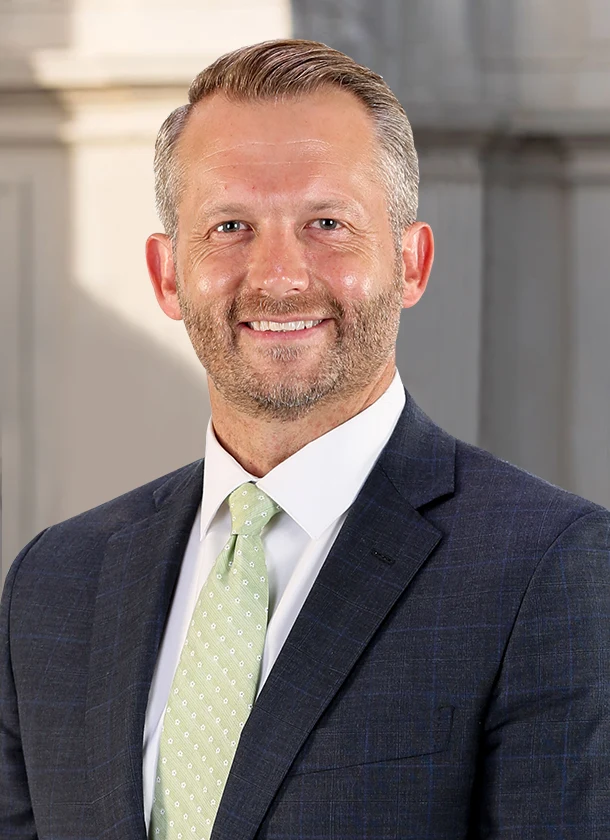
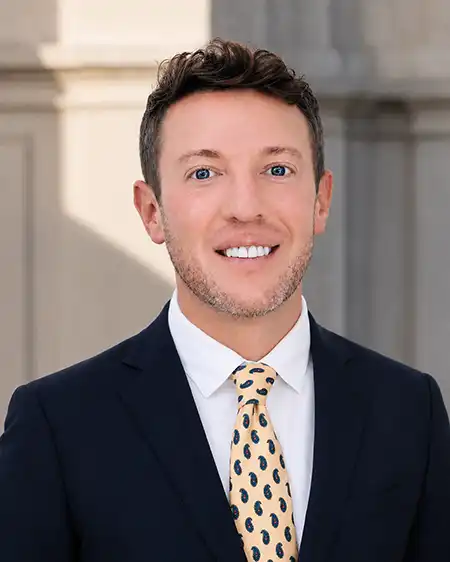
Brian G. Beecher is a partner and Litigation Department Chair for personal injury and class action practice at Arash Law, led by Arash Khorsandi, Esq., serving clients in key California cities, including Los Angeles, San Francisco, and Sacramento.
Mr. Beecher has extensive experience handling complex personal injury cases. Mr. Beecher handles all manner of severe injury cases and focuses on traumatic brain injuries because, in part, Mr. Beecher comes from a family of doctors — his brother is a nationally recognized neurosurgeon on the East Coast. Insurance companies may be cautious in handling brain injury claims because these types of injuries are difficult to diagnose in the emergency room. Peer-reviewed medical literature reports that many people who suffer brain damage, and especially people who suffer a mild traumatic brain injury, will not be able to recognize their injury during the first few days, weeks, and even months after the injury-causing incident.
Furthermore, mild traumatic brain injuries cannot be diagnosed through CT scans or MRIs and can only be seen through the use of diffusion tensor imaging of the brain (called a “DTI”). Insurance companies often try to use the gap in time from injury to diagnosis of brain damage and the lack of a CT scan or MRI evidence to argue that there is no brain injury.
Mr. Beecher understands how insurance companies settle claims and has experience with both the legal and medical sides of brain injuries. This enables him to challenge the opinions of defense medical experts that insurance companies employ to counter the victims’ claims. Mr. Beecher also understands how to use objective evidence (e.g., highly reliable diagnostic tests, such as DT MRIs, Videonystagmography/VNG, and PET scans) to demonstrate the extent of a brain injury. Mr. Beecher also understands that brain injuries impact every aspect of a person’s life. Even mild traumatic brain injuries can (and many often do) cause severe changes to a person’s behavior, emotions, cognitive abilities, memory, balance systems, ability to smell and taste, hearing, attention, speech, and more.
Mr. Beecher works diligently to counter insurance company arguments and challenge defense medical opinions so that his clients may have a chance at receiving a verdict or settlement that will support their recovery and address their medical and financial needs.
Mr. Beecher’s practice is to make a thorough effort to settle a case before proceeding to trial. This way, he can present to the insurance company and defense counsel the true extent of his client’s injuries through objective evidence, giving the insurer an opportunity to settle the matter fairly. Mr. Beecher routinely handles matters throughout the State of California, both at the state and federal levels.
Mr. Beecher is also an adjunct professor at Pepperdine University School of Law for both law students and practicing attorneys seeking an L.L.M. in Alternative Dispute Resolution. Mr. Beecher graduated from Pepperdine University School of Law in 2005 after earning his B.S. in psychology from the University of Iowa in 2002. In 2005, Mr. Beecher also received a Master’s Degree in Alternative Dispute Resolution from Pepperdine University, the Straus Institute of Dispute Resolution.
- Bachelor’s Degree from the University of Iowa
- Juris Doctor Degree from the Pepperdine University School of Law
- Master’s Degree in Alternative Dispute Resolution from Pepperdine University’s Straus Institute of Dispute Resolution