TL;DR: If an underage driver hits you, compensation usually comes from a parent’s or vehicle owner’s insurance, and parents may share liability. These crashes cause serious injuries and involve multiple policies, so early medical care and evidence preservation affect coverage, fault disputes, and timelines.
Highlights:
- Confirm the teen driver’s insurance and the vehicle owner’s policy.
- Check if a parent or guardian may share financial responsibility.
- Report the crash and request a copy of the police report.
- Seek medical care and keep all treatment and billing records.
- Collect photos, witness details, and any available video footage.
- Notify your insurer promptly to preserve coverage and claim rights.
- File DMV Form SR-1 within 10 days if injury or damage exceeds $1,000.
Tip: Keep statements factual and consistent, and let records document your injuries and losses.
Table of Contents
If an underage driver hits you, you can still pursue compensation for your injuries and losses. In many cases, the parents’ or guardians’ auto insurance pays first, unless the teen has their own policy. California law may also hold these parents or guardians financially responsible in some situations.
These cases can feel more complicated than a standard crash because they raise additional questions about age, permission, and insurance coverage. You may need to find out whether the teen had a valid license or permit, whether they had permission to use the car, and which policy applies. By reporting the crash, getting medical care, and preserving evidence early, you can protect your claim and put yourself in a stronger position moving forward.
Who Pays If An Underage Driver Hits You?
If an underage driver hits you, the claim often starts with the insurance of their parent, guardian, or the vehicle owner. These individuals may also share financial responsibility depending on the facts. That matters because the case may involve more than one path to recovery.
Car Insurance Coverage Comes First
In most cases, the underage driver’s insurance pays first. Many teen drivers are covered under a parent’s or guardian’s auto policy, especially if they live in the same household and drive a family car.
That policy may help cover:
- Medical bills
- Car repairs
- Lost income
- Other covered losses
If the teen was driving a family vehicle, the household policy may be the primary factor in the claim.
The insurance company may also look at:
- Who owned the car
- Whether the teen had permission to drive it
- Whether the teen followed license or permit rules
Parental Liability May Also Apply
A parent or guardian may also share financial responsibility in some cases. That may happen if they signed for the minor’s license or gave the teen permission to drive. That does not mean every parent is automatically liable after every crash. However, it does mean the claim may reach beyond the teen driver alone.
Parental liability can become even more important when:
- The injuries are serious.
- The insurance policy does not fully cover your damages.
- The parent owned the car.
- The parent helped put the teen on the road legally.
If their liability is established, the parents’ auto policy will typically cover your losses. If the value of your damages exceeds their policy limits, they may be personally responsible for paying the remaining amount.
When Insurance Is Not Enough
Sometimes the available insurance does not fully cover the harm caused by the crash.
That can happen when:
- The teen had no insurance.
- The policy limits are too low.
- The insurer denies coverage.
- The teen did not have permission to drive.
- The teen was using the car outside permit restrictions.
In this scenario, you may still have other options.
Your own uninsured motorist or underinsured motorist coverage may help pay for your losses. In some cases, it may also be necessary to consider filing a claim against:
- A parent or guardian
- The vehicle owner
- Another party that helped cause the situation
A crash involving an underage driver may involve the teen, the parent, the vehicle owner, and more than one insurance policy.
Finding every available source of recovery can make a major difference in the strength and value of your claim.
What Should You Do Right After An Underage Driver Hits You?

If you are reading this after the crash, focus on the steps that can still protect your health and your claim. Though the accident already happened, you can still secure important evidence, confirm insurance details, and avoid mistakes that could weaken your case.
- Get Medical and Chiropractic Care and Follow Through With Treatment
Your health comes first. If you have not seen a doctor yet, do so as soon as possible. If you already received emergency care, follow the treatment plan and attend follow-up visits. Make sure to keep records of your diagnosis, medications, test results, and bills. These documents can help show how the crash affected you.
- Make Sure the Crash Was Reported
If police arrive at the scene, find out how to get the accident report number and how to obtain a copy later. If you or the other driver didn’t notify authorities of the crash, despite California law requiring you to do so, take steps to address that as soon as possible.
A police report can help document who was involved, whether the teen had a valid license or permit, whether the driver appeared impaired, and whether any traffic law violations contributed to the collision.
- Gather the Evidence You Can Still Access
Even after you leave the scene, important evidence remains. Focus on anything that helps prove fault, identify insurance coverage, and show the extent of your injuries.
Here are some helpful steps you can take:
- Save any photos or videos already taken at the scene.
- Get the teen driver’s name, contact information, and license or permit details.
- Confirm the insurance information for the driver and vehicle.
- Identify the vehicle owner.
- Contact witnesses and save their names and phone numbers.
- Request nearby surveillance or dashcam footage before it gets deleted.
- Keep copies of repair estimates, medical bills, and proof of missed work.
- Tell Your Insurance Company
Notify your insurer as soon as you can. This step matters even if the underage driver caused the crash because your own policy may provide benefits if the teen was uninsured, underinsured, or driving without permission. Prompt notice also creates a record of when you reported the collision.
- Avoid Guessing or Downplaying Your Injuries
Do not tell the insurance company that you are fine if you are still in pain or waiting for answers from a doctor. Some injuries take time to appear fully, and insurers may use early statements against you later. Stick to the facts and let your medical records show the full impact of the crash.
- Keep All Crash-Related Records in One Place
Try to keep everything connected to the accident in one folder or file. That includes the police report, claim number, medical records, bills, repair estimates, photos, witness information, and letters or emails from the insurance company. Good records can make the claim easier to prove and easier to manage.
Why Can Claims Involving Underage Drivers Be More Complicated?
Claims involving underage drivers can be more complicated because liability can extend to other parties. Disputes may arise over who had legal authority to drive, who gave permission, and which insurance policy must pay.
These cases can raise questions about:
- Whether the teen had a valid driver’s license.
- Whether the teen had only a learner’s permit.
- Whether the teen had permission to use the car.
- Whether a parent or guardian may share liability.
- Whether the household policy covers the crash.
Insurance companies may use these issues to delay, limit, or dispute the claim.
That is why these cases require more than proving the teen caused the crash. You also need to identify every possible source of liability and every available insurance policy.
What Happens If The Underage Driver Only Had A Permit?
If the underage driver only had a permit, you can still file a claim. A permit does not take away your right to seek compensation, but it can make the insurance investigation more detailed.
That’s one reason some people look for help from student driver accident lawyers after a crash involving a teen with a learner’s permit.
The insurance company may closely examine whether the teen complied with California’s permit requirements at the time of the crash. For example, the insurer may ask:
- Was a licensed adult present?
- Did the teen have permission to drive the car?
- Was the teen driving within the limits of the permit?
These questions may affect coverage, but they do not erase your right to recover damages.
The key issue remains the same: whether the underage driver caused the crash and which insurance policy or responsible party may cover your losses.
What Evidence Helps Prove A Claim Against An Underage Driver?
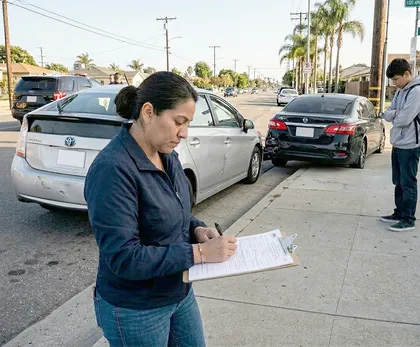
Strong evidence can help prove both fault and coverage. That matters because claims against underage drivers can involve disputes about permission, insurance, and parental responsibility.
The most helpful evidence often includes:
- Photos and video from the scene
- Dashcam, surveillance, or traffic camera footage
- The police report
- Witness statements
- Medical records and bills
- Proof of lost income
- Insurance policy details
- License or permit status
- Vehicle registration and ownership records
- Phone records, if distracted driving may have played a role
It is important to act quickly. Witnesses can become harder to find, and security systems may delete video footage within days. Early evidence collection can make a major difference in the strength of your claim.
If an underage driver hit you, a lawyer can help identify the right insurance policy, preserve key evidence, and sort out whether a parent or guardian may also share responsibility. Early guidance can make the claim clearer before the insurance company frames the facts in its own way.
Can Parents Be Held Responsible If Their Teen Driver Caused The Crash?
Yes, a parent or guardian can be held financially responsible in some cases. Liability depends on the teen’s age, the parent’s role in the licensing process, and whether the teen had permission to drive.
In practical terms, that means your claim may involve more than just the underage driver. It may also involve:
- A parent or guardian.
- More than one insurance policy.
- More than one path to recovery.
The possibility of parents and their child sharing fault becomes especially important when the injuries are serious, and your losses exceed a small insurance claim. You should review parent-related liability early because it can affect:
- How lawyers and insurers investigate the case.
- Who receives notice of the claim.
- Which insurance policies may apply.
What If The Underage Driver Was Drunk Or High?
An underage DUI crash can make the case much more serious. It can strengthen the evidence of negligence and raise deeper questions about supervision, access to the vehicle, and insurance exposure.
If the teen was under the influence of alcohol or drugs, that fact may support a stronger liability case. It may also affect:
- How the insurance company evaluates the crash.
- Whether you need to preserve more evidence to support your claim.
- Whether other people may share responsibility.
A criminal case and an injury claim are not the same. Still, evidence of impaired driving can play an important role in a civil claim for compensation.
These cases may also require fast action to preserve:
- Police records
- Chemical test results
- Witness statements
What If The Underage Driver Left The Scene?
A hit-and-run does not take away your right to seek compensation. You can still have a claim against the driver, the vehicle owner, or your own uninsured motorist coverage.
If you are no longer at the scene, focus on the steps that can still protect your claim. Hit-and-run cases often depend on early reporting, clear records, and any evidence that can help identify the driver.
Here are some things you can do in this scenario:
- Make sure the crash was reported to the police.
- Write down everything you remember about the car and driver.
- Save any photos, videos, or notes from the scene.
- Contact witnesses if you have their information.
- Check whether nearby homes, businesses, or cameras may have recorded the crash.
- Notify your insurance company as soon as possible.
A hit-and-run claim may depend heavily on the evidence gathered after the crash. A quick follow-up can improve the chance of identifying the vehicle and protecting your right to recover damages.
What Injuries Can Happen In A Crash With An Underage Driver?
The injuries can range from short-term pain to life-changing harm. The driver’s age does not reduce the seriousness of the injuries you may suffer.
Common injuries may include:
- Whiplash and neck injuries
- Back injuries
- Broken bones
- Head injuries and concussions
- Knee and shoulder injuries
- Internal injuries
- Cuts and scarring
- Emotional distress
Even a crash that looks minor at first can lead to lasting pain, medical treatment, missed work, and reduced quality of life. That is why medical evaluation matters, even when symptoms do not appear right away.
What Compensation Can You Recover If An Underage Driver Hits You?
You can recover compensation for both financial losses and the personal impact of the crash. The exact amount depends on your injuries, the available insurance, and the facts of the case.
Your claim may include compensation for:
- Medical bills
- Future medical treatment
- Lost wages
- Reduced earning ability
- Property damage
- Pain and suffering
- Emotional distress
- Other out-of-pocket losses tied to the crash
If the crash caused severe injuries, permanent disability, or death, the claim may involve much larger damages. In those cases, it becomes even more important to identify every insurance source and every potentially responsible party.
How Long Do You Have To Take Action After The Crash?
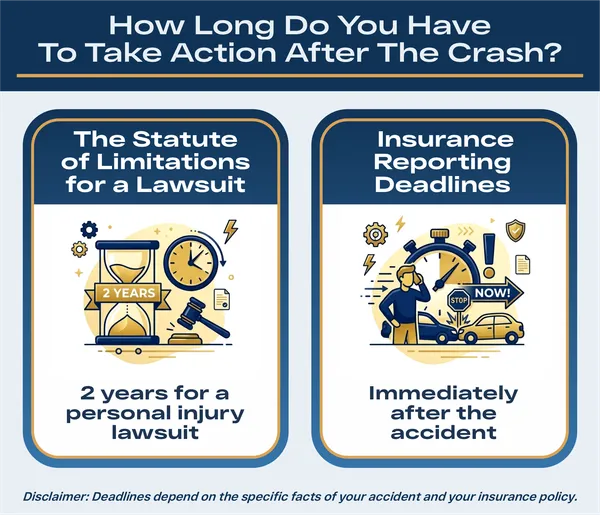
Pay close attention to two deadlines after a crash: the one for filing a lawsuit and the one tied to insurance reporting. Though they are not the same, both can affect your ability to recover compensation.
- The Statute of Limitations for a Lawsuit: In California, you generally have two years from the date of the injury to file a personal injury lawsuit. If you are also seeking compensation for damage to your car or other property, you generally have three years from the date of the damage to file a property damage claim in court.
These deadlines matter even if you are still talking to the insurance company. Settlement discussions do not automatically extend the time to sue. If the deadline passes, the other side may ask the court to dismiss the case.
- Insurance Deadlines Can Be Much Sooner: Insurance deadlines can come much earlier than court deadlines. The California Department of Insurance says you should notify your insurance company immediately after an accident. Your policy may also require prompt notice, so waiting too long can affect coverage or how the claim is handled.
If anyone was injured or killed, or if property damage exceeded $1,000, the crash must be reported to the California DMV within 10 days by filing an SR-1 form.
A lawsuit deadline and an insurance deadline serve different purposes. One controls how long you have to file in court. The other affects how and when you report the crash to an insurer or the DMV. Because these time limits can overlap, it is important to treat both seriously from the start.
Do You Need A Lawyer If An Underage Driver Hits You?
You are not required to hire a lawyer. However, legal help can be valuable when the claim involves an underage driver. These cases can raise additional issues that do not arise in a standard crash. If you are thinking, “I need a personal injury lawyer,” this is often the stage when legal guidance can help you understand your options and avoid mistakes that can weaken your claim.
A teen driving accidents lawyer from Arash Law can help identify the correct insurance policy, investigate parental responsibility, preserve evidence, and deal with adjusters who try to minimize the claim. That support becomes even more important if the teen was uninsured, intoxicated, driving without permission, or involved in a hit-and-run.
Questions People Commonly Ask After Being Hit By An Underage Driver
Being hit by an underage driver can leave you with questions that do not come up in every car accident case. You may wonder who pays for the damage, whether a parent can be held responsible, or what happens if the teen had only a permit or no insurance. These are some of the most common questions people ask after this type of crash.
Can I Sue An Underage Driver After A Car Accident?
Yes. You can sue a minor for a car accident if they’re responsible for causing the crash. In California, the claim may also involve a parent or guardian if that adult signed the minor’s license application or gave permission to drive.
Are Parents Liable If Their Teen Causes A Car Accident In California?
They can be. Under Section 17708 of the California Vehicle Code, a parent or guardian who signs a minor’s license application may share responsibility for damages caused by the minor’s driving.
Does Insurance Cover An Accident Caused By An Underage Driver?
In many cases, yes. The claim often starts with the teen driver’s auto insurance, which is commonly tied to a parent’s or guardian’s policy.
Coverage can become more complicated if the teen:
- Was not listed on that policy.
- Did not have permission to drive.
- Was using the vehicle outside the permitted driving restrictions.
What If The Teen Driver Was Driving Without Permission?
That can create a coverage dispute, but it does not automatically end your claim. This question repeatedly surfaces because permission determines which insurance policy applies and whether the vehicle owner, parent, or another party may still be involved in the case.
Understand Your Options After An Underage Driver Hits You
Being hit by an underage driver can leave you with more questions than answers. You might be looking for free advice from an underage driver accident lawyer. You may not know whose insurance applies, whether a parent shares responsibility, or what steps can best protect your claim. Our personal injury lawyers at Arash Law help injured people understand their options after serious crashes.
After the accident, you may wonder, “Do I need a personal injury lawyer?” If an underage driver hit you, we can review the facts, explain what coverage may apply, and help you understand the next steps in your claim.
Wondering, “Do lawyers only get paid if they win?” This is also a good time to ask how our fee agreement works. To speak with AK Law, call (888) 488-1391. Discussing your case with an accident lawyer early can give you clearer answers and help you move forward with confidence.