
TL;DR: To file a truck accident claim in California, report the crash, get medical care, and open the correct insurance claim against the driver or carrier. Injured drivers or passengers must preserve ELD data and maintenance records to prove fault, then file suit within 2 years before evidence is lost.
Highlights:
- Record the truck’s USDOT number and verify the carrier in the FMCSA lookup.
- Back up scene photos, vehicle damage, and visible injuries to cloud storage.
- Collect witness names, phone numbers, and a brief summary of what they saw.
- Write down the responding agency and collision report number to request later.
- File the California DMV SR-1 within 10 days if required.
- Send a preservation letter for ELD, dashcam, GPS, and maintenance records.
- Track treatment, work absences, and receipts to document every loss.
Tip: If an adjuster contacts you, stick to basic facts, avoid guessing, and don’t sign broad medical authorizations.
Table of Contents
To file a truck accident claim in California, you must document the scene, seek medical care, and notify the responsible parties’ insurance carriers. You must also submit a Department of Motor Vehicles (DMV) SR-1 report within 10 days if the crash caused injury, death, or more than $1,000 in property damage.
To build a credible claim, keep records that connect the crash to your injuries and losses. Gather medical records, crash report details, photos, and witness information. Secure trucking evidence early, including electronic logging device (ELD) data, dashcam footage, and maintenance records, before key proof gets lost or overwritten.
The Federal Motor Carrier Safety Administration (FMCSA) rules generally require carriers to retain Records of Duty Status (RODS) and supporting documents for at least six months. However, because data can be purged or overwritten quickly, early preservation of evidence is essential in truck accident cases.
What Are The First Steps To Take After A Truck Accident?
The timeline of a truck accident claim begins at the scene and progresses through investigation, medical stabilization, and legal negotiation. Here are practical steps to take after a truck accident:
- Get Medical Care: See a medical professional right away, especially after a high-impact truck crash.
- Report the Crash: Ensure law enforcement creates a collision report.
- Identify the Carrier: Look for the Department of Transportation (USDOT) number on the truck’s door or cab. You can use the FMCSA’s carrier lookup to confirm the trucking company’s legal name and safety record.
- Save Evidence: Back up photos of vehicle damage and the surrounding scene.
- Gather Witness Information: Store names and phone numbers of anyone who saw the impact.
- File the SR-1: Submit the SR-1 report to the DMV within 10 days if required.
- Send a Preservation Letter: Have a truck accident lawyer notify the trucking company to save ELD and maintenance records.
Why Medical Care Comes Before The Truck Accident Claim
Truck accidents often cause severe and internal injuries that are not easy to see right away. Early treatment protects your health and creates clear proof of your injuries.
Truck crashes involve a strong impact. That force can lead to internal bleeding, organ damage, crush injuries, or severe fractures. Some cases require surgery, intensive care, or even amputation. These injuries can worsen quickly without prompt treatment.
At the same time, other injuries may seem mild at first but can worsen over time. The Centers for Disease Control and Prevention (CDC) states that symptoms of mild traumatic brain injury and concussion may appear right away or hours to days later. A same-day or next-day evaluation helps detect hidden injuries. It also supports your claim.
Medical records document your diagnosis, symptoms, and treatment. In truck accident claims, insurers might argue that the pain stemmed from a prior condition or another event. Prompt care helps show that the crash caused your injuries.
How Do You File A Truck Accident Claim In California?
Filing a truck accident claim in California usually involves filing an insurance claim, gathering evidence, and pursuing a settlement or a lawsuit if needed. The basic path looks like this:
Open The Right Insurance Claim
You start your claim by notifying the correct insurance company. The right claim depends on who caused the crash and who owns the truck. Understanding what happens when a trucker gets into an accident can also clarify why multiple investigations and insurance policies may be involved.
You may need to file with:
- The truck driver’s insurer
- The trucking company’s insurer
- Your own insurance policy
Some crashes involve more than one policy. If your case involves a government truck or agency, you must file a government claim first. California law often gives you only six months to do that.
Gather And Organize Proof
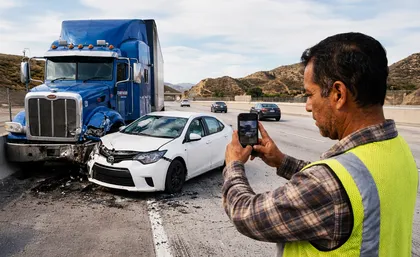
You build your truck accident claim by collecting and organizing proof. You must show what happened, who caused it, how badly you were hurt, and what the crash cost you.
Start with the evidence you can gather yourself:
- Photos or videos from the scene.
- Damage to every vehicle.
- Skid marks, debris & road signs.
- Visible injuries.
- Witness names and contact details.
- The responding agency and report number.
- Your medical records and bills.
- Pay records that show missed work.
Truck accident claims often involve records you cannot access on your own. These records can show what the truck driver and the company did before the crash.
For example, the FMCSA rules require carriers to use electronic logging devices. ELDs sync with the truck’s engine and record driving time. They can help show hours-of-service violations. Federal rules also require carriers to keep backup ELD data and maintenance records, which can reveal fatigue, poor upkeep, or mechanical issues.
Additional trucking evidence may include:
- Electronic logging device data.
- Dashcam footage.
- GPS and telematics records.
- Dispatch communications.
- Driver qualification and training records.
- Inspection, repair, and maintenance records.
- Cargo loading records.
- Cell phone records, when legally obtained.
- CHP or police collision reports.
You can request a crash report if you qualify as a party of interest. Save the report number early so you can request it later. In many cases, a lawyer sends a preservation letter to the trucking company. That notice asks them to keep key records.
Identify Every Liable Party
You strengthen your truck accident claim by identifying everyone who may share fault. Truck crashes often involve more than one party, and each one may have separate insurance coverage.
Start by reviewing what caused the crash and who had control over the truck, the cargo, or the roadway. Do not assume the truck driver is the only one responsible.
Depending on the facts, your claim may involve one or more of the following:
| Potential Liable Parties | When They May Be Liable |
|---|---|
| Truck driver | When speeding, distracted driving, improper lane changing, and other unsafe driving behaviors cause the crash. |
| Trucking company | When it failed to hire qualified drivers, enforce safety rules, or properly maintain the truck. |
| Maintenance provider | When poor inspection or repair led to mechanical failure. |
| Cargo loader or shipping company | When improper loading, shifting cargo, or overloading contributed to the crash. |
| Vehicle or parts manufacturer | When a defective part or system caused or worsened the incident. |
| Public agency | When a government vehicle was involved, or unsafe road design or conditions contributed to the collision. |
You need to match each party to the role they played in the crash. Each one may carry different insurance policies, which can affect how much compensation you can pursue.
Do not rely on the first insurance company that contacts you. A full review of liability helps you file the right claims and avoid missing other sources of recovery.
Value The Claim Fully
Build your truck accident claim by accounting for the full impact of the crash on your life. Do not limit your claim to the first hospital bill. Include current losses and future needs supported by your records.
Your claim may include compensation for:
- Medical bills
- Future medical care
- Lost wages
- Loss of earning capacity
- Property damage
- Rehabilitation and therapy
- Pain and suffering
- Other out-of-pocket losses
If the crash resulted in a loss of life, eligible family members may pursue a wrongful death claim.
Support each loss with records, timelines, and receipts. Insurance companies rely on documentation when reviewing your claim, not assumptions or estimates.
Send A Demand And Negotiate
Once your evidence is strong enough, you or your lawyer sends a demand package to the insurer. The insurer reviews your claim, asks for records, and may dispute fault, treatment, or value. If the insurer refuses to pay fairly, you may need to file a lawsuit.
You benefit from legal support before this stage, not after it, because early evidence work shapes your case. Truck accident attorneys can help you identify missing records, preserve key evidence, and determine whether your case involves one insurer, multiple insurers, or a government claim.
Why Your Injuries Matter To A Truck Accident Claim

Your injuries shape your truck accident claim. They determine the evidence required, the value of your claim, and the future care you may need.
Your medical records connect your injuries to the crash. They document when symptoms began, the treatment you received, and how your condition affects your daily life. These records also support claims for lost income, ongoing care, and pain.
Truck crashes often cause serious harm because commercial vehicles carry more weight and force than passenger cars. Common injuries include:
- Whiplash & Other Neck Injuries: These can cause lasting pain and limited movement. Ongoing treatment, including chiropractic care, can increase the value of your claim.
- Back Injuries & Spinal Cord Damage: These can affect your ability to sit, stand, or work. Long-term care and disability can raise your damages.
- Fractures: Broken bones may require surgery, casting, or therapy. A longer recovery time can lead to higher compensation for truck accident victims.
- Traumatic Brain Injuries: These can affect memory, focus, and mood. Ongoing symptoms often require specialist care and support, which can increase the claim value.
- Internal Injuries: These may not show right away but can require urgent treatment. The severity and risk involved can increase compensation.
- Crush Injuries: These may cause severe tissue damage or amputation. Long-term care needs and permanent disability can significantly impact your claim.
- Severe Soft Tissue Injuries: These can cause ongoing pain even without clear imaging results. Consistent medical records help support your claim.
What Deadlines Matter In A California Truck Accident Case?
You must meet several legal deadlines to keep your truck accident claim valid. Each time window depends on the type of claim and the party involved.
Here are the key timelines you need to track:
- SR-1 Reporting Deadline: You must file an SR-1 report with the California DMV within 10 days if the crash caused:
- Injury or death.
- More than $1,000 in property damage.
This requirement applies even if a police report exists or an insurance claim is already open.
- Personal Injury Lawsuit Deadline: You generally have two years from the date of the crash to file a personal injury lawsuit under California law. If you miss this deadline, you’ll lose your right to pursue compensation through legal action.
- Public Entity Claim Deadline: If a government agency caused or contributed to the crash, you must act much faster. You usually need to:
- File a government claim within 6 months.
- Wait for a response (up to 45 days).
If the agency denies your claim, you may have 6 months from the denial notice to file a lawsuit. If they do not respond within 45 days, you generally have up to 2 years from the date of the injury to file a lawsuit.
Many victims seek free advice from truck accident lawyers to better understand their situation. These legal professionals can help identify which deadlines apply to your case.
Truck Accident Claim FAQs In California
Here are clear answers to common questions about filing a truck accident claim in California. These help you understand your options and next steps after a crash.
Do I Need The CHP Or Police Report To File A Truck Accident Claim?
No. You can start a claim before the final report is ready. Still, it can become important evidence, so get the report number and request a copy when it becomes available. Do not confuse the collision record with the SR-1. California may require both.
Can I Still File A Truck Accident Claim Even If I Was Partly At Fault?
In California, yes. The state follows a comparative fault system that reduces your compensation based on your share of responsibility. For example, if you are 20% at fault, you can still recover 80% of your damages. You still need to prove the other party’s role and document your losses.
What If I Missed Work After The Crash?

You can still pursue a claim. Document the time you missed and the income you lost. Save pay stubs, attendance records, disability notes, and messages with your employer. If your injuries limit your ability to work long-term, you can include that loss in your claim.
When Should I Contact A Lawyer Who Handles Truck Accident Cases?
The moment you say, “I need a personal injury lawyer!” is the time to hire one. You should also consider speaking with an advocate if your case involves multiple defendants, federal trucking records, serious injuries, or short evidence windows. These legal professionals can help preserve key records, identify all liable parties, and keep your claim on track.
What Should I Do If The Trucking Company’s Insurance Adjuster Calls Me?
Stay cautious. The adjuster may ask for a recorded statement or try to limit your claim. You can choose not to give a recorded statement right away. Insurers might use these statements to dispute fault or the extent of your injuries.
Avoid signing broad medical authorizations. They may allow access to unrelated medical history. Save all communication and consider speaking with a lawyer before responding. If your own insurer contacts you, review your policy. Some coverages require cooperation, but you still have the right to be careful about what you share.
How Much Is My California Truck Accident Claim Worth?
The value depends on your injuries, medical care, lost income, and how the crash affects your daily life. Strong documentation, consistent treatment, and clear proof of losses all affect the outcome.
Get Legal Help Filing A Truck Accident Claim In California
Arash Law can guide you through every step of filing a truck accident claim in California. Our legal team reviews the facts, identifies all liable parties, and preserves key evidence before it gets lost.
Our truck accident lawyers manage communication with insurance companies. We track deadlines and prepare your claim based on your records and losses. We focus on building a clear case that demonstrates how the crash affected your health, work, and daily life.
AK Law works on a contingency fee basis. You do not pay any upfront legal fees. If you are wondering, “Do lawyers only get paid if they win?” the answer is yes if you work with us. We collect payment only after we obtain compensation for you, whether through a settlement or judgment.
To start your truck accident claim, call (888) 488-1391. We offer free initial consultations!