TL;DR: Forklift accidents often result from operator error, like speeding or improper load handling. Unsafe environments, poor maintenance, and distractions also contribute to accidents and injuries. Victims may pursue workers’ compensation or third-party claims, depending on the facts. Timely reporting is crucial for protecting your rights.
Highlights:
- Operator error is the leading cause of forklift accidents.
- Unsafe workplace conditions can also contribute to forklift accidents.
- Report workplace injuries within 30 days to preserve workers’ compensation rights.
- File workers’ compensation claims within one year of the injury.
- If a third party caused the accident, a personal injury claim may apply.
- Gather key evidence, such as photos, training records, and witness statements.
Tip: Stick to the facts when reporting the accident and avoid making assumptions about the cause.
Table of Contents
Operator error is a major contributing factor in many forklift accidents. That usually means someone drove the forklift too fast, turned it unsafely, loaded it improperly, or operated it even with blocked visibility. Often, a lack of training, poor forklift safety habits, and skipped maintenance lead to accidents.
Identifying the most common cause of a forklift accident is important. The cause of the incident impacts what evidence you need, who is responsible, and what kind of claim you can make. If you were hurt in a forklift accident in California, certain records can help. Training files, inspection logs, witness statements, and scene photos can show if your case is about workers’ compensation, third-party liability, or both.
Why Operator Error Leads To Forklift Accidents
Forklift accidents happen a lot on construction sites, factories, and warehouses. They can cause serious injuries or even death. The most common cause is operator error, such as driving the forklift unsafely. It can lead to a tip-over or a collision.
Forklifts are part of a larger material-handling system. Trained workers use them to move and lift heavy loads. The Occupational Safety and Health Administration (OSHA) requires:
- Operator training
- Recurring evaluation
- Safe driving
- Rated-load compliance
- Clear visibility
- Removal of unsafe trucks from service
Examples of non-compliance with these rules include poor load stability, training deficiency, and unsafe workplace conditions that make the truck harder to control. These actions are among the leading causes of forklift accidents. Notably, many of them fall under the umbrella of operator error.
Operator Error In Forklift Accidents
Most forklift accidents happen because of human error. These mistakes can occur in different ways, such as a driver tipping the forklift over or hitting a person. That’s why OSHA requires operator training. Employers must also ensure that their workers are competent enough to operate forklifts safely.
Unsafe operation can include:
- Driving too fast for the aisle, floor, or the forklift’s turn radius.
- Reversing without a clear path or spotter.
- Traveling through blind corners without a horn or pedestrian separation.
- Failing to properly secure, stabilize, or position the load before moving.
- Turning while the forklift’s load is unstable, raised, or poorly balanced.
- Ignoring the truck’s rated lifting capacity.
Tired workers are more likely to make these mistakes since they’re too drowsy to focus on what they’re doing. Distractions can also lead to accidents by reducing an operator’s ability to spot and avoid hazards. Forklift accident lawyers can review evidence to determine if fatigue or distracted driving contributed to the accident. For example, they may examine surveillance footage and employee logs.
Other Factors That Cause Forklift Accidents
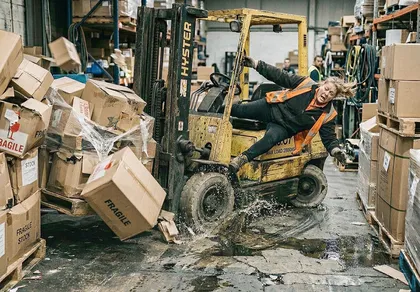
Other factors beyond operator error can play a major role in forklift accidents and significantly affect workplace safety. These factors relate to the physical conditions of the work area. An unsafe or poorly maintained environment raises the risk of accidents.
- Unsafe Flooring: Uneven floors, wet surfaces, and obstacles can increase the risk of accidents. Cracks and holes in the floor can cause the forklift to tip or be hard to control. Slippery floors from spills can also cause wheels to slide. These hazards can be especially dangerous when a forklift is carrying heavy loads.
- Cluttered Work Areas: A messy workplace can pose risks to operators and nearby workers. Objects blocking the driver’s view can lead to crashes. Forklifts also pose a greater risk of hitting people walking in tight spaces.
- Poor Lighting: Dim or poor lighting makes it difficult for drivers to see clearly. Such conditions can cause both operators and other workers to miss possible dangers.
- Lack of Forklift Maintenance: Unaddressed issues such as broken brakes, unresponsive steering systems, or worn-out tires can lead to otherwise preventable accidents.
What Should You Do After A Forklift Accident?
Forklift accidents can be confusing, so it’s important to know the steps to take immediately. Acting quickly can help protect your health and preserve your rights. Here are a few important things to do in the days following your injury:
- Report the Accident: In California, you must notify your employer or supervisor within 30 days to keep your workers’ compensation rights.
- Fill Out the Workers’ Compensation Form: Your employer will give or mail you a DWC-1 form. Fill out the employee section, sign it, keep a copy, and return it right away. Once your employer receives it, they’ll forward the form to their insurance carrier, which will kickstart the workers’ compensation process.
- Continue Getting Medical Help: After receiving initial treatments for your injury, attend all follow-up appointments, follow your doctor’s advice, and complete the treatment plan they prescribe for you.
- Preserve Evidence: Take photos of the forklift, load, prongs, floor, racks, warning signs, and any damage. Write down witness names and camera locations, information about where the accident occurred, and whether there were any unusual conditions during your accident, like blind corners or heavy foot traffic.
What Evidence Matters In A Forklift Accident Case?
Forklift cases usually rely on facts rather than guesses. In California, personal injury claims often consider photos, medical records, and witness statements. Other useful information can include the operator’s certification, training records, inspection logs, and repair documents. These documents may indicate that the forklift was unsafe to use or required maintenance.
Useful proof can include:
- Photos and video of the forklift, load, and travel path.
- Witness statements from workers on foot and nearby operators.
- Training and evaluation records showing who was allowed to drive.
- Inspection, repair, and forklift maintenance records.
- Medical records. They may include emergency care, imaging, physical therapy, and chiropractor/chiropractic records, when relevant.
- Phone records or other evidence of distraction if someone claims the operator was not paying attention.
What Claims Could You Pursue After A Forklift Accident In California?
There are several possible ways to take action after an accident involving motorized industrial vehicles, such as forklifts. After reviewing the details, a forklift accident lawyer can guide their client on which legal claims may be available.
Workers’ Compensation
Workers’ compensation is usually the first thing to look at if you get hurt at work. It is a no-fault system, so you don’t have to prove your employer caused the accident to get basic compensation. Workers who are hurt can seek compensation for the following:
- Medical care
- Temporary disability payments
- Permanent disability payments
- Supplemental job displacement benefits
Workers’ compensation may also provide death benefits to an employee’s dependents in the event of a fatal forklift accident.
Personal Injury Claim
If someone apart from your employer caused the forklift accident, you may be able to file a separate legal claim. Through a personal injury case, victims can pursue damages covering:
- Medical bills
- Lost wages
- Reduced earning
- Pain and suffering
- Loss of consortium
- Loss of enjoyment of life
Eligible surviving family members may also be able to file a wrongful death claim if someone else’s negligence resulted in fatal forklift injuries.
A personal injury claim may also be possible if someone else was hurt. This kind of forklift accident happens often. For example, around 80% of these incidents involve pedestrians. If you were injured by a forklift while walking due to the negligence of an operator or another party, you could file a claim against them.
The applicable claim type can depend on the circumstances of the accident. Given the complexity of some cases, some victims seek free advice from a forklift accident lawyer to understand their options.
Who May Be Responsible For A Forklift Accident?
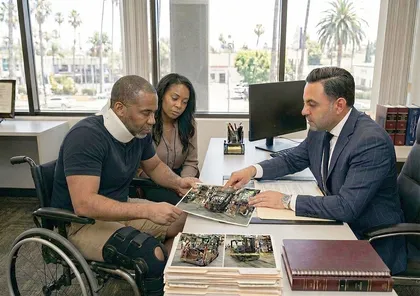
Responsibility depends on what actually went wrong. In some cases, the forklift accident may have been caused solely by operator error. In others, the real issue might be a workplace system failure, such as missing training, blocked aisles, poor site layout, or weak pedestrian controls.
Depending on the facts, potentially responsible parties may include:
- Employer: if the injury involved a training deficiency, poor forklift safety enforcement, or unsafe traffic controls.
- Forklift Operator: If they ignore safety rules and cause an accident that hurts someone, such as a pedestrian.
- Non-Employer Contractor or Operator: If they caused the accident or the safety hazard that caused the incident.
- Manufacturer or Seller: If equipment failure or a product defect contributed to the incident.
- Maintenance Provider: If inadequate repairs or skipped service left the forklift unsafe.
- Property or Business Operator: If blind corners, clutter, poor markings, or mixed pedestrian traffic made the work area unreasonably dangerous.
What Injuries Can A Forklift Accident Cause?
Every year from 2011 to 2017, 7,000 people got injured and had to miss work due to forklift accidents, as per the U.S. Bureau of Labor Statistics (BLS). Victims commonly sustain crush injuries, fractures, head trauma, spinal cord damage, and cuts.
Here’s more about how these injuries typically occur and the outcomes they may lead to:
- Crushed Hands, Feet, or Limbs: These injuries can occur when a worker is caught between the forklift and another object.
- Broken Bones: Often result from falls, collisions, or being struck by a forklift.
- Head Injuries: These can occur if the operator or bystander is hit during a crash or tip-over. Victims can also sustain head trauma from falling objects. In serious cases, an accident can result in traumatic brain injuries (TBIs). These can cause lasting cognitive problems.
- Spine, Neck, or Back Injuries: Victims may sustain these injuries in collisions, tip-overs, or improper lifting of heavy loads. For serious incidents, spinal cord damage can lead to permanent paralysis.
- Cuts and Lacerations: Often happen when sharp parts of the forklift or nearby objects strike a worker.
Driving forklifts, especially in reverse, can strain the neck and back. These problems can worsen over time, especially if the worker continues performing modified duties after an accident. Maintaining comprehensive documentation of your injuries and recovery progress can be crucial to supporting your claim.
What Deadlines Matter After A Forklift Accident?
Deadlines for forklift accident claims in California can vary. Report the injury to your employer right away. Waiting too long can put your benefits at risk. After the employer learns of the injury, it must provide the DWC-1 claim form within one working day.
Once you file the claim form, general deadlines can include the following:
- 14 Days: The insurer must send a written notice saying whether the claim is accepted, delayed, or denied.
- 30 Days: You should report the injury to your employer within this period to avoid risking benefits.
- 90 Days: If the claim is not denied within this time, the injury is usually presumed covered.
- 1 Year: Workers must file their workers’ compensation claim within this period to preserve their rights.
These timelines are general guidelines under California workers’ compensation law. They can change based on your case details, the type of benefit you claim, and relevant rules. Different deadlines can apply to reporting requirements, medical treatment, and dispute resolution.
For a separate personal injury lawsuit, the applicable deadlines are the following:
- 2 Years: You usually have this time from the injury date to file a civil lawsuit against non-government defendants.
- 6 Months: If the defendant is a government agency, you usually must submit a government claim first.
There are some exceptions to these deadlines. For example, if the injury doesn’t show up right after the accident, the deadline might change. It usually depends on when the injury is discovered or when it should have been.
Frequently Asked Questions About Forklift Accident Cases
Forklift cases raise questions about workers’ compensation, civil claims, proof, and fees. These are the issues injured workers and families ask most after a serious accident at a warehouse, loading dock, store, or construction site.
Is A Tip Over The Same Thing As The Most Common Cause?
Not exactly. A tip-over is a type of forklift accident. The cause behind it may be speeding, turning with an unstable load, ignoring load limits, poor visibility, or other unsafe operations.
Can I Get Workers’ Compensation If I Made A Mistake While Operating The Forklift?
Yes, in many situations. California workers’ compensation is a no-fault system. That means basic benefits do not depend on proving your employer was to blame, or that you were blameless. However, that does not mean fault never matters. It can still be important in a separate third-party case.
For example, aside from seeking workers’ comp benefits, you may be able to pursue additional compensation from another company, property operator, or manufacturer that contributed to the injury.
Can I Sue Someone Besides My Employer After A Forklift Accident?
Yes, if someone other than your employer caused or contributed to the cause of the incident. A workplace injury may lead to workers’ compensation. You can also file a claim against the responsible person or business.
That can matter when the facts point to another contractor’s driver, a property operator, or a defective forklift. A forklift accident attorney can identify possible liable parties through investigations and available evidence.
What If Poor Maintenance Or A Defective Forklift Caused The Crash?
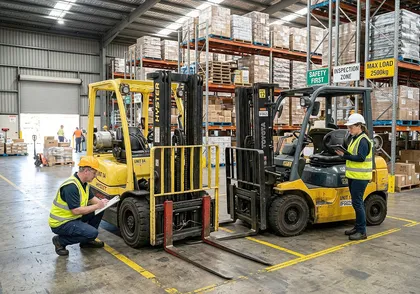
That fact can change the case. OSHA says unsafe forklifts should be removed from service. Operators should perform inspections and report defects. If those steps are skipped, the records may help show missed forklift maintenance, unsafe repairs, or equipment failure.
Those facts may support more than a workers’ compensation claim. They may also point to a third-party negligence or product liability case. Liability may depend on who serviced, supplied, or manufactured the forklift.
Do Lawyers Only Get Paid If They Win?
Yes, if they handle cases on a contingency fee basis. Many injury law firms, such as Arash Law, use this no-win, no-fee policy. Under this payment structure, injury lawyers are only paid if they obtain compensation for their clients. It is advisable to clarify the terms of this arrangement before deciding to hire a forklift accident attorney.
Talk To A Lawyer After A Forklift Accident
Talk to a lawyer early if the injury is severe, fault is unclear, several businesses may be involved, or key records are missing. Consulting one becomes more important when the injuries are serious, the damages are significant, or the fault is unclear.
If you are thinking, “I need a personal injury lawyer,” that concern makes sense in cases involving disputes over operator training, forklift maintenance, or third-party fault. A forklift accident can lead to workers’ compensation claims. You might also be eligible to file a separate personal injury case.
If you have questions about your options, our forklift accident lawyers at AK Law can review the facts, explain the possible claim paths, and help you understand what records matter most. Call us at (888) 488-1391 for a free initial consultation.