TL;DR: An accident is the event that happens, while an injury is the physical or psychological harm caused by that event. To seek compensation, an injured victim must establish a valid legal basis for holding another party responsible. Moreover, personal injury lawsuits generally must be filed within two years, but different or shorter deadlines may apply depending on the claim and the parties involved.
Highlights:
- Get a medical evaluation promptly and keep copies of all diagnoses and treatment notes.
- Photograph the scene, property damage, hazards, and visible injuries as soon as possible.
- Log symptoms, missed work, and out-of-pocket expenses daily in one running file.
- Identify what duty was owed and what act or omission breached it.
- Document relationship and real-time awareness evidence for bystander emotional distress claims.
- Remember important filing deadlines: 2 years for personal injury lawsuits, 3 years for property damage cases, and 6 months for government claims.
- Ask a lawyer how Proposition 213 may limit non-economic damages if you’re uninsured.
Tip: Preserve evidence early and share only verified facts with insurers, avoiding guesses about fault.
Table of Contents
An accident is not the same as an injury. The two are related concepts, but the law treats them separately. An accident is an unexpected event, such as a car crash, a fall, or an explosion. An injury is the physical, mental, psychological, or emotional harm that accidents may cause.
Knowing the difference can help determine whether you can file a compensation claim.
Accident Vs. Injury: Why The Distinction Matters
The distinction between an accident and an injury matters because it determines whether you have a claim. It also affects who you can file it against and which California filing deadline applies to your situation.
- Not every accident causes an injury. You can get into a fender-bender and walk away completely unhurt. The accident happened, but no injury resulted.
- Not every injury comes from an accident. Injuries can result from intentional acts (assault), medical negligence, defective products, or even conditions that develop from repetitive stress at work. None of these is an “accident” in the traditional sense.
- Personal injury claims often hinge on this link. In personal injury law, proving an accident occurred is not enough unless you can prove that the specific event caused or contributed to your injuries.
- Insurance terminology is specific. Some policies often specify “bodily injury caused by an accident,” meaning the insurer is only on the hook when both elements are present and connected.
What Is An Accident?
An accident is an unfortunate incident that happens unexpectedly. They often occur because someone ignored safety rules or acted carelessly. When negligence links the event to the harm, a simple accident can become a compensable injury claim.
Examples of accidents include:
- Motor vehicle collisions
- Slips, trips, and falls
- Scaffold collapse at a construction site
- Sudden elevator drop or misalignment
- Amusement park ride failure
- Explosion of a defective product
- Fire caused by faulty wiring
- Dog attacks or bites
- Sports or recreational incidents
What Is An Injury?
An injury is the physical, emotional, mental, or psychological harm that may result from an accident. It may also develop over time through delayed symptoms. Here are some common types of injuries:
- Whiplash
- Concussions
- Traumatic brain injury (TBI)
- Broken bones
- Soft tissue damage
- Internal bleeding
- Dislocated shoulders
- Third-degree burns
- Blast-induced hearing loss
- Eye injuries
- Shrapnel lacerations
- Psychological shock
- Post-traumatic stress disorder (PTSD)
Getting checked out promptly matters. A qualified healthcare professional can assess your condition and determine whether additional imaging or specialist care is appropriate. Their records can document your symptoms, diagnosis, treatment, and the medical effects associated with the event.
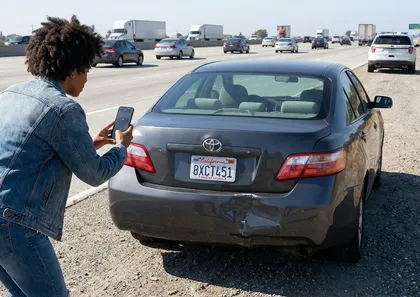
Can You File A Claim For An Accident With No Bodily Injuries?
Yes, you can file a claim after an accident even if you suffered no physical injuries. California law allows you to seek compensation for property damage or emotional distress. These claims require proof of financial loss or mental trauma caused directly by another party’s actions or inaction.
Property Damage Claims
A property damage claim is a formal request to an insurer or an at-fault party, seeking compensation to repair or replace damaged property. These properties may include your house, car, phone, or other personal belongings. This type of claim may recover the following:
- Vehicle Repair Costs: Payouts covering bodywork, mechanical repairs, structural restoration, and rental car coverage while your vehicle is in the shop.
- Total Loss Value: The vehicle’s pre-crash fair market or actual cash value if it is declared a total loss, subject to the applicable policy and liability limits.
- Diminished Value: Diminished value is the drop in your car’s resale price after a crash, even after repair. Depending on the evidence, a claimant may seek residual diminished value from an at-fault party, although the claimant’s own collision policy may exclude that loss.
- Personal Property: Laptops, car seats, smartphones, luggage, or tools that were broken during the impact.
Emotional Distress Claims
An emotional distress claim is a legal request seeking compensation for psychological harm. California also lets you claim emotional distress without a physical injury through a Negligent Infliction of Emotional Distress (NIED) claim. To pursue bystander emotional-distress damages without physical injury, a claimant generally must:
- Be closely related to the person who was harmed (such as a spouse or immediate family member).
- Be present when the victim is injured and know at that moment that the injury is happening. In some cases, seeing or hearing the event live through technology may count, depending on the facts. Under Downey v. City of Riverside, the claimant does not need to know at that moment how the defendant caused the event.
- Experience severe emotional distress as a direct result of what you witnessed.
These claims are not easy to bring. You will need strong evidence of genuine mental suffering, such as therapy records or medical notes.
Whether the harm is to your car or your mental health, California has specific rules for when and how these claims must be filed, and those rules can vary based on your situation.
Can You File A Claim For An Injury Without An Accident?
You can file an injury claim without an accident because not every injury results from a sudden or unintended accident. An injury may develop gradually or result from deliberate conduct, repeated exposure, or repetitive physical activity.
California law explicitly recognizes non-accidental injuries that accrue over time. Under Labor Code §3208.1, a cumulative trauma (CT) or occupational disease injury is one caused by repetitive mentally or physically traumatic activities over a period of time. They’re not caused by a single or unexpected incident, but they can eventually lead to disability or the need for treatment.
Examples may include:
- A repetitive-stress injury that develops from performing the same job duties over time.
- An occupational illness caused by repeated exposure to a harmful substance.
- An injury caused by a defective medication, medical device, or consumer product.
- Physical or psychological harm caused by an assault or another intentional act.
The legal claim depends on how the injury occurred. A negligence claim generally requires 4 elements: duty, breach, causation, and damages. Other cases may involve strict product liability, intentional tort, workers’ compensation, or another legal theory.
Different claims also have different procedures and deadlines. For example, workplace injuries generally begin through the workers’ compensation system, while claims against negligent third parties may proceed separately. Product liability, intentional tort, and public entity claims may also follow rules that differ from an ordinary accident claim.
“Accident” Claims Vs. Personal Injury Claims
An “accident” claim or a first-party insurance claim seeks benefits under your own applicable coverage. You may use your health insurance, disability insurance, MedPay, collision coverage, or accident insurance. No one else needs to be at fault. Think of slipping in your shower or falling down your own stairs: there’s no third party to sue, so you turn to your own policy to cover the loss.
A personal injury claim seeks damages from a person or entity legally responsible for your harm, under a theory like negligence, strict liability, or intentional tort. If your claim is based on negligence (like in most civil cases), you generally must prove four elements:
- Duty of Care: The other party has a legal duty to act with care toward you. For example:
- A driver must obey traffic laws and drive safely to avoid harming others.
- A property owner or occupier generally must use reasonable care to inspect, maintain, and address foreseeable hazards for lawful visitors.
- Breach of Duty: The other party failed to meet that duty. For example:
- A driver runs a red light or fails to yield the right of way.
- A store owner ignores a reported spill.
- Causation: You must prove that the breach was an actual and legally recognized cause of your injury, even if more than one factor contributed to the harm. Without a clear link between the breach and your harm, the claim cannot go forward.
- Damages: You must have suffered real harm you can measure, such as medical bills, lost income, or emotional distress.
Common types of personal injury cases may include:
- Car crashes
- Slip-and-fall accidents on someone else’s property
- Workplace accidents
- Other incidents arising from a third party’s actions.
Consulting with experienced personal injury attorneys can clarify your options and assist you in pursuing any compensation based on the specifics of your case.
California Laws That Can Affect A Claim
California injury cases may be affected by comparative fault and filing deadlines. Motor-vehicle cases may also be subject to Proposition 213 when an owner or driver lacked the required financial responsibility. If you were partly at fault in a crash, or you missed a filing deadline, either mistake can reduce your payout or end your claim.
Pure Comparative Negligence
California follows a pure comparative negligence rule that allows injured victims to recover damages even if they were partially at fault for an accident. Your share of the blame reduces any potential recovery.
For example, if your total damages are $100,000, and you are 30% at fault, then 30% ($30,000) is subtracted, leaving you with $70,000.
Proposition 213
Proposition 213 generally bars certain uninsured vehicle owners and operators from recovering non-economic damages, even when another driver caused the crash. Statutory exceptions may apply, including a specified exception involving a convicted impaired driver.
Statutes Of Limitations (Filing Deadlines)
You have two years from the date of injury to sue for personal injury under California Code of Civil Procedure (CCP) §335.1. Actions for injury to property generally have a 3-year statute of limitations under CCP §338. Discovery, tolling, and claim-specific rules may alter those deadlines.
A claim against a California public entity for death, personal injury, or injury to personal property generally must first be presented within six months after accrual under Government Code §911.2. Other public-entity claims generally have a 1-year claim-presentation period. A separate deadline governs any later lawsuit.
Both the fault calculation and the filing window require legal interpretation, and a consultation is a good way to get clear answers. Working with California accident lawyers can confirm the correct filing window for your claim type and assess how shared fault may affect what you recover.
Applying complex California rules requires experienced legal strategy — as seen in Arash Law’s past case outcomes. Our AK Law attorneys are experienced in handling a wide range of personal injury cases.
- $41,950,000 — A homeless man attacked a couple at Walmart with a baseball bat. The jury held Walmart 50% liable, resulting in a judgment of over $30 million against the popular retailer.
- $18,700,000 — Our eighteen-year-old client suffered serious leg injuries from a collapsing tractor at a farm. Arbitration resulted in a significant $18.7 million award, despite the defendant’s denial of responsibility.
- $17,900,000 — After prolonged litigation, our clients received a $17.9 million verdict for injuries from a car accident. The jury recognized the case’s strength in just 90 minutes, despite the County of LA’s attempts to deflect blame.
The outcomes above were the result of the unique facts of each case and do not guarantee the same result in similar cases.
Frequently Asked Questions
After an accident or injury, questions about the legal process are common. The answers below cover workplace-incident terminology, the difference between a claim and a lawsuit, and how long personal injury cases may take.
Understanding these basics can help you feel more prepared as you decide your next steps.
What Is The Difference Between An Incident And An Accident In The Workplace?
OSHA generally uses the term “incident” for work-related fatalities, injuries, illnesses, and close calls because “accident” can imply that an event was random or unavoidable. Separate OSHA rules require employers to report specified severe outcomes, including fatalities, inpatient hospitalizations, amputations, and losses of an eye.
California employers generally must report a work-connected death or serious injury or illness to Cal/OSHA as soon as practicable and no later than 8 hours after learning of it.
OSHA’s use of “incident” rather than “accident” is intended to emphasize preventability and root-cause investigation. The label does not determine civil liability. If a third party caused a work injury, the worker may have a separate claim outside the workers’ compensation system, depending on the facts and applicable law.
Is A Car Accident Claim The Same As A Personal Injury Lawsuit?
No, they’re related but not identical. A car accident claim is typically filed with an insurance company to seek compensation, and is often settled without going to court. A personal injury lawsuit is a formal legal action filed in court, usually pursued when an insurance claim is denied, undervalued, or fails to reach a fair settlement. Many car accident cases start as insurance claims and only become lawsuits if negotiations break down.
How Long Does A Personal Injury Case Take To Resolve In California?
There’s no fixed timeline. It depends heavily on case complexity, injury severity, and whether it settles or goes to trial. Straightforward claims with clear liability and complete medical treatment may only take a few months to about a year to resolve. More complex cases, especially those requiring litigation, can take one to three years or longer. California’s statute of limitations gives injured parties 2 years from the date of the accident to file a lawsuit, which also affects the timing of the case.
Accepting a settlement before you know the full extent of your injuries is also a risk. Because a settlement release is generally final, claimants should understand their diagnosis, prognosis, and reasonably anticipated future losses before accepting an offer.
Contact Arash Law After An Accident To Know Your Legal Options
In conclusion, while an accident often results in injury, the two concepts are not synonymous. Understanding the distinction can help assess liability and seek appropriate compensation in the aftermath of an incident.
If you have been searching for free advice from an accident lawyer, a free consultation is a good first step. At Arash Law, our attorneys will listen to what happened, review your options, and give you an honest assessment of your claim. You pay nothing up front, and you don’t pay the attorney’s fees unless we recover compensation for you.
Reaching out early lets our attorneys evaluate your situation and determine how we can help. Call us at (888) 488-1391 to schedule your free consultation and protect your rights before any deadlines pass.