TL;DR: You can sue a minor for a car accident in California if their negligence caused the crash. Minors may face liability for injuries, and parents can be held responsible under certain circumstances, such as vicarious liability or negligent entrustment. Even if the minor is covered by insurance, you may need to file a lawsuit for severe injuries or failed settlement negotiations. Parents can also be liable for the actions of their minor children, particularly if they allowed unsafe driving behavior.
Highlights:
- You can sue a minor for a car accident if they are negligent.
- Parents may be liable for the actions of their minor children.
- Minors may face liability for speeding, DUI, distracted, or reckless driving.
- California’s comparative negligence rule may reduce compensation if you share fault.
- Insurance claims can be filed through the minor’s insurance or your own policy.
- Legal action may be needed if you sustain severe injuries or settlement talks fail.
Tip: Stick to facts when discussing the accident with authorities or insurers.
Table of Contents
You can generally sue a minor for a car accident. California negligence laws apply regardless of age. If you sustain injuries or losses due to a minor’s careless actions, they could be legally responsible. Parental liability may also apply. You could potentially sue both a minor and their parents or legal guardians, depending on the facts of your case.
California’s Civil Code requires everyone to act with reasonable care to prevent harm. If a driver who is a minor fails to do so and causes a crash, they could be considered negligent. Parents or legal guardians may also be responsible if:
- They signed their child’s driver’s license application.
- They own the car that the minor was driving at the time of the accident.
- The minor is covered under their auto policy.
- They allowed their child to drive their car, even if that child previously exhibited incompetent or reckless behavior behind the wheel.
How Liability Works When A Minor Causes A Car Accident
California law usually treats minors differently. For example, courts keep their records confidential. Verdicts involving children also generally prioritize rehabilitation over punishment. However, drivers under 18 aren’t entirely free of responsibility for a car crash. They can still face liability if their negligent actions cause accidents, injuries, and losses.
Can A Minor Be Personally Sued After A Car Accident?
The short answer is yes. California’s negligence laws apply to everyone, including minors. Though car accident victims usually seek compensation for their losses through insurance, taking further legal action may be necessary if settlement negotiations fail. That’s especially true if you sustain severe injuries or the minor intentionally caused the crash.
Negligence Standards Apply Regardless Of Age
When assessing a teen driver’s potential fault in an accident, the legal concept of negligence applies. Under it, all drivers have a duty of care to avoid harming other road users. Suppose a teen driver fails to meet this duty and causes an accident, resulting in your injuries. In this case, they can face liability for your losses.
Minors, especially teenagers, often take risks while driving due to peer pressure, overconfidence, or a lack of understanding of the possible consequences. Some common risky behaviors they exhibit behind the wheel include:
- Speeding — National Highway Traffic Safety Administration (NHTSA) data showed that in 2023, young drivers aged 15 to 20 had a higher percentage of speeding-related fatal traffic crashes than any other age group. Many teen drivers broke speed laws by racing, driving too fast for conditions, or exceeding posted limits. Accidents can occur if they cannot brake in time to avoid a hazard.
- Drunk Driving — In 2023, about 30% of young drivers in fatal crashes in the U.S. had a blood-alcohol content (BAC) of 0.01 g/dL or more. Another 26% had a BAC of 0.08 g/dL or higher. That’s despite the fact that those younger than 21 are legally prohibited from consuming alcohol, and that this substance can impair one’s reaction time and decision-making skills on the road. In California, driving under the influence (DUI) can thus lead to civil and criminal responsibility, even for minors.
- Distracted Driving — Using phones, changing radio stations, and even talking to other people can distract minors behind the wheel. The California Highway Patrol (CHP) also recorded 195 crashes caused by inattention among teenage drivers. These are all distractions that can divert their attention from the road, making it harder for them to notice and avoid potential accidents.
- Reckless Driving — Young, inexperienced drivers are more likely to tailgate, weave through traffic, ignore traffic signals, or make other risky moves that increase the likelihood of a crash.
All these actions constitute negligence because they create unsafe conditions that could injure other road users. Minors who cause accidents for these reasons may be held legally responsible for covering any injuries and losses victims experience, whether through an insurance claim or an eventual lawsuit.
Civil Liability Vs. Criminal Responsibility
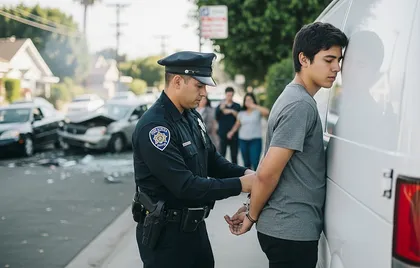
If you get involved in a California car accident caused by a negligent minor, you may have the right to file a civil claim against them. This process typically involves negotiating an insurance settlement that covers your injuries and losses. However, a minor may also face criminal responsibility if they broke local or state laws when they caused the crash.
Here’s a quick breakdown:
- Civil Liability — May apply if the victim can prove that the minor caused the crash by failing to act with reasonable care to avoid harm. The legal concept of “negligence per se” could also support your case if the minor violated the terms of their Graduated Driver Licensing (GDL) program, a staged licensing process that aims to help them build driving experience before they obtain full driving privileges. GDL restrictions include, for example, limits on cellphone use. If the minor caused the crash by violating GDL requirements, that violation could serve as proof of negligence.
- Criminal Responsibility — May apply when the minor’s actions are seen as harmful to the state or society. For example, a DUI may result in legal action and criminal penalties. However, the state pursues criminal cases, not the injured victim.
If the minor faces criminal responsibility, you don’t need to wait for a conviction to pursue a car accident claim or lawsuit against them. Both civil and criminal cases can proceed simultaneously. However, if convictions exist, you could use them as supporting evidence for your claim.
Situations Where Suing The Minor May Matter
Victims and their families may face financial and legal challenges when teen drivers cause car accidents. Though you can seek compensation for your losses through an insurance claim, you may consider suing if you sustained serious bodily harm or cannot reach a settlement with the at-fault party’s insurer. Legal action may also be necessary if the minor was intentionally reckless.
Below are a few situations where a lawsuit may matter:
- Severe Injuries — These often lead to high medical costs and lost wages. They can also significantly or permanently alter your quality of life. Examples of injuries you can sue for include:
- Severe burns, such as those that cause permanent disfigurement.
- Traumatic brain injuries (TBIs), which can lead to long-term cognitive issues.
- Spinal cord injuries, which may result in paralysis.
- Infections or crush injuries that lead to amputations.
- Fractures that significantly impact mobility and require long-term care.
- Failed Settlement Negotiations — Pursuing car accident claims involves demonstrating your losses to the at-fault party’s insurer. If it accepts your claim, it may offer a settlement. If you choose to negotiate but cannot agree on a new amount with the insurance company, you may file a lawsuit to continue seeking compensation.
- Intentionally Reckless Behavior — You may be eligible to seek additional compensation, known as punitive damages, in rare cases where the minor deliberately caused harm.
Parental Responsibility And Potential Liability
If a minor causes a car accident in California, you may also have the right to sue their parents. Through the concept of joint and several liability, they can share responsibility for your injuries. In some cases, vicarious liability may also hold parents accountable for their child’s actions.
Generally, parents are jointly and severally liable if their child causes a car crash because they have custody and control over that individual. However, they may be vicariously liable if their actions specifically contribute to a collision that results in injuries, fatalities, or property damage. For example, if they allow their teen to drive their car, and their child hits and injures another driver, vicarious liability may apply.
Other rules on parental liability and young drivers include:
- Negligent Entrustment — Parents allowed the teen driver to drive their car, despite knowing that their child is an inexperienced or reckless driver.
- The Law of Direct Liability — The parents’ own negligence makes them directly liable for an accident caused by their child. Victims must prove that:
- The parents were aware of their child’s inexperience or recklessness behind the wheel.
- They had the opportunity and ability to control or correct their child’s unsafe conduct.
- The parents did not use reasonable care to prevent that conduct.
- The victim suffered injuries and sustained actual losses due to their child’s actions.
Legal Exposure And Signed License Applications
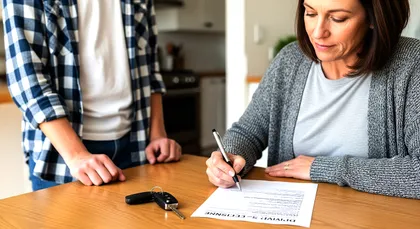
When parents or legal guardians sign their child’s driver’s license application, they accept financial responsibility for any accidents that child causes. The following are some possible losses parents may have to cover:
- Medical expenses, such as for emergency room visits and long-term treatments like chiropractic care.
- Property damage to your car and other personal belongings.
- Lost wages, if your injuries prevent you from working.
- Legal fees and court costs.
Parents can revoke their consent at any time and release themselves from this responsibility. To do so, they must submit a driver’s license cancellation request or surrender form. Accomplishing this task revokes the child’s driving privileges. Without the parents’ consent, the young driver can no longer operate a motor vehicle.
Revoking this consent allows parents to take precautions to shield themselves from liability if they worry about their child’s driving conduct.
How Comparative Negligence May Apply To These Cases
California’s comparative negligence rule may apply if multiple parties contribute to a crash. Under this rule, each liable individual or entity compensates the victim in proportion to the court-assigned share of fault.
In these cases, minors and their parents may not be the only parties you have a valid claim against. The following may also be liable for the car accident and your injuries:
- Another driver.
- Passengers.
- Pedestrians or cyclists.
- Manufacturers of faulty car parts.
- City or state agencies responsible for road maintenance.
Examples of scenarios where multiple parties may share fault are:
- Multi-vehicle accidents.
- The minor borrowed the car that caused the accident without permission.
- The minor was allowed to use their parents’ car, but let a friend drive it.
Notably, injured victims can also share liability for a crash. To illustrate, suppose a teen driver was speeding and rear-ended you. However, you were driving while distracted and only stopped at the last second for a traffic light, giving the minor less time to react.
Under the state’s comparative negligence rule, you can still seek damages, even if you are up to 99% at fault. However, your compensation can be reduced by their percentage of liability. For instance, the jury deems you, the injured victim, to be 20% at fault for the accident. In this case, the court may only award you 80% of the total damages you seek.
Insurance Coverage After Car Accidents Caused By Minors
California is an at-fault state. That means that, when pursuing compensation for your losses after a car accident caused by a minor, you typically file a claim with that minor’s insurer. In other words, you don’t seek damages from them or their parents directly.
A minor may carry their own auto policy or be covered by their parents’ insurance. Either way, liability coverage must provide at least:
- $30,000 for injury or death per person.
- $60,000 for injury or death per accident.
- $15,000 for property damage.
If the at-fault minor doesn’t have insurance and isn’t covered by their parents’ policy but was driving a family car, California’s permissive use law may apply. This rule states that, as soon as a minor receives consent to use that car, they become a “permissive driver.” That means they become eligible for “omnibus coverage,” or the same policy limits their parents carry.
Victims also have options for pursuing compensation, even if the minor or their parents carry insufficient or no insurance:
- Their Own Auto Policy — Injured victims can file a claim with their own insurer if their policy includes:
- Collision Coverage — Pays for the damage to your vehicle due to a car accident.
- MedPay — Covers urgent medical expenses, regardless of who caused the crash.
- Uninsured/Underinsured Motorist (UM/UIM) Coverage — Provides protection when another driver who lacks adequate insurance causes an accident.
- A Third Party — If multiple individuals or entities were involved in a car accident, victims may instead pursue compensation from their auto policies.
If these avenues aren’t available in your situation, filing a lawsuit may be an option. Legal action would allow you to seek damages from the at-fault minor directly.
What To Do After A Car Accident Caused By A Minor
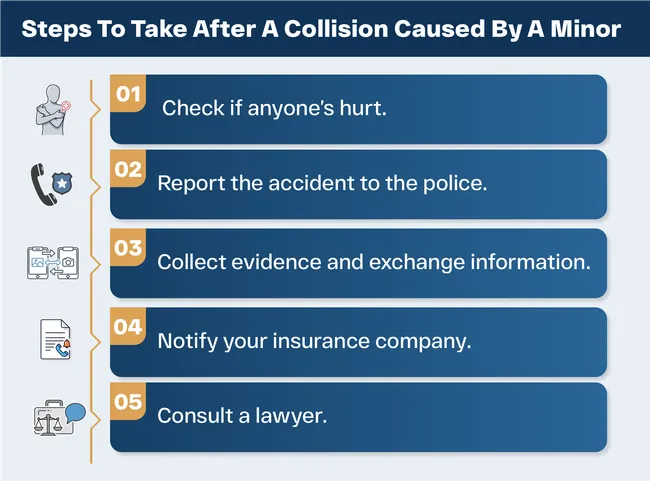
Here are some of the actions you can take to safeguard your interests in the event of an accident.
- Check for Injuries — Your priority should always be your safety and that of others involved. If anyone is hurt, call for immediate medical help.
- Call the Police — Reporting the accident to the police allows them to create an official report. This document is essential for insurance claims and potential legal action.
- Gather Evidence and the Minor Driver’s Information — Take pictures of any pertinent road signs or conditions, the vehicles, and any damage. Also, exchange information with the other driver, including their name, phone number, license plate, and insurance details.
- Notify Your Insurer — Your own coverage may be able to pay for urgent expenses as you pursue an injury claim or lawsuit. Your policy’s contract may also require you to report accidents, regardless of whether or not you caused a crash.
- Consult an Attorney — Car accident lawyers can explain how the at-fault driver being a minor may affect your rights and options after a collision. If you have a case, they can also help you pursue an insurance claim and file a lawsuit, if necessary.
Frequently Asked Questions (FAQs)
If the driver who caused your accident was a minor, you may be seeking free accident lawyer advice to clarify your next steps. You may share concerns with victims of similar accidents. Below are some answers to the common questions people ask in these situations.
What Happens If A Teen Driver Crashes A Parent’s Car?
Parents are potentially liable if their teen driver causes a crash. The principle of vicarious liability may apply if the teen driver caused harm while acting on their parents’ permission. In this case, parents may become responsible when:
- They allow their teen to use the vehicle.
- The teen lives in their household and regularly drives the car.
- The parents knowingly allow their teen with a record of unsafe driving to operate the car.
If a parent lists their teenager on their policy, it will usually cover the child driving the parent’s car, even if the parent isn’t with them. Legal problems may arise when the parent doesn’t list their child or excludes them from the policy to cut costs.
Can A Teenager’s Own Insurance Policy Cover My Damages After A Car Accident?
Yes, but only if they carry their own coverage. However, it may not be able to pay for all the damages you incurred in a crash. A teen applying for their own policy may end up buying a cheap one. It will likely have the lowest legally allowable coverage. In this case, you can check whether a family policy covers them. You can also ask an attorney if vicarious or permissive use liability applies. If they do, you may be able to seek compensation from their parents’ insurance.
Are There Limits On Damages When Suing For Teen Driver Accidents?
If you’re suing a teen driver for a car accident and their parents are vicariously liable for your losses, the law may place specific monetary caps on the damages you can pursue. If the crash resulted in an injury or fatality, you can only seek up to $25,000 in medical expenses from the parents themselves. Meanwhile, their insurers may only pay up to $10,000 in losses.
What If The Teen Driver Were Uninsured?
Uninsured motorist (UM) coverage could pay for your damages if the teen driver is uninsured. However, note that this coverage is optional in California. Though insurers are required to offer it when you’re shopping for a policy, you can waive it in writing.
Seek Legal Help If A Minor Driver Injured You
Car accidents caused by minors can be just as severe as those caused by adult drivers. If you get injured in such a crash, you may face physical and financial challenges. If you’re unsure about whether you can sue them and pursue compensation for your losses, you may be thinking, “I need a personal injury lawyer.”
The car accident lawyers at Arash Law can help. We can assist with filing an insurance claim and negotiating with insurers on your behalf. If negotiations fail, we can tell you if you can sue the at-fault minor for the car accident, help you file a lawsuit, and represent you in court if necessary.
If you’re wondering about the costs of these services, you might be asking, “Do lawyers only get paid if they win?” Our lawyers work on a contingency fee basis, so we only charge legal fees if we successfully win your case.
Call AK Law at (888) 488-1391 for a free case review.