TL;DR: You can claim for a car accident without a police report because the report does not create your right to compensation. Injured drivers can still pursue insurance or lawsuit claims, but they must prove fault and damages with photos, medical records, and witness evidence or risk denial of payment.
Highlights:
- Photograph the scene, vehicles, road signs, and visible injuries from multiple angles.
- Exchange and record names, contact info, insurance, plates, and vehicle owner details.
- Get witness names and numbers, and ask for a short written statement.
- Request dashcam, business, or traffic footage before it’s overwritten or deleted.
- Get medical care promptly and keep every record, bill, and treatment note.
- Notify your insurer promptly and save copies of all claim communications.
- Report injury/death crashes within 24 hours; file DMV SR-1 within 10 days if injury/death or $1,000+ damage.
Tip: Save original files (no edits), and describe what you saw and did in time order without guessing.
Table of Contents
Yes. You can still file a car accident claim without a police report. A police report is not what gives you the right to seek compensation. It primarily provides the adjuster in an insurance claim with an early third-party record of the crash. It may help show when and where the collision happened, who was involved, and what the responding officer observed.
Insurers investigate claims by gathering information, contacting drivers and witnesses, and reviewing documents that support the loss. A police report can help with that process, but it is only one piece of the claim.
It may still matter in an insurance claim, but in a lawsuit, it is generally considered hearsay. That means it is an out-of-court statement offered to prove what happened, and hearsay is usually not admissible unless an exception applies. For that reason, a police report is not automatically accepted as trial evidence just because it exists. Sometimes, part of a report may fall within a hearsay exception, such as the official-records rule, but that is a separate evidentiary issue the court must decide.
If there is no police report, the claim may still move forward. You may need other evidence to show how the crash happened, who was at fault, and how the accident affected you. That can include photos, videos, witness statements, vehicle damage, medical records, and other documents that support your claim.
How Do You Prove Injury And Damages Without A Police Report?
With or without a police report, you have to gather evidence to support your claim. Well-organized documentation can shape how insurance companies or courts see your case. It helps prove the link between the accident and your injuries or damages.
Helpful types of evidence include:
- Photos and videos of the accident scene, vehicles, and injuries.
- Dashcam or traffic camera footage.
- Business surveillance videos.
- Witness statements or interviews.
- Repair estimates and bills.
- Medical records and invoices from emergency care, urgent care, primary care, chiropractic visits, physical therapy, radiology, or follow-ups.
- Time-stamped phone photos or text messages.
- Rideshare or navigation app timestamps.
- Your own written notes or account of the accident.
While a police report is useful, it is just one part of the overall evidence picture. Car accident lawyers can use organized documentation to help prove fault and support your personal injury claim.
What To Do If There Is No Police Report For Your Car Accident Claim
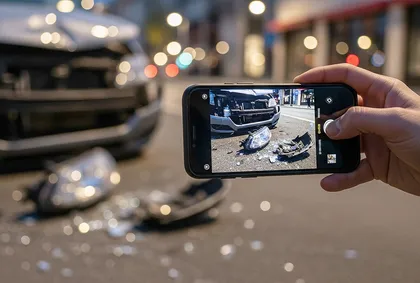
If there is no police report, focus on building a clear record of the crash and your losses. A missing report does not automatically prevent a claim, but it makes other documentation more important. The goal is to preserve evidence that shows how the collision happened, who may be responsible, and how the accident affected you.
Helpful steps include:
- Save all photos, videos, and messages related to the crash.
- Gather the other driver’s name, insurance information, and vehicle details if you have not already done so.
- Ask witnesses for written statements or contact information.
- Request any business, residential, dashcam, or traffic camera footage before it is deleted.
- Seek medical care as soon as possible if you have pain or other symptoms, and keep all records and bills.
- Keep repair estimates, towing records, rental receipts, and other proof of property damage.
- Notify your insurance company promptly and keep copies of all claim communications.
- Complete any required California reporting, including a DMV SR-1 report when the accident caused injury, death, or more than $1,000 in property damage.
These steps can help fill the gap left by a missing police report. They also make it easier to support your version of events during the car accident claim process.
Insurance claims without a police report may be more difficult to prove when there is little other evidence to show what happened. Car accident lawyers may need additional evidence to establish the sequence of events and clearly prove liability.
What Types Of Claims May Apply After A Car Accident?
The types of claims that may apply after a car accident depend on who caused the crash, the available insurance coverage, and the losses involved. A police report may help document the incident, but it does not create the claim or determine whether compensation is available. Even without a report, you may still have one or more paths to seek recovery if the facts and supporting evidence justify it.
Here are some possible claim options:
- Liability Claim: You may file a claim against the at-fault driver’s insurance for losses caused by the crash. This may include medical bills, lost income, property damage, and other related damages.
- Medical Payments (MedPay) Claim: If your auto policy includes MedPay coverage, you may use it to help pay medical expenses after the accident, regardless of who caused the crash.
- Uninsured/Underinsured Motorist (UM/UIM) Claim: If the other driver has no insurance or not enough coverage to fully pay for your losses, your own UM/UIM coverage may apply, depending on your policy.
The car accident claim process can become more document-heavy when no police report exists, as insurers may rely more on other evidence to evaluate fault and damages. In that situation, records such as photos, witness statements, medical records, repair estimates, and other supporting documents may carry more weight.
Many victims consider seeking free advice from a car accident lawyer to review the facts, explain which claim paths may apply, and help them understand their next steps.
Reporting Deadlines After A Car Accident
These deadlines apply even if no police report was made at the scene.
| Requirement | Who Must Act | Deadline | Where It Goes |
|---|---|---|---|
| Report injury or death to law enforcement. | Driver involved in the crash | Within 24 hours | CHP, local police, or sheriff with jurisdiction |
| File SR-1 with the DMV if the crash caused injury, death, or more than $1,000 in property damage. | Driver involved in the crash | Within 10 days | California DMV |
| Notify your insurance company. | Policyholder or claimant under the policy | Promptly or as soon as practicable, depending on the policy | Insurance company |
After a car accident in California, several deadlines may apply. If the crash caused injury or death, drivers generally must report it to law enforcement within 24 hours. They also usually must file an SR-1 with the DMV within 10 days if anyone was hurt or killed, or if property damage exceeded $1,000. Drivers should also notify their insurance company promptly, as policy terms often require prompt notice.
Claim And Lawsuit Deadlines That May Apply
These deadlines affect how long you may have to pursue compensation.
| Claim Type | Typical Deadline | Where It Is Filed | Legal Basis |
|---|---|---|---|
| Personal injury lawsuit | Generally 2 years from the accident | Court | CCP § 335.1 |
| Property damage lawsuit | Generally 3 years | Court | CCP § 338(c) |
| Government claims against a public entity | Generally 6 months | Relevant government agency first | Gov. Code § 911.2 |
In most California car accident cases, you generally have 2 years to file an injury lawsuit and 3 years to file a property damage lawsuit. If a city, county, or other public agency may be responsible, you usually must first file a government claim within 6 months.
Car accident claims lawyers can analyze the specifics of a case and determine what possible deadlines may apply.
Who May Be Responsible For The Crash?
In some cases, responsibility is clear. In others, it is not. According to California courts, injury cases often involve claims against the person who caused the injury, the owner of the car or property, or an employer if the person was working at the time.
In a car crash, different parties can be liable. These include:
- Other Drivers: If they acted negligently and caused the accident, through speeding, distracted driving, or tailgating, for example.
- Vehicle Owners: The law may sometimes hold them responsible, especially if they allowed someone unsafe or unlicensed to drive.
- Driver Employers: If the at-fault driver was working at the time of the crash, their employer may also be liable. This usually applies to commercial drivers or employees driving for work.
- Public Entities: You may have a claim if a city, county, or state agency played a role, such as when unsafe road conditions or poorly maintained structures contributed to the crash.
Situations Where A Crash May Not Get An On-Scene Police Report
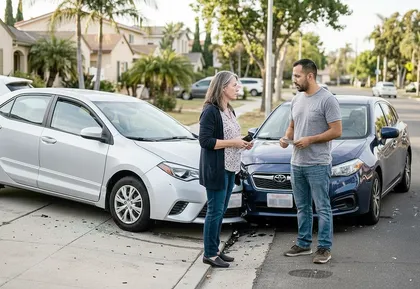
Not every crash gets an officer at the scene. Police may not respond to every accident and may consider the severity and location, including whether the collision happened on private property.
An accident may end up without a police report if:
- It is a minor accident.
- The accident occurred on private property, such as a driveway or a parking lot.
- All drivers involved are cooperative and properly insured.
- The damages from the accident are under the reporting threshold.
Still, do not assume a minor-looking collision stays minor. Injuries can surface later, and property damage can exceed the reporting threshold once repair estimates are available. While a police report helps, it is still possible to make a claim without one.
Why A Police Report Still Helps
A police report is not everything, but it is still useful. It can create an official record of the crash, identify the investigating agency, and preserve statements and scene details. This record can prevent parties from changing their account of what happened. It also provides insurance companies with essential proof, such as witness statements and officer observations, to process claims fairly.
FAQs About Filing A Car Crash Claim Without A Police Report
If you are dealing with a missing report, you may have legal concerns about filing a claim after an accident. Below are some answers to common legal questions about these cases.
How Can You Get A Police Report Later, And What If There Isn’t One?
You can get a police or CHP report later by calling the agency that handled the accident and asking how to request a copy. You can also check CHP’s official guide for requesting a report. If there isn’t a report, collect your own evidence, such as photos, medical records, repair bills, and witness statements. You can try to get footage from any nearby businesses or traffic cameras, if available. This helps ensure you have proof for insurance or legal purposes.
Can You Sue If There Is No Police Report?
Yes, you can still file a personal injury claim for a car accident. A missing report does not automatically block a lawsuit. You still have to prove fault, injury, and damages with other evidence, and you still have to file within the legal deadline. In other words, the report is helpful evidence, not the only doorway into court.
What If The Police Never Came To The Scene?
Start building the record yourself. Get names, insurance details, vehicle information, photos, witness contacts, and medical care right away. Then complete any required law enforcement report or California DMV filing. Do not assume that the absence of an on-scene officer excuses compliance with the reporting rules. It does not.
What Happens If You Don’t Report An Accident To The DMV In California?
If you don’t report an accident in California, the DMV could suspend your driving privileges, and you might face legal consequences depending on the circumstances. For serious accidents, failing to report can lead to legal trouble and increased penalties.
How Long Does It Take To Settle A Car Accident Claim In California?
The time it takes to settle a car accident claim in California isn’t the same for everyone. It depends on factors such as the severity of the accident, the complexity of the case, and whether the parties involved are ready to negotiate. A car accident lawyer can assess the available details of the case and provide an approximate timeline.
When Do I Need A Personal Injury Lawyer?
Consider consulting a lawyer early if your injuries are serious, there are fault disputes, multiple individuals or businesses are involved, a public agency is at fault, or the insurer is pushing back because a police report is missing. Legal guidance is particularly important in cases involving significant damages or complex liability.
How Much Do Lawyers Charge For Car Accident Cases In California?
The cost depends on the complexity of the case and the law firm’s fee structure. When there is no police report, car accident attorneys may need to gather extra evidence to support the claim, which can affect the overall fees.
However, if your concern is, “Do lawyers only get paid if they win?” Some injury law firms, like Arash Law, work on a contingency fee basis. Under this arrangement, they only receive attorney’s fees if they obtain compensation on your behalf.
Get Legal Help After A Car Accident Case Without A Police Report
Insurers don’t automatically deny a claim just because there’s no police report. However, it makes everything else more important. These include reporting promptly, taking photos of the accident scene, collecting witness information, keeping medical treatment records, and maintaining a clear timeline.
If an insurer disputes your claim due to a missing police report or you’re not sure what to do next, our car accident lawyers at AK Law can help. We analyze evidence, explain your options, and identify important deadlines. Call us at (888) 488-1391 to schedule a free case review.