TL;DR: If you’re injured on a roller coaster, seek medical care immediately and preserve evidence. You may pursue compensation if the park, ride operator, or manufacturer was negligent. Injuries can range from mild to severe, and proper documentation is essential for your claim.
Highlights:
- Report the incident immediately and ask for the report number.
- Photograph restraints, warning signs, platform conditions, and visible injuries.
- Get witness names and contact details before they leave.
- Save your ticket, wristband, receipt, and app purchase record.
- Watch for delayed symptoms like headaches, dizziness, nausea, or neck stiffness.
- Keep emails, messages, and follow-up notes from the park.
- Track the filing deadline – usually two years in California.
Tip: When speaking with park staff or insurers, stick to
Table of Contents
If you get hurt on a roller coaster, get medical care right away. Report the incident to the park and preserve as much evidence as you can. In California, you may pursue compensation if the park, ride operator, maintenance company, or manufacturer failed to keep the ride reasonably safe.
It’s natural for parkgoers to occasionally get bruised or scratched, or experience a headache, due to the intense forces of amusement park rides. However, unsafe conditions can cause serious head injuries, spinal cord damage, and other severe injuries.
When you get hurt, the ride operator or park management may respond in different ways. They may stop the ride, assist you on site, or take you to the nearest hospital. What you do next can affect both your health and your case. Photos, witness information, incident reports, and medical records can help show what happened, who may be at fault, and how badly you were hurt.
What Should I Do If I Am Injured On A Roller Coaster?
Start with your health. If you cannot move safely, stay where you are unless there is an immediate danger. Let emergency responders help. Even if you feel okay, get checked as soon as possible. Concussion symptoms and neck injuries may not appear right away.
From here, take these steps:
- Report the Incident: Notify the park staff or management about the accident. Ask for an incident report number or a copy of this document.
- Document the Scene: Gather any visual proof that can support your claim. Return to the amusement park ride where you got injured and take photos of:
- The ride itself
- Restraint systems
- Warning signs
- Loading area
- Visible injuries
- Get Witness Information: Some witnesses can be tourists or from another city or state. Make sure to get their contact details before they leave. If you were unable to do so immediately, you can get in touch with any ride operators or amusement park staff who were working at the time.
- Preserve Evidence: Save proof that you were on the ride. Keep your ticket, wristband, receipt, app purchase record, and damaged personal items.
- Know Your Situation: Take time to understand your injuries and the situation before sharing detailed information with insurance adjusters.
Why Does Medical Care Matter After A Roller Coaster Injury?
Proper documentation helps with the injury claims process. Medical records, specifically, connect the injury to the cause. This documentation is important in case the at-fault party’s insurer questions whether the ride, a preexisting condition, or another factor caused your symptoms. It can also justify any medical costs related to your roller coaster injury.
Proper medical documentation matters because it:
- Proves the Injury Is Ride-Related: Medical documentation may be consistent with injuries sustained on the roller coaster and may show a possible link to the ride.
- Captures the Full Extent of the Injury: Care from specialists or imaging can reveal the injury’s severity and scope.
- Creates an Accurate Timeline: Records show when symptoms started and which body parts were affected.
- Identifies Delayed or Hidden Symptoms: Some injuries, like concussions or whiplash, may appear later and need proper evaluation. Symptoms you shouldn’t ignore include:
- Headaches
- Dizziness
- Blurred vision
- Neck stiffness
- Nausea
Get a medical evaluation of your injury. Go to an emergency room, an urgent care center, your primary care physician, or a specialist. Follow-up treatment may include imaging, neurology, orthopedics, physical therapy, or chiropractic care. Amusement park accident attorneys can use your medical records to substantiate the losses you incurred due to the incident.
Useful Evidence For A Roller Coaster Injury Claim
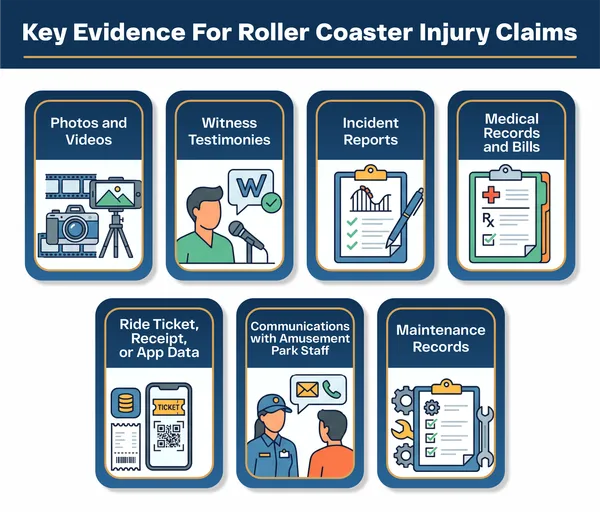
After a roller coaster injury, gathering strong evidence is crucial. The right proof can show what happened during the ride. It can help identify who was responsible for amusement park safety and highlight how the injury affects your health and daily life.
Useful proof may include:
- Visual Evidence: Photos and videos of the ride, restraints, platform, and warning signs show ride conditions, safety measures, and possible hazards.
- Witness Statements: Their testimonies can support your account of what happened.
- Incident Reports: These provide an official record of the injury and the park’s initial response.
- Medical Records & Bills: These document the severity of your injuries and the treatment required.
- Ride Ticket, Receipt, or App Data: These can confirm your presence on the ride and the timing of the incident.
- Park Communications & Follow-up Emails: These show interactions with staff and any acknowledgment of the incident.
- Surveillance Footage & Maintenance Records: These can clearly illustrate how the ride was operating and its condition at the time of the incident. Amusement park accident attorneys can formally request that the park preserve these records.
In California, permanent and temporary roller coasters are regulated by Cal/OSHA’s Amusement Ride and Tramway Unit (ART). Operators of amusement rides must report serious injuries to the agency and preserve the accident scene in certain cases. Copies of these reports can help support your claim. However, you should still preserve your own evidence because your claim will depend on proof.
Inspection schedules can vary depending on the type of roller coaster you were injured on. Permanent rides, usually at amusement parks, have yearly permits and in-house inspectors. Meanwhile, temporary rides at fairs require inspections for each event. Knowing these differences is important for preserving evidence. Inspection records and permits can document safety compliance or violations after an accident.
What Legal Claims Can Follow A Roller Coaster Injury?
When a roller coaster injury occurs, several types of legal claims may arise depending on the cause. Victims can get hurt at a theme park due to a ride malfunction, operator error, inadequate warnings, or unsafe conditions. Understanding the legal claims arising from these incidents can help you clarify your legal rights after injury and the responsibilities of park-and-ride operators.
Negligence Claim
A negligence claim arises when someone fails to use reasonable care to avoid harm, resulting in your injuries and losses. Railroads and buses are classified as “carriers of persons for reward” under California Civil Code Section 2100. Roller coasters fall into the same category. Under this law, operators must exercise the highest level of care to ensure passenger safety.
A park operator or management can be negligent if they:
- Fail to properly operate the roller coaster controls or dispatch system.
- Allow riders to board without sufficiently securing their restraints.
- Skip routine inspections of tracks, cars, or safety harnesses.
- Ignore mechanical issues or malfunctions that could cause accidents.
- Fail to warn riders of roller coaster risks or health restrictions.
- Don’t provide adequate staff supervision on platforms or during loading/unloading.
Premises Liability Claim
Premises liability is a property-based negligence claim. It applies when the danger involves the boarding area, exit platform, stairways, barriers, crowd control, or warning signs on the property.
Under California’s premises liability law, property owners are responsible for keeping their premises reasonably safe and warning visitors of any known dangers.
Product Liability Claim
A product liability claim arising from a roller coaster accident focuses on malfunctioning ride components or unsafe designs. In these cases, there is no need to prove negligence. It is enough to show that a roller coaster was defective and caused the injury.
At an amusement park, these claims can involve faulty:
- Restraint systems
- Lap bars
- Harnesses
- Doors
- Track designs
These claims can target the ride manufacturer and, in some cases, other companies involved in producing or distributing the ride. Product liability lawyers can work with industry experts to determine if the design flaw contributed to the victim’s injuries.
Who May Be Liable For A Roller Coaster Accident?
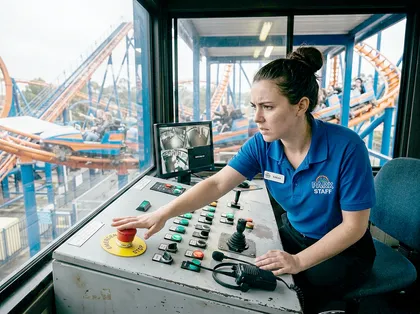
A roller coaster accident may involve multiple people, all of whom may be liable for the injuries. Liability can go beyond the park itself to include ride operators, maintenance firms, or manufacturers. Knowing who is accountable helps you understand your legal options for compensation for your injuries.
- The Amusement Park or Ride Operator: The park may be responsible for unsafe operations, poor training, insufficient staffing, poor emergency response, or failure to address a known problem.
- Amusement Park Employees: If an employee operated the ride carelessly or ignored a safety procedure, the employer may also be legally responsible.
- Maintenance or Inspection Contractors: An outside company may share fault if it handled repair, inspection, or maintenance carelessly.
- Product Manufacturer: A manufacturer may face a product liability claim if the ride or restraint system had a dangerous design, a manufacturing defect, or inadequate warnings.
- Another Guest: A guest may share fault in a smaller group of cases, such as interference with the ride, unsafe conduct in the loading area, or intentional misconduct.
To file a claim, you’ll need to know which party would be legally responsible for the injury. However, certain cases can be complicated, especially if either a manufacturing defect or maintenance negligence causes the accident. In these instances, victims often seek free advice from an amusement park accident lawyer to identify the potentially liable party.
What Injuries Can Happen After A Roller Coaster Incident?
Roller coaster accidents may occur due to mechanical problems, human error, or safety issues. These incidents can lead to different kinds of injuries, some mild and others very serious, affecting both children and adults. The injuries a person may sustain depend on the type of accident.
Some of these injuries include:
- Head & Neck Injuries: High-speed rides can cause riders to hit their heads or sustain whiplash, which may lead to brain damage or chronic pain.
- Spinal Cord Injuries: Strong impacts during rides can damage the spinal cord and may lead to paralysis.
- Broken Bones: Mechanical issues can cause riders to fall or get thrown about. These incidents can result in fractures in the arms, legs, or ribs.
- Internal Injuries: Sudden crashes can cause internal bleeding or damage to important organs, even if there are no visible injuries.
- Burns & Electrical Shocks: If a ride breaks down or catches fire, victims may sustain burns or electrical shock injuries.
In some cases, victims may also experience emotional trauma after such events. Children can be especially vulnerable because they may not fully understand what happened and feel more fear or anxiety after the incident. Amusement park accident lawyers consider these intangible losses in assessing the potential value of a claim.
What Compensation May A Roller Coaster Injury Claim Include?
A person may claim damages after suffering injuries in a roller coaster accident. A claim can include economic and non-economic damages. This compensation aims to reimburse the victim for all losses and help them recover after an injury.
Economic damages may include the following:
- Medical Bills: These can include costs related to hospital stays and follow-up care.
- Lost Wages: Victims can recover compensation for wages lost due to time away from work.
- Lost Future Income: If injuries cause permanent disability, victims can seek damages for reduced earning capacity.
- Out-of-Pocket Costs: These are miscellaneous expenses related to treatment or recovery. Examples include in-home care, transportation costs, and home modifications if your injuries result in disability.
Non-economic damages may include:
- Pain and suffering
- Emotional distress
- Loss of enjoyment of life
How Long Do You Have To File A Roller Coaster Injury Claim In California?
For most California personal injury cases, the deadline to file a lawsuit is two years from the date of injury. This time limit, known as the statute of limitations, is important to comply with. If you miss it, you may lose your right to seek compensation.
There are, however, a few exceptions to the statute of limitations:
- If the victim is a minor, the two-year deadline begins when they turn 18. Before that time, a parent or legal guardian may file a claim on their behalf.
- Some roller coaster injuries may not appear right after the ride. If a victim discovers the injury later, the deadline may change. It starts from the date the injury was discovered or reasonably should have been discovered.
- If a public entity is involved, the deadline may be much shorter. Victims must file an administrative claim within six months. If the government agency denies the claim in writing, you then have another six months to file a lawsuit.
Frequently Asked Questions About Roller Coaster Accident Cases
Below are some common questions victims may have after roller coaster accidents. If you have any specific concerns, consider consulting a legal professional.
Can I Still Sue If I Signed A Waiver?
Liability waivers do not automatically prevent one from suing another party. Typically, waivers are intended to cover ordinary negligence. These include minor mistakes or accidents that occur despite following standard safety procedures.
However, whether a waiver is enforceable depends on its specific wording and the facts of the case. It cannot shield an amusement park in instances of gross negligence or intentional misconduct. California law also prohibits contracts that excuse willful injury or fraud.
For example, you may still have a case despite signing a waiver if:
- The park ignored a known danger.
- The actions went beyond ordinary carelessness.
Ultimately, a waiver does not guarantee an automatic win for either side.
What If My Symptoms Started Hours Or Days Later?
You may still have a claim. Some roller coaster injuries, including concussion-related symptoms and whiplash-type pain, may not appear right away. Get checked as soon as symptoms appear, and tell the provider which ride you were on, what happened, and when the symptoms began.
What If Several People Were Hurt On The Same Ride?
Each injured person may have their own claim, even if the same malfunction or operator error hurt several riders. A multi-injury event may help show that something went wrong. However, each person still needs proof of their own injuries and losses.
Do I Need A Personal Injury Lawyer For A Roller Coaster Injury Claim?
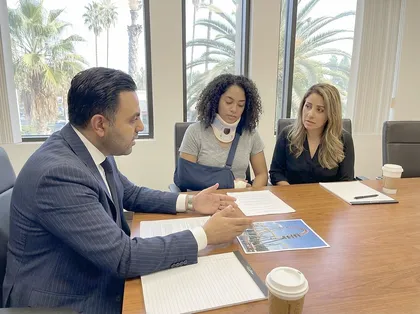
Hiring one offers advantages. Early legal support can make a difference in these cases. Roller coaster claims may involve waiver language, maintenance records, park procedures, manufacturers, and multiple defendants. An amusement park accident attorney can also help preserve evidence, deal with insurers, and identify the right legal theory that applies to your case.
Do Lawyers Only Get Paid If They Win?
Not always, but many injury law firms work on a contingency fee basis. That means they only get paid for their services if the case succeeds. Before signing anything, ask how fees, case costs, and medical liens may affect your share of any recovery.
Call Arash Law After A Roller Coaster Injury
If you get hurt on a roller coaster, what happens next depends on what you do right away, what evidence exists, who caused the incident, and whether you act before the deadline that applies to your case.
If you or a loved one suffered a roller coaster injury, AK Law can review the facts, explain your options, and help you understand your next steps. Call us at (888) 488-1391 to schedule a free initial consultation.