TL;DR: Evidence for a personal injury case in El Cajon includes photos, names, police reports, medical records, plus wage documents that prove fault, injury, or loss. Without this proof or if you miss California’s 2-year filing deadline, you can lose payment for ER bills, surgery, and missed paychecks.
Highlights:
- Photograph the scene, hazards, injuries, vehicles, signals, skid marks, and debris.
- Collect names, contact details, and insurance information for everyone involved.
- Ask nearby businesses or Connect El Cajon registrants to preserve any video.
- Request the police report from the El Cajon Police Records Unit promptly.
- Get medical care quickly and save ER, imaging, and treatment records.
- Document lost income with pay stubs, employer letters, tax forms, or bank deposits.
- Calendar California’s 2-year lawsuit deadline and the 6-month government claim deadline.
Tip: Keep originals and backups of everything, and when speaking with insurers, stick to facts and avoid guessing.
Table of Contents

The type of evidence you need to gather after an accident depends mainly on the type of accident you were in. For purposes of this page, common evidence is organized into five practical categories: official reports, electronic and digital information, medical documentation, witness evidence, and photographs or scene documentation. In many accident-based cases, the evidence is used to determine whether another party’s negligence or other legally recognized wrongful conduct caused the injury.
The strength of your personal injury claim depends almost entirely on the evidence you gather and how fast you move to preserve it. In El Cajon, that means acting quickly with specific local agencies, knowing which records to request and from whom, and understanding how the San Diego Superior Court evaluates civil cases arising from incidents in El Cajon.
El Cajon sits within San Diego County’s east region, and the California Office of Traffic Safety (OTS) lists El Cajon as a selectable jurisdiction in its annual crash-rankings tool — meaning city-level collision data for El Cajon is independently tracked and publicly verifiable. That local record matters when your attorney argues that a dangerous roadway condition, a reckless driver, or a negligent property owner caused your injury. Evidence tied to specific El Cajon streets and agencies is harder for a defense team to minimize than generic county-wide statistics.
Traffic injury cases in particular involve multiple categories of perishable evidence — dashcam footage that auto-overwrites within a short period of time, Event Data Recorder (EDR) data that can be erased in a subsequent crash, and witness memories that fade within days. Under California Code of Civil Procedure (CCP) § 335.1, you generally have two years from the date of injury to file suit, but the evidence window closes far sooner.
The Short Version: Five Evidence Categories That Determine Your Case
“Many accident-based personal injury cases turn on whether you can prove that another party’s negligence or another legally recognized form of wrongful conduct caused your injury. These are the five evidence categories that answer that question most directly.
- The Official Collision Report: The El Cajon Police Department, located at 100 Civic Center Way, issues Traffic Collision Reports (TCRs) for crashes that occur within city limits. If the collision occurred on a state freeway, request the report from the California Highway Patrol (CHP).
- Electronic and Digital Evidence: Most modern vehicles store speed, braking, and steering data in an Event Data Recorder (EDR), sometimes called a “black box.” Dashcams or surveillance cameras along El Cajon corridors may overwrite footage automatically within 24 to 72 hours. Your attorney must act immediately to preserve both EDR data and video before either is lost.
- Medical Records and Treatment Timeline: Every diagnosis, imaging result, emergency room visit, and follow-up appointment creates a documented link between the incident and your injuries. Gaps in treatment are one of the first things insurers use to challenge the severity of a claim.
- Witness Information and Statements: Bystanders and other drivers who saw the crash can provide signed declarations. The El Cajon Police Department takes initial witness statements at the scene, but those statements belong to the department’s records — your attorney needs to conduct independent interviews to get usable declarations for litigation.
- Photographs and Scene Documentation: The physical scene changes the moment emergency responders arrive: road debris gets cleared, skid marks fade, and vehicle positions shift. Photographs taken before vehicles are moved capture the geometry of the collision that no later record can replace.
The evidence window for your El Cajon case is already closing. Call Arash Law now at (888) 488-1391 to start preserving what matters most.
Why The Evidence You Gather Locally Shapes Your Claim’s Value
Location-specific evidence may be especially relevant because it directly relates to the incident site, but its weight depends on admissibility, reliability, and the facts of the case. In a public-property claim, liability may be based on a public employee’s creation of the dangerous condition or on the entity’s actual or constructive notice. Prior-crash data may support an investigation, but it does not by itself prove notice, negligence, or a dangerous condition.
-
It corroborates instead of just asserting. A collision report from the El Cajon Police Department, records from a local emergency department, and photos of the actual intersection all point to the same facts, each from a separate source.
A Traffic Collision Report can be an important starting point for investigation because it may identify parties, witnesses, locations, and other evidence. However, the report itself is not automatically admissible at trial, and California Vehicle Code § 20013 restricts the use of covered accident reports as evidence.
- It supports the legal standard for “notice.” If your case argues that a location was dangerous, California law generally requires showing that the responsible party knew or should have known of the hazard. County-wide statistics don’t prove that. A location-specific query on the Transportation Injury Mapping System (TIMS) — searched by the exact intersection, not just El Cajon generally — can show whether a pattern existed there.
- It matches how the case gets evaluated. Personal injury litigation arising in El Cajon is generally filed through the San Diego Superior Court’s Central Division Civil Business Office at the Hall of Justice. Evidence already anchored to El Cajon’s specific streets, agencies, and addresses requires less explanation to a judge or jury than evidence generalized from statewide data.
The Official Collision Report: Your Starting Point
A Traffic Collision Report (TCR) prepared by the El Cajon Police Department is the foundational document in almost every motor vehicle injury case. It records responding officers’ observations, witness contact information gathered at the scene, party statements, preliminary fault notations, and — critically — the location data that ties the crash to a specific El Cajon address or intersection.
You or your attorney can request the TCR through the El Cajon Police Department at 100 Civic Center Way, El Cajon, CA 92020. You or your attorney may request the TCR from the El Cajon Police Department if you qualify as a person with a proper interest under California Vehicle Code § 20012 and satisfy the department’s identification and authorization requirements. Reports may be restricted or temporarily unavailable while an investigation remains active.
The department’s records division processes these requests. Your attorney can submit the request on your behalf and obtain the full report, which may contain details that the at-fault driver’s insurer has already reviewed.
One important nuance: the TCR reflects the responding officers’ initial assessment, not a final legal determination of fault. If you believe the report contains an error — for instance, an inaccurate description of the point of impact or an omitted witness — your attorney can gather independent evidence to supplement or challenge that record in the civil case.
Electronic And Digital Evidence: What Disappears Fastest
The most powerful technical evidence in an El Cajon traffic injury case is also the most fragile. Event Data Recorder (EDR) data — the vehicle equivalent of an aircraft flight recorder — captures speed, braking force, throttle position, and seatbelt status in the seconds before impact. EDR data should be preserved before the vehicle is repaired, salvaged, transferred, destroyed, or involved in another collision. Moving the vehicle does not, by itself, erase the data. Federal rules require qualifying deployment-event data to be locked, although some non-deployment event data may be overwritten by a later event.
An attorney may promptly send targeted preservation notices to people or entities that possess or control relevant evidence. A preservation notice requests that the evidence be retained but does not itself compel access.
Retrieving EDR data from another person’s vehicle generally requires the registered owner’s consent, a court order, or another exception recognized by California Vehicle Code § 9951. Acting immediately gives your attorney the legal basis to compel preservation before the evidence is gone.
Video footage from commercial surveillance cameras, residential doorbell cameras, and dashcams follows a similar urgency curve. Video retention periods vary widely. Some systems overwrite footage quickly, while others retain it for days, weeks, or longer, and some traffic-monitoring cameras may not record footage at all. Contact potential custodians and send preservation requests as soon as possible.
Medical Evidence: Building The Link Between Injury And Incident
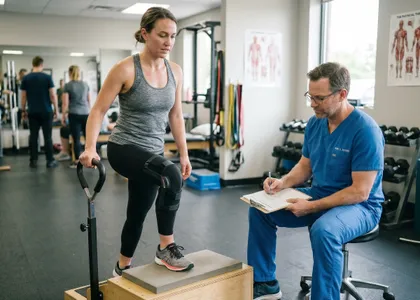
Your medical records are not just documentation of pain — they are the evidentiary chain that connects the incident to your injuries, the injuries to your treatment costs, and your treatment costs to the potential compensation for your losses. Every record in that chain strengthens your claim; every gap weakens it.
Seek emergency treatment or a medical evaluation as soon as possible after the incident, even if your symptoms seem manageable. Some injuries — including traumatic brain injuries, soft-tissue damage, and internal injuries — do not produce severe symptoms immediately. A gap between the incident date and your first medical visit gives an insurer a basis to argue the injury was not caused by the crash. Documentation should include emergency department records, imaging results (X-rays, MRIs, CT scans), specialist referral notes, physical therapy records, and any prescription history tied to the injury.
Keep personal records alongside the official ones. A daily injury journal — noting pain levels, mobility limitations, missed work, and how your injuries affect your ordinary activities — gives your attorney concrete, date-specific material to present as part of a damages claim. These notes are not a substitute for medical documentation, but they add dimension and credibility to your account.
Witness Evidence: Gathering And Preserving Statements
People who witnessed your crash can provide testimony that no physical record can replace. A credible eyewitness who saw the other driver run a red light, fail to yield, or drive recklessly can make the difference between a disputed liability case and a clear one.
The El Cajon Police Department takes initial witness statements at the scene as part of the TCR process, and those statements appear in the official report. However, the statements in a police report are the department’s record — not your witness’s signed declaration. Your attorney needs to conduct independent interviews with any witnesses, obtain signed statements, and, in some cases, depose a witness before their recollection fades or they become unavailable.
Time is the main obstacle to witnessing evidence. Memories degrade within days, especially in high-stress events where bystanders observe only a few seconds of action. Contact information collected at the scene — names, phone numbers, and any relevant bystander video — should be documented before you leave the location if your condition allows. Your attorney can follow up promptly to secure formal declarations.
Photographs And Scene Documentation: What To Capture Before It Changes
The physical scene of a crash begins changing the moment emergency responders arrive. Road debris gets cleared, skid marks fade with rain or traffic wear, and the vehicle positions that establish the geometry of the collision are documented only by photographs taken before the vehicles are moved.
If your condition allows you to act safely, photograph or video the following at the scene:
- All four sides of every vehicle involved
- The point of impact
- Road markings and traffic control signs
- Any visible road defects (potholes, faded lane markings, missing signage)
- The weather and lighting conditions
- Any injuries visible on your body
Take wide shots to establish context and close-up shots to capture detail. If a bystander recorded the crash, ask for a copy or, at a minimum, their contact information before leaving.
After the scene, return when you are able — ideally within 24 hours — to photograph the location in daylight and note any conditions that may have contributed to the crash. Road defects, obstructed sightlines, and missing traffic control infrastructure are all potential evidence of a dangerous condition that goes beyond the immediate actions of the at-fault driver.
The Evidence Map: What To Gather, Who Holds It, And How Long You Have
The table below maps the primary evidence categories in an El Cajon personal injury case to their custodians and urgency levels.
| Evidence Type | Who Holds It | Preservation Urgency |
|---|---|---|
| Traffic Collision Report prepared by law enforcement. |
Generally, the El Cajon Police Department (located at 100 Civic Center Way). The CHP holds reports for freeway crashes. |
It is available through the public records process. |
| SWITRS crash record | UC Berkeley SafeTREC makes SWITRS crash data accessible through the TIMS portal. | This is a public dataset, accessible anytime after creating a free account on the TIMS portal. |
| EDR / black box data stored by the vehicle. | The vehicle owner or insurer holds this data. | Preserve immediately. Data can be overwritten if the vehicle is in a subsequent crash. |
| Dashcam or surveillance video footage. | Private businesses, property owners, and city cameras hold this footage. | Preserve within 24–72 hours. Most systems auto-overwrite after that window. |
| Witness statements from people who observed the crash. | Witnesses hold this information. The El Cajon Police Department documents initial statements. | Act within days. Memory degrades rapidly after a traumatic event. |
| Medical records documenting your injuries and treatment. | Your treating providers and emergency departments hold these records. | Preservation is ongoing. Gaps in the treatment timeline weaken the claim. |
| Photographs of the scene taken after the crash. | You, bystanders, and investigating officers may hold these images. | Preserve immediately. Road conditions, debris, and skid marks change quickly. |
Legal basis: The California Public Records Act, Gov. Code § 7922.530, governs TCR requests. CCP § 335.1 sets the two-year general PI filing deadline. Gov. Code § 911.2 sets the six-month government claim deadline where a public entity is involved.
Filing Deadlines: When Evidence Must Be Ready to Support Your Claim
California Code of Civil Procedure § 335.1 generally provides a two-year limitations period for an action involving injury or death caused by another person’s wrongful act or neglect. The period is often measured from the date of injury, but discovery rules, tolling provisions, government-claim requirements, and other exceptions can change the applicable deadline. That deadline governs when your lawsuit must be filed at the Central Division Civil Business Office at the Hall of Justice — not when evidence collection begins. Evidence must be gathered and preserved well before the two-year mark to be available for investigation, expert review, and potential settlement negotiations.
If a government entity played a role in your injury — for instance, a city vehicle, a poorly maintained public road, or a transit agency — the timeline compresses significantly. For a claim relating to personal injury or death against a California public entity, a written government claim generally must be presented within six months after the claim accrues under Government Code § 911.2. Government Code § 945.4 generally prevents a lawsuit from proceeding until the claim has been presented and acted upon or deemed rejected. Missing the six-month deadline can seriously jeopardize the claim, although limited late-claim procedures may be available under Government Code §§ 911.4 and 946.6.
California Vehicle Code § 20008 requires that any traffic collision causing injury or death be reported to the CHP or local police within 24 hours. That reporting obligation creates an additional urgency around the earliest stage of evidence gathering — the collision report, the responding officers’ documentation, and the scene itself.
The six-month government claim deadline can expire before many people realize it applies to their case. Call Arash Law at (888) 488-1391 today — we identify government involvement early to help protect your right to pursue all responsible parties.
What To Bring When You Meet With An Attorney
Your first consultation with a personal injury attorney is most productive when you arrive with organized documentation. The attorney can assess the strength of your claim more accurately, identify immediate preservation steps, and advise you on the government claim deadline if a public entity is involved. Arash Law’s team reviews each of these items at the initial consultation.
Bring the following to your consultation:
- The traffic collision report number or a copy of the TCR, if you have already requested it from the El Cajon Police Department.
- All medical records, bills, and correspondence from your treating providers.
- Photographs and video from the scene, your vehicle, and your injuries.
- Insurance documents — your own policy and any information you have about the other party’s coverage.
- A written timeline of events, including the date, time, location, what happened, and the names and contact details of any witnesses you collected.
- Records of any income you lost because of your injury (pay stubs, employer correspondence, tax records).
- Any written or recorded communications from the other party’s insurer, including recorded-statement requests.
One important caution: do not give a recorded statement to the other party’s insurance adjuster before speaking with an attorney. Recorded statements are used to lock in your account of events before you have full medical information, and adjusters are trained to ask questions that can limit the value of your claim.
Arash Law Case Results: Evidence in Disputed Personal Injury Claims
Past results do not guarantee future outcomes. Every case is different, and results depend on the specific facts and evidence involved.
$3,500,000 — Bicycle Accident: Discovery Revealed Driver Distraction. A six-year-old boy suffered a traumatic brain injury after a pickup truck struck and ran over him while he was riding his bicycle. The defense blamed the child, but discovery and deposition testimony established that the driver was distracted. Arash Law secured a $3.5 million settlement.
$3,000,000 — Auto Collision: Black-Box Data Corrected the Police Report. The police report incorrectly blamed the client for running a stop sign. Data retrieved from the other vehicle’s black box showed that the other driver was speeding, and a physics analysis demonstrated that the excessive speed caused the crash. Arash Law recovered the full policy limits of $3 million.
Frequently Asked Questions About Personal Injury Evidence In El Cajon
Gathering evidence after an injury raises practical questions that are specific to El Cajon’s agencies, deadlines, and procedures. The answers below address what injured people in this city most commonly need to know.
How Do I Get My Traffic Collision Report From The El Cajon Police Department?
You or your attorney can submit a public records request to the El Cajon Police Department at 100 Civic Center Way, El Cajon, CA 92020. The request is governed by the California Public Records Act (Gov. Code § 7922.530). The department’s records division processes these requests, and your attorney can submit the request directly on your behalf. Turnaround time varies. Contact the department for current processing timelines.
What If Surveillance Cameras Near The Crash Have Already Overwritten The Footage?
If footage has been overwritten before a preservation demand was sent, it may be permanently lost. However, your attorney can investigate whether other sources captured the event — neighboring businesses, city traffic monitoring cameras, or dashcam footage from other drivers. If the footage was intentionally destroyed after notice of a potential claim, your attorney may argue spoliation, which can support an inference of the footage’s content in litigation.
Can I Use TIMS Crash Data To Show That The Location Where I Was Hurt Is Dangerous?
Yes. The Transportation Injury Mapping System (TIMS), developed by UC Berkeley SafeTREC, provides free, publicly accessible crash mapping for California cities, including El Cajon. After creating a free account at the TIMS crash data portal, you can query crash data by location. Your attorney can use location-specific crash history to support an argument that a pattern of collisions at a given intersection or roadway segment puts a responsible party on notice of a dangerous condition.
What Happens If A City Vehicle Or A Road Defect Caused My Crash?
If a government entity — such as the City of El Cajon, San Diego County, or a state agency — bears responsibility for your injury, the Government Claims Act applies. Under California Government Code § 945.4, you must file a government tort claim with the responsible agency before you can file a lawsuit. The deadline is typically 6 months from the incident date. This is separate from, and much shorter than, the two-year deadline for claims against private parties. Your attorney must identify government involvement early in the process.
Does The Other Driver’s Insurer Have A Right To A Recorded Statement From Me?
No. You are not legally required to give a recorded statement to the other party’s insurer. Their adjuster may contact you shortly after the crash and frame the request as routine, but these statements are recorded to protect the insurer’s interests — not yours. Speak with an attorney before agreeing to any recorded statement.
What If I Did Not Go To The Doctor Right Away — Does That Destroy My Case?
A delay in seeking treatment does not automatically eliminate your claim, but it creates a challenge your attorney will need to address. Insurers routinely argue that a gap between the incident and the first medical visit suggests the crash did not cause the injury. Your attorney can present medical expert testimony and other evidence to explain the delay, but the stronger approach is to seek evaluation as soon as possible after any injury.
How Does Arash Law Handle Evidence Preservation For El Cajon Clients?
Arash Law’s attorneys move immediately to preserve evidence when representing El Cajon clients. That means sending preservation demands to custodians of dashcam and EDR data, requesting the TCR from the El Cajon Police Department, identifying any government entity involvement for the six-month claim deadline, and securing witness contact information — all within the first days of representation.
Talk to Arash Law About Your El Cajon Personal Injury Case
Personal injury cases in El Cajon move on two timelines at once: the legal deadline to file through the Central Division Civil Business Office at the Hall of Justice, and the much shorter window during which the most valuable evidence still exists. Acting quickly on both is the clearest way to protect your claim.
Arash Law represents injured people across El Cajon and throughout San Diego County. Our attorneys handle the evidence-preservation process — collision reports, EDR data demands, video holds, witness interviews, and government claim filings — from the moment you retain us. We work on a contingency basis, meaning you pay no attorney’s fees unless we recover compensation for you. California Business & Professions Code § 6147 governs contingency fee agreements, and we explain every term of our agreement before you sign.
When you need a legal team that takes on the cases others overlook, AK Law is ready.
If you were injured in El Cajon and want to know whether you have a claim worth pursuing, call Arash Law at (888) 488-1391. We are available around the clock. MAKE THEM PAY, CALL AK.
About This Page
This page was prepared by the attorneys at Arash Law to provide general information on the injury evidence requirements for cases arising in El Cajon, California. The information reflects California law as of July 2026 and is based on the following verified sources: the San Diego Superior Court’s Hall of Justice location records, the El Cajon Police Department’s official city page, the California OTS Crash Rankings tool, the Transportation Injury Mapping System at UC Berkeley SafeTREC, California Code of Civil Procedure § 335.1, California Government Code § 945.4, California Government Code § 7922.530, and California Vehicle Code § 20008.
TIMS periodically updates its SWITRS-based crash data, including recent-year records that remain provisional until CHP finalizes them. Readers should confirm the current data-vintage note directly on the TIMS site before relying on any specific update date.
No specific El Cajon crash counts were extracted from TIMS or OTS in this research run. Those tools are referenced for their availability and public utility, not for any unconfirmed numerical claim. SR-67 is not characterized as a confirmed high-collision corridor on this page because no government-level or TIMS-extract source was obtained to support that claim.
Sources
- San Diego Superior Court — East County Regional Center location page: https://sdcourt.ca.gov/sdcourt/generalinformation/courtlocations/eastcountyregional
- San Diego Superior Court — Civil filing procedures: https://sdcourt.ca.gov/sdcourt/civil2/civilwheretofile
- El Cajon Police Department — Official city page: https://www.elcajon.gov/your-government/departments/police
- California OTS Crash Rankings tool: https://www.ots.ca.gov/media-and-research/crash-rankings/
- Transportation Injury Mapping System (TIMS), UC Berkeley SafeTREC: https://tims.berkeley.edu/
- California Code of Civil Procedure § 335.1 (two-year PI statute of limitations): https://leginfo.legislature.ca.gov/faces/codes_displaySection.xhtml?lawCode=CCP§ionNum=335.1.
- California Government Code § 945.4 (Government Claims Act — pre-suit claim requirement): https://leginfo.legislature.ca.gov/faces/codes_displaySection.xhtml?lawCode=GOV§ionNum=945.4.
- California Government Code § 7922.530 (California Public Records Act — records requests): https://leginfo.legislature.ca.gov/faces/codes_displaySection.xhtml?lawCode=GOV§ionNum=7922.530.
Disclaimer
The information on this page is for general informational purposes only and does not constitute legal advice. No attorney-client relationship is formed by reading this page. Results in prior matters do not guarantee similar outcomes in future cases.