TL;DR: California had a motorcycle fatality rate of 79 deaths per 100,000 registered motorcycles in 2022. Speeding, improper turning, and right-of-way violations dominated the fatal crash record. Injured riders and surviving families generally have two years under California Code of Civil Procedure § 335.1 to file a personal injury or wrongful death lawsuit to recover damages available under California law.
According to the California Office of Traffic Safety Annual Report (2024), California recorded a motorcycle fatality rate of 79 deaths per 100,000 registered motorcycles in 2022. More recently, 583 motorcyclists died in California traffic crashes in 2023, accounting for 14% of all traffic deaths statewide.
Motorcycle crashes are more likely to result in fatal injuries because riders have limited physical protection during a collision. Unlike passenger vehicle occupants, motorcyclists are exposed to direct impact forces and lack the vehicle structure, airbags, or other safety systems to absorb crash energy. Factors such as speeding, unsafe turns, and failure to yield can increase the severity of these crashes.
For riders who survive serious motorcycle accidents, the consequences can include extensive medical treatment, lost wages, permanent disabilities, and other long-term losses. When another person’s negligence caused the crash, an injured rider or the family of a deceased motorcyclist may be able to pursue compensation through an insurance claim or lawsuit under California law.
Data Transparency Note: The California Office of Traffic Safety (OTS) provides statewide motorcycle fatality counts in newer reports, but a comparable fatality rate requires matching motorcycle registration data for the same year. The most recent California motorcycle fatality rate used in this article is 79 deaths per 100,000 registered motorcycles in 2022. This article also references newer motorcyclist death totals where available and will be updated when OTS publishes a comparable statewide fatality rate.
Key Facts About Motorcycle Fatalities in California
- California motorcycle deaths increased compared with recent years: California recorded 583 motorcyclist deaths in 2023, compared with 491 deaths in 2019, according to the California Office of Traffic Safety.
- Motorcyclist vs. passenger vehicle fatality rate: Nationally, motorcyclists had a fatality rate of 31.39 deaths per 100 million vehicle miles traveled in 2023, approximately 28 times the fatality rate for passenger car occupants, according to NHTSA’s Traffic Safety Facts.
- Disproportionate national share: Motorcyclists accounted for 15.5% of U.S. traffic deaths in 2023 while representing only 3.3% of registered vehicles, according to NHTSA and UC Berkeley SafeTREC.
- Three leading crash factors: Unsafe speed, improper turning, and automobile right-of-way violations are the primary crash factors in fatal and serious-injury motorcycle crashes in California.
- Government claims have a six-month deadline: If a public entity may be liable, you must first file a written government claim within six months before you can sue the public entity (Government Code § 911.2).
Table of Contents

Why Are Motorcycle Fatality Rates Higher?
Riders face a higher risk of fatal injury because motorcycles lack the protective systems built into passenger vehicles. Unlike car occupants protected by a vehicle frame, airbags, and crumple zones, motorcyclists are exposed to direct impact forces during a crash. California Vehicle Code § 27803 requires riders to wear helmets that meet U.S. DOT safety standards, but these helmets and protective gear cannot provide the same protection as an enclosed vehicle.
According to NHTSA’s 2023 Traffic Safety Facts, motorcyclists had a fatality rate of 31.39 deaths per 100 million vehicle miles traveled in the U.S., which is significantly higher compared to 1.13 deaths per 100 million miles for passenger car occupants. This comparison shows that motorcycle crashes are more likely to result in fatal injuries compared with crashes involving enclosed passenger vehicles, largely because riders have fewer physical protections during a collision.
California follows this trend. Motorcycle fatalities remain a significant share of traffic deaths, even though motorcycles represent a smaller portion of vehicles on the road. OTS reported that 583 motorcyclists died in California crashes in 2023, which accounted for 14% of all traffic fatalities statewide.
These statistics show why motorcycle safety remains a continuing concern in California and why identifying the cause of a crash can be important for determining whether another party may be responsible.
Primary Crash Factors of Motorcycle Crashes in California
The primary crash factors in fatal and serious-injury motorcycle crashes in California are unsafe speed, improper turning, and automobile right-of-way violations.
- Unsafe speed accounts for 28.2% of fatal and serious-injury motorcycle crashes in California.
- Unsafe or illegal turns account for 19.8% of these crashes, with left-turn failures being among the deadliest.
- Drivers who fail to yield account for 19.3% of fatal and serious-injury crashes.
Left-turn crashes deserve particular attention because they concentrate the deadliest of these failures into a single, predictable scenario.
California Vehicle Code (CVC) § 21801(a) requires a driver making a left turn or U-turn to yield to oncoming traffic that is close enough to constitute a hazard. When a driver crosses oncoming lanes without yielding, a motorcyclist in that lane has almost no time to stop or evade. A violation of CVC § 21801(a) can support negligence per se, depending on the facts.
Insurers frequently respond to left-turn claims by asserting that the driver “did not see” the motorcycle. Under California law, that claim is not, by itself, a complete defense. Drivers have an affirmative duty to use reasonable care and look for oncoming traffic before turning.
Understanding which party caused a crash and what evidence documents it shapes the steps that follow. Knowing what to do after a motorcycle accident may help you protect your claim.
Arash Law can guide you throughout the whole process. We’ve recovered over $1 billion for injured clients across California.
We offer free case evaluations. If a motorcycle crash injured you or killed someone you love, call (888) 488-1391 to understand your legal options.
Legal Options Victims May Have After A Motorcycle Accident In California
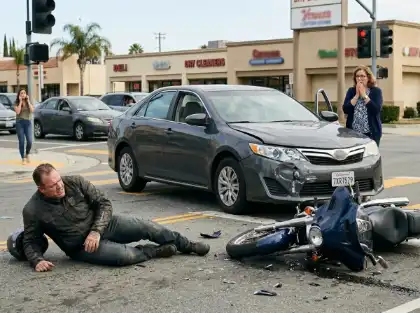 Motorcycle accident victims may have several legal options depending on the severity of the injuries and whether the crash resulted in a death. An injured rider may pursue a personal injury claim, while eligible family members may pursue a wrongful death claim after a fatal crash. In some cases, a survival action or loss-of-consortium claim may also apply.
- Injured Rider: An injured rider may file a personal injury claim to seek compensation for losses caused by the crash. California follows a pure comparative fault system, which allows an injured rider to recover damages even if they were partly responsible. Under Li v. Yellow Cab Co., 13 Cal. 3d 804, the rider’s recovery is reduced by their percentage of fault. For example, a rider found 30% at fault may still recover 70% of proven damages.
- Surviving Family Members: Eligible family members may file a wrongful death claim when a motorcycle accident causes a rider’s death. California law limits who may bring these claims, generally including a surviving spouse, domestic partner, children, and certain other heirs.
Wrongful Death Claims After a Fatal Motorcycle Accident
A wrongful death claim allows eligible family members to seek compensation for losses caused by the death of a motorcycle rider. Under California Code of Civil Procedure § 377.60, eligible claimants may include the decedent’s surviving spouse, domestic partner, children, and certain other heirs. Damages are based on the losses suffered by the surviving beneficiaries.
Under California Code of Civil Procedure § 377.61, recoverable damages in a wrongful death claim may include:
- Loss of Financial Support: The value of income, benefits, and other financial contributions the deceased would have provided.
- Loss of Household Services: The value of services the deceased provided, such as childcare, household tasks, and other support.
- Loss of Companionship and Protection: Compensation for the loss of the deceased’s love, companionship, comfort, care, assistance, and protection.
- Funeral and Burial Expenses: Reasonable costs related to the deceased’s funeral and burial.
California wrongful death claims generally do not include the deceased person’s own pain and suffering or medical expenses incurred before death. Those types of losses are typically addressed through a separate survival action under CCP § 377.30.
Survival Actions for Claims the Rider Could Have Pursued
A survival action allows certain claims that belonged to the deceased rider to continue after death. Unlike a wrongful death claim, which compensates family members for their own losses, a survival action preserves the claims the rider could have brought if they had survived. Under California Code of Civil Procedure § 377.30, the decedent’s personal representative or successor in interest may bring the action.
Recoverable damages may include medical expenses, lost income, and property damage incurred before death. Under CCP § 377.34, punitive damages may also be available if the deceased rider would have been entitled to recover them. For actions filed on or after January 1, 2026, damages generally do not include the decedent’s pain, suffering, or disfigurement, subject to statutory exceptions.
Compensation Available to Surviving Riders After a Motorcycle Accident
An injured motorcycle rider may be able to recover compensation for financial losses, physical injuries, and other damages caused by the crash. The available damages depend on the facts of the accident, the severity of the injuries, and the parties responsible.
- Economic Damages: These may include medical expenses, rehabilitation costs, lost wages, reduced earning capacity, property damage, and other measurable financial losses caused by the crash.
- Non-Economic Damages: These may include compensation for pain and suffering, emotional distress, loss of enjoyment of life, and other non-financial effects of the injuries.
- Punitive Damages: In cases involving oppression, fraud, or malice, California law may allow punitive damages to punish especially wrongful conduct and deter similar behavior.
A motorcycle accident lawyer can help you understand the damages available to you in your specific situation under the law.
Loss of Consortium Claims After a Serious Motorcycle Injury
A spouse or registered domestic partner may have a separate claim for loss of consortium when a motorcycle accident causes a serious injury that affects their relationship with the victim. This claim belongs to the spouse or registered domestic partner, not the injured rider, and compensates for relationship losses caused by the injury.
Loss-of-consortium damages may include the loss of companionship, affection, comfort, sexual relations, and household support. In Rodriguez v. Bethlehem Steel Corp., 12 Cal. 3d 382, the California Supreme Court recognized a spouse’s independent right to pursue these damages after a third party’s negligence injured the other spouse.
California Family Code § 297.5 generally provides registered domestic partners with the same rights and protections as spouses. However, unmarried partners who are not registered domestic partners generally cannot recover loss-of-consortium damages under Elden v. Sheldon, 46 Cal. 3d 267.
Deadlines to File a California Motorcycle Accident Claim
Motorcycle accident victims and surviving family members must act quickly because California law sets strict deadlines for pursuing compensation after a serious or fatal crash. The applicable deadline depends on whether the claim involves injuries, a wrongful death, or a government entity.
For an injured rider, a personal injury lawsuit against a private party generally must be filed within two years from the date of the injury under California Code of Civil Procedure § 335.1. If a motorcycle crash causes a rider’s death, eligible family members generally have two years from the date of death to file a wrongful death lawsuit under CCP § 335.1 and CCP § 377.60.
Different deadlines apply when a public entity may be responsible for the crash. If a city, county, Caltrans, or another government entity contributed to the accident, California Government Code § 911.2 generally requires a written government claim to be presented within six months before a lawsuit can be filed. This short deadline applies even to fatal crashes involving dangerous road conditions, roadway defects, or other public entity conduct.
The claim must be submitted to the correct government entity:
- State Agency Claims: Generally filed through the California Department of General Services, Office of Risk and Insurance Management, Government Claims Program.
- Caltrans Claims: Claims for death, personal injury, or personal property damage may follow Caltrans-specific procedures depending on the amount claimed.
- City, County, and Other Public Entities: Claims are generally presented directly to the responsible public entity.
Because fatal motorcycle crashes can involve multiple potential defendants and strict deadlines, identifying the responsible parties early can help protect a rider’s or family’s right to seek compensation. This is especially important when evidence, insurance coverage, and liability issues must be investigated after a serious collision.
What Arash Law Has Recovered for Seriously Injured Clients
Arash Law has experience pursuing compensation available under the law for injured clients across California. While no past result guarantees a future outcome, every case result is based on its own facts and evidence. A few results illustrate the firm’s track record on serious injury and governmental defendant cases:
$1,550,000 – Motorcycle Accident Settlement: Our client suffered spinal and wrist injuries in a motorcycle-versus-rideshare crash. The case settled for $1.55 million in 2021.
$1,450,000 – Motorcycle Accident Settlement: Our client suffered rib fractures and head trauma after hitting uneven pavement in a construction zone. The case settled after the first day of trial.
Past results do not guarantee future outcomes. Every case is different, and results depend on the specific facts and evidence involved.
Frequently Asked Questions About Motorcycle Accident Fatalities in California
Motorcycle fatalities often raise questions about fault, safety rules, insurance coverage, and legal options after a serious crash. The answers below address common concerns for injured riders and families who have lost a loved one.
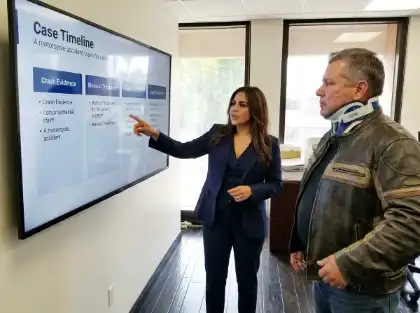
Do Lawyers Only Get Paid if They Win?
Many motorcycle accident lawyers handle injury cases on a contingency fee basis, meaning clients generally do not pay attorney fees unless the lawyer recovers compensation. The fee arrangement is agreed upon between the attorney and client before representation begins. Arash Law follows this fee arrangement as well. We don’t charge anything up front, and we only take a percentage of what we recover for you.
Can I File a Claim if I Wasn’t Wearing a Motorcycle Helmet?
Yes, you can still file a claim. California Vehicle Code § 27803 requires a DOT-compliant helmet, but the failure to wear one does not bar recovery. It is a comparative fault factor. Under California’s pure comparative fault rule, the proportion of fault assigned to a rider for not wearing a helmet may reduce the compensation recoverable, particularly for head injuries, but it does not eliminate the claim.
Does Proposition 213 Apply to Motorcycle Accidents?
In some cases, Proposition 213 may limit an uninsured rider’s ability to recover non-economic damages, such as pain and suffering. California Civil Code § 3333.4 generally restricts non-economic damages for certain uninsured drivers, but exceptions may apply.
Proposition 213 generally does not prevent eligible surviving family members from recovering their own wrongful death damages solely because the deceased rider was uninsured. In Horwich v. Superior Court, the California Supreme Court recognized that a wrongful death claim belongs to the surviving heirs, not the deceased rider.
What Evidence Disappears Fastest After a Motorcycle Crash?
Time-sensitive evidence disappears quickly. Surveillance and dashcam footage from nearby businesses or other drivers may be overwritten in as little as 24 to 72 hours unless someone sends a written preservation request. Witness contact information is also easy to lose if no one collects it at the scene.
The California Highway Patrol’s Traffic Collision Report (CHP 555) is central to any fatal crash claim — it documents the officer’s assessment of how the crash occurred. It is also the underlying data source for statewide fatality statistics, such as those cited above. A proper Party of Interest (including a surviving family member or their attorney) can request a copy through the CHP Crash Portal or by submitting Form CHP 190 to a CHP Area office.
Talk to Arash Law About Your California Motorcycle Claim
If you are dealing with injuries, medical bills, or the loss of someone you love after a motorcycle accident, you do not have to navigate California’s legal deadlines and insurance rules alone. Arash Law offers a free case evaluation with an attorney who handles motorcycle accident claims across California.
Arash Law operates on a contingency fee basis; you pay no attorney fees unless Arash Law recovers compensation for you. Call (888) 488-1391 any time, 24 hours a day, to schedule your free case evaluation.
Arash Law. Make ‘Em Pay, Call AK
Sources
California Office of Traffic Safety (OTS). “Motorcycle Safety.” Grant program overview with 2023 statewide motorcyclist fatality data (583 deaths; 10.2% decrease from 649 in 2022; 19% increase from 491 in 2019). https://www.ots.ca.gov/grants/motorcycle-safety/
UC Berkeley SafeTREC. “2025 SafeTREC Traffic Safety Facts: Motorcycle Safety.” Reports that motorcyclists comprised 15.5% of all U.S. traffic deaths in 2023 while accounting for 3.3% of registered vehicles; synthesizes NHTSA FARS and SWITRS data. safetrec.berkeley.edu/2025-safetrec-traffic-safety-facts-motorcycle-safety
National Highway Traffic Safety Administration (NHTSA). “Traffic Safety Facts 2023 Data: Motorcycles.” DOT HS 813 732, July 2025. Documents national motorcycle fatality counts, fatality rates per 100 million vehicle miles traveled, and state-level comparisons. crashstats.nhtsa.dot.gov/api/public/viewpublication/813732
California Legislature — LegInfo. California Code of Civil Procedure §§ 335.1, 377.60, 377.61; Government Code § 911.2; California Vehicle Code §§ 21658.1, 21801(a), 27803. Statutory text for personal injury and wrongful death limitations periods, government claims deadline, lane-splitting legality, left-turn yield requirement, and helmet requirement. leginfo.legislature.ca.gov
California Department of General Services, Office of Risk and Insurance Management (DGS/ORIM). Government Claims Program — the correct filing destination for claims against state agencies, including Caltrans, for dangerous road conditions. https://www.dgs.ca.gov/orim
California Department of Transportation (Caltrans). “Submit Damage Claim.” Confirms that the Government Claims process must be followed before suing Caltrans; filing goes to DGS/ORIM Government Claims Program. https://dot.ca.gov/online-services/submit-damage-claim
California Department of Motor Vehicles (DMV). “Insurance Requirements.” Confirms that California requires insurance (financial responsibility) on all vehicles operated in the state; reflects SB 1107 minimum liability limits effective January 1, 2025: $30,000 per person / $60,000 per occurrence / $15,000 property damage. dmv.ca.gov/portal/vehicle-registration/insurance-requirements
Disclaimer
The information on this page is for general educational purposes and does not constitute legal advice. Reading or relying on this content does not form an attorney-client relationship. If you were injured, consult a licensed California personal injury attorney about your specific situation. Arash Law — (888) 488-1391.