TL;DR: After a workplace injury, seek medical care immediately, report the injury to your employer within 30 days, complete the DWC-1 form, and document everything thoroughly. Timely actions help protect your workers’ compensation claim and prevent delays in benefits.
Highlights:
- Seek medical attention right away, even if the injury seems minor.
- Report your workplace injury to your employer within 30 days.
- Submit the DWC-1 claim form to start the workers’ compensation process.
- Document all details of the accident, including photos and witness information.
- Follow your doctor’s orders and attend all medical appointments.
- Respond carefully to insurance requests and avoid social media posts during your claim.
Tip: Don’t sign a settlement or give a recorded statement before you understand your rights.
Table of Contents
After a workplace accident in California, you can take these steps to prioritize your safety and uphold your rights:
- Seek immediate medical attention.
- Report the injury to your employer as soon as possible.
- Submit a DWC-1 form.
- Start documenting the incident and your treatment.
A workplace injury can affect you financially, physically, and emotionally. Acting early can safeguard your health and well-being while supporting your chances of pursuing a workers’ comp claim.
Understanding what to do right after a work-related accident can help prevent delays, disputes, or a denied workers’ comp claim.
Steps To Take After A Workplace Injury
If you get injured at work in California, see a doctor right away. Then, report your injuries to your employer as early as you can. That way, you can kickstart the process of seeking workers’ compensation benefits, which can cover the medical expenses and lost wages you incur.
Workplace injuries can take weeks, months, or years to heal, depending on their severity. In more serious cases, you may become temporarily or permanently disabled. Acting immediately after an accident on the job can help you file a claim early and maintain your eligibility for workers’ comp benefits.
That said, consider taking these steps:
Seek Immediate Medical Attention
After an accident at work, prioritize your safety and that of the people around you. If possible, move to a secure area away from any ongoing risk. Afterward, call 911 if you need emergency assistance. Otherwise, visit a doctor, preferably on the same day. Doing so is crucial for your health and your claim, even if your injury seems minor.
Even if you feel fine, injuries such as internal bleeding might not be noticeable at first. However, they can worsen over time. That’s why it’s vital to have a doctor assess you right away. Getting immediate medical care can also create documents that link your injuries to the accident and prove that you needed urgent treatment.
When you get a medical evaluation, let the doctor know that the accident occurred at work. That way, they can add that detail to your healthcare records. To further support your workers’ comp claim, obtain copies of other relevant documents, such as imaging, lab results, and emergency room notes.
Report Your Injury To Your Employer

California law requires injured employees to report workplace accidents to employers within 30 days. Failure to do so may bar them from seeking workers’ compensation. That makes early reporting crucial. By notifying your employer, you produce a record that backs up your claim.
You can report your accident to your manager, supervisor, or an HR representative. Describe the injury’s nature, date, time, and location. If you need to go to the ER, take care of your health first, then notify your company immediately afterward.
Fill Out A DWC-1 Claim Form
When you report your injuries in California, your employer must provide you with a Workers’ Compensation Claim Form (DWC-1). This form officially initiates the claims process. Complete the employee section of the form and return it to your employer promptly.
Once your employer receives the completed DWC-1 and fills out the “employer” section, it must forward the form to its workers’ compensation insurance carrier. Ask for a copy of the form for your records. It can provide information about your rights, benefits, and the medical treatment process.
After submitting your claim, follow up to make sure your employer or insurer is processing it. In many cases, you must file within 1 year. The insurer typically has up to 90 days to investigate, and it must update you on your claim status within 14 days. Your employer may authorize up to $10,000 in medical treatment while the claim is pending.
Document All Details Relevant To The Accident
As soon as your California workplace accident happens, start maintaining a detailed record. This file will be one of your most important sources of information. The success or failure of your claim often depends on the quality of the evidence you can provide.
Here’s a list of things you can include in your file:
- Pictures and Videos: Capture your injuries and the accident scene, including any tools or objects involved in the incident, if it is safe to do so.
- Witness Information: Get the complete names and contact information of anyone who saw the accident. If they’re willing, also get a brief statement from them. Their accounts may help support your version of events.
- Written Report: Write down the details of the incident while your memory is still fresh. Include the date, time, place, activity, and manner of injury.
- Medical Documents: Keep a thorough record of your medical bills, prescription receipts, and test results. Include physical therapy notes and reports from your doctor, surgeon, or chiropractor.
- Expense and Work Missed Log: Use a calendar to keep track of the workdays you’ve missed. You may also qualify for compensation for your travel costs to and from your medical appointments.
Keep Track Of Medical Treatment And Follow Your Doctor’s Orders
Under California law, injured employees must see a doctor from a medical provider network (MPN) after a workplace accident. Employers or their insurers usually provide this information. An MPN comprises a mix of healthcare providers specializing in various work-related injuries. In some situations, you may be able to treat with a doctor of your choice later in the process.
Regardless of where you receive care, follow your doctor’s advice to support your recovery and insurance claim. Stick to all your appointment schedules and complete any physical therapy you’re prescribed. Take medication as recommended. Your doctor can also impose job restrictions. For example, they may require you to take regular breaks at specific intervals or restrict you from lifting heavy objects.
Don’t disregard these recommendations. Doing so may create an impression that your injuries aren’t as severe as you say. This action may result in the discontinuation of your benefits or the rejection of your claim.
Finally, keep track of all the medical advice you’re given. Get these recommendations in writing whenever possible. These records can help you prove the extent of your injuries and the necessity of the treatments you’re receiving. If your healthcare provider approves your return to work, you can also use these documents to inform your employer of your current condition and any prescribed modifications. That way, it can accommodate your needs as you continue recovering.
Respond Promptly To Insurance Requests
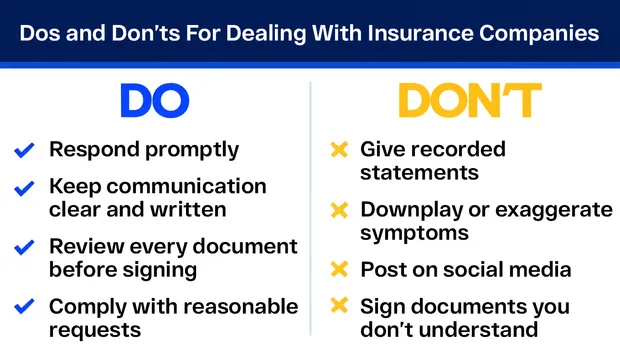
Your company’s insurance provider may contact you after you submit your California workers’ compensation claim. When this happens, use caution while remaining responsive. Prompt communication can help the claims process move along smoothly. Meanwhile, watching what you say can help you avoid making statements that hurt your case.
Consider following these dos and don’ts:
Do:
- Comply with appropriate requests.
- Make all written communications clear.
- Examine every paper before signing it.
Don’t:
- Don’t give a recorded statement without legal guidance. You may not be required to give one, and an attorney can help you respond without hurting your claim.
- Downplay or exaggerate symptoms.
- Accept the compensation offered before reviewing whether it covers all of your accident-related damages.
- Publish content on social media. Online posts of you doing activities showing you aren’t as hurt as you say may put your claim at risk. Consider avoiding posting on social media until after you settle your claim.
- Sign papers you don’t understand. It’s ideal to read and comprehend their contents first. You can consult a lawyer if you need clarity on any insurance documents.
Claims adjusters have the skills and training to thoroughly evaluate claims. They also have to balance the claimant’s potential payout and the insurance company’s bottom line. Thus, any information that may indicate fault on your part will likely affect your claim. To avoid this situation, focus on the facts about your injury and treatment. Don’t share unnecessary details.
What Are Your Compensation Options After A Workplace Accident?
Workers’ comp is your primary source of compensation after a California workplace accident. This coverage can help with the various expenses you incur as you heal from your injuries. Here is a list of the common types of workers’ compensation claim benefits:
- Medical Care: Refers to any appropriate and required care for your injury. Coverage includes prescription drugs, hospital stays, surgeries, physical therapy, and doctor visits.
- Temporary Disability Benefits: Covers a percentage of your lost income if your accident keeps you from working while you heal. California’s Division of Workers’ Compensation (DWC) sets the total disability rates you can seek under this coverage.
- Permanent Disability Benefits: Provides coverage if a work-related injury leaves you permanently disabled. Its severity determines the amount you may receive.
- Supplemental Job Displacement Benefit (SJDB) Voucher: Helps pay for retraining or skill enhancement if you sustain permanent partial disability and can no longer perform the same job you did before.
Notably, workers’ compensation is a no-fault system. You can pursue benefits from it without needing to demonstrate that your employer was at fault for your accident and injuries. However, that doesn’t mean the workers’ comp claims process is easy. There’s always a possibility that your claim gets denied, your payment postponed, or your coverage diminished.
If your employer’s insurance company rejects your claim, you may be able to appeal its decision. California’s DWC allows you to apply for claim adjudication. Here, a judge from the Workers’ Compensation Appeals Board (WCAB) evaluates your case. They will review new evidence, require hearings, and encourage potential settlement discussions.
Is It Possible To File A Workers’ Compensation Claim And A Personal Injury Claim At The Same Time?
Yes. You can file a workers’ compensation claim and a personal injury claim from the same workplace accident when a third party (someone other than your employer or a coworker) caused or contributed to your injuries. A third-party claim can also include damages like pain and suffering, which workers’ comp doesn’t cover.
Common examples include:
- A defective product (like machinery made by another company) injures you at work.
- A driver or other third party causes a work-related crash or equipment incident.
- You’re hurt while working on property owned or controlled by someone outside your company.
Frequently Asked Questions About Workplace Accidents In California
Getting injured in the workplace can leave you with several insurance and legal concerns. This section addresses some of the questions other people often ask about workplace injuries in California.
What Is The Deadline For Filing A Workers’ Compensation Claim?

In California, you need to file a workers’ compensation claim within one year of the incident. Still, you must report the workplace injury to your employer within 30 days. California’s statute of limitations specifies the deadlines for submitting a formal claim. Knowing these deadlines is crucial. If you miss them, you may lose your chance to pursue compensation for your losses.
Can My Employer Fire Me Or Retaliate Against Me For Filing A Workers’ Compensation Claim?
No. California prohibits employers from retaliating against an employee who submits a workers’ comp claim. What can you do if your employer fires, demotes, or punishes you after filing one? You may have the option to sue the company for wrongful termination.
What Happens If My Employer Doesn’t Have Workers’ Compensation Insurance?
You may file a personal injury claim if your employer has no workers’ comp insurance. You can also seek payments from the Uninsured Employers Benefits Trust Fund (UEBTF). This special fund covers work injury claims if an uninsured employer can’t pay your benefits.
What Should I Do If My Compensation Claim Gets Denied?
After receiving a written notice outlining the cause for the claim denial, you still have the option to appeal this decision. To do so, file an appeal with the California DWC. Prepare to submit any additional evidence. Also, follow the DWC’s timelines and legal requirements.
What Happens If You Don’t Report A Workplace Injury?
You risk losing various benefits if you don’t report your work injuries or notify your employer within 30 days. These include access to medical treatment, salary replacement, and disability benefits. Without timely reporting, disputes on the severity or circumstances of your work injury may arise. These issues may result in your claim getting rejected. It can also give your employer’s insurer a valid reason to minimize payouts.
Get Legal Clarity On What To Do After Your Workplace Accident
Getting injured at work can be distressing and debilitating for many employees. In such situations, consider following the steps mentioned here. That way, you can retain your legal right to seek workers’ comp benefits and regain control of your situation.
However, the severity of your injuries and the complexity of your workplace accident may make it challenging for you to handle an insurance claim on your own. At this point, you may be telling yourself, “I need a personal injury lawyer,” and start searching for free workplace accident lawyer advice.
Arash Law is available to assist if you’ve been injured at work and have inquiries about your rights and options. We can also help you prepare, file, and pursue both workers’ comp and personal injury claims.
If you’re wondering about the costs of these services, you might ask, “Do lawyers only get paid if they win?” The answer is yes at AK Law. You don’t need to pay our legal fees up front. Under our contingency fee arrangement, we only get paid for our services if we recover compensation for you.
Call us at (888) 488-1391 to schedule a free initial consultation. Our legal staff is available to help you navigate the process, review your claim, and explain what you can do after your workplace accident.