TL;DR: California car accident liability is determined by negligence, using evidence and traffic laws to assign fault, including shared fault under pure comparative negligence. Drivers and passengers face reduced insurance recovery based on the percentage of responsibility, making early medical records, crash evidence, and the 2-year filing deadline critical.
Highlights:
- Liability is based on negligence and the facts of how the crash happened
- Fault can be shared under pure comparative negligence
- Insurance payouts can drop if you’re assigned a percentage of fault
- Third-party claims use the other driver’s policy; first-party claims use yours
- More than one party can be liable, including employers, owners, and manufacturers
- Key evidence includes photos, police reports, video, vehicle damage, and witnesses
- Most injury lawsuits must be filed within 2 years in California
Tip: In the first 24 hours, secure the police report number and any video footage, then keep insurer statements brief and factual to avoid getting stuck with unfair fault.
Table of Contents
In California car accidents, liability is usually based on negligence, meaning someone failed to use reasonable care and caused the crash. Fault can be shared, and California’s pure comparative negligence rules reduce damages by each person’s percentage of responsibility. Liability is decided using evidence, traffic laws, and the facts of the collision.
Identifying who is legally responsible is crucial. Liability affects who may be financially accountable for accident-related losses, such as medical care, missed work, and property damage, subject to insurance coverage and other limits. Below is a clear breakdown of how liability works in California car accident cases and what you can do to protect your rights.
What Is Liability
Liability means legal responsibility for the harm caused in a crash. In California, it is most often decided on the basis of negligence and the percentage of fault each party shares.
Why Liability Matters In A California Car Accident Claim
Liability directly impacts your financial recovery after a car accident. California uses an at-fault system, meaning the at-fault driver for the crash is financially liable for the resulting damages.
In California, injured victims can file claims directly with the at-fault party’s insurance provider. Recoverable losses may include medical treatment and rehabilitation, lost income or reduced earning capacity, vehicle repair or replacement, and pain and suffering.
Insurance policies have coverage limits, so liability does not guarantee full compensation. Both fault allocation and available coverage influence the outcome. When insurers dispute or apportion fault, they may reduce payouts. Understanding liability early helps you avoid accepting unwarranted responsibility and strengthens your position during insurance negotiations.
Who Can Be Held Liable In A Car Accident In California?
Liability is not limited to the driver behind the wheel. Under California law, multiple parties may be held responsible depending on how the crash occurred.
Potentially liable parties include:
- The negligent or reckless driver.
- The driver’s employer, especially in delivery or commercial driving cases.
- The vehicle owner, if different from the driver.
- Parents or guardians of minors who caused the crash.
- Manufacturers of defective vehicle parts.
- Government entities, if unsafe road conditions contributed to the collision.
Identifying all liable parties is a key step in determining how liability is assigned and which insurance policies may apply.
Third-Party Claim vs. First-Party Claim (Your Policy vs. Their Policy)
Third-party liability refers to legal responsibility for injuries or damage suffered by someone other than the insured person. In auto insurance terms, liability coverage is designed to compensate people other than the policyholder for personal injury or property damage.
If another driver causes a crash and you pursue compensation through their liability insurance, that’s usually a third-party claim. If you use parts of your own policy (for example, uninsured motorist coverage) because the at-fault driver has no insurance or not enough coverage, that’s typically a first-party claim.
Third-party liability isn’t limited to the other driver. Depending on how the crash happened, other third parties may share responsibility, such as an employer (work-related driving), a vehicle owner, a manufacturer (defective parts), or a government entity (unsafe road conditions).
Why this matters: Identifying all liable third parties can expand the available insurance coverage and reduce the risk that one minimum policy limit caps your recovery. California minimum liability limits are $30,000/$60,000/$15,000, but serious injury claims can exceed those amounts quickly.
If a government entity may be at fault, special procedures and fast deadlines can apply. Under Government Code § 911.2, some claims must be presented within six months of accrual, and California Courts’ self-help guidance also emphasizes short government-claim deadlines.
How To Establish Negligence In A Car Accident Case In California
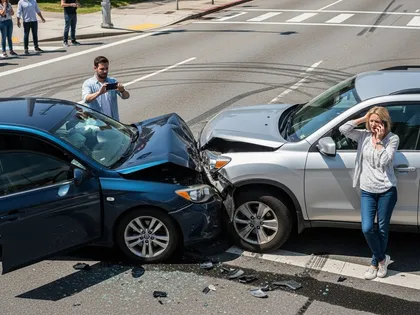
Negligence occurs when someone fails to exercise reasonable care, and that failure causes harm. In a California car accident case, establishing negligence is the primary way liability is determined.
Most cases focus on a driver’s actions, such as speeding, distracted driving, or disregarding traffic signals. However, negligence is not limited to drivers. Vehicle owners, employers, manufacturers, and government entities may also be responsible if their actions or inaction contributed to the crash.
To establish negligence, the injured victim must show that another party’s conduct caused the accident and the resulting injuries or losses. California law requires proof of four specific elements.
- Duty of Care — The responsible party had a legal obligation to act with reasonable care. For drivers, this means obeying traffic laws and operating vehicles safely. For others, it may involve maintaining a vehicle, supervising an employee, or keeping roads reasonably safe.
- Breach of Duty — The party failed to meet that obligation. Examples include texting while driving, running a red light, losing brake control, or allowing an unsafe condition to persist.
- Causation — The breach directly caused the crash and the injuries. There must be a clear link between the unsafe conduct and the resulting incident.
- Damages — The victim suffered actual harm, including physical injuries, property damage, lost income, and other measurable losses.
If all four elements are present, California law allows liability to be assigned to the negligent party. This framework helps courts and insurance companies determine responsibility.
How Traffic Laws Affect Liability
Traffic laws exist to protect everyone who uses California roads, including drivers, pedestrians, and cyclists. When a driver violates these laws, that violation becomes a key factor in determining liability after a car accident. Insurance companies and courts rely heavily on traffic laws to decide whether a driver failed to use reasonable care.
Several California Vehicle Code provisions are frequently used to establish fault, including laws that require drivers to:
- Obey posted speed limits and adjust speed for traffic and road conditions.
- Stop at red lights and stop signs.
- Yield the right of way at intersections, crosswalks, and during left turns.
- Maintain a safe following distance.
- Signal before turning or changing lanes.
- Drive sober and free from impairment.
- Avoid distracted driving, including handheld cellphone use.
When a crash occurs, evidence showing a violation of these laws can strongly support a finding of negligence. Common violations that affect fault include:
- Speeding
- Running red lights
- Failing to yield
- Unsafe lane changes
- Following too closely
For example, in rear-end collisions, the driver in the rear is usually presumed at fault for failing to maintain a safe following distance. That presumption may change if evidence shows unusual circumstances, such as sudden stops or hazardous road conditions.
Other Legal Rules That Can Determine Liability In California Car Accident Cases
California law recognizes additional legal principles that can assign responsibility beyond the at-fault driver. These rules help injured victims establish liability when another person, business, or manufacturer contributed to causing the crash.
- Negligence Per Se — Negligence per se applies when someone violates a law designed to prevent harm, and that violation causes injury. When this rule kicks in, the law itself establishes negligence.
For example, if a driver runs a red light and causes an accident, that violation can establish negligence, since traffic lights are meant to prevent crashes. In these cases, you do not need to prove that the driver acted unreasonably separately.
- Vicarious Liability — Vicarious liability extends responsibility beyond the person who directly caused the accident. Under this principle, one party can be held liable for another person’s negligent actions.
This situation commonly arises in employer–employee relationships. If a delivery driver causes a crash while performing job duties, the employer may be responsible for the damages, even though the employer was not present at the scene.
- Strict Liability — California also recognizes strict liability for defective or dangerous products. Under this doctrine, you do not need to prove negligence or intent. You only need to show that the product was faulty and that the defect caused the injury.
For example, if a faulty brake system or tire causes a crash, the manufacturer or distributor may be held liable for the resulting injuries. This rule helps protect victims when vehicle defects, rather than driver behavior, cause an accident.
How Comparative Fault Affects Liability In A Car Accident Case In California
California follows a pure comparative negligence system. More than one party can share liability, and compensation is reduced based on each party’s percentage of fault.
Civil Code § 1431.2 (Prop 51) makes each defendant’s liability for non‑economic damages several only (not joint) in comparative-fault cases, which matters a lot when you’re pursuing third-party liability against multiple parties.
Courts assign fault percentages based on each party’s actions. If you are partially responsible, your compensation decreases accordingly. For example, if total damages are $100,000 and you are found 20% at fault, damages may be reduced to $80,000.
A slight shift in liability can significantly affect:
- Medical reimbursement
- Lost income recovery
- Property damage compensation
- Pain and suffering awards
Insurers may review fault carefully when evaluating payouts. Without strong evidence, you may accept more responsibility than the facts support.
What Evidence Helps Prove Liability In A Car Accident Case
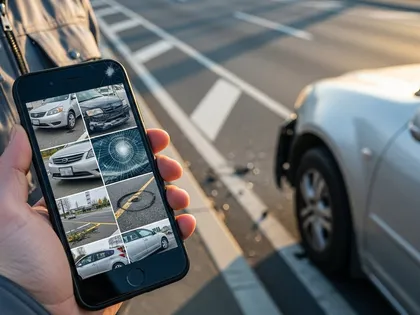
Proving liability requires evidence showing how the crash happened and who was responsible. Evidence is central to insurance claims and court cases.
Common types of evidence include:
- Photos of the Accident Scene — Show vehicle positions, road conditions, traffic signs, and visible damage right after the crash.
- Police Report — Records officer observations, statements from drivers and witnesses, and any citations issued.
- Surveillance or Dashcam Footage — Captures how the collision occurred and may show traffic violations or unsafe driving.
- Vehicle Damage — Helps explain the direction of impact, point of contact, and severity of the crash.
- Witness Statements — Provide independent accounts that can confirm what happened before and during the collision.
- Expert Testimony — Uses technical analysis to connect physical evidence to how the crash occurred and who caused it.
Together, these pieces of evidence help establish negligence. They show a breach of care, link that conduct to the collision, and confirm the harm you suffered. Strong documentation limits an insurer’s ability to dispute fault and supports a fair resolution of your claim.
The Statute Of Limitations For California Car Accident Claims
The statute of limitations sets a legal deadline for filing a lawsuit. In California, you generally have two years from the date of the accident to file a personal injury claim.
This deadline is important because courts will not hear your case after the time expires. Even if another driver clearly caused the crash, missing the statute of limitations can prevent you from recovering compensation for your injuries and losses.
The clock usually starts on the day of the accident. In some situations, such as when injuries are discovered later, or a government entity is involved, different deadlines may apply. Because these exceptions are limited and fact-specific, delays can put your claim at risk.
Understanding the statute of limitations helps you protect your rights as an injured victim. Acting early gives you time to gather evidence, identify liable parties, and file your claim before the legal window closes.
Frequently Asked Questions (FAQs)
Car crash victims may have questions about fault, insurance, and compensation. The answers below address common concerns injured individuals face when dealing with liability and car accident claims in California.
What is a third-party claim after a car accident?
A third-party claim is a claim you file against someone else’s liability insurance after a crash, usually the at-fault driver’s insurer, to recover compensation for your losses (like medical bills, lost wages, property damage, and pain and suffering), up to the available policy limits.
By contrast, a first-party claim is made under your own auto insurance, such as uninsured/underinsured motorist (UM/UIM) coverage, which may apply if the at-fault driver has no insurance or not enough coverage.
In California, Who Is Responsible For Determining Fault In A Car Accident?
Insurance companies determine fault during the claim stage. Adjusters review police reports, photos, videos, vehicle damage, and statements from drivers and witnesses to determine who caused the crash and how to allocate fault.
If the parties disagree or cannot resolve the claim, a court determines who is responsible. A judge or jury reviews the evidence and assigns responsibility based on California negligence and comparative fault rules.
What Should I Not Say To An Insurance Adjuster?
Avoid making statements that insurers may use to reduce or deny your claim. Examples include:
- Apologizing or saying anything that suggests you caused the crash.
- Claiming you feel “fine” before a medical evaluation.
- Guessing or speculating about how the accident happened.
- Giving detailed statements without reviewing the facts.
- Discussing injuries or recovery without medical documentation.
You can share basic information, but keep your answers brief and factual. If you feel unsure, pause the conversation and seek legal guidance before providing a recorded statement.
How Long Do Insurance Companies Have To Respond To A Car Accident Claim?
The California Code of Regulations states that:
- The insurance company must acknowledge your claim within 15 days of receiving notice and provide any required claim forms or instructions.
- Once you submit the necessary documentation, they must accept or deny the claim within 40 days.
- If the insurer does not finish the investigation within that time, it must send you a written update explaining the delay and continue providing status updates every 30 days until it reaches a decision.
These timelines apply whether you are dealing with your own insurer or the at-fault driver’s insurance company.
What Happens When Drivers Don’t Have Enough Insurance?
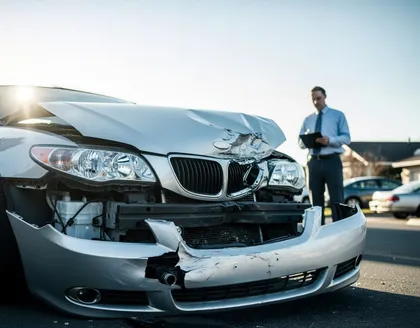
California law requires drivers to carry liability insurance. However, the minimum coverage may not fully pay for serious injuries or property damage. The required minimum limits are:
- $30,000 for injury to one person.
- $60,000 for injuries to multiple people.
- $15,000 for property damage.
These minimums may not fully cover the damages. You may need to use other coverage, such as underinsured or uninsured motorist coverage.
What If The At-Fault Driver Doesn’t Have Insurance?
If the at-fault driver does not have insurance, you may be able to rely on your own auto policy if you have uninsured motorist (UM) coverage. UM coverage allows you to seek compensation from your insurer for bodily injury losses for which the uninsured driver would have been responsible.
If you do not have uninsured motorist coverage, recovering damages may be more difficult. You may need to explore other legal options, such as pursuing a claim directly against the uninsured driver or identifying other potentially liable parties.
What Compensation Can I Recover In A Car Accident Claim?
If you suffer injuries in a car crash caused by another party, California law allows you to seek compensation for the losses you experience. At this stage, many injured victims ask, “Do I need a personal injury lawyer to assess my damages?” The answer often depends on how the incident affected your health, finances, and daily life.
Damages in car accident claims generally fall into three categories:
- Economic Damages — Economic damages cover financial losses tied directly to the accident. These losses have clear dollar values and may include:
- Medical bills, including chiropractic care and future medical needs.
- Lost wages or reduced earning capacity.
- Property damage to your vehicle or personal items.
- Other incident-related expenses.
- Non-Economic Damages — Non-economic damages address the personal impact of the accident. These losses do not have fixed dollar amounts but reflect how the injuries affect your quality of life, including:
- Pain and suffering
- Loss of enjoyment of life
- Emotional distress
- Punitive Damages — Punitive damages apply in limited cases where the at-fault driver acted with extreme recklessness or malice. These damages aim to punish dangerous behavior and discourage similar conduct in the future.
Get Legal Guidance On How Liability Applies To Your California Car Accident
If another driver’s negligence caused your injuries, legal representation can help you understand how liability applies to your case and what compensation may be available under California law. Many injured victims begin by seeking free legal advice from an accident lawyer to clarify fault, insurance coverage, and next steps.
The car accident lawyers at Arash Law can review your case for free, gather evidence, and communicate with insurance companies to evaluate liability and damages. We work on a contingency fee basis, which addresses a common question victims have: Do lawyers only get paid if they win your case? At our injury law firm, we receive payment only if we recover compensation through a car accident settlement or court award.
If you were injured in a California car accident and have questions about liability or fault, call AK Law at (888) 488-1391 to schedule a free initial consultation.