TL;DR: After an accident, liability insurance from the responsible party is usually the primary source of payment for injuries and damages. Victims across workplace, premises, product, and traffic accidents may use their own insurance when investigations stall, fault overlaps, or coverage gaps delay recovery costs.
Highlights:
- File a claim with the at-fault party’s insurer for primary compensation.
- Use your own insurance if the other party’s insurer delays or disputes fault.
- Document the accident scene and collect evidence for both insurers.
- File a claim with your insurer if the other party is uninsured or underinsured.
- Review your insurance policy for coverage on medical bills, lost wages, and property damage.
- Contact an accident lawyer to help navigate complex claims or disputes.
Tip: Always notify your insurer immediately, even for minor accidents, to prevent delays in your claim.
Table of Contents
After an accident in California, you usually go through the at‑fault party’s insurer. You may file a claim for compensation following:
- Traffic accidents
- Slip-and-fall accidents
- Workplace injuries
- Injuries caused by defective products
Determining who was responsible for an accident can help you decide where to file a claim. However, some complex cases involve multiple liable parties. In these scenarios, you may have to seek compensation from each of their insurers.
On top of this, you may use your own policy if you experience delays in the claims process or if the other insurer disputes fault or coverage. You can also file a claim with your own insurer if the other party does not have insurance or has inadequate coverage.
Filing An Insurance Claim: Yours Or Theirs?
After an accident, you may be asking, “Which insurance pays first?” In California, the at-fault party’s liability coverage is ultimately responsible for paying damages. However, your own insurance may apply initially, depending on what’s in your policy. You could use it to access benefits while pursuing a claim with the other party’s insurer.
You do not always have to go through insurance after a car accident, but you should think carefully before choosing not to. Some drivers handle minor crashes privately to avoid premium increases. However, if injuries appear later or damage costs more than expected, skipping insurance can leave you paying out of pocket. Reporting the accident protects your right to seek coverage if problems arise.
Filing A Claim With Your Insurance
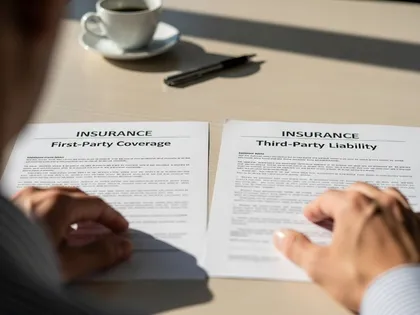
Regardless of fault, you can file a claim with your insurer depending on the coverage you have. Doing so could provide you with:
- Immediate Coverage — If you are not at fault, your claim against the other party is likely to undergo a thorough investigation. Your policy could cover urgent costs, such as for emergency care, during this time.
- Policy Benefits — Depending on the types of insurance policy you have, you may have coverage for different types of damages, which may include:
- Medical bills
- Lost wages
- Property damage
- Additional Protection — Filing a first-party claim with your insurer can help if the at-fault party is uninsured or underinsured. It could also be beneficial for specific types of accidents, such as hit-and-runs, since you still need to find and identify the negligent driver.
Be careful what you say to your own insurer, especially if you may share some fault. Do not admit blame, speculate about what happened, or minimize your injuries by saying you feel fine. California follows comparative fault rules, so statements that suggest you were partly responsible can reduce your compensation. Let the investigation determine liability before giving detailed or recorded statements.
Filing A Claim With The Other Party’s Insurance
If another party is responsible for the accident, you can file a claim with their insurance company. Determining who may be at fault depends on the specific facts and circumstances of the incident. Accident lawyers can help you identify potentially liable parties and submit claims to the appropriate insurer.
For Traffic Accidents
The applicable coverage will depend on who is at fault and the nature of the crash. Here’s a brief overview of what that could look like across different types of traffic accidents:
- Car Collisions — In the event of a car accident, the California DMV generally requires drivers to carry minimum liability insurance of up to:
- $30,000 for injury or fatality to an individual.
- $60,000 for injury or death to more than one person.
- $15,000 for property damage.
- Truck Accidents — In cases of commercial truck accidents, you can file a claim with the trucking company. Various types of commercial vehicles are subject to different minimum liability insurance requirements set by the Federal Motor Carrier Safety Administration (FMCSA):
- Trucks carrying non-hazardous goods and weighing more than 10,001 pounds must have at least $750,000 in liability insurance.
- Companies must have much greater coverage, at least $5 million, if they transport certain hazardous products.
- Bus Accidents — Liability can vary depending on the type of bus involved, such as private, charter, or tour buses. Bodily Injury and Property Damage (BIPD) liability insurance depends on the passenger capacity:
- 15 or Fewer Passengers — $1,500,000
- 16+ Passengers — $5,000,000
However, if a public bus is involved, you may file a claim against the city or county.
- Rideshare Crashes — In California, rideshare companies like Uber and Lyft may offer coverage when their drivers cause an accident. However, it depends on the specific period during which the collision occurred:
- Period 0 — App is off. The driver’s auto insurance will apply.
- Period 1 — Rideshare driver is still waiting for a match. During this time, the company may cover up to:
- $50,000 — For injury or death per person.
- $100,000 — For injury or death per accident.
- $30,000 — For property damage.
- Periods 2 & 3 — Period 2 is when the driver is on the way to a pick-up point, while Period 3 is when the passenger is already in the vehicle. A rideshare company’s $1 million third-party liability insurance may apply.
The specific circumstances of the incident can influence how liability is assessed. Coverage can also depend on the specific terms of each policy. Car accident lawyers can review the case details to identify who may be at fault.
For Premises Liability Accidents
Accidents can also happen on someone else’s property. In many cases, they could have been avoided if a property owner, manager, or a third-party responsible for maintenance had addressed the hazards promptly. Insurance claim options can depend on where an accident occurs:
- Residential Property — Homeowners insurance will usually apply. It often covers slips and falls, as well as other accidents caused by unsafe conditions on residential properties.
- Commercial Property — This responsibility can sometimes be transferred to a tenant or renter, such as a business operating on the property. Generally, Commercial General Liability (CGL) coverage can cover premises liability claims.
If a third party is responsible for an accident, you may file a claim against them. For example, if a maintenance company failed to repair leaking pipes and contributed to a slip-and-fall accident, they may be partially liable.

For Workplace Accidents
Employers are generally responsible for maintaining a safe workplace environment. As such, employees injured on the job may seek workers’ compensation benefits. This coverage may apply if:
- The accident happened while the employee was performing job-related duties.
- The incident occurred on the employer’s premises or at a location where work was being performed.
- The injury or illness arose out of employment, meaning it was related to work activities or conditions.
If a third party, such as an outside company, contractor, or equipment manufacturer, is responsible for an accident, victims may instead file a personal injury claim against them. Employees may also pursue a personal injury lawsuit directly against an employer that does not carry workers’ compensation insurance. Seeking free accident lawyer advice can be helpful when a workplace injury case becomes complicated.
For Accidents Caused By Defective Products
Sometimes accidents happen because a product doesn’t work the way it should. For example, a laptop battery might overheat and explode, or a car’s brake system may fail. In these types of accidents, the manufacturer, distributor, or seller may be responsible.
In California, product liability laws can hold these parties strictly liable. That means you don’t have to prove negligence to file a claim against them. You just have to show that:
- The product had a flaw in its manufacturing, design, or warnings.
- The product was defective when it left the manufacturer or seller.
- The defect directly caused your injury.
- You used the product in a reasonably foreseeable way.
Product liability insurance can vary depending on the manufacturer, distributor, or seller. The coverage may also fall under CGL, as outlined by the California Department of Insurance (CDI).
It’s important to know that you can both file with your insurer and the other party’s insurance company. In most cases, if your insurer covers your losses during the claims process, they can later seek reimbursement for these expenses from the other party. This is usually done through subrogation.
What Is Subrogation?
The insurance company has the right to collect the amount it paid out for damages from a third party, a practice known as subrogation. Here are some crucial aspects of this action that you should know:
- Policies often require reasonable cooperation, depending on your insurance company.
- The deductible must be considered in any subrogation proceedings initiated by the insurer.
How To File An Accident Insurance Claim In California

The process of seeking compensation from the other party’s insurer or your own can be similar. It usually involves:
- Informing the Insurance Provider — You need to take this step regardless of who is at fault. Immediately after an accident, document the scene and gather any relevant information. These details can help insurers process your claim. Different carriers have different reporting windows. You can ask your agent for the specific deadline that applies to your policy.
- Securing Proper Medical Records — You can back your claim with documents that substantiate the severity of your injuries and the costs of the treatments you require. You can have these records if you:
- Go to an urgent care or hospital for immediate medical attention.
- Follow up with your physician regarding any treatment, if necessary. Many accident victims often need physical therapy, chiropractic care, surgeries, and medications.
- Wait until you have achieved maximum medical improvement (MMI) before initiating compensation discussions. MMI is the point in recovery when a person’s condition has stabilized and is unlikely to improve much, even with additional treatment. By doing this, you can know the extent of your losses. Nevertheless, it is still essential to keep legal deadlines in mind when planning the timing of your claim.
- Presenting Necessary Evidence — Gather evidence showing causation, responsibility, and your losses. Examples of evidence might be:
- Police or incident reports
- Surveillance footage
- Eyewitness statements
- Hospital bills
- Proof of income
- Sending a Demand Letter — This document provides specific details regarding your injuries and damages. Present a case that can substantiate the liability of the at-fault party. Take note that additional requirements may apply when filing claims for specific accidents. For workers’ compensation, you generally must report the injury to your employer within 30 days. Completing the DWC‑1 claim form is part of starting the claims process.
- Negotiating a Settlement — The insurance company will investigate the accident after receiving the demand letter. They will then decide whether to accept, reject, or make a counteroffer based on their findings.
Weeks or months of back-and-forth can happen. However, insurers must still follow a strict timeline for insurance claims, as outlined by the California Department of Insurance (CDI):
- Acknowledgment — The insurer must confirm they received your demand letter within 15 days.
- Decision — After 40 days of receiving proof, the insurer must accept or deny your claim.
- Payment — If your claim is approved, payment must be made within 30 days.
If parties eventually agree on terms, you sign a settlement agreement. After that, the insurance company will send a check to you or your accident lawyer.
You can consider filing a civil action if settlement negotiations fail. Depending on the situation, you may either file a case against:
- The at-fault party, to recover damages for the accident
- Your own insurer, if it has acted in bad faith by unfairly denying or delaying your claim.
It’s important to note that California has specific deadlines for filing cases. There is a two-year statute of limitations for personal injury claims, starting from the date of injury. For property damage, the deadline is three years from the accident date. After reviewing your case, a lawyer can tell you if exceptions may change the time frame that applies to your situation.
What Compensation Can You Pursue In An Insurance Claim?
When pursuing an insurance claim, you need to document all the losses you incurred due to the accident. These can affect how much personal injury cases settle for, as a lawyer will often assign a monetary value to each one. They also influence the types of compensation you can seek, which can include:
- Economic Damages — These are the financial losses resulting from an accident. You can readily determine their value by reviewing records and documents. They can include:
- Medical costs from urgent care, hospital stays, or treatments.
- Costs to repair or replace damaged property.
- Lost income and reduced earning capacity.
- Out-of-pocket costs such as car rental, transportation, medical devices, etc.
- Non-Economic Damages — These cover the intangible losses you incur after an accident. It’s tougher to put a dollar amount on these losses since they are more subjective. Some examples are:
- Pain and suffering.
- Emotional distress or trauma.
- Loss of enjoyment of life.
- Loss of consortium, including the loss of companionship and support.
- Scarring, deformity, and lasting physical impairment.
Frequently Asked Questions
Accident victims often have concerns about the process of seeking compensation. Below are answers to some of the most common ones.
Why Do You Have To Share Your Insurance Information?
Sharing your insurance information is necessary to start the claims process. It allows insurers to verify coverage, identify fault, and pay for damages or injuries. Exchanging this information helps to prevent fraud. It ensures claims are handled correctly. It also allows insurers to assess risk and apply the right coverage.
For these reasons, California Vehicle Code § 16025 specifically requires drivers involved in an accident to share their insurance information and a valid driver’s license. Failing to do so can result in fines and other penalties.

When Should You Contact A California Accident Lawyer?
Given the nuances of legal and insurance procedures, you may be wondering, “Do I need a personal injury lawyer when dealing with insurers?” The answer is generally yes. You may want to avoid talking to insurance companies before an accident attorney because you could accidentally hurt your case. For example, simply saying “I’m fine” could cause claims adjusters to doubt how serious your injuries actually are.
Legal representation can also be important if the case involves:
- Severe injuries with possible long-term repercussions.
- Significant losses involving high medical bills, lost wages, and pain and suffering.
In these cases, disputes may arise, and negotiations may be necessary. An attorney can gather evidence and address these arguments. If they remain unresolved and negotiations fail, a lawyer can also help prepare your case and present it in court.
Do I Need To Inform My Insurance Company Even If The Damage Isn’t Substantial?
Yes. You should notify your insurance company after any car accident, even if the damage seems minor. Injuries or vehicle damage may be more serious than they appear, and your insurer can help assess the situation. Reporting promptly also helps avoid delays in processing claims. It may also allow your insurer to coordinate with the other party’s insurance regarding reimbursements.
Protect Your Rights After An Accident
Following an accident, you may be facing financial challenges. The costs associated with treating your injuries alone can add up over time. You can seek compensation for these and other losses from the at-fault party’s insurance company. However, notifying your insurance provider of an accident is still crucial. Your policy can help cover immediate accident-related costs.
If you are still confused about the process, our accident lawyers at Arash Law can provide legal guidance. Our team can help you collect more evidence to establish liability and identify which insurer to file a claim with. We can also negotiate settlements on your behalf.
However, if the cost of legal representation is an issue, you may be asking, “Do lawyers only get paid if they win?” The answer depends on the lawyer’s fee structure. Some injury law firms, such as AK Law, work on a contingency basis. Under this no-win, no-fee policy, you only pay attorneys for their services if they obtain compensation on your behalf.
For more information on how we can help you, call us at (888) 488-1391.