TL;DR: If rain and another party’s negligence caused your accident, you may have a case. Drivers must adjust to the weather, property owners must address hazards, and pedestrians should follow traffic rules. Gather evidence quickly to support your claim and prove liability.
Highlights:
- Drivers must adjust to wet conditions to avoid accidents.
- Property owners must address wet hazards to prevent slip-and-falls.
- Pedestrians should ensure they are visible to drivers during rainy weather.
- Collect evidence early to support your claim, such as photos and reports.
- Liability can extend to various parties like drivers, property owners, and employers.
- California has a two-year statute of limitations for filing a personal injury lawsuit.
Tip: Gather footage, medical records, and witness statements promptly to strengthen your case.
Table of Contents
You have a case if someone else’s negligence contributed to your rain-related accident. In California, everyone has a duty to use reasonable care to avoid harming others. During downpours, actions such as speeding and poor property maintenance could cause traffic collisions or slip-and-falls. Liability can fall on the party who failed to adjust to the weather, resulting in your injuries.
When You Have A Case For A Rain-Related Traffic Accident
California law is an at-fault state, meaning the party responsible for your injuries is typically liable for your losses, despite rain being a factor in the accident. When drivers don’t adjust to rainy conditions and cause a crash, you may have a valid car accident case.
Drivers of cars and other vehicles must prevent accidents by adjusting to road and weather conditions. For example, federal laws require commercial truckers to slow down and increase their following distance in adverse weather. If they fail to do so and contribute to your crash, you could pursue compensation from them.
Similarly, a car driver could break a traffic law by speeding or driving under the influence. In these cases, rain is only a contributing factor, and the at-fault driver’s traffic violation is the main cause of the accident. Poor road conditions, like potholes, can also contribute to an accident. In these cases, liability may fall on a government agency.
What Happens If Rain Causes Other Rain-Related Accidents?
Rain not only heightens the risk of traffic collisions but also increases the risk of other types of accidents. This weather condition also leads to pedestrian and slip-and-fall accidents.
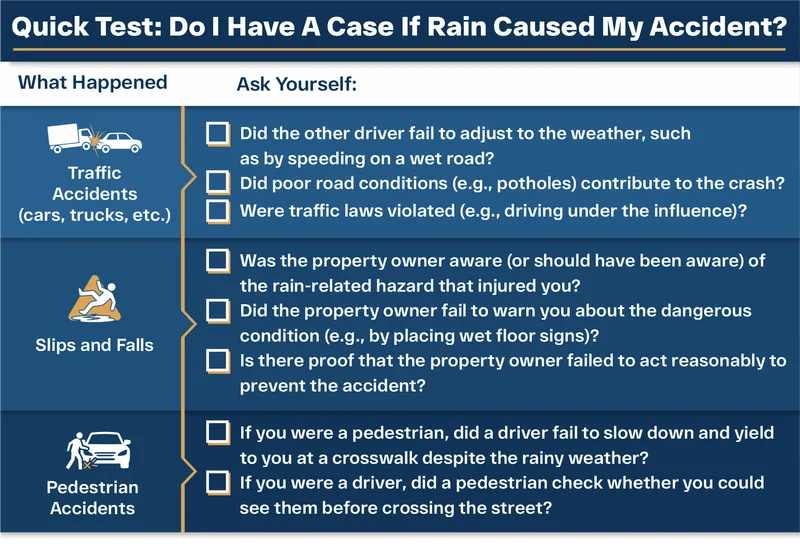
Depending on the incident, different state laws may apply. This distinction affects how lawyers investigate and prove your case. Below are some common rain-related accidents that can occur in California, as well as when you may have a case:
Slip-and-Falls
Property owners must use reasonable care to keep lawful visitors safe. For example, mall owners should place absorbent mats at entrances when it’s raining to prevent slips and falls. California premises liability laws hold them liable for injuries caused by dangerous conditions if:
- They were aware or should’ve known of the hazardous condition.
- They failed to address the hazard promptly.
- The property owner failed to warn visitors of potential hazards.
Pedestrian Accidents
Drivers are expected to yield to pedestrians at marked and unmarked crosswalks. Meanwhile, pedestrians should check for oncoming traffic and make themselves visible to drivers. Both parties may face liability if they don’t take these precautions in rainy weather and cause accidents.
When Weather Does And Doesn’t Excuse Liability
Rain can be the sole cause of accidents. However, if another party acts negligently and contributes to your injuries, the weather won’t excuse them from liability in California. Exceptions apply during natural disasters, such as flash floods.
Despite the weather, someone can still be at fault for an accident if they:
- Ignore warning signs, such as wet floor hazards.
- Neglect to maintain their property or warn visitors of dangerous conditions.
- Violate traffic laws, such as by tailgating.
However, extreme weather conditions may excuse liability in certain circumstances. Such events include “Acts of God.” State law defines them as sudden, unforeseeable events. In California, where atmospheric rivers are common, these can include:
- Flash floods
- Lightning strikes
- Landslides
How Rain Can Cause Accidents In California
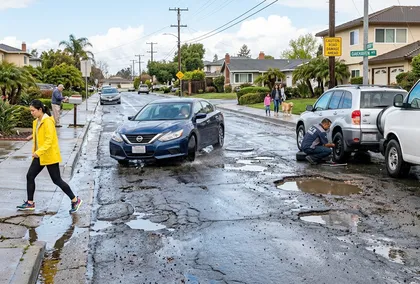
Rain causes more accidents than other weather conditions because it creates additional driving hazards. In California, where dry spells are common, downpours can make roads slick when water mixes with oil, dirt, and debris. These conditions can lead to car collisions.
Rain can contribute to traffic accidents due to:
- Slippery roads.
- Reduced tire traction.
- Reduced vehicle maneuverability.
- Hydroplaning.
- Reduced stopping distance.
- Limited/low visibility.
- Blocked roads due to storm debris.
- Invisible, water-filled potholes.
- Flooding or landslides.
Rainy weather can also contribute to wet surfaces on private and public property. These factors often contribute to slip-and-fall accidents.
- Slick floors in grocery stores, shopping malls, and other businesses.
- Wet pavements in parks, trails, sidewalks, and on other public properties.
- Slippery stairs, entranceways, and lobbies.
- Indoor puddles from roof leaks.
A downpour can also pose a risk to pedestrians by making them less visible to drivers.
How Negligence Can Contribute To Rain-Related Accidents
When it’s raining, others can increase the risk of an accident if they fail to prepare for or adjust to weather-related hazards. If they fail to take actions like these during or after a downpour, they could face responsibility for a victim’s injuries and losses:
- Traffic Crashes: Drivers must slow down on wet roads to maintain control of their vehicles and avoid causing harm.
- Slips and Falls: Property owners should clean up leaks to prevent slip-and-fall accidents.
- Pedestrian Accidents: Pedestrians must pay attention to traffic signals and ensure they are fully visible to drivers before crossing.
Common Injuries After A Rain-Related Accident
Common injuries in rain-related accidents include head trauma and broken bones. Though some victims walk away with minor bruises and sprains, others sustain permanent impairment or fatal wounds. If someone else’s negligence contributed to the accident, you can pursue compensation for the losses these injuries cause.
Below are common injuries in rain-related accidents:
- Traumatic brain injuries (TBIs) result from head trauma. These can range from concussions to brain damage. Victims may suffer permanent cognitive impairment. This condition can severely impact a person’s quality of life.
- Spinal cord injuries (SCIs) occur due to damage to the spine. Some injured victims develop partial or complete paralysis, leading to permanent disability. Others may benefit from rehabilitation, chiropractic care, and physical therapy.
- Fractures can occur in accidents involving traumatic impact. Some broken bones may heal over time. In extreme cases, fractures can lead to chronic pain or amputation. Children and older adults are particularly vulnerable.
- Internal injuries happen when victims suffer organ damage. Symptoms can manifest days or weeks later. Seeking immediate medical attention can help prevent complications.
- Lacerations occur when victims come into contact with sharp objects. These include broken glass and metal components. Severe cuts can lead to nerve damage and chronic pain.
- Post-traumatic stress disorder (PTSD) is a severe mental health condition. Victims often suffer debilitating symptoms, such as nightmares, flashbacks, and anxiety.
How California Laws Apply When Rain Causes An Accident
Under California Civil Code 1714, individuals are liable for injuries caused by their willful acts or by a lack of ordinary care. This obligation applies to everyone, including drivers, property owners, and pedestrians.
- Traffic Collisions: When it’s raining, drivers must be more careful and adjust their driving to the weather. Other state laws may apply to rain-related accidents.
Below are the sections of the state’s vehicle code that can apply to rain-related traffic collisions:- VC Section 22350: Drivers must adapt their speed to the road and weather conditions.
- VC Section 21703: Drivers must maintain safe following distances. What is considered safe may change in adverse weather, such as rain, snow, or fog. Failing to adjust can lead to liability for rear-end collisions.
- VC Section 24400: Drivers must use headlights in inclement weather and darkness. “Inclement weather” is a condition that:
- Prevents a driver from clearly discerning people or other vehicles from 1,000 feet.
- Requires continuous use of windshield wipers. These include rain, mist, snow, fog, or other precipitation.
- VC Section 26708: The law prohibits objects that block a driver’s view. These include window tint, stickers, and signs. Specific exceptions apply.
- VC Section 26707: Vehicles must have functional windshield wipers. Drivers should use them in the rain or snow.
- Slips and Falls: The state’s premises liability law applies to rain-related slip-and-falls. It requires property owners to keep lawful visitors safe by addressing or warning about known hazards. In wet weather, that means they need to mop up slippery floors and post warning signs. If they fail that duty, they can be held liable for any resulting injuries.
- Pedestrian Accidents: Pedestrians also have a duty to follow traffic rules. When they fail to do so and contribute to an accident, they may be held liable. For example, they may be jaywalking or suddenly step into traffic. In such cases, they may have their compensation for their own injuries reduced or be financially responsible for the other party’s damages.
Who Can Be Held Liable For Rain-Related Accidents?
The party that caused the accident is usually liable. California law requires everyone to adjust their behavior to weather and road conditions. They can face accountability if an accident occurs due to their negligence. However, liability can extend to other parties.
Potential at-fault parties in rain-related accidents include:
- Motorists: Other drivers may fail to adjust their speed to wet roads and foggy conditions.
- Auto Mechanic Shops: In some cases, mechanic shops may improperly repair, install, or maintain vehicle parts, which can contribute to a crash.
- Government Entities: If poor road conditions or a hazard on public property caused the accident, the government entity responsible for maintenance may be liable for injuries.
- Employers: They may be liable if their employee causes an accident while on duty.
- Property Owners: If they don’t address or warn visitors about rain-related slip hazards, such as puddles, it could lead to accidents.
How Insurance Works In Rain-Related Accidents In California
In rain-related accidents, the at-fault party’s liability coverage typically applies. Insurance coverage varies based on the party responsible for the accident. If you were injured in a downpour, you can file a claim under one of these policies:
- Auto Liability Insurance: Applies in collisions where the other driver is at fault. If they lack adequate insurance, you can file a claim against your uninsured/underinsured motorist coverage. Note that this benefit isn’t mandatory, so it will only apply if it’s part of your auto policy.
- Homeowners/Renters Insurance: Provides liability coverage for residential property owners or tenants.
- Commercial General Liability: Insures businesses against third-party claims. This policy covers compensatory damages for:
- Bodily injury.
- Property damage.
- Certain personal and advertising injuries, including slander and libel.
- Workers’ Compensation: Applies regardless of fault. It’s carried by the employer and covers injuries and illnesses employees sustain on the job.
What To Prove In A Rain-Related Accident
You must prove that someone else’s actions or inaction caused your rain-related accident. By demonstrating someone else’s carelessness, you can show that rain wasn’t the only factor that contributed to your injuries and losses. Essentially, you must establish four elements of negligence to have a case, which are:
- Duty: Individuals have a duty to act reasonably to avoid harm. In rainy weather, they must exercise extra caution. For example:
- Drivers must slow down on wet roads to maintain control over their vehicles.
- Property owners should place mats and wet floor signs at entrances where rainwater can puddle.
- Breach: They failed to fulfill that duty. Individuals who fail to adjust for wet conditions breach their duty of care.
- Causation: That breach of duty caused the accident. For example, failure to maintain a safe following distance causes a truck crash.
- Damages: The victim suffered actual harm. In rain-related crashes, these may include financial and intangible losses.
Proving fault requires a preponderance of evidence. You must show that the defendant was more likely than not negligent.
| What Reasonable Care Means For Potentially Liable Parties | |
|---|---|
| Drivers | They must adjust their driving to the conditions. That means they must lower their speed, use windshield wipers, and increase following distance. |
| Property Owners | They must address or warn visitors of hazards on their property. For example, they should inspect their property for dangerous conditions. They should also post warning signs. |
| Pedestrians | They must compensate for poor road visibility in rainy weather by ensuring that drivers can see them at crosswalks. |
How Comparative Negligence Can Change Your Settlement Value
California’s comparative negligence system divides liability among all negligent parties. That can include injured victims. Partial responsibility won’t bar you from seeking compensation. However, a court can reduce the value of your settlement by the share of fault it assigns to you.
For example, let’s say your potential award is $100,000. If you are:
- 10% at Fault: You can only recover $90,000.
- 25% at Fault: You can only recover $75,000.
- 50% at Fault: You can only recover $50,000.
The at-fault driver’s insurer may use comparative negligence to deny full responsibility for a rain-related accident. For example:
- Car Accidents: They may contend that you were also driving too fast for the conditions. Evidence, such as vehicle data and traffic footage, can help contradict this argument.
- Slip-and-Falls: They might point out that you could’ve avoided the accident because the hazard was open and obvious. Slip-and-fall attorneys counter these arguments by demonstrating that the property owner still should have known about and addressed the dangerous condition.
- Premises Liability Cases: They may argue that the property owner had no notice of the hazard. Evidence, such as maintenance logs, can help counter these arguments.
Rain accident lawyers study the facts of the case to review liability and advocate for a fair assessment of fault.
What Evidence Is Needed In Rain-Related Accidents?
Evidence in rain-related accidents includes photos, videos, police reports, and eyewitness statements. However, some forms of proof can be challenging to obtain. For example, security cameras may overwrite footage of the crash before you can collect it. Acting early can help you gather enough evidence to support your case.
After a rain-related accident, consider gathering:
- Incident Reports: Documents detailing the date, time, location, and cause of your accident. In slip-and-fall cases, these reports are created by a property owner or manager.
- Camera Footage: Recordings from security, traffic, and dashboard cameras. Video evidence shows how the accident unfolded. Video footage may be overwritten quickly, depending on who owns it. Personal injury lawyers send preservation letters to the owner of the footage to request a copy.
- Black Box Data: Mainly relevant in truck collisions. This data offers insight into the driver’s behavior while behind the wheel. For example, it may show the speed at which they were traveling and whether they accelerated or stopped suddenly.
- Police Reports: Document an officer’s observations. This report offers insight into the other driver’s conduct. It also details road conditions and traffic violations.
- Medical Records: Account for your injuries. These documents show the extent of your injury. Medical records play a key role in calculating damages.
- Photos: Document the scene of the accident. Examples include pictures of water-filled potholes on roads and puddles of rainwater at mall entrances.
- Witness Statements: Offer objective, firsthand accounts of the accident.
- Expert Opinions: Insights on an accident’s cause and impacts, often provided by doctors or accident reconstructionists.
Recoverable Damages In Rain-Related Accidents
In California, recoverable damages refer to the losses you can seek compensation for. These can be financial or personal. What you include in your personal injury case will depend on the injuries you sustained and how the accident impacted your life.
Generally, recoverable damages fall into these categories:
- Economic Damages: These are financial losses, including:
- Cost of medical bills.
- Lost wages.
- Loss of earning capacity.
- Property damage.
- Non-Economic Damages: These are personal losses, such as:
- Pain and suffering.
- Emotional distress.
- Loss of companionship.
Deadlines For Filing Rain-Related Personal Injury Lawsuits In California
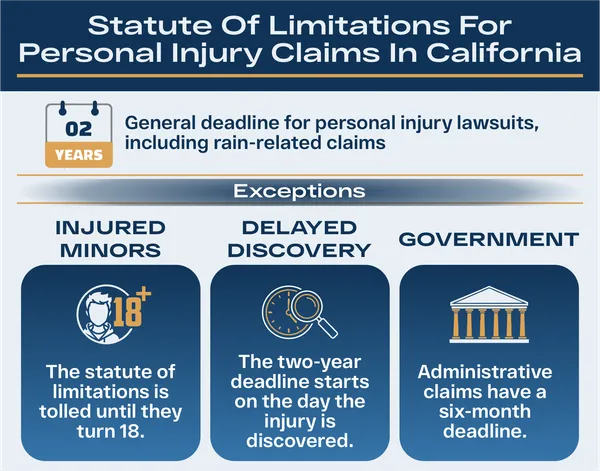
Most personal injury cases are subject to a two-year deadline. In California, the Code of Civil Procedure 335.1 establishes this statute of limitations. That means courts will likely dismiss your case if you file after this time limit.
Certain exceptions may apply:
- For injured minors, the deadline only starts when they turn 18.
- The statute of limitations may pause if the injury was discovered after the fact.
- For cases against the government, plaintiffs have six months to file an administrative claim.
Frequently Asked Questions About Rain-Related Accidents
Accidents caused by rain raise complex legal questions. Victims often ask whether they have a valid case. Clear answers can help them decide on how to proceed with their claim. Below are some common questions about rain-related injury claims.
Can I Sue A City For A Pothole Injury?
Yes. City governments have a duty to inspect and repair potholes. In rainy weather, these can quickly fill up with water and cause hydroplaning accidents. You can sue a local agency if you can prove that it was responsible for a dangerous condition of public property.
You must prove that:
- The government had notice of the dangerous condition:
- Actual Notice: It was aware of the hazard.
- Constructive Notice: The government should’ve known about the dangerous condition because it was present for an unreasonable amount of time.
- The public entity failed to fix it within a reasonable time.
It’s also important to note that you have to follow specific rules before suing a government agency. First, you have to file an administrative claim within six months of your rain-related car accident. You can only sue a city government if:
- It rejects your claim. You have six months from the date you receive a written denial to file a lawsuit.
- It fails to respond within 45 days. You must submit your case within two years of the date of your injury.
Does Insurance Cover Accidents Caused By Rain?
Yes, insurance typically covers accidents caused by rain. Coverage depends on the nature of the incident and who caused it. If you sustained injuries due to another party’s negligent actions, you may be able to seek compensation from:
- Another driver’s auto policy.
- Homeowners, renters, or commercial general liability insurance.
- Workers’ compensation benefits.
- Your own auto or health insurance policies.
Do I Need A Personal Injury Lawyer For A Rain-Related Accident?
California law does not require you to hire a lawyer for a rain-related accident. However, personal injury lawyers offer guidance. They help handle the claims process while victims recover from injuries. They gather and preserve time-sensitive evidence. Attorneys also navigate disputes and advocate for fair treatment. If necessary, lawyers present the case in court.
Do Lawyers Only Get Paid If They Win My Rain-Related Accident Claim?
Lawyers who work on a contingency fee basis don’t charge attorney’s fees unless they win. A case “wins” if the client receives compensation through a settlement or a verdict. In California, most personal injury lawyers operate under this agreement.
Is Rain An ‘Act Of God’ Defense In California Accidents?
California law rarely considers rain as an Act of God. Insurers and attorneys can only use this defense if the accident occurred during an unforeseeable, uncontrollable event that doesn’t involve human intervention. Natural disasters or phenomena fall under this category, but ordinary rain does not.
Seek Guidance On Your Rain-Related Car Accident
A car accident caused by rain can cause confusion about legal rights. Insurers may argue that natural forces caused the accident. For example, they might question whether the victim shares fault. California’s comparative fault laws divide liability among the relevant parties. In these cases, proving negligence can be challenging. As a result, many victims seek free advice from rain accident lawyers.
At Arash Law, our attorneys offer a free initial consultation. We can review your accident, explain your rights, and tell you whether you have a case. If you do, we can assist you throughout the claims process.
Contact AK Law at (888) 488-1391 for a free case review.