TL;DR: In California, the left-turn driver is typically at fault for failing to yield to oncoming traffic. However, the oncoming driver may share liability if they violate traffic laws, such as speeding or running a red light. Comparative fault allows multiple parties to share responsibility.
Highlights:
- Left-turn drivers must yield to oncoming traffic to avoid liability.
- Oncoming drivers may share fault if they break traffic laws.
- Comparative fault allows both drivers to share responsibility for the crash.
- Vehicle manufacturers, employers, or government agencies can also be liable.
- Left-turn collisions may involve defective parts or poor road conditions.
- Protected left turns usually favor the turning driver’s right of way.
Tip: Preserve evidence, such as dashcam footage or witness statements, to clarify fault.
Table of Contents
In a California left-turn accident, the driver turning left is generally liable because the law requires them to yield to oncoming traffic. However, comparative fault can shift liability if the oncoming driver also violated traffic laws.
State law requires drivers making a left turn to wait until the road is clear before completing the maneuver. Under this rule, many people assume the turning driver is always at fault in a crash.
In reality, fault is not always that simple. Another driver may share responsibility if they speed, run a red light, fail to stop, or drive recklessly. In some cases, a vehicle manufacturer, employer, or government agency may be partially responsible for the collision.
California follows a pure comparative fault system. This rule allows multiple parties to share liability for a crash. Each driver may receive a percentage of fault based on their actions.
Who May Be Responsible In A California Left Turn Accident
California law sets clear rules for left-turn collisions. A driver who plans to turn left must yield to oncoming traffic that is close enough to create a hazard. However, right-of-way is not absolute. Traffic signals, protected arrows, and unlawful driving can change who is responsible for the crash.
The sections below explain situations where liability may fall on different drivers or other parties.
When The Left-Turning Driver May Be Liable
Drivers making a left turn must allow approaching traffic to pass before completing the maneuver. If they fail to do so safely, a collision can occur. They can be responsible for a crash if they:
- Enter the intersection without allowing oncoming vehicles to pass.
- Misjudge the distance or speed of approaching traffic.
- Turn across multiple lanes when their view is blocked or limited.
- Rush the maneuver due to traffic pressure or impatience.
Drivers must also watch for pedestrians and cyclists. Many intersections include marked crosswalks and bike lanes. Turning without checking these areas can lead to serious injuries.
When The Oncoming Driver May Be Responsible
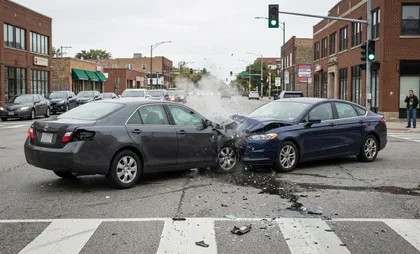
Drivers traveling straight through an intersection usually have the right of way. However, they must still follow traffic laws and drive safely. They could be at fault if they:
- Travel well above the speed limit when approaching the intersection.
- Enter the intersection after the traffic signal turns red.
- Ignore a stop sign or other traffic control device.
- Drive while distracted, impaired, or inattentive.
- Rush through the intersection aggressively.
When Other Parties May Share Responsibility
A left-turn collision can occur due to factors beyond the driver’s control. Other individuals or entities that contribute to the crash can be partially to blame for the harm. The following parties may be liable when:
- A vehicle manufacturer produces a defective part, such as faulty brakes or steering.
- A vehicle owner allows an unfit or unlicensed driver to operate the vehicle.
- An employer sends a worker onto the road without proper training or supervision.
Government agencies may also contribute to a crash if they fail to maintain roads, traffic signals, or warning signs. To pursue a claim against a public entity, a claimant usually must show:
- The roadway had a dangerous condition.
- The agency knew or should have known about the problem.
- The condition directly contributed to the crash.
Left Turn Laws In California You Need To Know
The California Vehicle Code (CVC) sets clear rules for drivers making left turns. These rules often help determine who is responsible in a crash. Two key rights-of-way laws in California explain when a driver must yield and how they should complete a left turn at an intersection:
- Yielding to Oncoming Traffic (CVC § 21801): Drivers who plan to turn left must yield to oncoming vehicles that are close enough to create a hazard. The turning driver must wait until the path is clear before crossing traffic.
Key points to remember:
- Allow oncoming vehicles to pass before turning left.
- Yield to traffic that could create a danger.
- Wait if you cannot complete the turn safely.
- Proper Left-Turn Position and Movement (CVC § 22100(b)): Specific traffic rules explain how drivers must position their vehicles before making a left turn.
Here’s what the law says:
- Approach the turn near the left edge of the far-left lane available for your direction of travel.
- Enter the intersection before starting the left turn.
- Leave the intersection in a lane that is lawfully open for traffic in that direction.
- On a road with three lanes moving in one direction that ends at a two-way road, a driver in the middle lane may turn left into any open lane on the cross street.
These rules help guide traffic safely through intersections and often play a role when determining responsibility after a left-turn collision.
Protected Vs Unprotected Left-Turn Scenarios And Fault
Traffic signals can change who holds the right-of-way during a left turn. Some intersections use a protected left turn, while others allow an unprotected left turn. These differences often affect fault determination after a crash.
A protected left turn uses a green arrow. The arrow allows the turning driver to proceed, while oncoming traffic must stop. In this situation, the turning driver usually has the right of way.
An unprotected left turn uses a solid green light. The turning driver may enter the intersection but must yield to oncoming traffic before completing the turn.
The table below shows how these situations may affect responsibility.
| Left-Turn Scenario | Typical Right-of-Way | Possible Fault Outcome |
|---|---|---|
| Protected left turn (green arrow) | The left-turn driver has the right-of-way. | The oncoming driver may be at fault if they run a red light or enter the intersection unlawfully. |
| Unprotected left turn (solid green) | Oncoming traffic usually has the right-of-way. | The left-turn driver may be responsible if they fail to yield. |
| An oncoming driver runs a red light | The left-turn driver may have lawfully entered the intersection. | The oncoming driver may share or carry most of the fault. |
| An oncoming driver speeds through the intersection | The oncoming driver typically retains the right of way unless they are far enough away for the other driver to turn left safely. | Both drivers may share responsibility under comparative fault. |
How To Determine Fault In A Left Turn Accident In California
To prove liability in a left-turn accident, four legal elements must exist under negligence law. A claimant must show that another driver failed to follow traffic rules and caused the crash. These elements form the legal basis for determining responsibility after a collision.
- Duty of Care: Drivers must follow traffic laws and operate their vehicles safely to avoid harming others on the road.
- Breach of Duty: A breach occurs when a driver violates traffic rules or drives carelessly, such as by failing to obey signals or misjudging traffic conditions.
- Causation: The negligent act must directly cause the crash. The collision would likely not have occurred without the driver’s conduct.
- Damages: The crash must result in measurable harm, such as injuries, medical costs, lost income, or property damage.
Remember that responsibility does not always fall on the driver who turns left. Fault may shift when the oncoming driver or other parties contribute to the crash.
What If Both Drivers Say They Had The Green Light?
When both drivers claim they had the green light, liability depends on the available evidence. Investigators and insurance companies review records and physical evidence to determine which driver entered the intersection lawfully.
Several types of evidence can help clarify what actually happened at the intersection:
- Traffic Camera or Dashcam Footage: Videos may show the traffic signal and the movement of the vehicles before the crash.
- Witness Statements: Nearby drivers, passengers, or pedestrians may confirm which driver entered the intersection lawfully.
- Traffic Signal Timing Records: Cities often keep logs showing how traffic lights changed during the time of the crash.
- Vehicle Event Data Recorders: Some vehicles store driving data that may show speed, braking, and other actions before impact.
These pieces of evidence can help determine which driver had the right of way and which may have violated traffic laws.
Deadlines To File A Claim After A Left-Turn Accident
In California, car crash victims generally have two years from the date of the accident to file a personal injury lawsuit. For property damage claims, the law allows three years to file.
Shorter deadlines apply when a government agency may share responsibility. In those cases, claimants usually must file a government claim within six months. If they miss these deadlines, they could lose the right to pursue compensation through legal action.
Compensation You May Recover After A Left-Turn Car Accident
California law allows injured individuals to seek compensation for harm caused by another driver’s negligence. The goal is to address the actual impact the crash had on your health, work, and daily life. The amount and type of compensation depend on your injuries, the evidence available, and the level of responsibility assigned to each party involved in the crash.
Compensation in a left-turn accident claim may include:
- Medical Costs: Payment for hospital care, doctor visits, surgery, medication, rehabilitation, and chiropractic care related to the injury.
- Lost Income: Wages you lose while recovering or while medical treatment keeps you away from work.
- Pain and Emotional Distress: Compensation for physical pain, anxiety, trauma, or reduced quality of life after the crash.
- Vehicle and Property Damage: The cost to repair or replace your car and other personal property damaged in the collision.
If the crash occurred while you were working, you may also qualify for workers’ compensation benefits through your employer. This state-mandated insurance covers medical treatment and a portion of lost wages related to the injury.
How The Claims Process Works After A Left-Turn Accident
After you submit a claim, an insurance adjuster will usually review the case. The adjuster may look at accident reports, photos, witness statements, and medical records to estimate the value of the claim. They will review this information carefully because they may try to settle claims for less than the full value of the losses.
The process often involves several steps:
- Reporting the Accident: You report the crash to the insurance company and provide basic details about the incident.
- Claim Investigation: The insurer reviews evidence such as police reports, photos, medical records, and witness statements.
- Fault Evaluation: The insurance company analyzes the evidence to decide who may be responsible for the crash.
- Damage Assessment: Claims adjusters review medical bills, repair costs, and other losses to estimate the claim’s value.
- Settlement Discussions: The insurer may present an offer to resolve the claim. Negotiations may follow if the amount does not reflect the full losses.
- Claim Resolution: The claim may result in a settlement agreement or proceed to legal action if the dispute continues.
Ultimately, multiple issues can arise during the claims process, affecting a victim’s ability to seek compensation. That is why many people begin to think, “I need a personal injury lawyer.” Left-turn accident lawyers can help gather evidence, review the details of the crash, and communicate with the insurance company on your behalf. If the insurer refuses to offer reasonable compensation, your lawyer can guide you through the next steps, including filing a lawsuit to pursue recovery through the court process.
FAQs About Left-Turn Accidents In California
Left-turn accidents often leave people with many questions. You may wonder who is responsible, whether you can recover compensation, or if you should speak with a lawyer. Below are answers to some common questions people ask after a left-turn collision in California.
Does The Turning Car Always Have Fault In A Left-Turn Accident?
No. Drivers who turn left must usually yield to oncoming traffic. Due to this rule, people often assume the turning driver caused the crash. However, the situation can change if the other driver breaks traffic laws. Speeding, running a red light, or driving while distracted can shift some or all of the fault.
Can I Recover Compensation If I Was Partially At Fault?
Yes, you can. California law allows injured people to seek compensation even if they made a mistake. The court or insurance company will reduce the final amount by your percentage of fault. For example, if your damages equal $50,000 and you hold 20% of the fault, you may still recover $40,000.
You may also seek free advice from a left-turn accident lawyer to better understand how comparative fault may affect your claim.
Is It Necessary To Hire An Attorney For A Left-Turn Accident Case?
Working with a lawyer can be a good decision, especially when the accident involves serious injuries or disputes about fault. A left turn accident lawyer can review the evidence and explain your legal options. They can also communicate with the insurance company and handle negotiations during the claims process.
How Do Most Lawyer Fees Work If I Decide To Hire One?
Many personal injury lawyers work on a contingency fee. That means you usually pay no upfront legal fees. The attorney receives payment only if the case results in compensation. So, do lawyers only get paid if they win your case? Under this arrangement, the answer is yes. Their fee is often a percentage of the amount recovered.
Need Help After A Left-Turn Accident In California? Speak With A Lawyer
A left-turn accident can result in injuries, expenses, and uncertainty about who is at fault. Responsibility is not always clear. Insurance companies may also dispute liability.
The lawyers at Arash Law understand the California traffic laws that govern left-turn accidents. That includes rules about yielding to oncoming traffic and how comparative negligence can impact a claim. We review the details of the crash and explain your legal options.
Call AK Law at (888) 488-1391 for a free, no-obligation consultation. Our left-turn accident attorneys will listen to your situation and help you understand your next steps.