TL;DR: Health insurance covers emergency medical services after an accident, including ambulances and ER or hospital stays, but you still owe deductibles or coinsurance. Injured drivers must track bills because health plans pay first while a fault claim proceeds, and California’s 2-year injury deadline can limit what you recover.
Highlights:
- Request the ambulance run sheet, dispatch log, and paramedic report.
- Save ER triage notes, imaging/labs, orders, and discharge instructions.
- Get itemized bills and match each charge to its EOB.
- Ask your doctor for a brief medical-necessity note supporting emergency treatment.
- Document when you were stabilized and any transfer or billing notices given.
- Appeal within 180 days if your plan denies an emergency bill.
- Track MedPay, Medicare, or Medi-Cal payments that may create reimbursement claims.
Tip: Keep a single folder with dated copies of records, bills, EOBs, and denial letters, and when describing the event to insurers, stick to symptoms and timelines rather than guessing.
Table of Contents
Health insurance helps pay for emergency medical care after an accident. It can cover ambulance transportation, emergency room treatment, and hospital care needed to stabilize your injuries. Your plan sets the terms. Deductibles, co-pays, coinsurance, and network rules affect what you pay out of pocket.
In California, health insurance typically pays for covered care first, subject to plan terms and coordination of benefits. However, the exact “pay-first” order depends on your plan type and whether you have additional coverages, such as MedPay. Health insurance does not replace a claim against the at-fault party. You may still need to pursue compensation for unpaid medical bills, lost income, and other losses your plan does not fully cover.
After an accident, health insurance usually helps cover medically necessary emergency care, including ambulance transportation, emergency room treatment, and hospital care. That does not mean it pays for everything. Your out-of-pocket costs depend on your policy, your network status, whether the care remained emergency care after stabilization, and whether another source of coverage applies.
What Records Help With Emergency Bill Coverage Or Denials?
Keep records that show the care was emergency treatment, why it was medically necessary, and how the insurer handled the bill. These documents can affect whether the plan approves, reduces, or denies charges. They can also support an appeal if the insurer refuses to pay.
Focus on these records first:
- Ambulance Records: Get the run sheet, dispatch log, and paramedic report. These records show your symptoms, where you were picked up, and why emergency transport was necessary.
- Emergency Room Records: Keep triage notes, physician orders, imaging reports, lab results, and discharge instructions. These records show your condition upon arrival and the care you received.
- Hospital Admission Records: If you were admitted, gather admission notes, operative reports, and progress notes. These records support the need for inpatient treatment.
- Itemized Bills and Explanations of Benefits (EOBs): Match each bill with its Explanation of Benefits. These documents show the charges, coding, network status, payments, and any amount the insurer denied.
- Medical Necessity Statements: Keep any physician notes or certifications that explain why the ambulance ride, ER visit, or hospital stay was necessary.
- Denial & Appeal Records: Save denial letters, appeal forms, and insurer responses. These records help show why the claim was denied and what support you submitted to challenge the decision.
These records can help you understand what the plan paid, what it denied, and whether you have grounds to appeal.
What Emergency Medical Services Can Health Insurance Cover After An Accident?
Health plans usually decide emergency coverage under the prudent layperson standard. That means the question is whether a reasonable person would think delaying care could seriously harm their health, based on the symptoms at the time, not the final diagnosis. This matters because it can affect whether ambulance and emergency room bills are treated as covered emergency care.
Health insurance covers a range of emergency services after an accident. California law requires plans to include emergency services and hospitalization as essential health benefits. In practice, health insurance often pays for urgent care first while your injury claim is still pending.
After an accident, covered emergency care can include:
- Ambulance Transportation: Ground or air transport when you need rapid medical care.
- Emergency Room (ER) Facility Charges: Use of the ER, equipment, and staff.
- Emergency Physician Services: Evaluation, diagnosis, and immediate treatment.
- Imaging and Lab Work: X-rays, CT scans, blood tests, and other diagnostics.
- Medications in the ER: Drugs given to manage pain, bleeding, or infection.
- Surgery or Hospital Admission: Inpatient care when your condition requires it.
Your coverage depends on your injuries, the provider, and your policy terms. Medicare follows a similar structure. Part B covers ambulance services and emergency department care when your condition makes other transport unsafe. Part A covers inpatient hospital care after admission.
How Does Health Insurance Usually Pay For Emergency Care After An Accident?

Health insurance usually helps cover emergency care through the standard claims process. After an accident, the ambulance provider, emergency room, doctors, or hospital sends the bill to your health plan. The insurer then reviews the claim to decide whether the services qualify as covered emergency care under your policy.
In most cases, the process works like this:
- The Provider Sends the Bill to Your Health Plan: The ambulance company, hospital, and treating doctors usually bill your insurer directly.
- The Insurer Reviews the Claim: The plan reviews records, diagnosis codes, and treatment provided to determine whether the services qualify as covered emergency care.
- The Plan Pays Its Share Under Your Benefits: If the claim is approved, the insurer pays according to your policy terms.
- You May Still Owe Out-of-Pocket Costs: Even when emergency care is covered, you may still owe a deductible, co-pay, coinsurance, or charges for care the plan does not fully cover.
- Other Coverage May Also Apply: MedPay, Medicare, Medi-Cal, or a later liability claim may help cover costs that health insurance did not fully cover.
Emergency care also gets special protection in many cases. If you go to an out-of-network emergency room, health plans generally must treat the emergency services at in-network cost-sharing levels. However, once your condition stabilizes, ordinary plan rules may apply to ongoing care, transfer decisions, and follow-up treatment.
Health insurance can help you get emergency treatment without waiting for a fault decision or settlement. Still, it does not always pay the full bill, nor does it replace a claim against the person who caused the accident.
Does Health Insurance Cover Out-Of-Network Emergency Care?
Yes. Federal and state laws say health plans must cover emergency services at in-network rates. This applies even if the hospital or doctor is out-of-network. Federal law requires plans to treat emergency services as in-network for cost-sharing and to waive prior authorization. You can get care right away without checking the network status first.
The No Surprises Act (NSA) provides critical protections for emergency care. It prohibits “balance billing” for emergency services and certain non-emergency services at in-network facilities.
- Scope: The NSA applies to most emergency services, including air ambulances.
- The Dispute Pathway: If an insurer and an out-of-network provider disagree on payment, they must use an Independent Dispute Resolution (IDR) process rather than billing the patient.
- Exclusions: The federal NSA does not cover ground ambulance services, though state rules may still apply. It also does not cover non-emergency follow-up care after a provider stabilizes you and can safely transfer you.
Coverage can change after stabilization. Once your condition stabilizes, the plan can require transfer to an in-network facility. If you choose to stay after proper notice, out-of-network costs may apply. These rules also affect your injury claim. Clear records of emergency treatment, transfer status, and billing notices help show what care was necessary and what costs remain.
How Do Auto Insurance And Health Insurance Work Together After A Crash?
Payer priority depends on your specific coverages. MedPay covers immediate costs first. Next comes health insurance. Lastly, the at-fault driver’s liability insurance pays through a settlement or judgment.
A simple way to see the difference:
| Coverage Type | What It Pays | When It Applies | Key Limits |
|---|---|---|---|
| Health Insurance | ER care, hospital treatment, and follow-up care under the plan. | Right after the crash. | Deductibles, co-pays, & network rules. |
| MedPay (Auto) | Immediate medical expenses, including ambulance and ER bills. | After the crash, regardless of fault. | Policy limits apply; usually, smaller coverage amounts. |
| UM/UIM (Auto) | Medical costs, lost income, and property damage when the at-fault driver lacks coverage. | After liability and coverage issues are confirmed. | Requires proof of fault and damages; subject to policy limits. |
| Liability Claim (At-Fault Party) | Full range of damages, including medical bills, lost wages, and pain & suffering. | After the investigation and claim process. | Takes time; depends on proof of fault and insurer response. |
Time is of the essence. California rules require insurers to acknowledge a claim within 15 days, make a decision within 40 days after proof of claim, and issue payment within 30 days after acceptance. These timelines help, but they do not resolve emergency bills right away. Health insurance and MedPay often cover initial costs while the liability claim proceeds.
What If Medicare Or Medi-Cal Paid For Emergency Care?
Government programs pay for immediate care but have a legal right to be paid back from any settlement you receive from the at-fault party.
To understand how repayment works, focus on these key terms:
- Subrogation: The insurer’s right to recover what it paid by pursuing the at-fault party.
- Lien: A legal claim against your settlement proceeds for the amount paid on your behalf.
- Conditional Payment: Medicare pays for care now with the condition that you repay it after a settlement or recovery.
Here is how each program applies:
- Medicare: Medicare follows the Medicare Secondary Payer (MSP) rules. It covers emergency care when needed, but it seeks reimbursement from any later settlement, judgment, or insurance payment.
- Medi-Cal: Medi-Cal acts as the payer of last resort. The California Department of Health Care Services (DHCS) runs a Personal Injury Program that seeks repayment from settlements or recoveries related to the injury.
You must address these repayment claims before you distribute settlement funds. Clear notice, accurate payment records, and early coordination help prevent delays and disputes in your case.
What If The Health Plan Denies The Emergency Bill?
You have the right to appeal. Start with an internal appeal through your insurer.
If the health plan denies the emergency bill, start with the plan’s internal appeal process. Depending on the type of plan, you may then be able to file a complaint with the California Department of Managed Health Care, the California Department of Insurance, or follow the appeal rules that apply to a self-funded employer plan under the Employee Retirement Income Security Act (ERISA).
To challenge a denial, follow these steps:
- Request Records: Ask your provider for triage notes, physician statements, and any documentation that supports the emergency nature of your visit.
- File an Internal Appeal: Submit your appeal within 180 days of the denial. Follow your plan’s claims and appeals process.
- Request an External Review: Ask for an independent third-party review if the plan upholds the denial.
- File a DMHC Complaint: Submit a complaint if your plan falls under DMHC oversight and the issue remains unresolved.
Strong documentation can demonstrate medical necessity and support payment or the reversal of a denial.
What Compensation Is Available Beyond Emergency Bills?

Emergency medical services are only one piece of an injury claim. If another party caused the accident, you can pursue compensation for the full impact of the injury, not just the ER bill.
You can pursue compensation for:
- Economic Damages
- Medical Expenses: Past & future care, therapy/chiropractic care, and medication.
- Lost Wages: Time missed from work during recovery.
- Loss of Earning Capacity: Reduced ability to work in the future.
- Out-of-Pocket Costs: Transportation, medical supplies, and in-home care.
- Non-Economic Damages
- Pain and Suffering: Physical pain from the injury.
- Emotional Distress: Anxiety, trauma, or mental strain.
- Loss of Enjoyment of Life: Limits on daily activities or hobbies.
- Physical Impairment or Disability: Long-term or permanent limitations.
If the injury happened at work, workers’ compensation may cover medical care and part of your lost wages, regardless of fault. You may still have a separate claim against a third party if someone outside your employer contributed to the accident.
Many accident victims also want to understand how much most personal injury cases settle for when evaluating whether to pursue compensation beyond what health insurance paid. Focus on documenting the full scope of your losses and identifying all available payers. This approach helps ensure no part of the claim gets overlooked.
What Deadlines Matter In California?
Several strict deadlines apply to personal injury claims in California. You must act within these time limits to protect your right to recover damages.
Key California timelines include:
- Personal Injury Claims: You have 2 years from the date of injury to file a lawsuit in most cases.
- Government Claims: You must file an administrative claim within 6 months if a public entity is involved, such as a city vehicle, county agency, or dangerous road condition.
- The agency has 45 days to accept or reject the claim.
- You usually have 6 months from a written rejection to file a lawsuit, or up to 2 years from the injury if the agency does not respond.
- Workers’ Compensation Claims: You must report the injury to your employer within 30 days. You generally have 1 year to file a workers’ compensation claim.
Many victims search for free advice from an accident lawyer to confirm the deadline and next steps. Early guidance can help you preserve evidence, confirm liability, and keep your claim within the required time limits.
FAQs About Health Insurance Coverage For Emergency Medical Care
You may still have questions about how health insurance works after an accident. These answers address common concerns about emergency care, billing, and your legal options.
Does Health Insurance Cover An Ambulance Ride After A Car Accident?
Yes, health insurance often covers ambulance transport when it is medically necessary. Plans and Medicare need proof that other transport could harm your health. Also, the ambulance must take you to the nearest suitable facility. Coverage does not mean full payment. Deductibles, co-pays, or coinsurance may still apply. Review the bill with your health and auto policies to confirm how each applies.
Can I Still Pursue The At-Fault Driver If My Health Insurance Paid First?
Yes, you can still pursue a claim. Health insurance payment does not remove the at-fault party’s legal responsibility. You can seek compensation for medical bills, lost wages, and other losses caused by the crash. Your health plan may assert a right to reimbursement from any recovery. Clear records help track what the plan paid and what you can still recover.
What If I Do Not Have Health Insurance?
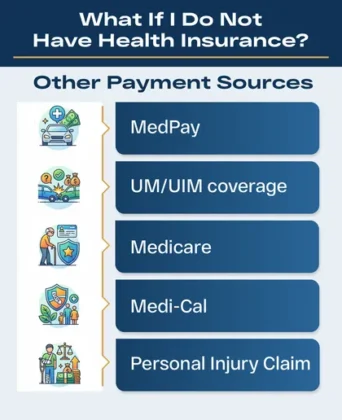
You can still receive emergency care. EMTALA requires hospitals to screen and stabilize you regardless of your ability to pay. You will still receive bills after treatment. Other payment sources may include MedPay, uninsured or underinsured motorist coverage, Medicare, Medi-Cal, or payment arrangements with providers. A personal injury claim can help address unpaid medical costs and other losses.
Do I Need A Personal Injury Lawyer After Emergency Medical Treatment?
You may benefit from legal guidance if emergency bills, insurance issues, or fault questions arise. A lawyer can review how health insurance, auto coverage, and any third-party claims work together. They can also check billing, handle insurer communication, and address reimbursement claims from Medicare, Medi-Cal, or private plans. This way, you understand what you may still be able to recover beyond what health insurance paid.
Speak With A California Lawyer About Emergency Care And Insurance Coverage
Health insurance often covers emergency medical services after an accident. However, it does not fully cover the financial impact. You may still face cost-sharing, denied bills, or questions about which coverage should pay first. Our experienced accident lawyers can review how health insurance, auto coverage, and any liability claim work together. We can also help you:
- Review emergency bills and coverage to spot errors, denials, or unpaid balances.
- Coordinate multiple payers, including health insurance, MedPay, Medicare, and Medi-Cal.
- Handle appeals and reimbursement issues tied to liens or subrogation claims.
- Track deadlines and claim requirements to protect your right to recover.
- Evaluate your injury claim to pursue medical costs, lost income, and other losses.
You might also be concerned about legal costs and ask, “Do lawyers only get paid if they win?” At Arash Law, yes. We work on a contingency fee basis. That means our attorneys only get paid if they win or settle your case.
If you have questions about emergency medical bills or insurance after an accident, you can call (888) 488-1391 to discuss your situation. AK Law offers free case evaluations.