TL;DR: Discovery in truck accident cases is the formal pre-trial process where both sides request and exchange relevant evidence, including ELD data, black box records, driver files, and maintenance logs. The trucking company’s early access to evidence makes discovery important because it gives injured people legal tools to request key records before trial. Act quickly to preserve dashcam footage and truck electronic records before they become harder to obtain.
Highlights:
- Ask your attorney to send a spoliation letter right away to put the trucking company on notice to preserve dashcam footage, black box data, and ELD records.
- Use interrogatories, document requests, and depositions to obtain driver logs, maintenance records, inspection reports, and records of possible FMCSA safety violations.
- Request the driver’s qualification file, drug and alcohol test results, and dispatch messages to help determine whether negligence played a role.
- Expect the defense to demand your medical records, work history, and testimony.
- Ask a truck accident lawyer whether federal court rules could apply to your case.
- Respond to discovery requests on time, as California law generally only gives parties 30 days to do so.
Tip: Focus on facts and timelines during your deposition rather than guesses. A court reporter records your answers, and the testimony may be used later as allowed by law.
Table of Contents
Discovery in truck accident cases is the formal pre-trial phase of a lawsuit. Both sides must share evidence and information before the case goes to trial. Each party must respond to proper discovery requests so that both sides can prepare for trial with fewer surprises.
After a truck accident, trucking companies and their insurers often begin investigating a serious crash right away. They might send investigators, keep electronic data from the truck, interview witnesses, and start evaluating the claim while you get medical care. This early response can give them an advantage in gathering evidence. Discovery could help level the playing field by giving you the legal tools to request records from the trucking company.
When Does The Discovery Phase Begin?
Formal discovery in California doesn’t open the moment a truck accident happens. It begins only after a lawsuit is filed and served, and even then, the timing depends on which side is requesting evidence:
- Defendants can start immediately. Once the trucking company or driver is served with the complaint, they can send written discovery (interrogatories, requests for production, and requests for admission) to the injured party.
- If you’re the one filing suit, California law requires a 10-day wait after serving the summons and complaint on a defendant (or until that defendant formally appears in the case, whichever happens first) before you can send written discovery requests to them.
Depositions take longer to schedule. A plaintiff generally cannot notice a defendant’s deposition until 20 days after service or appearance, unless the defendant agrees to an earlier date in writing or the court permits expedited discovery.
Discovery has a closing date, too. Under California law, discovery generally cuts off 30 days before trial. Additionally, discovery motions must be heard no later than 15 days before that trial date. For that reason, attorneys work to get key requests out early rather than waiting until the case is well underway.
| Phase & Timeline | Primary Goal | What Is Gathered Or Exchanged |
|---|---|---|
| 1. The Spoliation Letter
(Immediate / Pre-Lawsuit) |
Preservation: Puts the trucking company on notice to preserve potentially relevant evidence before it can be deleted or overwritten. | Dashcam footage, black box data, and Electronic Logging Device (ELD) hours-of-service records. |
| 2. Written Discovery
(After the applicable waiting period) |
Paper Trail: Gathers foundational facts, corporate records, and internal documents under oath. | Form Interrogatories, Special Interrogatories, and Requests for Production (driver files, maintenance logs). |
| 3. Depositions
(During the discovery period) |
Locking Testimony: Sworn, face-to-face questioning to lock in stories and evaluate how witnesses perform. | Oral testimony from the truck company’s person most qualified (PMQ), the truck driver, eyewitnesses, safety managers, and the injured plaintiff. |
| 4. Expert Exchange
(Pre-Trial Close) |
Technical Analysis: Introduces specialized scientists and industry professionals to explain the data. | Accident reconstruction reports, FMCSA safety compliance reviews, and biomechanical analysis. |
What Are The Main Discovery Tools Used?
Your truck accident lawyer uses formal discovery tools such as interrogatories, depositions, and third-party subpoenas to request evidence from the other side. In California, the other party must reply to valid discovery requests. They can object or withhold information if the law protects it. If the parties cannot resolve a dispute, the court may order the other side to provide the requested evidence.
Your attorney may use one or more of the following discovery tools:
- Interrogatories: Written questions the other party must answer under oath. Your attorney can ask about the driver’s training, hours on the road, or actions before the crash.
- Requests for Production: Formal demands for records and data, such as driver logs, repair files, dashcam footage, and onboard truck data. These requests may require the other party to permit the inspection, photographing, testing, or sampling of physical evidence, such as the truck and its components, under California Code of Civil Procedure (CCP) § 2031.010.
- Depositions: Sworn questioning of witnesses and parties, in person or by video. A court reporter records every answer. California law allows lawyers to use the testimony later, including in court in some situations.
- Requests for Admission: Written requests asking the other party to admit specific facts, the application of law to facts, or the authenticity of documents. Admissions can narrow the disputed issues.
- Third-Party Subpoenas: Court orders that require outside companies not directly involved in the lawsuit, like the ELD/telematics provider, the driver’s phone carrier, or the truck repair shop, to hand over records or testify.
What Evidence Can You Uncover From The Trucking Company?
Evidence may include driver qualification files, hours-of-service records, maintenance and inspection logs, electronic truck data, dispatch communications, and company safety records. This evidence shows how the crash happened. It also helps determine whether the trucking company or another party, such as a cargo-loading company, maintenance contractor, or parts manufacturer, failed to follow safety rules.
Some of that evidence does not last long on its own. Dashcam footage and black box logs can be quickly purged or overwritten, depending on the system.
Your attorney can request many types of records during discovery in a truck accident case, including:
- ELD Data: Electronic Logging Devices keep track of driving time. They also record duty status, location, engine hours, and vehicle miles. These records can help show whether the driver followed federal hours-of-service rules before the crash.
- Driver Qualification File: This file shows the driver’s license and driving history. It also includes medical certification, the road test, and annual reviews. It can help show whether the driver met federal qualification rules before and during employment.
- Drug and Alcohol Test Records: FMCSA rules require post-accident testing in specified circumstances. Testing is generally required after a fatal crash. Discovery may show whether the trucking company completed a required test.
- Maintenance Logs and Safety Records: Maintenance and inspection records show whether workers inspected the truck and kept it in good condition. Discovery may also uncover roadside inspection reports, enforcement records, or other documents showing possible violations of federal motor carrier safety rules.
- Driver-Dispatch Messages: Texts and dispatch records show the driver’s route. GPS logs show the schedule. They list instructions before the crash. In some cases, they may show whether delivery pressure contributed to the collision.
If a third-party telematics or vendor platform hosts this data, your attorney may need to subpoena the vendor directly rather than relying solely on the trucking company’s production.
What Evidence Will The Trucking Company Request From You?
Discovery in a truck accident case goes both ways. The defense can also request information from you. You also need to comply with these evidence requests. That’s why preserving the following will be one of the most important things to do after a truck accident:
- Your Medical Records: This can include information about prior injuries or health conditions. The defense may use them to assess whether the crash caused new injuries or worsened existing ones. They might ask you to have a physical or mental exam under California’s discovery rules if there’s a dispute about your condition. This request must comply with California law. The court may sometimes need to approve the exam.
- Your Employment and Wage Records: If you claim lost wages, the defense may use this evidence to verify how much income you lost, so keep any pay stubs, tax returns, or records of missed shifts.
- Your Social Media Posts: Some of them may be relevant to your claim or injuries. Because defense teams actively monitor social media during discovery, avoid posting about the crash, your health, or your activities. Additionally, do not delete or alter existing content without first speaking with your attorney because relevant material may need to be preserved.
Limits On Discovery In Truck Accident Cases
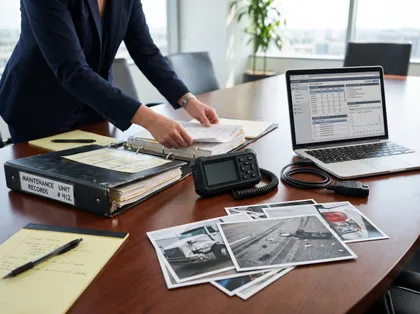
A party cannot request unrestricted access to all communications or records. In general, discovery must look for material that is reasonably proportionate to the truck accident case and pertinent to the claims or defenses.
Courts can restrict requests that are too broad, overly burdensome, or that invade privacy. They can also limit those who target trade secrets or protected attorney work. Additionally, protective orders can restrict access to and use of sensitive records.
Discovery may be restricted by:
- Attorney-client privilege.
- Attorney work product.
- Medical and financial privacy.
- Trade-secret protections.
- Undue burden or expense.
- Protective orders.
- Limits on overly broad ESI requests.
Does Discovery Work Differently In Federal Court?
It can. Trucking is an interstate business, so some truck accident cases may end up in federal court rather than a California court. A trucking company can often move a case to federal court when the parties are from different states, and the amount in dispute exceeds $75,000. If that happens, the Federal Rules of Civil Procedure (FRCP) apply instead of the CCP.
Some key differences include:
- Initial Disclosures: Federal Rule 26 generally requires both sides to automatically hand over certain evidence and witness information early, without waiting for a formal request. California does not require this.
- Discovery Cutoff: California generally cuts off discovery 30 days before trial. In federal court, the cutoff is set by the judge’s scheduling order and can vary by district and by judge.
- Expert Witness Deadlines: California courts follow CCP 2034 procedures, while federal courts follow FRCP 26(a)(2). These sections of the CCP and FRCP establish different disclosure and reporting requirements.
- Deposition Limits: Federal Rule 30 generally limits each side to 10 depositions of 7 hours each, unless the court allows more. California’s limits differ.
Because these deadlines can shift once a case is removed to federal court, it’s important to work with an attorney experienced in both California state and federal truck litigation.
How Does Discovery Impact Your Truck Accident Settlement?
Discovery can have a major impact on a truck accident settlement. When it reveals strong evidence about the crash, both sides can better assess their cases. That may encourage settlement discussions and help the parties resolve the case before trial. If they cannot reach an agreement, the evidence gathered during discovery may be presented in court, subject to the rules of evidence.
If a truck accident case proceeds to trial, discovery may also help the judge or jury determine each party’s share of fault. That matters because California follows a pure comparative negligence rule. Under it, a court can assign a victim a percentage of fault and deduct that percentage from their final award. For instance, if a judge assigns you 30% of the fault and your total damages are $100,000, you may only recover $70,000.
Frequently Asked Questions About Truck Accident Discovery
The discovery phase in a truck accident can feel overwhelming. You may have questions about what you must do, what the trucking company can ask for, and what happens if something goes wrong. The answers below cover the most common concerns that injured victims have about how discovery works in California.
How Does The Statute Of Limitations Affect Discovery Timing?
Discovery cannot begin until a lawsuit is filed. In California, most truck accident injury claims must be filed within two years of the crash under the state’s statute of limitations (CCP § 335.1). If your claim involves a government entity, such as a city- or county-owned truck, that deadline can be much shorter, sometimes just six months to file an initial claim.
How Long Does The Discovery Process Take In California?
There is no set timeline, but it may last 6 to 12 months or longer, depending on the facts. The timeline depends on factors such as the amount of evidence, the number of parties, and whether discovery disputes arise. Both sides share records. These include driver logs, maintenance records, and medical records. They review this information before trial or settlement talks. Cases involving serious injuries, multiple parties, or disputed fault often take longer.
What Happens If A Trucking Company Hides Or Destroys Evidence?
If evidence still exists but the trucking company won’t produce it, your attorney can send a meet-and-confer letter, then file a motion to compel. If the court agrees and the company still does not provide the requested evidence, sanctions may follow. These include fines or limits on the evidence they can use at trial. If evidence was destroyed or lost, such as overwritten dashcam footage or ELD data, courts can impose similar sanctions or allow the jury to assume the missing evidence would have hurt the company’s case.
Can You Request Text Messages During Discovery?
Yes. Text messages are electronically stored information (ESI). California law permits each side to request relevant text messages, unless the attorney-client privilege or another legal privilege applies. So, the trucking company can request your relevant messages, and your attorney can ask for relevant messages from them.
What Happens If I Miss A Discovery Deadline?
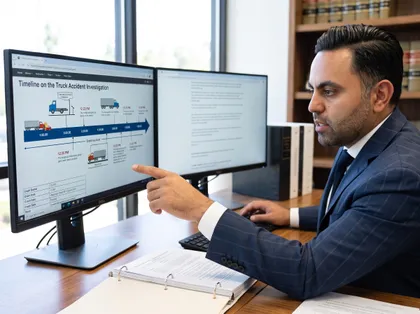
Missing a discovery deadline can seriously hurt your case. In California, you generally have 30 days to respond to a document request. If you miss the deadline, you may waive many objections unless the court grants relief. If you miss a discovery deadline, tell your attorney right away.
Can I Refuse To Answer Deposition Questions?
In most cases, you cannot refuse to answer questions at a deposition. A deposition is a formal, recorded interview done under oath before trial. Your attorney can object if a question asks for legally protected information. In some cases, your attorney can tell you not to answer at all. Refusing on your own, without a legal reason, can lead to court sanctions.
Do I Need A Lawyer For The Discovery Process?
Going through California discovery without a lawyer puts you at a real disadvantage against the trucking company’s defense team. Seeking free advice from a truck accident lawyer before signing anything can help you understand your rights and what to expect. One misstep can cost you evidence you cannot recover, such as missing a deadline or failing to protect privileged information.
Need Help With Discovery In A Truck Accident?
The trucking company’s legal team may begin investigating the crash soon after it happens. Some systems overwrite dashcam footage and purge truck electronic data after a certain period. Some maintenance and inspection records may also become harder to obtain if no one requests them promptly. Acting quickly helps preserve critical evidence before it can be lost or overwritten.
If we take your case, our attorneys at Arash Law can help manage every step of the discovery process so you can focus on recovery. We’ll handle your document requests, depositions, and court filings so missed deadlines and mishandled requests don’t hurt your case in ways that are hard to undo. Though the following case results don’t guarantee specific outcomes for your situation, they illustrate how we’ve helped truck accident victims in the past:
- $5,000,000 — Truck and Motorcycle Collision: At first, the evidence appeared to be against our client, the injured motorcyclist. He faced claims of speeding, riding under the influence, and being uninsured under California’s Proposition 213. Our legal team thoroughly investigated the crash and found that the truck driver violated company policies and training. As a result, the trucker made an unsafe turn, and the accident would not have happened if he had turned safely. This evidence led to a $5,000,000 recovery for our client.
- $5,000,000 — Pedestrian Struck by a Truck: A large truck struck our client, who was walking within a marked crosswalk. The trucking company argued that he caused the crash because he was using his phone at the time. We challenged that claim, presented evidence supporting our client’s case, and recovered $5,000,000 on his behalf.
Arash Law works on a contingency fee basis, so you don’t pay attorney’s fees unless we win your case. Call AK Law at (888) 488-1391 today to schedule your free initial consultation and find out how we can help.