TL;DR: Comparative negligence in California lets injured people recover damages even if they share fault, but their share reduces the amount recovered. Drivers, pedestrians, and other injured people must show another party’s fault and meet the usual 2-year deadline for injury lawsuits.
Comparative negligence in California is a legal doctrine that allows injured parties to recover damages even when they share responsibility for an accident. Under the state’s pure comparative negligence system, an injured person’s damages are reduced by their percentage of fault rather than automatically denied.
For example, someone who is 30% responsible for an accident may still recover 70% of their total damages from other liable parties, subject to applicable liability and insurance rules. Even if someone is 99% at fault, they may recover the remaining 1% if another party is legally responsible.
The California Supreme Court established this system in Li v. Yellow Cab Co. (1975) 13 Cal.3d 804. It replaced the earlier contributory negligence rule, which generally prevented an injured person from recovering damages if they contributed to the accident.
Key Facts About Comparative Negligence in California
- California follows pure comparative negligence. An injured person’s percentage of fault reduces their recoverable damages rather than automatically preventing recovery. (Judicial Council of California, CACI No. 405)
- There is no 50% fault cutoff. Someone more responsible than another party may still recover damages attributable to that other party.
- Evidence determines fault allocation. Photographs, witness testimony, accident reports, and other records help establish each party’s responsibility.
- Insurance findings can be challenged. An insurer’s initial assessment does not necessarily establish the final legal allocation of fault.
- Different damages rules may apply. When multiple defendants are liable, California distinguishes economic damages from non-economic damages. Defendants may share responsibility for the victim’s financial losses. However, each defendant is generally responsible only for their percentage of non-economic damages. (California Civil Code § 1431.2)
- Filing deadlines still apply. Comparative negligence does not extend the time available to pursue an injury lawsuit or applicable government claim.
Table of Contents

How Does California’s Pure Comparative Negligence Law Work?
California’s pure comparative negligence law allocates legal responsibility for a personal injury based on the extent to which each party contributed to it. Even if an injured person shares some of the blame, they may still recover compensation from another party who was also at fault.
Civil Code § 1714 establishes the general duty to use reasonable care to avoid harming others. However, the state’s pure comparative negligence rule comes from court decisions rather than a specific statute.
The California Supreme Court established this rule in Li v. Yellow Cab Co. The decision replaced the old all-or-nothing system with one that allows injured people to recover damages based on each party’s share of responsibility.
However, determining fault in a personal injury case is not always straightforward. Sometimes, one person is entirely responsible. Other times, two or more people may have contributed to what happened. When fault is shared, California injury attorneys examine the evidence to assess each party’s responsibility and how it could affect an injured person’s right to compensation.
How Do Different Negligence Rules Affect Compensation?
While California follows pure comparative negligence, other states use different rules to determine compensation when fault is shared. The biggest difference is the extent of responsibility an injured person can have before losing the right to recover damages. Some states allow recovery regardless of the person’s share of fault, while others set limits that can prevent recovery altogether.
| Fault System | How Recovery Works |
|---|---|
| Pure comparative negligence | You can recover compensation even if you are mostly at fault. Your percentage of fault reduces your compensation. |
| Modified comparative negligence | You cannot recover compensation if your share of fault reaches a certain limit, usually 50% or 51%, depending on the state. |
| Contributory negligence | Even 1% of fault may prevent you from recovering compensation. |
California uses the pure comparative negligence system, meaning there is no 50% fault cutoff. Even if you are up to 99% responsible, you may still recover compensation. However, the amount you can receive will be reduced according to your share of fault.
How Are Fault Percentages Determined in California?
In California, fault percentages are generally determined by examining what each party did before and during an accident and how their actions may have contributed to the injuries. This process involves reviewing the available evidence, identifying possible negligence, and assessing each person’s share of responsibility.
Insurance adjusters and attorneys may evaluate fault during settlement negotiations. If the case goes to trial, a judge or jury may determine how responsibility should be divided based on the evidence and applicable law.
Several types of evidence may help establish or challenge each party’s share of fault:
- Actions of Each Party: Evidence of speeding, distracted driving, traffic violations, or other conduct that may show a failure to exercise reasonable care.
- Accident Reports: Officers’ observations, recorded statements, accident diagrams, and findings about possible contributing factors.
- Photographs and Videos: Images that may show vehicle positions, road conditions, traffic signals, visibility, or dangerous property conditions.
- Witness Statements: Accounts from people who saw the incident and may help clarify what happened before and during the accident.
- Vehicle Data and Recordings: Available dashcam footage and vehicle information that may help establish speed, braking, or other relevant driving behavior.
- Accident Reconstruction: Technical analysis that may help explain how a collision occurred, particularly when the available evidence is disputed.
To establish negligence, an injured person generally needs to show that another party failed to exercise reasonable care and that this failure caused harm. If the defendant claims the injured person was also negligent, the defendant generally must prove that the injured person’s conduct contributed to the harm.
Medical records, treatment bills, wage-loss documents, and repair estimates may also help support an injury claim. While these records generally do not determine fault percentages, they can help establish the injuries, their connection to the accident, and the resulting financial losses.
For example, suppose one driver was speeding while another made an unsafe left turn. Both actions might have contributed to the collision. However, that does not necessarily mean the drivers share equal responsibility. Their fault percentages would depend on the available evidence, the circumstances of the crash, and how each driver’s actions contributed to what happened.
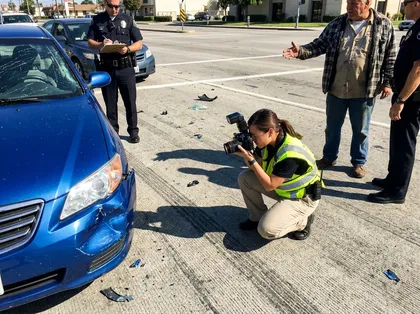
Does a Police Report Determine Who Is at Fault?
No. A police report can influence how an insurance company evaluates your claim. However, it does not make the final legal determination of fault. Even if an officer believes you caused the accident, you may still be able to recover compensation under the state’s comparative negligence law.
After a traffic accident, the California Highway Patrol (CHP) or another law enforcement agency may prepare a collision report. This document may include witness statements, road conditions, and the officer’s opinion about what caused the crash. Insurance adjusters may consider these findings when deciding how much responsibility to assign to each driver.
If you disagree with the police report, you can take steps to challenge its findings:
- Get a copy of the report. If the CHP investigated your accident, you can request a copy of your crash report online, in person, or by mail. If another agency investigated, contact that agency instead.
- Review the report carefully. Look for incorrect statements, missing information, or details that do not match what happened.
- Gather supporting evidence. Photos, dashcam footage, and witness statements may help show that the officer’s assessment was incomplete or inaccurate.
- Ask about correcting errors. If the CHP prepared the report, you can submit a written supplemental statement explaining which findings you dispute. Other agencies may have different procedures.
- Challenge the insurer’s fault assessment. Present evidence that supports your account and explains why a different allocation of responsibility may be appropriate.
An unfavorable police report does not automatically prevent you from pursuing an injury claim. What matters is the available evidence and how each person’s actions contributed to the accident.
How Does Comparative Negligence Affect Your Compensation?
In California, comparative negligence can affect how much compensation you can potentially recover through a personal injury case. Your share of fault can reduce the amount you may receive. The more responsibility assigned to you, the greater the reduction may be.
Several factors can affect how much compensation you may recover when you share responsibility for an accident:
- Damages Assessment: Insurance adjusters, attorneys, or courts review your medical bills, lost wages, pain and suffering, and other eligible losses to assess your claim.
- Fault Determination: If your actions contributed to the accident, your percentage of responsibility generally reduces the compensation you may recover.
- Other Factors: Available insurance coverage, the number of liable parties, and the types of damages involved may also affect how much compensation you could receive.
California law generally divides personal injury damages into two categories: economic and non-economic damages. Your share of fault may reduce both. However, different rules can affect how much each responsible party must pay, especially when multiple parties contributed to the accident.
Economic Damages
Economic damages cover the financial losses you suffer because of an injury. These are expenses and losses that can generally be documented through bills, receipts, and other financial records.
They may include:
- Medical expenses, including treatment and rehabilitation.
- Lost wages and reduced future earning capacity.
- Necessary out-of-pocket expenses.
- Property repair or replacement costs.
Your share of fault generally reduces the economic damages you can recover. However, when multiple defendants are responsible, California’s joint and several liability rules may allow you to recover your remaining economic damages from any legally responsible defendant, subject to applicable rules.
Non-Economic Damages
Non-economic damages address harm that does not have a readily measurable dollar value. Examples include:
- Physical pain and suffering.
- Emotional distress.
- Loss of enjoyment of life.
- Physical impairment, scarring, or disfigurement.
These damages may also be reduced by comparative fault. Their value depends on the evidence and the circumstances of the injury rather than a fixed calculation.
California’s Proposition 213 may also limit an uninsured driver’s recovery of non-economic damages in certain vehicle accident cases. That restriction is separate from comparative negligence and is subject to statutory exceptions.
What Happens When Multiple Defendants Share Responsibility?
California distinguishes between economic and non-economic damages when multiple defendants are liable.
Under the state’s joint and several liability principles, a defendant may be responsible for economic damages, even if they must pay a larger percentage of those damages than their assigned percentage of fault. However, whether these principles apply depends on the facts of the case.
In contrast, Civil Code Section 1431.2, enacted through Proposition 51, generally limits each defendant’s liability for non-economic damages to that defendant’s allocated percentage of responsibility.
This distinction becomes especially relevant when one liable party lacks sufficient insurance or financial resources. The amount recoverable from another defendant can depend on whether the damages are economic or non-economic.
Can You Still Recover Compensation if You Were Partly at Fault?
Yes. You may still recover compensation under California’s pure comparative negligence rule if another party also bears legal responsibility for the injury you sustained.
The amount of compensation you can recover depends on the injuries, available evidence, each party’s fault, and other applicable legal rules. Sharing responsibility does not automatically eliminate a claim. However, it can substantially reduce its value.
If an insurer claims you contributed to an accident, Arash Law’s California personal injury attorneys can review the circumstances and explain your legal options. Call (888) 488-1391 for a free initial consultation.
Examples of Comparative Negligence in California Accidents
Comparative negligence can apply to many types of accidents, not just car crashes. Even when someone else’s negligence causes an injury, the injured person’s actions may have contributed to what happened. Here are some situations where California’s comparative negligence rule could come into play.
Intersection Accidents Involving Two Drivers
Imagine you’re driving through an intersection when another driver makes a left turn directly into your path. You hit the brakes, but cannot avoid the collision. During the investigation, however, evidence suggests you may have been driving faster than the posted speed limit.
The turning driver may be responsible for failing to yield, while your speed may have contributed to the crash or the resulting injuries.
If both parties are at fault in a car accident, you could still pursue compensation under California’s comparative negligence rule. How much you may recover depends on the evidence and each driver’s role in causing the collision.
Pedestrian Accidents Involving Shared Fault
Picture someone crossing a busy street after the pedestrian signal changes to “Don’t Walk.” At the same time, a speeding driver fails to slow down as they approach the crosswalk, causing the driver to strike the pedestrian.
The pedestrian may share responsibility for crossing against the signal. However, the driver may also be negligent for speeding or failing to exercise reasonable care.
Crossing against a signal does not automatically prevent an injured pedestrian from recovering compensation. Both parties’ actions must be considered when determining fault.
Slip-and-Fall Accidents
Suppose you’re shopping at a store when your foot catches on a loose section of carpeting, causing you to fall. The damaged carpet has been there for some time. However, you were looking at your phone and did not notice it.
The store owner may be responsible for failing to address a dangerous condition. At the same time, your distraction could raise questions about whether you exercised reasonable care.
Whether you share any fault depends on the circumstances, including how noticeable the hazard was and whether the store owner knew or should have known about it.
Product-Related Injuries
Imagine using a power tool when it suddenly malfunctions and injures you. An investigation reveals a possible defect in the equipment and shows that you were operating it without a safety guard.
The manufacturer may face liability if a product defect contributed to the injury. However, your decision to use the equipment without the guard could also raise questions about comparative fault.
Product liability cases can involve different legal standards, including strict liability. Whether your conduct reduces your potential compensation depends on the type of claim, the nature of the defect, and how the accident occurred.
How Do Insurance Companies Use Comparative Negligence?
Insurance companies consider comparative negligence when determining how much compensation they may owe. They assess each party’s share of fault and use those percentages to calculate how much they may offer in a settlement.
However, disagreements may arise when the insurer and the injured person interpret the evidence differently. For example, an adjuster might argue that a driver was distracted, speeding, or failed to react reasonably.
Those allegations should be evaluated against the available evidence rather than accepted simply because the insurer made them.
Is an Insurance Company’s Fault Decision Final?
No. You can challenge an insurance company’s fault decision during settlement negotiations. If the case goes to trial, a jury may determine each party’s share of fault.
California law also prohibits insurers from making unreasonably low settlement offers under 10 CCR § 2695.7(g). However, disagreeing with an insurer’s fault assessment does not automatically mean the insurer violated this law.
How Can You Challenge an Insurer’s Unfavorable Fault Assessment?
If you disagree with an insurance company’s assessment of fault, you can challenge its decision by pointing out factual errors and providing additional evidence.
Here are some steps you can take:
- Ask for an explanation. Request that the insurer explain how it determined your share of responsibility.
- Review the accident report. Check for errors, missing details, or descriptions that do not match what happened.
- Gather supporting evidence. Collect photos, video footage, witness statements, and other records that support your account.
- Identify inconsistencies. Point out any statements or conclusions that conflict with the available evidence.
- Submit a written dispute. Explain why you disagree with the fault assessment and include documents that support your position.
- Consult a personal injury attorney. Ask a California attorney to review the evidence, assess potential liability, and explain your legal options.
Additional evidence may help you challenge the insurer’s decision. However, it does not guarantee a different outcome. The insurer may reconsider its assessment based on the facts and information you provide.
What Mistakes Can Affect a Comparative Negligence Claim?
Providing speculative statements, failing to gather the relevant evidence, and accepting early settlement offers can complicate a shared-fault claim.
Some mistakes to avoid include:
- Speculating About Fault: Making guesses about who caused the accident before understanding all the circumstances that contributed to it, especially when providing a recorded statement, may lead to disputes later.
- Overlooking Report Errors: Failing to correct incomplete or inaccurate descriptions in accident reports may influence the insurer’s evaluation.
- Losing Important Evidence: Delays may make it harder to obtain time-sensitive evidence such as surveillance footage and witness testimony.
- Providing Inaccurate Statements: Inconsistent descriptions can create disputes about what occurred.
- Posting About the Incident Online: Social media posts may contain statements or photographs that insurers use to question an injured person’s account of the accident.
- Accepting a Settlement Without Reviewing Fault: An offer may reflect a disputed allocation of responsibility or fail to account for documented losses.
People involved in accidents should provide truthful, accurate information to investigators and insurers. They should also distinguish what they personally observed from assumptions about another party’s actions.
Why Does Evidence Preservation Matter?
Evidence can become unavailable long before a lawsuit’s filing deadline expires. Security systems may overwrite video recordings, physical conditions at the accident scene can change, and witnesses may forget important details over time.
Preserving relevant evidence early can strengthen an injury claim and could help disprove unsupported allegations of fault.
What Are California’s Filing Deadlines for Shared-Fault Injury Claims?
Comparative negligence does not change the ordinary filing deadlines for California personal injury claims.
Different deadlines apply depending on the type of claim and the party involved.
| Claim Type | General Deadline | Legal Basis |
|---|---|---|
| Personal injury lawsuit | Two years from the injury, subject to applicable exceptions. | Code of Civil Procedure § 335.1 |
| Property damage lawsuit | Three years, generally measured from when the claim accrues, subject to applicable exceptions. | Code of Civil Procedure § 338 |
| Government claim involving personal injury | A government claim generally must be presented within six months after accrual, subject to applicable exceptions. | Government Code § 911.2 |
Missing an applicable statute of limitations may bar the lawsuit entirely. Failure to satisfy government claim presentation requirements can also bar a claim, although government claims have additional procedural rules.
These deadlines differ from those for accident reporting. Missing a required report may create administrative problems or weaken available evidence without necessarily producing the same legal consequence as missing a filing deadline.
A Comparative Negligence Case Result From Arash Law
A police report that places the blame on an injured person does not necessarily mean they cannot recover compensation. One of Arash Law’s pedestrian accident cases illustrates how a claim can still result in a recovery despite an unfavorable police report.
Source: Arash Law Case Results.
This case illustrates how California’s comparative negligence rule may allow an injured person to recover compensation even when their own actions contributed to an accident. Although our client was cited for jaywalking, that did not automatically prevent him from pursuing a claim.
Other parties may still share responsibility for an accident, and an unfavorable police report does not necessarily settle the question of fault. The published case result does not specify how fault between the parties involved was ultimately divided.
Past results do not guarantee future outcomes. Every claim depends on its particular facts, evidence, applicable law, and circumstances.
Frequently Asked Questions About Comparative Negligence in California
Can I Recover Damages if I Am 50% at Fault in California?
Yes. California’s pure comparative negligence rule allows an injured person who is 50% responsible for an accident to pursue the remaining 50% of recoverable damages from other liable parties.
For example, $40,000 in total damages would be reduced to $20,000 under a straightforward 50% comparative fault calculation. Actual recovery may also depend on insurance coverage and other applicable legal rules.
Can I Sue if I Am 99% at Fault for an Accident?
Yes. Under California’s pure comparative negligence rule, a person found 99% at fault may still recover 1% of their damages attributable to another legally responsible party.
The injured person must still establish the other party’s liability. Comparative negligence does not create compensation when no other party is legally responsible.
Who Has to Prove Comparative Negligence in California?
The defendant generally has the burden of proving that the injured person was negligent and that the negligence contributed to the harm.
The injured person must establish the elements of their underlying claim, including the defendant’s liability, causation, and damages. California’s civil jury instructions address these different burdens.
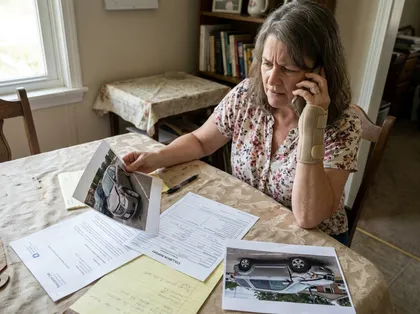
What if I Disagree With the Insurance Company’s Fault Percentage?
You can dispute an insurer’s fault assessment by presenting evidence that supports a different allocation of responsibility.
Relevant materials may include accident reports, witness accounts, photographs, video recordings, and technical analysis. If the dispute cannot be resolved through negotiations, fault may ultimately be determined in litigation.
Does Comparative Negligence Apply to All California Personal Injury Cases?
No. Comparative negligence applies broadly to negligence-based injury claims, but different liability rules can affect its application in other cases.
For example, product liability, dog bite, and intentional misconduct claims may involve different legal standards. The proper analysis depends on the legal theory and facts of the case.
Can More Than Two People Share Fault for an Accident?
Yes. California law permits responsibility to be allocated among multiple people or entities whose conduct contributed to the harm.
The injured person’s own percentage of fault can reduce recoverable damages. California’s separate rules for economic and non-economic damages also affect how liability is allocated among multiple defendants.
Does a Police Report Proving I Broke a Traffic Law Mean I Cannot Recover?
No. A reported traffic violation does not automatically prevent recovery under California’s pure comparative negligence system.
The violation may be relevant to fault, but the full circumstances must be examined. Another driver’s negligence may also have contributed to the collision.
Speak With Arash Law About a Shared-Fault Injury Claim
Being partly responsible for an accident does not necessarily mean you have no legal options. California’s comparative negligence rule allows injured people to recover compensation even when another party contributed to their injuries.
At Arash Law, our attorneys can review the available evidence, assess disputed fault allegations, and explain how shared responsibility may affect your claim. We also handle communications and negotiations with insurers on behalf of the clients we represent.
Call (888) 488-1391 for a free case evaluation. Arash Law handles personal injury matters on a contingency fee basis, meaning you only pay the attorney’s fees if you successfully recover compensation. The applicable percentage must be stated in the written fee agreement, and case costs may apply.
Sources
- Maryland State Archives Public Database. Li v. Yellow Cab Co. (1975) 13 Cal.3d 804. Decision establishing California’s pure comparative negligence doctrine. https://msa.maryland.gov/megafile/msa/speccol/sc5300/sc5339/000137/000000/000003/restricted/13_cal_3d_804.pdf
- Judicial Council of California. California Civil Jury Instructions, including CACI Nos. 405 and 406, addressing comparative fault and allocation of responsibility. https://courts.ca.gov/system/files/file/judicial_council_of_california_civil_jury_instructions_2026.pdf
- California Highway Patrol. Frequently Asked Questions, explaining how involved parties can contest traffic collision report findings through supplemental statements. https://www.chp.ca.gov/faq/
- California Highway Patrol. Request a Crash Report, providing instructions for obtaining CHP traffic collision reports.
https://www.chp.ca.gov/traffic/request-a-crash-report/- California Legislature. California Civil Code Section 1431.2 addresses each defendant’s individual responsibility for non-economic damages under Proposition 51. https://leginfo.legislature.ca.gov/faces/codes_displaySection.xhtml?sectionNum=1431.2.&lawCode=CIV
- California Legislature. California Civil Code Section 1714 establishes the general duty to exercise reasonable care to avoid harming others. https://leginfo.legislature.ca.gov/faces/codes_displaySection.xhtml?sectionNum=1714.&lawCode=CIV
- California Legislature. California Civil Code Section 3333.4, addressing restrictions on non-economic damages for certain uninsured motorists under Proposition 213. https://leginfo.legislature.ca.gov/faces/codes_displaySection.xhtml?sectionNum=3333.4.&lawCode=CIV
- California Legislature. California Code of Civil Procedure Sections 335.1 and 338, addressing personal injury and property damage filing deadlines. https://leginfo.legislature.ca.gov/faces/codes_displaySection.xhtml?sectionNum=335.1.&lawCode=CCP
https://leginfo.legislature.ca.gov/faces/codes_displaySection.xhtml?sectionNum=338.&lawCode=CCP- California Legislature. California Government Code Section 911.2 establishes government claim presentation deadlines. https://leginfo.legislature.ca.gov/faces/codes_displaySection.xhtml?sectionNum=911.2.&lawCode=GOV
- California Department of Insurance. Fair Claims Settlement Practices Regulations, Title 10, California Code of Regulations, Section 2695.7, addressing standards for fair settlement practices. https://www.insurance.ca.gov/01-consumers/130-laws-regs-hearings/05-adm-procedure/
- Arash Law. Case Results, including the reported $2,000,000 pedestrian accident recovery involving a disputed finding of fault. https://arashlaw.com/case-results/
Disclaimer
This content is provided for general educational and informational purposes only and does not constitute legal advice. Comparative negligence and other liability rules depend on the specific facts and applicable law. Reading this content or contacting the firm does not establish an attorney-client relationship. Past case results do not guarantee similar outcomes. Individuals with questions about their legal rights should consult a licensed California attorney. Attorney fees and potential case costs depend on the applicable written fee agreement.
Arash Law — (888) 488-1391.