TL;DR: Head injuries accounted for about 19% of bicycle-riding injuries treated in U.S. emergency departments in 2024. The majority of bicyclists who die in these accidents don’t wear a helmet, which shows how helmet use is important not only to avoid shared-fault defenses but also for safety. Under California law, a person generally has 2 years to file a personal injury lawsuit against a private party. Claims against a government agency usually require a written claim within six months before filing a lawsuit.
There is no authoritative national percentage showing how many bicycle accidents result in head injuries. However, the Consumer Product Safety Commission (CPSC) found that 19% of bicycle injuries treated in emergency rooms in 2024 involved head injuries, representing an estimated 80,600 injuries.
For fatal bicycle accidents, the most serious injuries that lead to death are also to the head, which highlights how important wearing a helmet is. From 2015 to 2024, data from the Insurance Institute for Highway Safety (IIHS) showed that a majority of bicyclists killed in motor vehicle crashes were not wearing helmets. In 2024, 68% of bicyclists killed were not wearing helmets, 13% were wearing one, and helmet use was unknown for the remaining 19%.
What is clear is that a cyclist’s head is very exposed in a crash. Compared to car passengers, there’s no metal frame, airbag, or crumple zone to protect them. So when a vehicle hits a rider or a poorly maintained road causes an accident, the cyclist’s head may take the worst of the impact.
Data Transparency Note: This page uses data from the U.S. Consumer Product Safety Commission (CPSC), the Insurance Institute for Highway Safety (IIHS), the National Highway Traffic Safety Administration (NHTSA), and the California Office of Traffic Safety. The CPSC figures are national estimates of emergency department visits associated with bicycle riding, not a count of all bicycle crashes or injuries. The IIHS helmet-use figures are based on bicyclist fatalities in motor vehicle crashes. They should not be interpreted as a representation of all bicycle crashes involving helmeted or unhelmeted riders.
Key Facts About Bicycle Head Injuries And California Law
- Head and brain injuries are a primary concern in serious bicycle collisions. OTS data confirms 145 bicyclists were struck and killed on California roads in 2023. Head injuries are among the most serious consequences of bicycle accident injuries in California.
- California Vehicle Code (CVC) § 21212 requires helmets only for riders under 18. California law does not require adults to wear a helmet, but insurers routinely argue that not wearing one worsens a head injury and should reduce any payout.
- California follows pure comparative negligence. An adult cyclist injured without a helmet can still recover compensation. Insurers often argue that not wearing a helmet contributed to the severity of head injuries and may seek a comparative-fault reduction. Still, to succeed, they must present evidence that a helmet would have prevented or reduced the specific injuries claimed.
- Two deadlines apply. You must file private-party claims within 2 years (California Code of Civil Procedure (CCP) § 335.1). If a government entity caused the crash, you must file a government claim within 6 months (Government Code § 911.2).
- Brain injury symptoms may appear days after the crash. Gaps in treatment may give insurers grounds to dispute the connection between the crash and your injuries, which is why same-day emergency care is critical both medically and legally.
- California collision reports are an important source of crash evidence. CHP and local law enforcement agencies submit qualifying collision data to the Statewide Integrated Traffic Records System (SWITRS), which the California Highway Patrol maintains. UC Berkeley SafeTREC’s Transportation Injury Mapping System (TIMS) provides tools to analyze and map SWITRS data.
Table of Contents

What The Statistics Say About Head Injuries From Bicycle Accidents
According to the CPSC, head injuries accounted for 18–19% of bicycle-riding injuries treated in ERs from 2022 through 2024. Although a single case can involve injuries to multiple body parts, head injuries remain a substantial category of bicycle-related injuries each year.
- Head Injuries:
- 19% (80,400 visits) in 2022
- 18% (78,100 visits) in 2023
- 19% (80,600 visits) in 2024
- Face/Ear Injuries:
- 17% (71,800 visits) in 2022
- 18% (75,600 visits) in 2023
- 17% (74,600 visits) in 2024
Head trauma is also what makes bicycle crashes so deadly. The 2024 Bicyclist Fatality Facts from the IIHS mentioned that around 2–3% of motor vehicle accident fatalities are bicyclists, and that the most serious injuries are to the head. That vulnerability is backed by data: across 2022 through 2024, the large majority of bicyclists killed were not wearing a helmet.
| Helmet Use | 2022 | 2023 | 2024 |
|---|---|---|---|
| No helmet use | 62% (684) | 65% (752) | 68% (727) |
| Helmet use | 15% (166) | 15% (169) | 13% (141) |
| Unknown | 22% (246) | 21% (242) | 19% (207) |
| Total | 100% (1,096) | 100% (1,163) | 100% (1,075) |
The stakes are high because bicyclists have so little protection to begin with. Unlike vehicle occupants, who are shielded by seat belts, airbags, and a steel frame, cyclists are almost fully exposed in a collision. Safety equipment and helmets can help reduce this vulnerability. According to the National Highway Traffic Safety Administration, bicycle helmets can reduce the risk of head injury by about 48%, serious head injury by 60%, and traumatic brain injury by 53% in a crash.
All the figures and percentages mentioned above represent real, largely preventable losses. Learning about what causes them may reduce the risks.
How Bicycle Crashes Cause Head Injuries
Bicycle crashes cause head injuries when impact energy, from a vehicle strike or a fall onto pavement, transfers directly to the rider’s unprotected head. Cyclists have no surrounding metal frame, no airbag, and no crumple zone, so that force travels directly to the body, and the head absorbs a large share of it. Driver error and road hazards are the two primary mechanisms that turn that vulnerability into serious head trauma.
Accidents that consistently put cyclists at risk of head injuries include:
- Dooring: A driver or passenger opens a car door into a cyclist’s path. The cyclist has no time to stop or swerve, strikes the door, and is thrown forward or to the side.
- Sideswipe Collisions: A passing vehicle comes too close and clips the cyclist, knocking them off balance and into the pavement, often at road speed.
- Failure to Yield: A driver turning at an intersection fails to give way to a cyclist traveling through the intersection, resulting in a direct collision.
- Distracted Driving: A driver looking at a phone, adjusting a radio, or otherwise inattentive may not see a cyclist until impact.
Speed amplifies every one of these risks. Higher vehicle speeds dramatically increase the force of impact and the severity of any resulting head injury. Road hazards, including uneven pavement, potholes, loose gravel, or debris, can also cause a cyclist to lose control and fall, even when no vehicle is involved. In those cases, a public agency responsible for road maintenance may bear liability for the crash.
When a public agency is responsible, Government Code § 911.2 generally requires that you present a written tort claim to the public entity within six months before you can file a lawsuit.
Common Types Of Head Injuries From Bicycle Accidents

A head impact in a bicycle crash can cause a range of injuries, from a mild concussion to a life-threatening bleed. Some do not cause obvious immediate symptoms. Seeking medical evaluation the same day is critical, even if you feel no pain.
- Concussion: A mild traumatic brain injury that causes headache, dizziness, nausea, and confusion. Concussions can lead to lasting memory problems, mood changes, or post-concussive syndrome without proper treatment and monitoring.
- Skull Fracture and Intracranial Hemorrhage: A skull fracture breaks the bone that protects the brain; intracranial hemorrhage occurs when blood pools inside the skull under pressure. Skull fractures and intracranial hemorrhages can be serious or life-threatening and require prompt medical evaluation.
- Diffuse Axonal Injury (DAI): The rotational force of a crash, even without a direct blow, can shear the brain’s nerve fibers. DAI can cause severe brain damage, coma, or permanent disability.
- Maxillofacial Trauma and Scalp Lacerations: Impacts to the face and jaw can fracture facial bones, damage the eye orbit, or knock out teeth. Deep scalp cuts can leave permanent scarring and often signal an underlying skull injury.
These injuries share a critical feature for legal purposes: their full severity is often not apparent at the initial emergency visit. CT scans may look normal while significant brain injury is developing. That is why neurological follow-up within days of the crash is not just sound medical practice; it can be important to documenting the scope of your injuries for any future damages claim.
California Bike Helmet Laws And The Helmet Defense
California Vehicle Code § 21212 requires riders under 18 to wear a helmet. Under CVC § 21213, all riders on Class 3 e-bikes must wear a helmet, regardless of the rider’s age.
For adult riders on standard bikes, California law does not require wearing a helmet, but that legal fact does not protect you from an insurer’s argument that you should have worn one anyway. Moreover, the protection helmets provide may save your life in a crash.
Insurers may argue that the absence of a helmet contributed to the severity of the head injury and that the rider’s compensation should decrease proportionally. California’s pure comparative negligence rule, rooted in Civil Code § 1714 and decades of California case law, means an unhelmeted rider can still recover damages. An insurer generally cannot reduce damages based on the Helmet Defense by assertion alone.
Whether such an argument is admissible or persuasive depends on the facts and supporting evidence, including whether helmet use would have affected the particular injury. If the cyclist also suffered a fractured arm, road rash, or a spinal injury, helmet use has no bearing on those claims at all.
The practical implication: every piece of evidence you preserve, such as medical records, the damaged helmet itself, and the bike frame, shapes how that comparative fault argument plays out.
In practice, insurers sometimes raise the Helmet Defense even when the evidence clearly shows a helmet would not have changed the outcome. Knowing how to push back on that argument and what evidence shuts it down is part of what bicycle accident litigation requires.
What To Do After A Bicycle Crash With A Head Injury
Taking the right steps in the first hours and days after a bicycle crash protects both your recovery and the strength of any legal claim. Brain injuries are susceptible to gaps in the evidentiary record: a delay in seeking care, an altered helmet, or a missing medical record can hand an insurer the argument it needs to minimize what it pays.
- Get emergency care the same day. Go to an emergency room or urgent care center the same day of the crash, even if you feel no immediate pain. A same-day medical record creates a documented, timestamped link between the crash and your injuries that is very difficult for insurers to challenge. Waiting even a day or two creates a gap that defense lawyers will exploit.
-
Preserve your helmet and bicycle without altering them. Do not clean, repair, or replace your helmet or your bike frame. Cracks, crush patterns, impact marks, and frame deformation are physical evidence of the crash’s force.
An expert retained by Arash Law can analyze these to document what the helmet absorbed and where on the head the impact occurred. Cleaning or repairing them permanently destroys that record.
- Follow up with a neurologist within days. Early imaging can look normal even when a significant brain injury is developing. See a neurologist within days of the crash, not weeks. Documented specialist follow-up helps your attorneys and medical experts project future care needs, a critical component of any traumatic brain injury (TBI) damages claim.
- Keep a daily symptom journal from day one. Write down every cognitive change, every headache, every mood shift, every memory lapse, and every work-capacity loss from the crash date forward. That journal, kept contemporaneously and dated, becomes one of the most credible pieces of evidence of ongoing and future impairment. Reconstructing it months later is significantly less persuasive to a jury.
- Speak with a bicycle accident lawyer before contacting insurance. Do not give a recorded statement to any insurance company, yours or the driver’s, before consulting an attorney. Insurance companies train their adjusters to elicit statements they can use to minimize what they pay. You may need a bicycle accident lawyer to protect your claim from the start.
When you are ready for legal guidance, a free case review with Arash Law can clarify exactly what to say, what not to say, and how the evidence you have already gathered positions your case.
Once you are medically stable, an attorney can confirm which deadline applies. Private-party and public-entity road-defect cases follow different timelines.
Why Future Damages Are Critical In Brain Injury Claims
Future damages are critical in brain injury claims because TBI symptoms and care costs can continue to emerge and escalate months or years after the initial crash. Unlike a broken bone, which typically heals to a fixed endpoint, a traumatic brain injury can worsen over months or years.
Cognitive symptoms, including memory problems, chronic headaches, and mood dysregulation, may not appear at their full severity until well after the crash. If you accept an early settlement before those symptoms have fully declared themselves, you may lose the ability to recover costs that emerge later.
California courts allow recovery for future damages where expert medical testimony documents the brain injury’s progression. Bicycle accident lawyers may work directly with neurologists, neuropsychologists, and life-care planners to build a full picture of what a TBI will cost over a client’s lifetime: ongoing rehabilitation, in-home care, lost earning capacity, and non-economic losses such as loss of enjoyment of life.
Lost earning capacity is not just the wages you have already missed; it is the income you may never be able to earn again because of how the injury changed your cognitive function.
This approach to TBI valuation has produced results like a $17.9 million unanimous jury verdict Arash Law secured for clients who included a rider with a mild but permanent brain injury, a case in which the County of Los Angeles attempted to shift blame. The jury delivered its verdict in 90 minutes.
The verdict reflects how thoroughly documented and expertly supported brain-injury evidence can withstand an aggressive liability defense.
You can review case results for injured cyclists directly on the Arash Law website. Past results do not guarantee future outcomes. Every case is different, and results depend on the specific facts and evidence involved.
Injured in a California bicycle crash? Call Arash Law at (888) 488-1391 for a free case evaluation. Our attorneys are available 24 hours a day.
Frequently Asked Questions About Bicycle Accident Head Injuries In California
The questions below reflect what injured cyclists and their families most often ask after a crash. Each answer reflects how California law applies.
How Long Do I Have To File A Lawsuit After A Bicycle Brain Injury In California?
Under CCP § 335.1, you generally have 2 years from the crash date to file a personal injury lawsuit against a private party, such as a driver. If a government entity such as Caltrans is involved, Government Code § 911.2 requires you to file a written government tort claim within 6 months. Situations where this may apply include when a road defect caused the crash.
If the responsible entity is the State of California or a state agency such as Caltrans, you must present that claim through the California Department of General Services / Office of Risk and Insurance Management (DGS/ORIM) Government Claims Program, not the California Victim Compensation Board, which handles a different category of claims entirely.
Claims against cities, counties, or other local public entities follow similar government-claims procedures under Government Code §911.2, but are presented to the responsible local agency. Missing the six-month deadline can permanently bar a claim against a public entity. For many private personal injury claims, the law may toll the filing deadline while the injured person is a minor.
Government-entity claims and other specialized claims can have different timing rules, so you should review the applicable deadline with an attorney.
Can I Recover Compensation If I Was Not Wearing A Helmet In California?
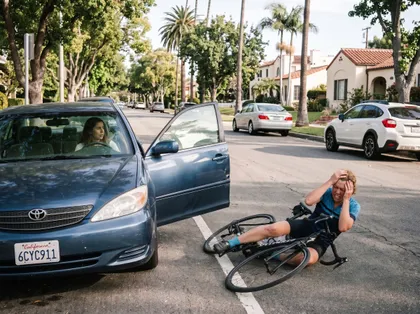
Yes, you can still recover compensation even if you were not wearing a helmet at the time of the crash. California’s pure comparative negligence rule means your failure to wear a helmet does not bar your claim. However, insurers may argue that not wearing a helmet contributed to the severity of your head injuries and use that argument to reduce your recovery.
To succeed with that argument, they must prove, with evidence, that a helmet would have prevented or reduced the specific injuries you suffered. An attorney can evaluate how that argument applies to your specific case.
How Long After A Bicycle Crash Can Head Injury Symptoms Appear?
Symptoms such as headaches, dizziness, nausea, confusion, memory problems, and personality changes can appear hours or even days after the initial crash. This delayed onset is a well-documented feature of traumatic brain injury and concussion.
Because of this, seek medical evaluation the same day. Follow up with a neurologist within days: this is critical both medically and for your claim. Gaps in your medical treatment record give insurers grounds to argue that your symptoms are not related to the crash.
Can You Sustain A Traumatic Brain Injury Even While Wearing A Helmet?
Yes. Helmets significantly reduce the risk of skull fractures and are most effective at preventing penetrating head injuries. However, they do not prevent the brain from moving inside the skull during a high-force impact.
That rotational movement, not just the direct blow, is what causes concussions and Diffuse Axonal Injuries (DAI), and it can occur even when the helmet appears undamaged on the outside. A normal-looking helmet after a high-force crash is not evidence that no brain injury occurred.
Do Bicycle Accident Lawyers Charge Upfront Fees?
Most bicycle accident attorneys, including those at Arash Law, work on a contingency fee basis. That means you pay no legal fees unless your case results in a settlement or verdict in your favor. If your case does not resolve successfully, you owe no attorney’s fees.
Clients may still be responsible for case costs and expenses, such as filing fees or expert costs, depending on the terms of the fee agreement. Your attorney will explain these in writing before you sign. California Business and Professions Code § 6147 requires that contingency fee agreements be in writing and signed by both client and attorney, and Arash Law provides this at the start of every case.
How Do I Get A Free Case Evaluation From A Bicycle Accident Lawyer?
Call Arash Law at (888) 488-1391, available 24 hours a day, to schedule a free case evaluation. You can discuss the facts of your crash, ask questions about your rights under California law, and understand what evidence matters before making any decisions. There is no obligation to retain us after the case review.
Talk To Arash Law About Your California Bicycle Head Injury Claim
Arash Law represents cyclists across California who have suffered head injuries caused by negligent drivers, dangerous road conditions, and defective equipment. Our attorneys work with medical experts and life-care planners to build brain injury claims that account for the full lifetime cost of a TBI, not just the first hospital bill.
Arash Law has recovered over $1 billion for injured clients across California, and we are ready to stand with you.
If you were hurt in a bicycle crash, the decisions you make in the first days matter: to your health and to your case. Call us at (888) 488-1391 for a free case evaluation. Arash Law. Make ‘em pay. Call AK.
Sources
California Office of Traffic Safety (OTS): Pedestrian and Bicycle Safety Program. Statewide cyclist and pedestrian fatality data, 2023 figures, and the 56% increase since 2014. https://ots.ca.gov/grants/pedestrian-and-bicycle-safety
UC Berkeley Transportation Injury Mapping System (TIMS) / Statewide Integrated Traffic Records System (SWITRS) Summary Tool. California’s statewide fatal and injury-crash data repository (used in litigation and policy). https://tims.berkeley.edu/tools/summary
California Legislative Information (LegInfo). California Code of Civil Procedure § 335.1 (two-year personal injury statute of limitations); Government Code § 911.2 (six-month government claim deadline); California Vehicle Code § 21212 (helmet requirement for riders under 18) and § 21213 (helmet requirement for all Class 3 e-bike riders regardless of age). https://leginfo.legislature.ca.gov
California Department of General Services / Office of Risk and Insurance Management (DGS/ORIM): Government Claims Program. The correct pathway for presenting claims against the State of California or a state agency such as Caltrans. https://www.dgs.ca.gov/ORIM/File-a-Claim
Disclaimer
The information on this page is for general educational purposes and does not constitute legal advice. Reading or relying on this content does not form an attorney-client relationship. If you were injured, consult a licensed California personal injury attorney about your specific situation. Arash Law — (888) 488-1391.