TL;DR: The four pillars of workplace safety are safety policy and objectives, safety risk management, safety assurance, and safety promotion. In California, many of these functions overlap with the IIPP requirements under Title 8 CCR § 3203. Safety failures may become relevant in a workers’ compensation or separate civil claim.
The four components of a Safety Management System (SMS) are Safety Policy, Safety Risk Management, Safety Assurance, and Safety Promotion. Together, they provide a structured approach to preventing accidents by establishing safety responsibilities, identifying hazards, evaluating protective measures, and training workers.
The Federal Aviation Administration (FAA) recognizes these four components in its aviation safety-management framework. Although developed for aviation, the underlying principles can also help organizations improve workplace accident prevention.
However, these four components are not universal legal requirements established by the Occupational Safety and Health Administration (OSHA) or California’s Division of Occupational Safety and Health (Cal/OSHA). OSHA instead recommends seven core elements for general workplace safety and health programs.
In California, employers generally must establish, implement, and maintain an IIPP under Title 8 CCR § 3203. Many IIPP requirements address similar safety functions, although California’s regulation does not formally adopt the FAA’s four-component framework.
After a workplace injury, safety policies, inspection reports, training records, and corrective-action documents may help establish whether an employer identified and addressed hazards. These records can become relevant in workers’ compensation and separate civil claims.
Key Facts About California Workplace Safety Law
- Four SMS Components: The FAA recognizes Safety Policy, Safety Risk Management, Safety Assurance, and Safety Promotion as four functional components of its SMS framework.
- OSHA Safety Programs: OSHA recommends seven core elements for effective workplace safety programs. These recommendations are distinct from enforceable safety regulations.
- California Safety Requirements: California employers generally must maintain a written Injury and Illness Prevention Program (IIPP) under Title 8 CCR § 3203. The program outlines procedures for identifying workplace hazards, correcting unsafe conditions, and training employees to prevent injuries and illnesses.
- Injury Reporting Deadline: Injured employees should promptly notify their employer, generally within 30 days, to protect their workers’ compensation rights.
- Retaliation Protection: Workers may be protected from retaliation for reporting workplace safety hazards or unsafe working conditions under Labor Code § 6310.
- Third-Party Personal Injury Claims: An injured worker may be able to pursue a separate civil claim if someone other than the employer caused the injury. This type of claim can proceed alongside a workers’ compensation claim.
Table of Contents

The FAA’s Four Safety Management System Components
The FAA’s SMS framework organizes safety management into four components. Although developed for aviation, these principles also provide a useful approach to identifying and preventing hazards in other workplaces. They are separate from OSHA’s recommended safety-program elements and California’s IIPP requirements.
-
Safety Policy and Objectives: Establish management’s commitment to safety, define objectives, and assign responsibilities. It also establishes procedures for reporting hazards and ensuring accountability.
California’s IIPP requirements address similar functions by requiring employers to designate program responsibilities and establish procedures for maintaining safe work practices.
-
Safety Risk Management: Identifies workplace hazards, evaluates associated risks, and establishes preventive controls. Employers can apply these principles through equipment inspections, job-task assessments, and reviews of previous incidents.
California’s IIPP regulation similarly requires procedures to identify and evaluate unsafe conditions and work practices.
-
Safety Assurance: Evaluates the effectiveness of existing safety measures and identifies areas for improvement. Activities may include reviewing inspection findings, investigating incidents, and assessing corrective actions.
Although California’s IIPP regulation does not use this term, it requires employers to establish procedures to investigate occupational injuries and correct unsafe conditions.
For example, following a machinery-related incident, employers may need to review safeguards, operating procedures, and training. Additional measures to prevent workplace pinning accidents may apply.
-
Safety Promotion: Strengthens workplace safety through training, communication, and employee awareness. It encourages workers to understand hazards, follow established procedures, and report dangerous conditions.
California’s IIPP requirements address similar functions through mandatory safety instruction and effective communication about workplace hazards.
How OSHA and Cal/OSHA Approach Workplace Safety
The FAA’s four SMS components provide one approach to safety management, but they should not be confused with OSHA’s recommended practices or California’s enforceable safety regulations.
OSHA’s Seven Core Safety Program Elements
The Occupational Safety and Health Administration recommends seven core elements for effective workplace safety and health programs. These elements can be applied across many industries to help employers prevent injuries, identify hazards, and improve working conditions.
Management Leadership
Management leadership establishes workplace safety as an organizational priority. Employers should demonstrate their commitment through the following actions:
- Set Safety Goals: Establish measurable objectives to prevent injuries and improve working conditions.
- Assign Responsibilities: Identify managers and supervisors responsible for implementing safety procedures.
- Provide Resources: Allocate sufficient time, equipment, personnel, and funding to address hazards.
- Monitor Performance: Review safety results and correct problems before accidents occur.
Visible management involvement encourages employees to take safety procedures seriously and reinforces accountability throughout the workplace.
Worker Participation
Worker participation gives employees an active role in identifying hazards, assessing risks, and improving workplace safety. Employers should encourage employees to:
- Report Hazards: Raise concerns about dangerous conditions without fear of retaliation.
- Share Safety Suggestions: Recommend improvements based on their daily work experiences.
- Participate in Inspections: Help identify hazards that may not be obvious to supervisors.
- Review Safety Procedures: Provide feedback on training, equipment use, and workplace rules.
Employees often recognize risks that management may overlook because they perform the work regularly. Their involvement can help identify hazards before accidents occur.
Hazard Identification and Assessment
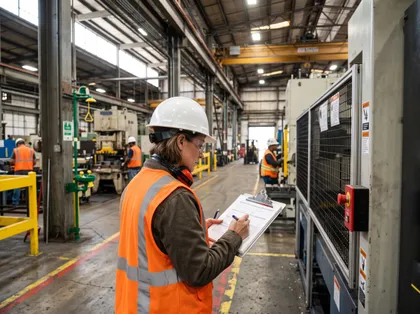
Hazard identification and assessment involve systematically examining the workplace for conditions that could cause injuries or illnesses. Employers should use several methods to identify risks:
- Workplace Inspections: Examine equipment, walkways, machinery, and work areas for unsafe conditions.
- Incident Investigations: Review workplace injuries, illnesses, and near-misses to identify contributing factors.
- Safety Record Reviews: Examine previous incidents, inspection reports, and employee complaints.
- Risk Assessments: Evaluate the severity of identified hazards and the likelihood of injury.
Once hazards are identified, employers should prioritize corrective measures based on the level of risk. Serious or immediate dangers may require urgent action.
Hazard Prevention and Control
Hazard prevention and control focus on eliminating dangerous conditions or reducing employee exposure to them. Employers should prioritize effective controls instead of relying solely on personal protective equipment.
Common preventive measures include:
- Hazard Elimination: Remove dangerous equipment, conditions, or activities when possible.
- Substitution: Replace hazardous substances, equipment, or processes with safer alternatives.
- Engineering Controls: Install machine guards, barriers, ventilation systems, or other physical safeguards.
- Administrative Controls: Establish safer work procedures, schedules, and training requirements.
- Personal Protective Equipment: Provide appropriate helmets, gloves, respirators, and other protective gear as needed.
For example, installing machine guards can help prevent employees from contacting dangerous moving parts. Employers should also monitor whether protective measures remain effective as workplace conditions change.
Education and Training
Education and training help employees and supervisors recognize hazards and understand how to prevent workplace injuries.
Effective training programs should address:
- Hazard Recognition: Teach workers to identify dangerous conditions and unsafe practices.
- Equipment Safety: Explain proper machinery operation and the use of protective equipment.
- Emergency Procedures: Provide instructions for responding to fires, chemical releases, and other emergencies.
- Incident Reporting: Explain how employees can report injuries, hazards, and near-misses.
- Updated Safety Procedures: Provide additional instruction when equipment, processes, or workplace risks change.
Training should match employees’ actual duties and be delivered in a language and vocabulary they understand. Employers should also evaluate whether workers can apply what they have learned.
Program Evaluation and Improvement
Education and training help employees and supervisors recognize hazards and understand how to prevent workplace injuries.
Effective training programs should address:
- Hazard Recognition: Teach workers to identify dangerous conditions and unsafe practices.
- Equipment Safety: Explain proper machinery operation and the use of protective equipment.
- Emergency Procedures: Provide instructions for responding to fires, chemical releases, and other emergencies.
- Incident Reporting: Explain how employees can report injuries, hazards, and near-misses.
- Updated Safety Procedures: Provide additional instruction when equipment, processes, or workplace risks change.
Training should match employees’ actual duties and be delivered in a language and vocabulary they understand. Employers should also evaluate whether workers can apply what they have learned.
Communication and Coordination for Host Employers, Contractors, and Staffing Agencies
Communication and coordination help prevent accidents when multiple employers operate in the same workplace. Host employers, contractors, and staffing agencies should understand their respective safety responsibilities.
Effective coordination includes:
- Sharing Hazard Information: Inform other employers about dangerous conditions that may affect their workers.
- Clarifying Responsibilities: Establish which employer is responsible for specific safety procedures and protective measures.
- Coordinating Work Activities: Schedule tasks to prevent one employer’s operations from creating hazards for another.
- Communicating Emergency Procedures: Ensure workers understand evacuation routes, emergency contacts, and reporting requirements.
For example, employees at a construction site may face hazards created by another contractor’s machinery or activities. Clear coordination can reduce the risk of accidents involving multiple parties.
These elements come from OSHA’s Recommended Practices for Safety and Health Programs. They are widely applicable recommendations, not seven independently enforceable legal requirements imposed on every employer.
California’s Injury and Illness Prevention Program (IIPP) Requirements
California employers generally must establish, implement, and maintain a written IIPP under Title 8 CCR § 3203.
Cal/OSHA identifies eight principal IIPP elements:
- Responsibility: Employers must identify individuals responsible for implementing and maintaining the IIPP. These individuals oversee the program and help ensure workplace hazards are addressed.
- Compliance: Employers must establish procedures for ensuring employees follow safe work practices. These may include recognizing safe behavior, providing additional training, and taking appropriate corrective action.
- Communication: Employers must maintain understandable communication about workplace safety. Employees must have a means of reporting hazards without fear of reprisal.
- Hazard Assessment: Employers must establish procedures to identify and evaluate workplace hazards through periodic inspections. Additional inspections are required when certain changes or newly recognized hazards create safety concerns.
- Accident and Exposure Investigation: Employers must establish procedures for investigating occupational injuries and illnesses. Investigations can help identify contributing hazards and measures needed to prevent similar incidents.
- Hazard Correction: Employers must correct unsafe conditions and practices promptly based on their severity. Imminent hazards require additional protective measures, including the removal of exposed employees when appropriate.
- Training and Instruction: Employers must provide required training to new employees, workers assigned unfamiliar tasks, and employees exposed to new hazards. Supervisors must also receive instruction concerning hazards affecting workers under their direction.
- Recordkeeping: Employers generally must document inspections, identified hazards, corrective actions, and safety training. Certain employers qualify for alternative documentation requirements or recordkeeping exceptions.
Additional industry-specific safety standards may apply.
Employers must implement their programs, not merely maintain written policies.
After a workplace injury, IIPP records may help establish what safety procedures existed, whether employees received necessary training, and how previously identified hazards were handled.
Workers’ compensation lawyers may review these materials alongside witness statements, accident reports, and Cal/OSHA records.
What Workers Should Do After a Workplace Accident
Workers should seek appropriate medical care, report their injuries, and preserve relevant evidence after a workplace accident.
The steps to take after a workplace accident generally include:
- Seek Medical Attention: Obtain necessary treatment and explain that the injury occurred at work.
- Report the Injury: Notify your employer promptly, preferably in writing.
- Complete the Claim Form: Request and submit the DWC-1 Workers’ Compensation Claim Form.
- Document the Accident: Save photographs, witness information, and incident reports.
- Preserve Safety Evidence: Keep copies of available safety records and workplace communications.
- Follow Medical Instructions: Attend appointments and maintain treatment records.
The employer must provide a DWC-1 Workers’ Compensation Claim Form within one working day after receiving notice or knowledge of the injury. Submitting the completed form begins the formal claim process.
Workers should preserve evidence promptly because employers may repair equipment, alter accident scenes, or delete electronic recordings before legal filing deadlines expire.
Your Legal Rights After a California Workplace Safety Failure
California workers may have several legal rights after a workplace injury. These can include reporting the accident, receiving workers’ compensation benefits, seeking increased benefits for serious and willful misconduct, and pursuing a separate claim against a third party that contributed to the injury.
Right to Report the Workplace Accident
Workers have the right to report a job-related injury and seek workers’ compensation benefits. An injured worker should notify the employer as soon as possible, generally within 30 days. Reporting the injury is separate from filing a workers’ compensation claim.
Right to Workers’ Compensation Benefits
Workers’ compensation generally provides benefits for job-related injuries without requiring the worker to prove that the employer was at fault.
Depending on the situation, benefits may include:
- Medical treatment.
- Temporary disability benefits.
- Permanent disability benefits.
- Supplemental job displacement benefits, when applicable.
- Death benefits for qualifying dependents.
A one-year filing period generally applies to initiating workers’ compensation proceedings, although the starting point can vary depending on benefits and treatment already provided (Labor Code § 5405).
Right to Seek Increased Benefits for Serious and Willful Misconduct
Labor Code § 4553 provides for a 50% increase in otherwise recoverable workers’ compensation benefits when an employer’s serious and willful misconduct causes an employee’s injury.
Evidence may include prior safety complaints, inspection findings, witness statements, and records showing the employer’s knowledge of a serious hazard.
A safety violation alone does not automatically establish serious and willful misconduct.
Under Labor Code § 5407, proceedings seeking this increase generally must be instituted within 12 months of the injury.
Right to Pursue a Third-Party Injury Claim
An injured worker may have a separate personal injury claim when someone other than the employer contributed to the workplace accident.
Potential third parties can include:
- Contractors or subcontractors.
- Equipment or product manufacturers.
- Property owners.
- Drivers.
- Other companies or individuals whose conduct contributed to the injury.
For example, a worker injured by defective machinery may receive workers’ compensation benefits while also pursuing a product liability claim against the manufacturer.
A third-party claim may provide compensation for losses that workers’ compensation does not fully cover, including:
- Medical expenses.
- Lost income and reduced earning capacity.
- Pain and suffering.
- Other legally recoverable losses.
Right to File a Personal Injury Lawsuit
A worker with a valid third-party claim may file a personal injury lawsuit if the matter does not settle. California generally allows two years from the date of injury to file a lawsuit (Code of Civil Procedure § 335.1).
Different rules apply when a government entity may be responsible. Examples can include:
- A road construction worker injured by a dangerous condition on public property.
- A worker struck by a vehicle operated by a government employee.
- A contractor injured by a dangerous condition on government-owned property.
For many personal injury claims against a California public entity, the injured worker generally must first present a government claim within six months of the injury or incident before filing a lawsuit (Government Code § 911.2).
Preserving evidence is also urgent because accident scenes can change, equipment may be repaired or discarded, and video footage or electronic records may not be kept indefinitely. Workplace accident lawyers can help identify the correct filing deadline, preserve key evidence, and determine which public entity or third party may be responsible.
Right to Report Safety Concerns Without Retaliation
California law protects workers who report unsafe working conditions or certain violations of workplace safety laws. Labor Code § 6310 prohibits retaliation against employees for making qualifying safety complaints or exercising protected workplace safety rights.
California’s whistleblower protection law, Labor Code § 1102.5, also prohibits retaliation when employees disclose information they reasonably believe reveals a violation of a law or regulation to an authorized person or agency. Workers who want to understand these protections can read more about whistleblowing under employment law.
Retaliation may include termination, demotion, reduced hours, or other adverse employment actions connected to protected activity. Whistleblower and workplace safety retaliation claims have separate procedures and deadlines from workers’ compensation and third-party injury claims.
How a Lawyer Can Help After a Workplace Accident
A workplace accident can involve multiple claims, deadlines, and sources of compensation. Arash Law’s workplace accident lawyers can:
- Review the accident, medical records, and available safety evidence.
- Obtain the employer’s IIPP, training records, inspection records, and related documents.
- Evaluate a workers’ compensation claim and any possible serious and willful misconduct issue.
- Identify third parties that may share responsibility, such as contractors, property owners, drivers, or equipment manufacturers.
- Preserve evidence and request relevant Cal/OSHA records.
- Calculate applicable filing deadlines, including shorter government-claim deadlines when a public entity may be involved.
- Document medical expenses, lost income, reduced earning capacity, pain and suffering, and other recoverable losses.
- Handle negotiations and, when necessary, file a lawsuit against a responsible third party.
An attorney can also evaluate how workers’ compensation benefits and third-party recoveries interact, including potential reimbursement and lien issues.
Was your employer running a real safety program, or just a paper one? If you were hurt at work and suspect your employer’s safety program had gaps, Arash Law can help you understand whether those failures may give rise to a claim beyond standard workers’ comp. Call us at (888) 488-1391 for a free case evaluation.
Frequently Asked Questions About California Workplace Safety

Are the Four SMS Components Required by OSHA or Cal/OSHA?
No. The four components are part of the FAA-recognized SMS framework and are not universal requirements imposed on every workplace by OSHA or Cal/OSHA.
OSHA recommends seven core safety-program elements. California employers must separately comply with applicable Cal/OSHA regulations, including IIPP requirements.
Can Workers Access Their Employer’s IIPP?
Yes. Under Title 8 CCR § 3203(a)(8), employees and designated representatives have the right to access the employer’s written IIPP.
Employers must provide access through a method permitted by the regulation, including providing a copy within five business days of a qualifying request or offering compliant electronic access.
Does an IIPP Violation Automatically Mean an Employer Is Liable for a Workplace Injury?
No. An IIPP violation does not automatically establish liability or guarantee additional compensation. The violation may still become relevant evidence in a workplace injury dispute, particularly if the safety failure relates to the hazard that caused the injury. Cal/OSHA may also separately cite an employer for failing to comply with applicable IIPP requirements.
Does Law require Emergency Action Plans and Drills?
Not for every California workplace. Emergency action plan, training, and drill requirements depend on the regulations that apply to the particular workplace, industry, and hazards. Some workplaces must maintain written emergency procedures or provide specific emergency training. Workers can check the Cal/OSHA standards that apply to their job site.
Can I Receive Workers’ Compensation and Pursue a Third-Party Claim at the Same Time?
Yes. A workers’ compensation claim and a third-party personal injury claim may proceed at the same time when the same workplace accident supports both. Workers’ compensation generally provides job-related benefits regardless of fault, whereas a third-party claim requires a legal basis to hold another person or company responsible. Reimbursement or lien rights may affect how the two recoveries interact.
What Evidence Should I Preserve After a Workplace Injury?
Preserve photos of the accident scene, your employer’s IIPP and safety records, Cal/OSHA inspection or citation records, defective equipment, co-worker contact information, and any written statements. These materials may help show how the accident happened, what safety measures were in place, and whether a known hazard had been addressed.
What Arash Law Has Recovered for Injured California Workers
These case results show how workplace injury cases can involve premises liability, workers’ compensation, and third-party personal injury claims. They also illustrate how the legal path can depend on who contributed to the accident and what evidence the investigation uncovers.
$11,250,000 — Workers’ Compensation Settlement: A worker suffered severe brain, orthopedic, and internal injuries after falling four stories down an elevator shaft. The structured settlement included a lump-sum payment and lifetime monthly payments.
$9,000,000 — Third-Party Personal Injury Settlement: A construction accident initially appeared to involve only workers’ compensation. Discovery later revealed a third-party claim that resolved for policy limits.
$6,500,000 — Workers’ Compensation and Third-Party Settlements: A worker suffered a brain and spinal cord injury after falling from a roof. The case resulted in workers’ compensation and third-party settlements.
Past results do not guarantee future outcomes. Every case is different, and results depend on the specific facts and circumstances.
Learn Your Legal Options After a Workplace Injury
Call Arash Law at (888) 488-1391 for a free case evaluation. Workplace injury claims can involve workers’ compensation, third-party liability, and strict filing deadlines. Arash Law handles workers’ compensation claims, third-party lawsuits, and serious and willful misconduct issues when the evidence supports them. The firm has recovered over $1 billion for injured Californians.
There are no attorney’s fees unless we recover compensation for you.
Arash Law. Make them pay. Call AK.
Sources
- California Department of Industrial Relations, Division of Occupational Safety and Health. Title 8 CCR § 3203: IIPP requirements.
https://www.dir.ca.gov/title8/3203.html- California Division of Workers’ Compensation. Injured Worker Guide: Reporting injuries, DWC-1 claims, and workers’ compensation benefits.
https://www.dir.ca.gov/dwc/InjuredWorker.htm- California Legislative Information. Labor Code § 4553: Serious and willful misconduct.
https://leginfo.legislature.ca.gov/faces/codes_displaySection.xhtml?lawCode=LAB§ionNum=4553- California Legislative Information. Labor Code § 5405: Workers’ compensation filing deadline.
https://leginfo.legislature.ca.gov/faces/codes_displaySection.xhtml?lawCode=LAB§ionNum=5405- California Legislative Information. Labor Code § 5407: Deadline for serious and willful misconduct claims.
https://leginfo.legislature.ca.gov/faces/codes_displaySection.xhtml?lawCode=LAB§ionNum=5407- California Legislative Information. Labor Code § 6310: Retaliation protections for workplace safety complaints.
https://leginfo.legislature.ca.gov/faces/codes_displaySection.xhtml?lawCode=LAB§ionNum=6310- California Legislative Information. Code of Civil Procedure § 335.1: Two-year personal injury statute of limitations.
https://leginfo.legislature.ca.gov/faces/codes_displaySection.xhtml?lawCode=CCP§ionNum=335.1- California Legislative Information. Government Code § 911.2: Government claim deadline.
https://leginfo.legislature.ca.gov/faces/codes_displaySection.xhtml?lawCode=GOV§ionNum=911.2Disclaimer
This content is for general educational purposes only and does not constitute legal advice. Reading this page does not create an attorney-client relationship. Consult a licensed California workplace accident attorney about your specific circumstances. Arash Law — (888) 488-1391.