TL;DR: If your leased car is totaled, you generally cannot recover your previous monthly payments or down payment. However, you may receive refunds for certain deposits, advance payments, or unused services. The insurance settlement usually goes toward the leasing company’s interest in the car. Guaranteed Asset Protection (GAP) may help with any remaining balance.
When a leased car is totaled in California, the money you previously paid toward the lease generally does not come back to you. The leasing company owns the vehicle and usually receives the insurance settlement. Your monthly payments covered your use of the car, rather than building an ownership interest. However, certain refundable deposits and advance payments may still be owed to you.
A total-loss accident can leave you with financial questions even when another driver caused the crash. You may have paid thousands of dollars at signing, made every monthly payment, and maintained the vehicle. Understanding how the insurance settlement affects your lease can help you determine whether you still owe money, qualify for a refund, or have a separate personal injury claim.
Table of Contents

My Leased Car Was Totaled, and the Lease Was Paid Off. What Happens to the Money I Already Paid Into the Lease, Such as Prior Payments or Money Due at Signing?
You generally cannot recover prior monthly lease payments or a nonrefundable down payment, even if insurance covers the remaining lease balance. However, you may receive money back for certain refundable deposits and advance payments.
The treatment of your previous payments depends on what they covered:
| Payment Type | Can You Get Your Money Back? |
|---|---|
| Previous monthly lease payments | Generally no. These payments covered your use of the vehicle. |
| Down payment or capitalized cost reduction | Generally no. This amount typically reduces your lease costs. |
| First month’s lease payment | Generally, no, if the payment was already earned. |
| Refundable security deposit | Yes, but only to the extent that money remains after satisfying applicable lease obligations. |
| Advance rental payments | Yes, if any amount remains after applicable lease obligations are satisfied. |
| Prepaid maintenance or service plans | Possibly. Refunds depend on the contract and applicable law. |
| Upfront taxes and administrative fees | Generally, it is not refundable solely because the vehicle was totaled, subject to applicable law and contract terms. |
California requires leasing companies to credit security deposits and advance rental payments against the lessee’s applicable obligations. The leasing company must return any remaining amount within 30 days after those obligations have been satisfied, under California Civil Code § 2987(e).
If you have paid off your lease, request a final account statement. This document can help you determine whether the leasing company owes you a refund or still claims additional charges.
Key Facts About Totaled Leased Cars in California
- Insurance usually pays the leasing company. The lessor owns the vehicle, so the total-loss settlement generally goes toward the leasing company’s interest in the car. Any excess proceeds depend on the applicable policy and lease terms.
- Previous lease payments usually are not refunded. Monthly payments and a down payment that reduced the lease cost generally do not create refundable ownership equity.
- The lease payoff is different from the vehicle’s value. Your payoff depends on the contract’s early-termination terms and applicable credits. It is not necessarily the sum of all remaining monthly payments and the residual value.
- GAP insurance may cover a shortfall. Guaranteed Asset Protection (GAP) insurance, a GAP waiver, or an included lease provision may cover or waive eligible amounts, subject to the agreement.
- Some upfront payments may be refundable. Security deposits and advance rental payments receive specific protection under Civil Code § 2987(e).
Why Prior Payments on a Leased Car Are Not Refunded After a Total Loss
Previous monthly lease payments are generally non-refundable because they paid for your right to use the vehicle. Unlike car loan payments, lease payments do not ordinarily build an ownership interest in the car.
The leasing company typically receives the total-loss insurance settlement because it owns the vehicle. The insurer calculates the vehicle’s value in accordance with the applicable policy and California’s claims-settlement rules.
How Does the Insurance Company Calculate Your Car’s Value?
The insurer generally bases a cash total-loss settlement on the cost of a comparable vehicle, subject to applicable adjustments and policy terms. This amount is commonly called the vehicle’s Actual Cash Value (ACV).
The insurer may consider:
- Your vehicle’s make, model, year, and trim.
- Its mileage and condition before the crash.
- Factory-installed equipment and options.
- Prices of comparable vehicles in your local market.
- Applicable taxes and one-time transfer-related fees.
You can question a valuation that contains incorrect vehicle details or unsupported adjustments. California requires insurers to follow specific valuation standards and provide written explanations of comparable-vehicle costs and adjustments, under Title 10, California Code of Regulations § 2695.8(b).
What if the Insurance Payment Does Not Cover Your Lease Balance?
You may owe a remaining balance if the insurance settlement and applicable credits do not satisfy your lease obligations. However, the leasing company must calculate that balance in accordance with your agreement and applicable California law.
For example, suppose your leased vehicle is totaled:
| Item | Amount |
|---|---|
| Lease liability after applicable adjustments, before insurance proceeds | $24,000 |
| Insurance settlement applied to the lease | $28,000 |
| Potential unpaid balance | $4,000 |
In this example, you may be responsible for the $4,000 shortfall unless GAP insurance or another provision covers or waives it.
Your actual balance may differ because your early-termination liability is not simply the sum of your remaining monthly payments and the car’s residual value. California establishes rules for calculating early lease termination liability, including certain total-loss situations, under Civil Code § 2987(b)–(e).
If the insurance settlement exceeds your remaining lease obligations, you may be entitled to some of the excess, depending on your lease agreement and applicable law. However, having paid money toward the lease does not automatically give you ownership equity or a right to the excess insurance proceeds. Your final lease accounting should also identify any applicable early-termination charges, credits, or other remaining obligations.
Ask your leasing company for an itemized payoff calculation. Compare it with the insurance settlement and confirm that all applicable deposits, advance payments, and other credits were included.
Can GAP Coverage Help You Avoid Paying the Difference?
GAP may cover or waive an eligible shortfall between the total-loss settlement and your remaining lease liability.
GAP stands for Guaranteed Asset Protection. Depending on your agreement, it may be provided through insurance, a contractual waiver, or a provision included in the lease.
However, GAP insurance does not necessarily cover every outstanding charge. Common exclusions or limitations may involve:
- Insurance deductibles.
- Overdue lease payments.
- Late fees and unrelated charges.
- Other charges, if legally permitted under the lease and applicable California law.
Some GAP products cover certain deductible amounts, while others exclude them. Your specific agreement determines which charges qualify.
If you are unsure whether you have GAP coverage, review your lease agreement, GAP documents, and insurance policy. California also requires a GAP liability notice in motor vehicle leases containing specified total-loss liability provisions, under Civil Code § 2985.8(j).
What if Another Driver Caused Your Leased Car Accident?
A negligent driver may be liable for the damages they cause under California Civil Code § 1714. You may pursue compensation from another driver when their negligence caused your accident. Compensation may cover legally recoverable vehicle damage and any injuries you suffered.
However, another driver’s fault does not automatically require their insurer to pay your entire outstanding lease balance. Property damage compensation generally reflects the legally recoverable loss, while insurance payments remain subject to the available coverage.
If the responsible driver’s insurance is insufficient, you may need to examine other potential sources of payment, including your collision coverage, GAP coverage, or a claim against the responsible party.
California car accident claims lawyers can help you identify potentially responsible parties, review available insurance coverage, and assess your accident-related losses. They can also gather evidence to support your claim, negotiate with insurers, and help you pursue compensation for your injuries and other legally recoverable damages.
What if You Were Partially Responsible for the Accident?
You may still recover compensation even if you share some responsibility for the crash. California follows a pure comparative fault rule, established by the California Supreme Court in Li v. Yellow Cab Co. (1975) 13 Cal.3d 804. It generally reduces your negligence-based recovery according to your percentage of fault.
For example, suppose another driver runs a red light and crashes into your leased car. If a court determines that you were 20% responsible for the collision, you may recover 80% of your otherwise recoverable damages from the other responsible party. This rule can affect your property damage and personal injury claims.
The same comparative fault principle may apply if you crash a rental car. However, your financial obligations for vehicle damage may differ depending on the rental agreement and available insurance coverage.
Can You Recover Compensation for Injuries if Your Leased Car Is Totaled?
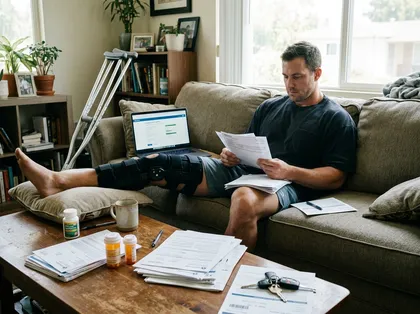
Since the vehicle damage claim and personal injury claim address different losses, you may seek compensation for your injuries even if insurance has already paid for your totaled leased car.
Here are some of the compensatory damages you may be able to pursue:
- Medical Expenses: Emergency treatment, hospital bills, surgery, medication, physical therapy, and other necessary care.
- Lost Wages: Income you could not earn while recovering from your injuries.
- Reduced Earning Capacity: Future income you may lose because of lasting physical limitations.
- Pain and Suffering: Physical pain, emotional distress, and other qualifying non-economic losses.
- Future Medical Expenses: Reasonably necessary treatment, rehabilitation, and ongoing care.
Your potential compensation depends on your injuries, the evidence, available insurance coverage, and other circumstances of the case.
Does Settling the Totaled Car Claim Affect Your Injury Claim?
Settling your property damage claim does not automatically prevent you from pursuing compensation for your injuries. However, the terms of a settlement agreement may affect your remaining rights. For example, an agreement that releases all claims arising from the accident may also waive your personal injury claim.
Before signing a settlement, review whether the release covers only the vehicle damage or also includes bodily injuries, unknown claims, and other accident-related losses. You do not have to settle your personal injury claim simply because the insurance company is ready to resolve your vehicle damage claim.
How Long Do You Have to File a Lawsuit in California?
California generally gives injured accident victims two years to file a negligence-based personal injury lawsuit. A separate three-year period generally applies to lawsuits seeking compensation for damage to personal property.
If a government vehicle or dangerous public road condition contributed to your accident, you generally must submit a written claim to the responsible public entity within six months, under Government Code § 911.2.
- If the entity sends a legally compliant rejection notice, you generally have six months from the date it personally delivers or mails the notice to file a lawsuit.
- If the entity does not provide a legally compliant rejection notice, you generally have two years from when your claim arose to file a lawsuit, subject to exceptions. These deadlines follow Government Code § 945.6.
Preserving evidence early is important, even if you have time to file a lawsuit. Surveillance footage may be deleted, witnesses may forget details, and damaged vehicles may be repaired or disposed of. Losing this evidence can make it harder to establish fault and document your damages.
Certain deadlines may differ for injured minors, claims arising from insurance or lease contracts, and other circumstances. Consult a California personal injury attorney as soon as possible to identify the applicable deadlines, preserve evidence, and protect your right to pursue compensation.
Steps to Take if Your Leased Car Is Totaled in California
You can take several steps to protect your finances and legal rights after a car accident involving a leased car. These steps can help you understand your remaining obligations, preserve evidence, and avoid overlooking a potential injury claim.
- Notify your insurer and leasing company. Report the accident promptly and follow the reporting requirements in your insurance policy and lease agreement.
- Gather important documents. Keep your lease agreement, insurance policy, GAP documents, payment receipts, collision report if available, medical records, and correspondence about the accident. You can begin pursuing a personal injury claim even if the collision report is not yet available.
- Request the insurer’s written valuation. Review the vehicle’s mileage, condition, trim, equipment, and comparable-vehicle information. You can dispute errors or unsupported deductions.
- Ask for a final lease accounting. Obtain an itemized statement showing the insurance settlement, remaining liability, deposits, advance payments, and other applicable credits.
- Check whether GAP insurance applies. Review the agreement for coverage, exclusions, and any steps needed to request payment or a waiver of your remaining balance.
- Report the accident to the appropriate authorities. California generally requires drivers involved in an accident that causes injury or death to make or cause a written report to the CHP or the appropriate city police department within 24 hours, under Vehicle Code § 20008. California also generally requires drivers to submit an SR-1 report to the DMV within 10 days if the accident caused any injury (no matter how minor), a death, or more than $1,000 in damage to the property of any one person.
- Confirm your remaining payment obligations. Ask the leasing company whether you must continue making payments while the claim is pending. Obtain written confirmation before suspending required payments.
- Review any settlement or release before signing. Make sure you understand which claims the agreement resolves, especially if you suffered injuries.
If your injuries make it difficult to manage these steps, consider contacting a car accident claims attorney.
How a California Lawyer Can Help After Your Leased Car Is Totaled
A car accident lawyer can help you pursue compensation for your injuries and address legal issues arising from the crash. If your injuries prevent you from managing the claims process, an attorney can handle important tasks while you focus on recovery.
Depending on your situation, an attorney can help you by:
- Investigating the accident. This includes gathering evidence, interviewing witnesses, reviewing available crash reports, and identifying parties who may be responsible for your injuries.
- Reviewing insurance and lease documents. Examine available coverage, GAP insurance, and lease obligations to identify potential payment sources and issues that may affect your claim.
- Documenting your losses. Collect medical records, treatment bills, proof of lost income, and other evidence to support your compensation claim.
- Communicating with insurers. Handle claim-related discussions, respond to requests for information, and negotiate a settlement based on your documented losses.
- Reviewing settlement offers. Check whether a proposed property damage settlement could affect your right to pursue compensation for your injuries.
- Managing legal deadlines. Identify applicable filing deadlines and prepare a lawsuit if necessary to pursue your claim.
If you got injured in an accident involving your leased car, Arash Law can review your case and explain your legal options. Call (888) 488-1391, available 24/7, for a free case evaluation. Our car accident attorneys can help you pursue compensation while you focus on recovery.
Frequently Asked Questions About Totaled Leased Cars in California
Do I Still Have to Make Lease Payments While the Total-Loss Claim Is Being Processed?
You may need to continue making lease payments until the leasing company closes your account or agrees to suspend them. Stopping payments without confirmation may place you in default or affect your credit. Review your agreement and obtain any payment suspension in writing.
What if the At-Fault Driver Was Uninsured?
Your collision coverage may pay for covered damage to your leased car if the responsible driver has no insurance. You may also qualify for uninsured motorist (UM) bodily injury benefits if your policy includes that coverage and the claim meets its requirements.
California’s uninsured motorist property damage coverage is separate and has specific limitations. Check your policy to see which coverages apply.
Can I Keep My Leased Car After It Is Declared a Total Loss?

You generally cannot keep a totaled leased car without the leasing company’s approval. Because the lessor owns the vehicle, it ordinarily controls whether the car may be retained or disposed of after the loss. If the lessor agrees to let you acquire it, salvage title and registration requirements may apply.
What Should I Avoid Saying to an Insurance Adjuster?
Avoid guessing about how the accident happened, making unsupported statements about fault, or agreeing to a settlement you do not understand. Provide accurate information and ask for clarification when necessary. Your cooperation duties under your own insurance policy may differ from those involving another driver’s insurer.
Do I Still Owe Money if My GAP Coverage Expired?
You may owe a remaining lease balance if your GAP insurance was not effective at the time of the covered total loss. However, the amount you owe depends on the lease agreement, insurance proceeds, applicable credits, and any other provision that limits or waives your liability.
Is It Worth Hiring a Lawyer if My Leased Car Was Totaled?
Hiring a lawyer may be worthwhile if you suffered injuries, another driver disputes fault, or the available insurance does not cover your losses. While you can handle a routine total-loss property damage claim yourself, an attorney can help you address more complicated issues involving liability, insurance coverage, and personal injury compensation.
What Arash Law Has Recovered for California Car Accident Clients
Arash Law has secured significant results for people who suffered serious injuries in car accidents. The following case results illustrate how compensation may address severe injuries, medical needs, and other accident-related losses.
- $5,250,000: Our client suffered paralysis after an inattentive driver struck him, leaving him with life-changing injuries. Arash Law secured the full available policy limits and helped our client obtain additional workers’ compensation benefits because the accident occurred while they were working.
- $3,500,000: A distracted driver rear-ended our client, who was stopped at a red light, causing severe spinal injuries that required surgery. Arash Law secured a settlement just three days before the scheduled trial.
- $2,200,000: A client suffered serious lower back injuries in a car accident and required multiple surgeries to repair damaged spinal discs. After two mediation sessions and extensive trial preparation, Arash Law secured a settlement shortly before trial.
Past results do not guarantee future outcomes. Every case is different, and results depend on the specific facts, evidence, and circumstances involved.
Get Help With Your Leased Car Accident Claim in California
If another driver’s negligence caused your leased car accident, you may have the right to pursue compensation for your injuries and other legally recoverable losses. Resolving the vehicle’s total-loss claim does not necessarily resolve the financial and physical effects of the accident.
Arash Law’s car accident claims attorneys can investigate the collision, identify potentially responsible parties, review available insurance coverage, and assess the compensation you may be entitled to pursue. They can also examine whether a proposed property damage settlement affects your injury claim.
Arash Law has recovered over $1 billion for California accident victims. Our team handles personal injury claims on a contingency fee basis, with attorney’s fees depending on obtaining a recovery. The fee agreement explains the applicable terms and case-related costs.
Call Arash Law at (888) 488-1391, available 24/7, for a free case evaluation.
Sources
- California Legislative Information. California Civil Code § 2987: Vehicle Lease Early Termination and Refund Requirements.
https://leginfo.legislature.ca.gov/faces/codes_displaySection.xhtml?sectionNum=2987.&lawCode=CIV- California Legislative Information. California Civil Code § 2985.8: Motor Vehicle Lease Disclosures.
https://leginfo.legislature.ca.gov/faces/codes_displaySection.xhtml?sectionNum=2985.8.&lawCode=CIV- California Code of Regulations. Title 10, § 2695.8: Additional Standards Applicable to Automobile Insurance.
https://www.law.cornell.edu/regulations/california/10-CCR-2695.8- California Legislative Information. California Civil Code § 1714: General Negligence Liability.
https://leginfo.legislature.ca.gov/faces/codes_displaySection.xhtml?sectionNum=1714.&lawCode=CIV- California Legislative Information. California Code of Civil Procedure § 335.1: Personal Injury Statute of Limitations.
https://leginfo.legislature.ca.gov/faces/codes_displaySection.xhtml?sectionNum=335.1.&lawCode=CCP- California Legislative Information. California Code of Civil Procedure § 338: Property Damage Statute of Limitations.
https://leginfo.legislature.ca.gov/faces/codes_displaySection.xhtml?sectionNum=338.&lawCode=CCP- California Legislative Information. California Government Code § 911.2: Government Claim Deadlines.
https://leginfo.legislature.ca.gov/faces/codes_displaySection.xhtml?sectionNum=911.2.&lawCode=GOV- California Legislative Information. California Vehicle Code § 16000: Accident Reporting Requirements.
https://leginfo.legislature.ca.gov/faces/codes_displaySection.xhtml?sectionNum=16000.&lawCode=VEH- California Department of Motor Vehicles. Report of Traffic Accident Occurring in California (SR-1).
https://www.dmv.ca.gov/portal/dmv-virtual-office/accident-reporting/- California Legislative Information. California Government Code § 945.6: Time Limits for Filing Lawsuits Against Public Entities.
https://leginfo.legislature.ca.gov/faces/codes_displaySection.xhtml?sectionNum=945.6.&lawCode=GOV- California Legislative Information. California Vehicle Code § 20008: Reporting Accidents Involving Injury or Death.
https://leginfo.legislature.ca.gov/faces/codes_displaySection.xhtml?sectionNum=20008.&lawCode=VEHDisclaimer
Past results do not guarantee future outcomes. Every case is different. The information on this page is for general educational purposes and does not constitute legal advice. Reading or relying on this content does not create an attorney-client relationship. Consult a licensed California car accident claims lawyer about your specific situation. Arash Law: (888) 488-1391.