TL;DR: You should slow down at a yellow light and stop if you can do so safely. Do not speed up just to beat the light. If stopping would require hard braking or create a crash risk, continue carefully and stay alert for pedestrians, cyclists, turning vehicles, and cross traffic.
Highlights:
- Get medical care and keep every treatment note and bill.
- Photograph the intersection, signal, lane markings, and vehicle damage.
- Collect witness names and contact details before they leave.
- Secure dashcam and surveillance footage; request traffic camera video quickly.
- Have counsel send a preservation letter to ensure the video evidence is not overwritten.
- Notify your insurer promptly and ask if MedPay covers early care.
- File within 2 years; public-entity claims may require 6 months’ notice.
Tip: Write down your timing, speed, and lane position right away, and stick to facts with insurers – avoid guessing.
Table of Contents
A yellow light means the signal is changing, so your first move should be to ease off the gas and decide whether you can stop safely before the limit line or crosswalk. The limit line is the white line where drivers should stop before entering the intersection or crosswalk.
If you have enough space, stopping is the safer choice. If you are already too close to stop, continue carefully and stay alert for turning vehicles, pedestrians, cyclists, and cross traffic. You may be too close to stop safely if stopping would require slamming on the brakes, skidding, stopping inside the crosswalk, or creating a rear-end risk.
Problems often start when drivers treat a yellow light like a countdown they can beat. Accelerating through the intersection can make it harder to stop, avoid other vehicles, and show that you acted reasonably if a crash occurs. If a crash occurs as the light changes, fault often depends on speed, distance, signal timing, right-of-way, and what each driver did in the moments before impact.
The Basic Rule: Slow Down At A Yellow Light And Stop If It Is Safe
The safest response to a yellow light depends on your distance from the intersection and the traffic around you. You should not make a split-second decision based only on the color of the light. You also need to consider whether you can stop without creating another hazard. Rain, poor visibility, heavy traffic, and slick roads can also affect whether stopping is safe.
Use this simple approach:
- Slow Down: Ease off the gas as soon as the light turns yellow.
- Check Your Distance: Stop if you have enough space before the limit line or crosswalk.
- Check Traffic Behind You: Do not slam on the brakes if a sudden stop could cause a crash.
- Proceed Carefully: Continue only if stopping would be unsafe.
- Watch the Intersection: Look for pedestrians, cyclists, turning vehicles, and drivers entering early.
A yellow light also matters because pedestrians and turning drivers may be moving through the intersection as the signal changes. The rule is not “always stop” or “always go.” The rule is to make the safest reasonable decision under the circumstances.
What California Law Says About Yellow Lights
California law treats a yellow light as a warning that the signal is about to turn red. Drivers should stop if they can do so safely. If they are already too close to stop safely, they may continue through the intersection with caution.
The California Department of Motor Vehicles’ Driver Handbook gives practical guidance for different yellow signals:
| Traffic Signal | What It Means | When To Continue Instead Of Stopping |
|---|---|---|
| Solid Yellow Light | The light is about to turn red. Stop if it’s safe to do so. | Continue if you cannot stop safely or are already in the intersection. |
| Solid Yellow Arrow | Your protected turning time is ending. Stop safely. | Continue if you cannot stop safely or are already in the intersection. |
| Flashing Yellow Light | Slow down and stay alert. | You do not need to stop, but you must proceed with caution. |
| Flashing Yellow Arrow | You may turn after yielding. | You may proceed if the turn is safe and you yield to oncoming traffic and pedestrians. |
Speeding up at a yellow light can make an intersection crash more likely and more severe. It gives drivers, pedestrians, cyclists, and cross traffic less time to react. A driver who tries to beat the light may enter too late, misjudge a left turn, or collide with vehicles that begin moving as the signal changes. If a crash happens, fault often depends on timing, speed, distance, and whether each driver acted reasonably.
Is It Illegal To Drive Through A Yellow Light In California?
Driving through a yellow light is not automatically illegal in California. A yellow light warns that the red light is coming. If you enter the intersection while the light is still yellow and you cannot stop safely, you are not automatically at fault just for continuing.
The issue changes if the driver enters the intersection after the light turns red, speeds up unsafely, or fails to yield. In crashes involving a late entry on a red light, many injured drivers consult California red-light accident lawyers to understand how liability may be determined.
Legal problems can arise when a driver:
- Speeds up to beat the light.
- Enters the intersection after the light turns red.
- Fails to yield while turning left.
- Drives too fast for traffic or weather conditions.
- Stops suddenly when a safe, controlled stop is not possible.
- Misses the signal change due to distraction.
In a crash, the question is not just whether the light was yellow. The bigger question is whether each driver acted reasonably.
How Your Response To A Yellow Light Can Affect Fault
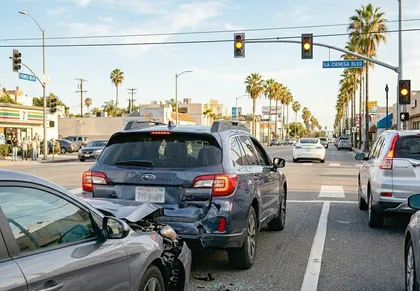
The safest choice at a yellow light is usually to slow down and stop if you can do so safely. If a crash happens, fault often depends on whether each driver made a reasonable decision when the signal changed. Entering on yellow does not automatically prove fault. Stopping at a yellow light does not automatically clear a driver either.
Insurers, lawyers, and courts may look at:
- Whether you had enough distance to stop safely before the limit line or crosswalk.
- Whether either driver sped up to beat the light.
- Whether a driver entered the intersection after the light turned red.
- Whether someone braked suddenly when a smooth stop was possible.
- Whether a following driver tailgated or failed to stop in time.
- Whether a driver made an unsafe left turn across oncoming traffic.
- Whether traffic, visibility, weather, or road conditions affected the decision.
- Whether video or witness evidence shows what each driver did.
These details matter because a yellow light does not automatically protect or blame either driver. The key issue is whether each person acted reasonably based on what they could see, the time they had to stop, and whether their actions made the intersection more dangerous.
Who Is Liable For A Crash Involving A Yellow Light in California?
Fault usually depends on what each driver did before impact, including speed, distance, signal timing, traffic, and road conditions. A driver may be liable if they:
- Speed up to beat the yellow light.
- Enter the intersection after the light turns red.
- Turn left without yielding.
- Tailgate and rear-end another vehicle.
- Miss the light change because they are distracted.
An employer may be liable if an employee causes the crash while working. A city, county, or state agency may also be liable if a broken signal, poor timing, blocked sign, or dangerous intersection design contributed to the crash.
California uses pure comparative negligence, so more than one party can share fault. You may still recover compensation if you share some fault, but your percentage of responsibility may reduce your recovery. Many victims seek free advice from traffic accident lawyers to understand how shared fault could affect their claim.
What Should You Do If You Get In A Crash At A Yellow Light?
If a crash occurs when someone slows down, stops, or runs a yellow light, focus on safety, medical care, and evidence. These accidents often turn into timing disputes because each driver may remember the signal, speed, and distance differently.
Take these steps when possible:
- Get Medical Care: Visit an emergency room, urgent care clinic, primary care doctor, chiropractor, physical therapist, or specialist if you have pain or symptoms.
- Call Law Enforcement: A police report can document the crash location, driver statements, witness information, and possible traffic violations.
- Photograph the Scene: Take photos of the intersection, signal lights, limit line, crosswalks, lane markings, skid marks, vehicle positions, and damage.
- Get Witness Information: Ask witnesses for their names and contact details before they leave.
- Preserve Video Evidence: Look for dashcam footage, traffic cameras, red-light cameras, nearby business cameras, and home surveillance cameras.
- Notify Your Insurer: Your policy may require prompt notice. Ask whether medical payments coverage, also called MedPay, may help with early medical bills.
- Avoid Guessing: Stick to facts when speaking with insurers. Do not guess about your speed, timing, distance, or fault.
- Consult a Lawyer: Many intersection accident attorneys in California offer free initial consultations. You can use these meetings to learn about your rights and potential next steps.
After a crash at a yellow light, the main issue is usually whether each driver acted reasonably. Evidence gathered early can help show whether a driver had enough time to stop safely, continued because stopping would have been unsafe, or sped up to beat the light.
What Evidence Shows Whether A Driver Should Have Stopped or Continued?
Accidents involving a yellow light often come down to a few seconds. Evidence can show whether a driver had enough time to stop safely or whether continuing through the intersection made more sense under the circumstances.
Important evidence may include:
- Photos of the signal, limit line, crosswalk, lane markings, and vehicle damage.
- Dashcam video from either vehicle.
- Traffic camera or red-light camera footage, if available.
- Nearby business or home surveillance video.
- Witness names and contact information.
- Police report details.
- Vehicle damage patterns.
- Skid marks or debris location.
- Event data recorder information, when available.
- Phone records or app data if distracted driving is suspected.
- Medical records showing diagnosis, treatment, work limits, and pain complaints.
This evidence can help answer key questions: Did the driver speed up? Was there enough space to stop? Did the light turn red before the driver entered the intersection? Did another driver follow too closely? Did someone make an unsafe turn? Those answers can affect how fault is assigned.
Do You Have A Case After A Crash At A Yellow Light?
You may have a claim if another driver acted carelessly when the light turned yellow and caused your injuries. A driver may be negligent if they sped up to beat the light, entered after a red light, failed to yield, followed too closely, drove distracted, or made an unsafe turn.
Other parties may also be involved in some cases. For example, an employer may be liable if an employee causes a work-related crash. A city, county, or state agency may be involved if a broken or poorly timed signal, a missing or obscured sign, or a dangerous intersection design contributed to the crash.
Claims involving a yellow light often require a careful review because the issue is not simply whether the light was yellow. The real question is whether each driver acted safely and reasonably when the signal changed.
Why Medical Records Matter After A Crash At A Yellow Light

A crash at a yellow light can cause serious injuries, especially when one driver speeds into the intersection or hits the side of another vehicle. Some injuries appear right away. Others develop hours or days later.
Common injuries include:
- Whiplash and neck strain.
- Back injuries and herniated discs.
- Traumatic brain injuries.
- Broken bones.
- Shoulder, wrist, knee, and ankle injuries.
- Chest or abdominal injuries from seat belts or airbags.
- Cuts, bruising, and facial injuries.
- Anxiety, sleep problems, or fear of driving.
Medical records matter because they connect your symptoms to the crash. They can also show the treatment you needed, how long recovery may take, and whether the crash affected your work, movement, or daily life.
What Compensation Can a Claim Involving a Yellow Light Include?
If a crash at a yellow light results in injuries, a claim may include losses related to the accident. Compensation depends on the evidence, injury severity, available insurance, and each party’s share of fault.
A claim may include compensation for:
- Medical bills.
- Future medical care.
- Lost income.
- Reduced earning ability.
- Vehicle repair or replacement.
- Out-of-pocket costs.
- Pain and suffering.
- Loss of normal daily activities.
Wrongful death damages may apply if the crash causes a fatal injury. The available damages depend on the facts of the accident, the losses involved, and California law.
How Long Do You Have To File A Yellow-Light Accident Claim In California?
California’s statute of limitations generally sets a two-year deadline for filing a personal injury lawsuit. Other exceptions may apply. For instance, minors generally have until their 20th birthday to file a case.
A shorter time limit applies if a public entity is involved. You would have to first submit an administrative claim within six months of the incident. Missing this deadline typically bars you from suing the entity.
Do not wait until the deadline is close. Cases involving accidents at yellow lights depend on preserving evidence fast. Videos, witness statements, and traffic signal-related records are time-sensitive. More crucially, courts in California can dismiss your case if you file it late. If you’re unsure of which deadlines may apply in your situation, you can always consult a traffic accident lawyer.
Frequently Asked Questions About Yellow Light Rules In California
In California, the laws around yellow lights are more nuanced than those for red lights. As a result, people injured in crashes involving yellow lights in California often have many legal questions. This section answers the most common concerns after these crashes.
How Long Does A Yellow Light Last In California?
In California, a yellow light typically lasts about 3 to 6 seconds. However, it can also vary based on roadway speed, intersection conditions, and traffic engineering standards. Local and state agencies use formulas from sources such as the California Manual on Uniform Traffic Control Devices. The resulting intervals are meant to provide drivers with adequate perception and stopping time.
Who Is At Fault If I Stopped At A Yellow Light And Got Rear-Ended?
The rear driver is typically liable for following too closely or failing to stop in time. However, the lead driver may be found at fault if they stop suddenly without a valid reason.
Can I Recover Compensation If I Was Partly At Fault?
Yes. California’s pure comparative negligence rule allows compensation to be reduced by the injured person’s share of fault. Sharing fault for a yellow-light crash does not automatically erase the claim. It would only reduce your potential compensation. For example, if you’re 25% at fault and your total damages are $100,000, you can still pursue $75,000.
Do I Need A Lawyer After A Crash Involving A Yellow Light?
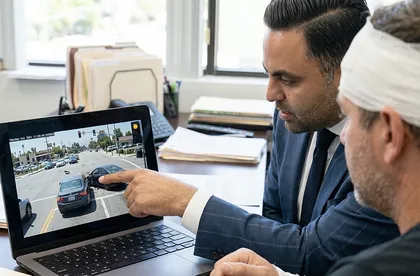
If you have severe injuries, face disputed fault, or have other legal concerns that you cannot handle alone, you may find yourself thinking, I need a personal injury lawyer. An attorney can help you gather time-sensitive evidence and handle all communication with insurance companies. A lawyer can review the facts of the crash and explain whether a claim is worth pursuing.
Do Lawyers Only Get Paid If They Win?
Yes, but only if they work on a contingency fee basis. That means they won’t charge you upfront. Instead, you’ll only pay your lawyer if they win or settle your case. This arrangement aims to make legal help more accessible to victims who are struggling financially after a crash.
Talk To Arash Law After An Accident At A Yellow Light
A crash involving a yellow light can quickly turn into a dispute over fault. The insurer may question your speed, timing, braking, injuries, or who had the right of way. They may also argue that you entered too late, stopped too suddenly, or shared responsibility for the crash.
AK Law can review what happened, identify useful evidence, and explain your legal options. Our team can help locate dashcam and traffic camera footage, witness statements, police reports, medical records, and other details that may show whether each driver acted reasonably when the light changed.
Call (888) 488-1391 for a free initial consultation. No attorney fees unless compensation is recovered for you.