TL;DR: In a sun glare accident, a blinded driver may be liable if they failed to respond reasonably to limited visibility and that failure caused the crash. California law requires drivers to slow down or stop when visibility drops. Injured drivers, pedestrians, and cyclists generally have 2 years to file a lawsuit against the at-fault party.
Highlights:
- Call 911 and get medical care, even if symptoms feel minor.
- Photograph vehicles, injuries, road markings, signals, and travel directions.
- Record the exact time and location to match the sun angle and weather logs.
- Get driver and witness contacts, and note any “couldn’t see” statements.
- Save dashcam footage immediately before it gets overwritten, and request nearby camera video.
- Preserve damaged items, repair estimates, and all medical records and bills.
- If dangerous road conditions played a role, filing a government claim within 6 months may be necessary.
Tip: When talking to police or insurers, stick to observable facts and avoid guessing about speeds, distances, or what someone “should have seen.”
Table of Contents
Fault in a sun glare accident usually depends on whether each driver acted reasonably when visibility became limited. California drivers have a duty to use reasonable care. This may require slowing down, increasing following distance, delaying a turn, or stopping when they cannot see safely. Sun glare may be predictable in some situations, but fault still depends on the timing, road layout, traffic, and actions of everyone involved.
The driver who failed to adjust to the sun glare may be liable if that failure caused the collision. Depending on how the crash occurred, this may include:
- A rear driver who followed too closely.
- A turning driver who entered another vehicle’s path.
- A driver who drifted from a lane.
- A driver who struck a pedestrian, cyclist, or stopped vehicle.
Another driver may also share fault if an unsafe maneuver contributed to the crash. Saying “I couldn’t see” does not automatically excuse a driver from liability under California law. Sun glare is often foreseeable, but whether a driver should have anticipated it depends on the road, time, weather, and surrounding conditions.
California law requires every driver to exercise reasonable care. That means acting the way a cautious person would in the same situation, including when visibility is poor. That duty applies even when the sun is low in the sky. A driver who fails to prepare for predictable glare can still be held legally responsible for any crash they cause.
Why Doesn’t Sun Glare Excuse A Driver From Liability?
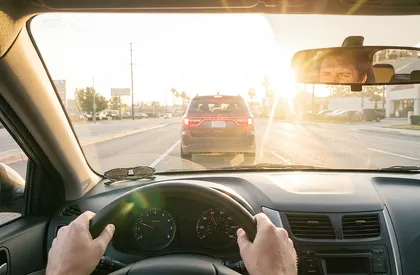
A driver’s legal duty to stay in control does not stop when the sun gets in their eyes. California law requires drivers to prepare for conditions they can expect to face. Sun glare fits that category. It occurs at predictable times every day, so the circumstances may support an argument that it was foreseeable.
A driver heading east at dawn or west at dusk knows bright glare is coming. That predictability is what separates glare from a true sudden hazard, like a tire blowout or debris falling from a truck.
Under California’s sudden emergency doctrine (CACI No. 452), a hazard only excuses a driver when it was truly unexpected. When glare reduces visibility, drivers should take reasonable steps to remain in control. Depending on the circumstances, these steps may include:
- Slowing down. Reduce your speed so you have more time to stop if the car ahead brakes.
- Using the sun visor. Flip it down to block direct sunlight from your line of sight.
- Wearing sunglasses. Polarized lenses cut through glare in ways a visor alone cannot.
- Keeping the windshield clean. Clean the inside and outside of the windshield, as dirt, dust, and streaks can scatter sunlight and worsen glare.
- Maintaining visibility equipment. Replace worn windshield wipers, repair any damaged glass, and ensure the windshield washer system works properly.
- Increasing following distance. Leave more space between you and the vehicle ahead to give yourself extra reaction time.
- Pulling over if needed. If glare makes it unsafe to continue, slow down and stop only where it is lawful and safe. California’s basic speed law requires drivers to travel at a reasonable and safe speed based on visibility, weather, traffic, and road conditions. Driving too fast for limited visibility may support a finding of negligence when it contributes to a crash.
A driver who fails to take reasonable precautions after glare limits visibility may be liable if that failure contributes to a crash. Whether glare qualifies as an emergency depends on how suddenly it appeared, whether the driver should have anticipated it, and how the driver responded.
Comparative Negligence In Sun Glare Accident Cases In California
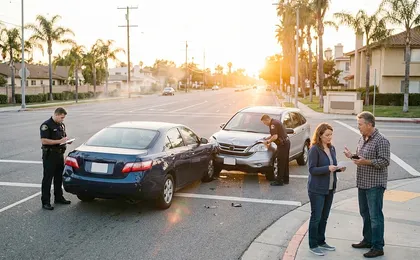
Fault in a sun glare accident is not always placed on one person. Under California’s pure comparative negligence rule, two or more people may share responsibility for the same crash. An injured person can still get compensation, even if they were partly at fault. However, their share of fault will lower the amount they can recover.
This rule comes from Li v. Yellow Cab Co. (1975). For example, if your damages total $50,000 and you are found to be 20% at fault, you may still recover $40,000.
Simply being affected by sun glare does not automatically make someone negligent. Comparative fault may apply when more than one person failed to use reasonable care after visibility became limited. Examples include:
- Injured Driver: In some cases, the victim may also share fault in such collisions. Their compensation may be reduced if:
- They drove too fast for the conditions.
- Followed too closely.
- Changed lanes without a clear view.
- Stopped unsafely in a travel lane.
For example, a driver who suddenly brakes because of glare may share fault if the manner or location of the stop was unreasonable under the circumstances. The rear driver may also be at fault for following too closely or failing to leave a reasonable stopping distance under the conditions.
- Pedestrian: A pedestrian may share fault if they crossed outside a safe area, entered traffic unexpectedly, or failed to use reasonable care. However, this does not excuse a driver who continued without being able to see clearly.
- Cyclist: A cyclist may share fault if they failed to yield when required, ignored a traffic signal, or turned or changed lanes without reasonable care. The driver may still be responsible for failing to slow down or stop when glare blocked their view.
The percentage assigned to each person depends on evidence. Traffic accident lawyers consider several factors when assessing liability. They consider vehicle speed, following distance, lane position, and witness statements. Dashcam footage and actions taken before the crash also play a key role. The stronger the evidence, the easier it is to determine how responsibility should be divided.
Actions You Can Take After A Sun Glare Accident
After a sun glare accident, it’s important to stay calm and take a few key steps to protect your safety, preserve evidence, and support any future insurance or legal claim. The actions you take immediately after the crash can make a significant difference in how the situation is documented and resolved.
- Call for Help: Call 911 if you are injured, if anyone else is hurt, or if the crash is blocking traffic.
- Move to Safety: Move to a safe place if you can do so without causing more harm. If you were hit while walking or riding a bicycle, do not move unless you are in immediate danger.
- Get Medical Care: Accept medical help and see a doctor if you feel pain, dizziness, confusion, or other symptoms. Pedestrians and cyclists may suffer serious injuries even when the impact seems minor.
- Document the Scene: Take photos or videos of the vehicles, bicycle, injuries, damage, road markings, traffic signals, crosswalks, bike lanes, and the direction everyone was traveling.
- Record the Time and Location: Write down the exact time and location because the sun’s position may help show how glare affected the driver’s visibility. Do not stare into the sun or stand in traffic to recreate the view.
- Collect Driver Information: Get the driver’s name, contact details, driver’s license number, and insurance information.
- Collect Witness Information: Ask witnesses for their names and phone numbers. Their statements may help show what happened before the crash.
- Report the Glare: Tell the responding officer about the glare and any statements the driver makes, such as saying they could not see.
- Preserve Evidence: Save photos, medical records, repair estimates, damaged clothing, bicycle parts, and other crash-related items.
It can be challenging to know who is at fault in a car accident, especially when the sun glare is a factor. Getting free advice from a traffic accident lawyer may help you understand what your legal options are based on the specific circumstances of your case.
Proving Who Is At Fault In A Sun Glare Accident
Proving fault in a sun glare crash requires evidence that the driver failed to respond reasonably to the limited visibility they knew or should have anticipated. That evidence needs to be gathered quickly, because some of it can be lost or overwritten within days. Knowing what to collect and acting early is what separates a strong claim from a weak one.
The following evidence may help establish how the crash happened, whether the driver took reasonable precautions, and what injuries and losses resulted:
- Historical Sun-Position and Weather Data: From the time of the crash, confirming glare was present. For example, sun-position calculators can estimate the sun’s altitude and direction based on the crash time and location. Meanwhile, weather records may show cloud cover and visibility conditions.
- Dashcam Footage: Showing the driver did not brake before impact.
- Witness Statements: About the driver’s actions before the crash.
- Police Report: Noting visibility conditions and contributing factors.
- Tire Marks and Vehicle Data: Physical marks, event data recorder information, or video that may show braking, steering, and speed.
- Medical Records: Documenting the injuries, treatment, and whether the findings are consistent with the crash.
Dashcam systems loop-record and can overwrite footage within days. Witnesses are also easier to reach in the early days after a crash. An attorney can step in quickly, request footage before it cycles, and build your case around the conditions that caused the crash. Sun glare accident cases raise real questions about evidence, insurance disputes, and legal strategy. Understanding what comes next matters for anyone working through a claim like this.
Case Results: Proving Liability After A Limited-Visibility Collision
The following Arash Law case results involved disputes about a driver’s view of the road, including blocked sightlines and poor weather. Although they were not sun glare cases, they show how strong evidence can help identify the responsible party when visibility is limited.
- $1,003,000 Obstructed View Recovery: An overgrown bush on a property blocked a driver’s view and led to a crash. The at-fault driver had no insurance, so our team built a case against another responsible party instead.
- $4,100,000 Heavy Fog Recovery: Our client suffered multiple broken bones after another driver turned left in front of them in heavy fog. Poor visibility was not a valid excuse, and we recovered $4.1 million on our client’s behalf.
Case Results Disclaimer: Every case is different. Prior successes do not guarantee a favorable outcome in every case. Results depend on the facts, injuries, available insurance, applicable law, and other circumstances.
Frequently Asked Questions About Sun Glare Accidents
Sun glare accidents raise questions that span weather, driver behavior, and road design. Sorting out who is liable, what insurance covers, and when deadlines apply is rarely simple. California law provides specific answers to each of these concerns, and the questions below address the most common.
Can A City Be At Fault For Poor Road Design Contributing To Sun Glare?
Possibly, but sun glare alone usually is not enough to make a city liable. A public entity may be responsible if a feature of the public road, such as unsafe road geometry, a poorly placed traffic signal, blocked sightlines, or a lack of needed warnings, created a dangerous condition that contributed to the collision.
The claimant must show the condition caused the injury, posed a foreseeable risk under reasonable use, and was created by or known to the public entity in time to address it. Design immunity and other defenses may also apply. Claimants generally must file an administrative claim within six months of the accident.
Does Auto Insurance Cover Accidents Caused Exclusively By Weather?
It may. Auto insurance does not cover the weather itself, but it may cover losses caused during bad weather or sun glare. Liability coverage may apply when a driver fails to use reasonable care, such as by driving too fast in limited visibility or continuing when they cannot see safely.
Collision coverage may pay for damage to the insured vehicle after a crash, while comprehensive coverage may apply to some weather-related damage that does not involve a collision.
Coverage depends on the policy’s terms, limits, deductibles, and exclusions.
What Compensation May Be Available After A Sun Glare Crash?
Depending on your injuries and the available insurance, a claim may cover medical bills, lost income, and reduced future earning ability. You may also recover for property damage, pain and suffering, and future medical care. If a crash causes a death, eligible family members may have a separate wrongful death claim.
What If Both Drivers Were Blinded By The Sun At The Same Time?
Under California’s comparative negligence rule, both drivers may share liability. Your compensation is reduced proportionally by your share of fault, though you may still be able to recover damages.
Does The Police Report Decide Who Is At Fault?
No. A police report does not make the final decision about fault. Under California Vehicle Code § 20013, the report generally cannot be used as evidence at trial.
Insurance companies may still review the report when handling a claim, but they may also consider photos, videos, witness statements, vehicle damage, and other evidence. Any fault finding in the report can be challenged if it is incomplete or incorrect.
How Long Do I Have To File An Accident Lawsuit In California?
In California, you have two years from the date of the crash to file a personal injury lawsuit under Code of Civil Procedure §335.1. In most cases, missing this deadline means losing the right to pursue a claim, though some exceptions may extend the timeframe depending on your circumstances.
Hurt In A Sun Glare Crash? Contact Arash Law
If a sun glare accident left you injured, do not wait to protect your rights. Delays can make it harder to preserve evidence and meet California’s legal deadlines. If Arash Law represents you, our traffic accident lawyers can evaluate your case and determine what losses you may pursue.
AK Law handles every personal injury case on a contingency fee basis. You don’t pay attorney’s fees unless we win. Call (888) 488-1391 for a free case review today. Reach out today to discuss your situation and explore your possible legal options.