TL;DR: If you are entirely at fault for a California car accident, you usually cannot recover damages from another driver. If someone else also contributed, California’s pure comparative fault rule allows you to pursue compensation, reduced by your percentage of responsibility. MedPay, collision coverage, health insurance, or workers’ compensation may still help cover certain losses.
Highlights:
- Get medical care quickly, follow instructions, and document every symptom change.
- Photograph vehicles, injuries, road conditions, and any skid marks or debris.
- Exchange information, identify witnesses, and write down what you remember fast.
- File a DMV SR-1 report within 10 days if there’s injury/death or property damage that exceeds $1,000.
- Report the crash to your insurer promptly and stick to what you know.
- Avoid giving a recorded statement to the other driver’s insurer.
- Calendar deadlines: 2 years to sue and 6 months for government claims.
Tip: Keep damaged parts, repair estimates, photos, and every insurance letter together for easy proof later.
Table of Contents
If you are entirely at fault for a California car accident, you usually cannot recover damages from another driver who did not contribute to the crash. However, fault is not always assigned to only one person.
If another driver or party also contributed, California’s pure comparative fault rule may allow you to pursue compensation. Your percentage of responsibility would reduce your recovery.
For example, if your damages total $100,000 and you are found 30% at fault, your potential recovery may be reduced to $70,000. Even if you bear most of the fault, you may still pursue the portion caused by someone else.
Do not assume you are solely responsible based only on an apology, citation, police report, or insurance decision. Witness statements, videos, vehicle data, road conditions, or other evidence may show that responsibility should be shared.
Are You Legally At Fault, Or Do You Only Think You Are?
Assuming you’re at fault doesn’t make it true. You could still be a victim with a valid compensation claim. Fault in a car accident isn’t decided by gut feelings, guilt, or even what the other driver insists happened at the scene. It’s determined by evidence: police reports, witness statements, traffic laws, and a careful look at everything that led to the crash.
Many accident victims wrongly assume they’re to blame when, in reality, fault is shared or even lies mostly with the other driver. Even if you are legally at fault, you may still have options for your own injuries:
- If You are 100% at Fault: You generally cannot recover injury damages from the other driver. MedPay, health insurance, workers’ compensation, or another applicable policy may still cover some losses.
- If You are Only Partly at Fault: California’s pure comparative fault rule may let you recover the percentage of your damages caused by someone else. For example, if you are 70% at fault, you may still recover 30% of your losses.
- If Another Source Contributed: A vehicle defect, a dangerous road condition, an employer, a vehicle owner, or a third driver could open the door to other claims.
Police officers, insurance companies, attorneys, judges, and juries may review the same accident for different purposes. A police report can be important evidence, but it does not automatically decide civil liability. The full investigation may include witness statements, vehicle damage, videos, road markings, electronic data, and expert analysis.
A car accident lawyer can evaluate whether another party shares fault. The investigation might change how responsibility is shared. It could affect your ability to get compensation for medical bills, lost income, pain, and other losses.
What Happens If You Are Partly At Fault?
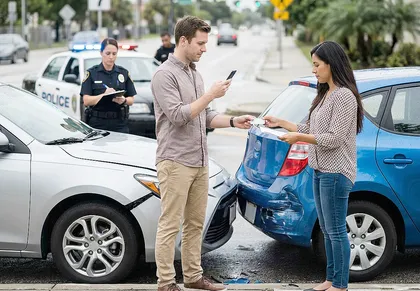
California’s pure comparative negligence rule allows an injured person to recover compensation even when they share responsibility for the crash. Their percentage of fault only reduces their potential compensation.
For example, suppose your losses total $100,000. If the court finds you 30% responsible, it will reduce your recovery by $30,000, leaving you with $70,000. If you are found 50% responsible, you may still seek the remaining 50%, or $50,000.
This rule matters when both drivers make mistakes. Common scenarios include:
- Entering an intersection when the other driver was speeding.
- Changing lanes while the other driver was distracted.
- Making a left turn while the other driver ran a red light.
- Making a sudden stop while the driver behind you was following too closely.
- Failing to yield, but another driver had no working headlights at night.
Do not admit fault at the scene. What feels like your mistake in the moment can look very different once police reports and witness statements are reviewed. Fault is not a fixed fact decided on the spot.
Moreover, the percentage assigned by an insurance company is not always final. It may be challenged with evidence, such as photographs, videos, witness statements, vehicle data, and medical records.
Insurance companies investigate fault while also protecting their financial interests. An injured person may dispute an unfair percentage with stronger evidence. You can challenge these percentages with evidence and a lawyer.
Who Else May Be Responsible For The Accident?
Fault may extend beyond the drivers involved in the crash. Identifying every responsible party in a car accident can increase the options available to cover an injured person’s losses.
Responsible parties may include the following:
- A Vehicle Owner: A vehicle owner may face liability in some cases when another person causes a crash while using the vehicle with permission.
- An Employer: A company may be responsible when its employee caused a crash while performing job duties.
- A Trucking, Delivery, or Rideshare Company: Commercial driving cases may involve company policies, driver training, vehicle maintenance, or additional insurance.
- A Vehicle or Parts Manufacturer: A defective tire, brake, airbag, steering component, or other component may contribute to a collision or worsen injuries.
- A Repair Shop: Poor repairs or unsafe maintenance may contribute to a crash.
- A Public Agency: A dangerous road design, broken traffic signal, missing sign, or other public property condition may contribute to an accident.
- Another Driver: A third driver may cause a chain reaction even without making direct contact with your vehicle.
Claims against these parties require evidence showing what they did and how that conduct contributed to the crash.
What Insurance Applies After A Car Accident In California?
Several types of insurance may apply after a California car accident, including liability, collision, MedPay, and health insurance. UM/UIM, workers’ compensation, and commercial or rideshare coverage may also apply.
The applicable insurance policies depend on who caused the accident, whether fault is shared, and whose injuries or property damage are being covered. More than one policy may also apply to the same accident. That’s why it is important to review all possible sources before assuming that no compensation or coverage is available.
What Insurance May Cover Your Losses If Another Party Shares Fault?
When another driver shares responsibility for the accident, their liability insurance may pay the portion of your injuries and property damage caused by that driver, up to the available policy limits. Your own percentage of fault reduces the compensation you may recover. California’s current minimum liability limits are:
- Bodily Injury Per Person: $30,000 per injured person.
- Bodily Injury Per Accident: $60,000 per accident.
- Property Damage: $15,000 per accident.
If your losses exceed the available liability limits, other potential sources may include your UM/UIM coverage, another applicable policy, additional responsible parties, or the responsible party’s assets. Available options depend on the facts of the accident and the policy terms.
What Other Insurance May Cover Your Losses?
Other coverage may help pay your losses regardless of fault or when another party shares responsibility for the crash.
- Medical Payments Coverage: MedPay may pay eligible medical expenses for you and covered passengers, regardless of fault, up to the purchased limit.
- Health Insurance: Your health plan may cover accident-related treatment, although deductibles, copayments, reimbursement rights, or medical liens may apply.
- Collision Coverage: Collision insurance may pay for covered damage to your vehicle regardless of fault, subject to the deductible, policy terms, and vehicle value.
- Uninsured or Underinsured Motorist Coverage: UM or UIM coverage may apply when another driver contributed to your injuries but lacks sufficient bodily injury insurance. It does not cover injuries caused solely by your own negligence.
- Workers’ Compensation: Workers’ compensation may cover medical treatment and disability benefits if you were injured while performing job duties, regardless of who caused the crash.
- Commercial or Rideshare Insurance: Additional coverage may apply when another responsible driver was operating a truck, delivery vehicle, company vehicle, or rideshare vehicle.
Available coverage depends on how fault is divided, who owned the vehicles, whether a driver was working, whether a rideshare app was active, and the terms, limits, and exclusions of each policy. Review every potential source of coverage before accepting a settlement or assuming that no compensation is available.
What Compensation Can An Injured Party Recover?
An injured person may seek compensation for the share of their losses caused by another party. The amount available depends on the injuries, evidence, insurance coverage, and facts of the accident. California generally divides compensable losses into economic damages and non-economic damages.
Economic damages refer to financial losses you can prove with bills, receipts, wage records, or expert estimates. They can include:
- Emergency care
- Hospital bills
- Doctor visits
- Medical tests
- Medication
- Physical therapy
- Rehabilitation
- Medical equipment
- Future medical treatment
They may also cover lost wages, lost employment benefits, reduced future earning ability, and reasonable out-of-pocket expenses from the crash.
Non-economic damages compensate an injured person for losses that do not have a fixed dollar amount. They can involve:
- Physical pain
- Emotional distress
- Anxiety
- Inconvenience
- Physical impairment
- Disfigurement
- Loss of enjoyment of life
The value of these damages depends on factors such as the severity of the injury, the length of recovery, and the injury’s impact on the person’s daily life.
Your percentage of fault may reduce your total compensation. However, being partly responsible does not mean your medical bills, lost income, and other losses disappear.
An uninsured vehicle owner or driver generally cannot recover non-economic damages, such as pain, suffering, inconvenience, physical impairment, or disfigurement, from a motor vehicle accident. The person may still seek recoverable economic losses, including medical expenses and lost income, subject to comparative fault. An exception may apply when the uninsured victim was injured by a driver who was convicted of DUI.
Important Steps To Take After A Car Accident In California
After a California car accident, seek medical care, preserve evidence, file required reports, notify your insurer, and avoid guessing about fault. The steps you take after a crash can affect your health, insurance coverage, driving privileges, and injury claim.
- Write Down What You Remember: Record the time, date, location, weather, traffic conditions, vehicle positions, and events leading to the crash. Do this while your memory is still fresh. Describe facts, but do not guess about speed, distance, or fault.
- Preserve Evidence: Photograph the vehicles, damage, road conditions, signals, skid marks, debris, and visible injuries. Save dashcam footage and ask nearby homes or businesses to preserve video before it is erased.
- File the SR-1 Form When Required: Submit an SR-1 form to the California DMV within 10 days when anyone was injured or killed or when property damage exceeded $1,000. The requirement applies regardless of who caused the accident. Filing a police report or insurance claim does not replace the SR-1.
- Notify Your Insurance Company: Report the crash to your insurer as soon as possible. Give accurate facts and cooperate with reasonable requests required by the policy. Avoid guessing or accepting a percentage of fault before the evidence has been reviewed.
- Avoid Recorded Statements to the Other Insurer: The other driver’s insurance company may ask for a recorded statement. You generally should understand your rights and the purpose of the request before agreeing. Do not minimize your injuries or speculate about how the crash happened.
- Keep All Accident Documents: Save medical records, bills, repair estimates, wage records, insurance letters, police information, photographs, and receipts in one place. Do not repair or dispose of important damaged property before it has been documented.
- Speak With a Lawyer When Fault Is Disputed: Consider legal help from a car accident lawyer when you were injured, fault is unclear, multiple parties were involved, the insurer blames you, or the available insurance may not cover your losses.

How Long Do You Have To File A California Car Accident Claim?
In most California personal injury cases, you have two years from the date of the accident to file a personal injury lawsuit. Missing the deadline may prevent you from recovering compensation.
Some cases have much shorter deadlines. If a public agency may be responsible for a dangerous road, traffic signal, government vehicle, or other public property condition, an administrative claim usually must be presented within six months.
Other rules may apply when the injured person is a minor, the defendant leaves California, or the injury is not discovered right away. Do not rely on the general two-year period without reviewing the facts of the case.
Frequently Asked Questions
The effect of a California car accident depends on how fault is apportioned, the available insurance, and whether anyone was injured. These answers address common questions from drivers who may share responsibility for a crash.
Does A Police Report Decide Who Is At Fault?
No. A police report may contain useful facts, witness statements, citations, and the officer’s opinion. However, it does not automatically control the outcome of an insurance claim or civil lawsuit. Other evidence may show that the fault should be divided differently.
What If I Admitted Fault At The Scene?
An apology or statement at the scene may become evidence, but it does not always decide the case. People often speak before they know all the facts or understand what another driver was doing. Do not repeat or expand on an admission. Preserve the evidence and allow the full investigation of the accident.
Do I Have To Report The Accident If I May Be At Fault?
You generally should report the accident promptly. Most California auto policies require notice of a collision or potential claim, even when you believe you caused it. Failing to comply with the policy’s notice and cooperation requirements may put coverage at risk. Review your policy and notify the insurer as soon as reasonably possible so it can investigate and manage the claim.
Will My License Be Suspended If I Am At Fault In A Car Accident?
Being at fault does not automatically suspend your driver’s license. However, the California DMV may take action if you were uninsured, failed to file a required SR-1 form, accumulated too many points, committed a serious traffic offense, or negligently caused a crash that led to serious injury or death.
If you were involved in a reportable collision without proper insurance, your driving privilege may be suspended for a minimum of one year, regardless of who caused the crash. You generally cannot seek reinstatement during that year. After that, you may regain your driving privilege by filing proof of financial responsibility with the DMV, and you must keep that proof on file for three more years to avoid a new suspension.
How Do DMV Points Work For An At-Fault Accident In California?
The California DMV may add one negligent-operator point if a law enforcement report states that you contributed to or were responsible for a collision. You may also receive points for a related traffic conviction.
Most ordinary moving violations carry one point. More serious convictions, such as DUI, reckless driving, or hit-and-run, may carry two points. Commercial drivers may be subject to different point values.
Under the Negligent Operator Treatment System, reaching four points in 12 months, six points in 24 months, or eight points in 36 months may result in a one-year probation period that includes a six-month license suspension. A driver may request a hearing and present evidence before certain DMV actions become final.
Do I Have To Pay My Own Medical Bills If I Am At Fault?
Not necessarily. Liability insurance generally pays for injuries you cause to other people, not for your own medical treatment. However, other coverage may help pay your bills.
Medical Payments coverage, also called MedPay, may pay eligible medical expenses up to the policy limit regardless of fault. Your health insurance may also cover treatment. If another driver shares responsibility, that driver’s liability coverage may pay part of your damages. UM/UIM coverage, workers’ compensation, or a commercial policy may also apply in some cases.
Coverage depends on the policy terms, limits, exclusions, and facts of the accident. You should not assume that you must pay every bill out of pocket before all available insurance has been reviewed.
Protect Your Rights After A California Car Accident
You may believe you caused the accident and still have a valid injury claim. Evidence may show that another driver, company, vehicle owner, manufacturer, repair shop, or public agency also contributed. It may also support a lower percentage of fault than the insurer initially assigned.
Arash Law can investigate how responsibility should be divided, identify other responsible parties and insurance coverage, and explain how comparative fault may affect your claim.
AK Law case results show how evidence can challenge allegations of incorrect or disputed fault. Each case is unique, and past results do not guarantee a similar outcome.
- $3,000,000 – Auto Vs. Auto: Our client was falsely accused of running a stop sign in the police report. However, our team worked hard and found clear proof that the other driver was speeding after obtaining the black box data from the other car. We demonstrated that their high speed indeed caused the crash. In the end, the victim and their family received the full policy limits.
- $1,250,000 – Car Accident: Initially, the at-fault driver accepted responsibility. However, this did not mean the driver acknowledged the seriousness of our client’s injuries. To successfully conclude the matter for our clients and increase the settlement offer from $150,000 to $1,250,000, our trial team had to conduct hard litigation for two years. Three weeks before trial, after expert depositions began, the case was resolved.
- $1,000,000 – Auto vs. Auto: Our team handled a car accident case with disputed liability. We supported our client in a traditional “he said, she said” situation that lacked witnesses. Our team reached a fair mediation settlement just one month before the trial.
We handle personal injury cases on a contingency fee basis. You do not pay the attorney’s fees unless compensation is recovered for you.
Call (888) 488-1391 for a free case evaluation. When you reach out, our team can review the facts of your case and help you understand your options.