TL;DR: If you are in a bus accident, call 911, get medical care, and report the crash to the bus operator before leaving the scene. If a California public entity may be responsible, you generally must present a government claim within six months. Personal-injury lawsuits against private parties generally have a two-year limitations period, although exceptions can change either deadline.
Highlights:
- Write down the agency name, bus number, route, plate, and driver ID.
- Ask for the incident report number and confirm it was filed.
- Photograph damage, traffic signals, skid marks, debris, and lighting conditions.
- Collect witness contacts and note nearby cameras to request video later.
- Keep tickets, app receipts, and damaged items unwashed and unrepaired.
- Track symptoms, appointments, work restrictions, and every accident-related expense.
- If a public transit agency or another public entity may be liable, a Government Claims Act claim generally must be presented within 6 months.
Tip: Back up photos and notes right away, and when asked questions, stick to observable facts and avoid guessing.
Table of Contents
Your priority should be safety and medical care. After that, reporting the accident, documenting what happened, preserving available evidence, and identifying the bus operator can help support any claim you may need to file. Because different procedures and deadlines may apply depending on who operated the bus, it is important to act promptly.
These steps are not limited to bus riders. They may also apply if you were a pedestrian or cyclist struck by a bus, a driver or passenger in another vehicle, or someone injured while boarding or exiting.
Immediate Actions After A Bus Accident In California
What you do in the first minutes after a bus crash affects your health and your ability to get compensation. Taking these steps can help protect both.
- Call 911: Move to safety if you can, then call the authorities right away. Law enforcement may arrive at the scene and create an official accident report. This documentation can back your case.
- Document Important Details: If you can, gather information and take photos of the accident scene. Record any available identifying information, including:
- The transit agency or company name.
- Bus number and license plate.
- Route number and direction of travel.
- Driver’s name or employee number, when available.
- Date, time, and precise location.
- Boarding and destination information.
- Incident or report number.
- Get Medical Attention Right Away: If paramedics are at the scene, let them evaluate you. Even if you feel fine, consider getting medical attention. Some injuries, including concussions, internal injuries, and spinal trauma, may not cause noticeable symptoms immediately. A medical professional can check for injuries that may not be obvious at first, and your medical records can help document the connection between your injuries and the crash.
- Report the Accident to the Bus Operator or Transit Authority: If you can do so safely, report the incident at the scene. If emergency treatment prevents that, report it to the operator or agency as soon as reasonably possible. Ask for confirmation that an incident report was filed.
- Notify Your Own Insurer: If you were driving or riding in another insured vehicle involved in the crash, notify your auto insurer promptly. Your policy may require timely notice and cooperation. Depending on the circumstances and the terms of your policy, coverage may be available for certain accident-related losses.
- File Any Required DMV Report: If you were driving a motor vehicle involved in the accident, you generally must submit an SR-1 report to the California DMV within 10 days if anyone was injured or killed or if property damage exceeded $1,000. The reporting requirement applies regardless of fault and is separate from any report made to law enforcement, the bus operator, or your insurance company.
- Be Cautious With Recorded Statements: You generally do not have a contractual duty to provide a recorded statement to the bus company’s insurer or another party’s liability insurer. Consider getting legal advice before giving a recorded statement or discussing fault. If your own insurer requests a statement, review your policy obligations carefully, because your policy may require reasonable cooperation with the insurer’s investigation.
Once you have reported the crash and initiated medical care, the next step is to preserve the evidence before it disappears.
Gathering And Preserving Evidence After A Bus Accident
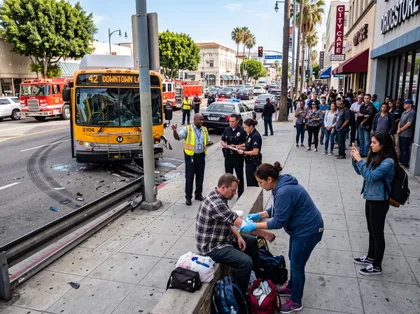
Gather what you reasonably can, but do not endanger yourself or interfere with emergency treatment. If you cannot collect evidence because you are unconscious, immobilized, or transported by ambulance, that does not necessarily prevent you from having the evidence you need. A family member, investigator, or attorney may be able to obtain evidence afterward.
Identify The Bus And Operator
Look at the side, front, or rear of the bus for the agency or company name, bus number, route, and license plate. Ask the driver for identifying information if it is safe and appropriate to do so.
Determining the correct operator is important because different entities may own or operate the bus. These may include:
- City or county
- School district
- Regional transit authority
- Private charter service
- Tour company
The operator’s identity may affect the required claim procedure and filing deadline.
Don’t assume the name printed on the bus is the entity you’ll ultimately file against. Public agencies frequently contract bus service to private operators, maintenance vendors, or school-transportation companies, and school districts often use third-party bus contractors.
The vehicle’s markings are a starting point for identification, not confirmation of who is legally responsible or which claim procedure applies. This is one of the first things an attorney will verify.
Photograph The Scene
If you can do so safely, document the accident scene before vehicles are moved or conditions change. Photos and videos can help preserve important details about how the crash happened and the conditions at the scene. Take clear photographs or videos of:
- The bus and all other involved vehicles.
- License plates and vehicle identification markings.
- The point of impact and vehicle damage.
- The intersection, traffic signals, signs, and lane markings.
- Skid marks, debris, broken glass, and fluid.
- Road, lighting, traffic, and weather conditions.
- Damaged seats, handrails, doors, steps, or wheelchair restraints.
- Visible injuries and damaged clothing or personal property.
Pedestrians, cyclists, and occupants of other vehicles should also photograph their location relative to the bus, nearby crosswalks or bicycle lanes, and anything that may have blocked the driver’s view.
Obtain Witness Information
Ask other passengers, motorists, pedestrians, nearby workers, and bystanders for their names and contact information. Witnesses may have observed the bus before the impact or recorded part of the incident.
Ask whether anyone has photographs, dashcam footage, mobile phone video, or security camera footage. Request preservation of bus-camera footage promptly.
Preserve Tickets, Clothing, And Personal Items
Keep any transit ticket, pass, receipt, booking confirmation, or mobile-app record showing your presence on the bus or route. Do not discard damaged clothing, helmets, bicycles, child-restraint equipment, mobility devices, luggage, or personal items.
Store physical evidence in a safe place and avoid repairing, washing, altering, or disposing of it before it has been photographed and evaluated.
Document Your Injuries, Recovery, And Losses
Photograph visible injuries soon after the accident and periodically as bruising, swelling, cuts, or other visible conditions change.
Consider keeping a private daily record of your symptoms, medical appointments, medication use, sleep problems, mobility limitations, missed work, and activities you cannot perform. Keep the entries factual and consistent with what you report to your medical providers.
Create a file for all accident-related documents, including:
- Emergency room, hospital, physician, therapy, imaging, and pharmacy records.
- Medical bills and health insurance statements.
- Prescription, medical equipment, parking, transportation, and caregiving receipts.
- Written work restrictions.
- Pay stubs, tax records, timesheets, and employer correspondence showing lost work.
- Property repair or replacement estimates.
- Emails, letters, text messages, and claim documents from the operator or insurers.
- Police, transit, fire department, and emergency medical reports.
These records can help document the financial and personal effects of the accident. Do not send original documents to an insurance company unless you have retained copies. Bus accident attorneys can also obtain crucial evidence on behalf of their clients.
Understanding Common Carrier Liability
A common carrier is a business that transports passengers for a fee, such as a bus company. Under California Civil Code § 2100, common carriers must use the utmost care and diligence for the safe carriage of their passengers.
This heightened duty generally applies to passengers in the carrier’s care. If a pedestrian, cyclist, or occupant of another vehicle is injured in a crash involving a bus, different negligence rules may apply depending on the circumstances.
A bus operator may be responsible for a passenger’s injuries when the driver or company fails to use the level of care required by law. Examples may include:
- Driver distraction or inattention.
- Speeding or other unsafe driving maneuvers.
- Inadequate bus inspections or maintenance.
- Failure to address known safety issues.
- Insufficient driver training or supervision.
California law may also hold a bus company responsible for the actions of a driver who was acting within the scope of employment. This principle is known as respondeat superior. If the driver was performing job duties at the time of the crash, the employer may also be liable for any resulting injuries.
Other parties may also share responsibility for a bus accident, including another driver, a maintenance contractor, a vehicle or parts manufacturer, or a government entity responsible for the roadway or transit system.
A bus accident attorney can investigate the crash, determine who may be responsible, and pursue compensation from the appropriate parties. They can help you understand your situation and how to file a personal injury claim.
California Bus Accident Filing Deadlines
The time you have to file a bus accident claim in California can vary depending on who operated the bus and which laws apply. Claims involving public transit agencies may follow different procedures than claims against private bus companies, so identifying the responsible operator early is important. Missing an applicable filing deadline could prevent you from recovering compensation.
| Bus Type | General Deadline / Requirement | Governing Law |
|---|---|---|
| Public entity (city buses, school districts, government agencies). | Present an administrative claim within 6 months after the injury. | Government Code §911.2. |
| Private party (charter companies, private intercity bus lines). | Generally, commence the suit within 2 years after the injury. | California Code of Civil Procedure (CCP) §335.1. |
Reporting the crash to the bus driver or transit authority and receiving an incident report number is not the same as legally presenting a claim under the Government Claims Act. The incident report documents that the crash happened; it does not start or satisfy your claim obligations.
Public transit agencies are subject to the California Government Claims Act. This is a state law requiring you to file a formal notice before you can sue a government agency. The claim must be submitted to the correct public entity and include the required information, such as:
- Your name and address.
- When, where, and how the incident occurred.
- A description of your injuries or losses.
- The names of involved public employees, if known.
- The amount claimed, when required.
Sending an informal complaint or submitting the claim to the wrong agency may not satisfy these requirements. After receiving the claim, the public entity generally has 45 days to respond. Keep copies of the claim, proof of delivery, and any response or rejection notice because those dates can affect later filing deadlines.
If the public entity gives proper written notice rejecting the claim, California Government Code § 945.6 generally requires any resulting lawsuit against the public entity to be filed within six months after the rejection notice is personally delivered or mailed. Different rules may apply when proper written notice is not provided.
Missing an applicable deadline can bar a claim, although California law provides limited procedures for seeking permission to present certain late government claims. Because those procedures have their own strict time limits, prompt action is important.
If you are unsure which deadline applies, bus accident attorneys can review your case, identify whether a public or private carrier was involved, and help you file on time.
Exceptions For Victims Who Are Minors
For claims against private bus companies, California generally pauses the statute of limitations while an injured person is a minor, with the limitations period beginning when they turn 18. Government claims follow different rules.
If a minor misses the initial claim deadline, an application to present a late claim may generally be submitted within one year after the claim accrues. Minority can provide grounds for granting that application, but it does not pause the one-year limit. Acting quickly is especially important when a public transit agency is involved.
Recoverable Damages In A Bus Accident Claim
A bus accident claim may help you rebuild your finances and recover from the crash. The losses you can pursue fall into two categories: financial and personal.
Here is what you may be able to seek:
- Financial Losses (Economic Damages): These cover medical bills, future treatment costs, and income you lost while you could not work.
- Personal Losses (Non-Economic Damages): These can cover pain and suffering, emotional distress, and loss of enjoyment of life.
If a bus accident in California resulted in fatalities, the families can pursue a claim. Eligible family members may seek money for funeral costs, lost income, and lost companionship.
What you can recover depends on your injuries and the facts of your case. A bus accident attorney can help you find which categories apply and what you may be able to pursue.
Frequently Asked Questions About Bus Accidents
Bus accident cases raise questions that go beyond the basics. You may be wondering whether shared fault affects your claim, whether a sudden stop counts as an accident, or what a lawyer actually costs. These are valid concerns, and the answers can help you understand your possible options.
Can I Still File A Bus Accident Claim If I Was Partly At Fault?
Yes. California follows a rule called pure comparative negligence. This means that being partly at fault does not necessarily prevent you from pursuing compensation. However, your damages are reduced by your portion of fault. For example, if you were found 15% at fault, your total compensation would be reduced by 15%. You may still be able to recover 85% of your total damages.
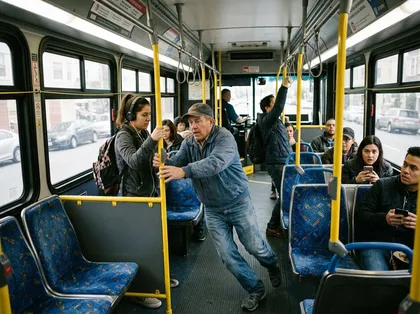
What If The Bus Didn’t Crash, But I Fell Because It Stopped Suddenly?
You may still have a valid claim. A fall caused by a sudden stop can still warrant investigation even without a collision. Preserve onboard video and witness information because whether the bus movement was negligent depends heavily on the circumstances.
What If I Were A Pedestrian, Cyclist, Or Occupant Of Another Vehicle?
The same basic safety, reporting, medical, and evidence-preservation steps apply. Call 911, obtain medical care, photograph the bus and scene if possible, record the bus number and operator, and collect witness information.
Do not assume that the ordinary two-year limitation period is the only deadline. If a public transit agency or another government entity may be responsible, an administrative claim may still need to be presented within six months.
What If I Were Taken To The Hospital Before I Could Gather Evidence?
Prioritize emergency care. Ask a trusted family member to preserve your clothing and belongings, photograph visible injuries, obtain the police report number, and write down what you remember. A bus accident lawyer or investigator may later seek video, electronic data, and operator records.
Arash Law Provides Legal Support To Bus Accident Victims
Bus accident claims in California move fast. They often involve multiple parties, layered deadlines, and competing insurance carriers. Our bus accident attorneys at Arash Law can guide you through the legal process while you focus on healing, including communicating with insurers and determining liability.
Our team has experience handling serious bus accident cases. In one case, we recovered $2,083,145 for a client involved in an accident with a bus. Past results do not guarantee a similar outcome, as every case depends on its unique facts, available evidence, insurance coverage, applicable law, and other circumstances.
Bus accident cases in California have tight deadlines. The sooner you speak with an attorney, the more options you keep open. Call AK Law at (888) 488-1391 to schedule a free initial consultation. Speaking with us costs you nothing, and you pay no attorney’s fees unless we win your case.