TL;DR: Yes, you can sue for a car accident in California without a lawyer for property damage or injury claims under the $12,500 Small Claims limit. But comparative negligence rules and the 2-year statute of limitations can cut your payout or leave you paying medical bills and lost wages yourself. For more complex cases, consider legal representation.
Highlights:
- Confirm your total damages fit within California Small Claims’ $12,500 limit.
- Gather photos, witness contacts, medical records, repair estimates, and the police report.
- Send a written demand for payment before filing a Small Claims case.
- File with Form SC-100 in the proper county for the defendant or crash.
- Arrange legal services by a non-party adult.
- Track deadlines: 2 years for personal injury lawsuits, 3 years for property damage cases, and 6 months for government claims.
- Review settlement releases and medical liens before accepting any insurance payment.
Tip: Stick to verifiable facts with insurers, and save every photo, receipt, and medical note.
Table of Contents
Yes, you can sue for a car accident in California without a lawyer. This is called appearing “pro se” or “in propria persona,” and it is legal. Whether it is the right choice depends on how serious your injuries are and what is at stake financially.
Formal civil court holds unrepresented people to the same standard as licensed attorneys. You must follow the same rules of evidence and civil procedure. Handling your case is best for minor situations, such as minor property damage and no serious injuries. For serious injuries or large financial losses, seeking free advice from a personal injury lawyer can help you understand the best choice for your case.
When It Makes Sense To Handle Your Own Claim
You can consider handling your claim when the damages amount to up to $12,500. The California Small Claims Court establishes the figure and allows individuals to seek damages, subject to statutory limits that may change. If your losses exceed $12,500, you have two options. You can waive any recovery above that limit and still file in Small Claims Court. Alternatively, you can take the case to formal civil court, where the rules are more complex.
One important thing to understand is that in small claims court, if you’re the plaintiff and lose your case, you cannot appeal; the decision is final. The defendant can appeal if they lose. However, if the defendant countersues and you lose that counter-claim, you then have the same appeal rights regarding that specific counter-claim, but this does not apply to your original claim.
Representing yourself in small claims court works for both property damage and personal injury cases, as long as your total damages fall within the court’s limit.
California Small Claims Court is designed for people to represent themselves. In most small claims actions, attorneys cannot represent a party during the proceedings. However, they may provide legal advice before or after the action, represent a party in an appeal, and assist with the enforcement of a judgment. This is one of the few legal settings where handling it yourself is not just possible; it is how the system was designed to work.
Challenges Of Suing Without A Lawyer After A California Car Accident
If you are asking yourself, “Do I really need a lawyer for a car accident injury?”, you may need to know the challenges involved in personal injury lawsuits. Many legal requirements can affect your ability to recover compensation. The challenges include:
Facing Defense Attorneys
When you file a lawsuit in California Superior Court, it’s important to know that you won’t actually be facing the at-fault driver directly. Instead, you’ll be dealing with their defense attorney, who is trained to represent their interests and challenge your case.
This means you should be prepared for a legal process that focuses on the arguments made by their legal team.
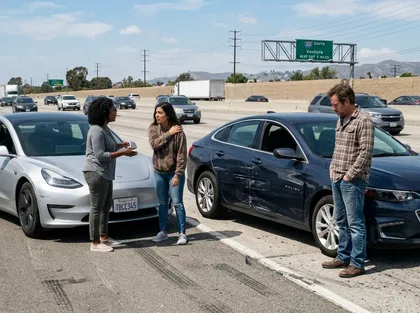
Proving Liability And Damages
A successful car accident lawsuit requires evidence showing:
- The other driver caused the accident.
- The accident resulted in your injuries.
- Your injuries caused financial losses or other damages.
Getting any available police report can be useful for someone handling a claim without a lawyer. The California Highway Patrol (CHP) or local police usually prepare this report. It may contain useful observations, diagrams, witness information, and citations, but a police report alone does not determine civil liability.
It’s important to remember, however, that civil fault is determined from all available evidence, not by the report alone.
Dealing With Insurance Companies
Insurance adjusters handle lawsuits every day. They understand negotiation strategies, liability arguments, and settlement evaluations.
Without legal representation, an injured person may have difficulty determining whether an offer fairly reflects:
- Past medical expenses
- Future medical care
- Lost income
- Reduced earning ability
- Pain and suffering
Accepting a settlement usually ends the case, meaning you may not be able to request additional compensation later if your injuries become worse.
Understanding California Car Accident Laws
You must understand the rules that affect your lawsuit, including:
Pure Comparative Negligence
California follows pure comparative negligence. Your compensation is reduced according to your percentage of fault.
For example, if your damages total $100,000 but you are found 30% at fault, your recovery would be reduced by 30% to $70,000. You may still recover damages even if your share of fault is greater than the other driver’s.
Prop 213
California Civil Code §3333.4 may limit recovery of noneconomic damages for:
- Certain uninsured vehicle owners or drivers who fail to meet financial responsibility requirements. However, this is subject to statutory exceptions.
- The injured person was driving an involved vehicle and could not establish the financial responsibility required by California law.
- The injured driver was convicted of driving under the influence in connection with the accident.
Non-economic damages include pain, suffering, inconvenience, physical impairment, disfigurement, and other nonfinancial losses.
An exception applies to an uninsured vehicle owner injured by a driver who was convicted of DUI in connection with the accident. This DUI exception applies to the uninsured owner category specified in the statute, not automatically to every uninsured driver.
Settlement Releases
Signing a settlement release generally prevents you from seeking additional compensation for the parties and claims covered by that release.
Before settling, you should account for losses such as:
- Future medical treatment
- Long-term care
- Lost income
- Reduced earning capacity
- Medical liens and reimbursement obligations
The exact effect of a settlement depends on the language and scope of the release.
Medical Liens Or Reimbursement Claims
Part of your settlement may have to be used to resolve liens or reimbursement claims. Depending on the circumstances, repayment may be sought by:
- Medicare or Medi-Cal.
- Health insurance companies.
- Workers’ compensation insurers or employers may have reimbursement or subrogation rights depending on the circumstances.
- Hospitals or medical providers.
- Medical financing companies.
These claims can affect how much of the settlement you ultimately receive. Workers’ compensation reimbursement rights are subject to California’s statutory rules and may vary depending on the type of claim.
While self-represented litigants typically pay back full reimbursement for medical bills from any settlement, attorneys actively negotiate medical liens down. This negotiation may result in clients receiving more money, even after accounting for attorney fees.
California’s Statute Of Limitations
California imposes different deadlines depending on the type of lawsuit and the parties involved. Missing the applicable deadline may prevent you from seeking compensation.
- Personal Injury Lawsuit: You generally have two years from the date of the accident to file a personal injury lawsuit. Miss this window, and you can lose your ability to seek compensation.
- Property Damage Lawsuit: Under CCP § 338(c), property damage cases typically have a three-year deadline from the date of the crash.
- California State or Local Government Lawsuit: When pursuing a personal injury or personal-property lawsuit against a California state or local public entity, you generally must first present an administrative claim to the proper entity within six months after the date of the car accident.
This requirement may apply when a government employee, a government vehicle, or a dangerous condition of public property allegedly causes the accident. The administrative claim is a prerequisite to filing a lawsuit; it is not the lawsuit itself.
If a public entity rejects a government claim in a manner that triggers the statutory deadline, a lawsuit generally must be filed within 6 months after service of notice of rejection.
Late Lawsuits And Other Exceptions
Tolling, which pauses the filing clock, is rare. It can apply in limited situations, such as when the injured person is a minor. The sooner you act after a crash, the better your chances of preserving evidence and meeting every deadline.
A straightforward property-damage dispute may be manageable without an attorney. A significant bodily injury case, however, may require complex legal, medical, and financial evidence.
Speaking with a traffic accident lawyer before deciding how to proceed may help determine whether the case is suitable for Small Claims Court, whether liens or special deadlines apply, and whether the potential recovery justifies formal civil litigation.
When You Should Strongly Consider A Lawyer
You are not legally required to hire a lawyer after a California car accident. However, legal representation may be especially important when your accident case involves substantial damages, disputed facts, or complex procedural rules.
Consider speaking with a lawyer when:
- You suffered serious or permanent injuries. Future medical care, disability, lost earning capacity, and non-economic damages may require medical or financial evidence to prove.
- Several parties may be responsible. A crash may involve another driver, an employer, a vehicle owner, a manufacturer, a contractor, or a government entity.
- A government vehicle or a dangerous public roadway contributed to the crash. Cases against California state or local public entities generally require an administrative claim before a lawsuit, often within six months.
- The at-fault driver was uninsured or underinsured. UM/UIM claims involve policy requirements, coverage limits, and procedures that differ from ordinary liability claims.
- The insurance company denies coverage or makes a disputed liability decision. An attorney can evaluate the policy, available evidence, and possible grounds for challenging the decision.
- Your condition or future losses are uncertain. Settling before the extent of your injuries is reasonably understood may leave future treatment or income losses uncompensated.
- The case requires expert testimony. Accident reconstructionists, physicians, economists, vocational experts, or other specialists may be needed to prove fault, causation, or damages.
- Your damages exceed the small claims limit. Limited and unlimited civil cases involve formal pleadings, discovery, evidentiary rules, motions, and potentially a jury trial.
- You receive a formal settlement offer under Code of Civil Procedure § 998. Rejecting such an offer and later obtaining a less favorable result may expose you to certain post-offer costs and, in the court’s discretion, expert-witness expenses.
Even when you do not hire a lawyer for the entire case, you may obtain limited legal assistance to review a settlement offer, evaluate your damages, or advise you about a difficult part of the lawsuit.
At Arash Law, we work relentlessly to advocate for our clients’ rights and to pursue the full compensation allowed by California law. Below are examples of cases we have handled in the past:
- $6,000,000 — A drunk driver caused a head-on collision, resulting in the tragic death of a wife and mother. We successfully obtained the maximum policy limits for our grieving client.
- $5,250,000 — Our client became a paraplegic after being hit by an inattentive driver. We secured the full policy limits and added workers’ compensation benefits.
- $5,000,000 — A couple faced a serious collision when a work truck ran a red light. After two years of litigation, we achieved a significant settlement for them.
Disclaimer: The results mentioned herein do not guarantee similar outcomes in future cases. Each case’s outcome depends on its unique circumstances and specific factors involved.
Key Steps For A DIY Claim
If you choose to pursue a claim yourself, you will be responsible for managing every stage of the process:
- Gather Evidence: Collect the police report, photos from the scene, witness contact information, medical records, and repair estimates.
- Calculate Damages: Total your economic losses (such as medical bills and lost wages) and non-economic losses.
- Request Payment: Before filing a Small Claims case, California generally requires you to demand payment from the defendant. You may also send a copy of the demand to the at-fault driver’s insurance company, especially if the insurer is handling the claim. The demand should explain the facts of the accident, your damages, and the amount you are requesting.
- Negotiate: Insurance companies may evaluate claims differently and may make settlement offers that do not reflect all the damages claimed. Reviewing the available evidence and losses is important before accepting an offer.
- File the Small Claims Case: To start a small claims case:
- Complete Form SC-100, Plaintiff’s Claim and Order to Go to Small Claims Court.
- File it in a proper county, generally where the defendant lives or where the accident occurred.
- Pay the filing fee or request a fee waiver.
- Have each defendant legally served.
You cannot personally serve your own papers. Service may be completed through an eligible nonparty adult or another authorized method. When a server delivers the papers, the server must sign Form SC-104, Proof of Service, which must be filed with the court.
Prepare for the hearing by organizing your evidence and being ready to explain fault, causation, and damages.
- Use the Free Small Claims Advisor Program: California provides free small claims advisory services through county programs. The availability, format, and level of assistance vary by county. Advisors can help explain court forms, filing requirements, and procedures, but they cannot represent you or appear in court on your behalf.
- If You Use Formal Civil Court: A formal civil lawsuit may also involve discovery, depositions, case management conferences, motions, evidence rules, and trial preparation. Court staff may provide forms and procedural information, but cannot give legal advice or recommend a litigation strategy.
Frequently Asked Questions
After a car accident, you may feel overwhelmed by pain, insurance calls, and questions you have never had to face before. Knowing the answers to some common questions after a car accident can help protect your case and help you avoid mistakes that are difficult to undo.
What Happens If The At-Fault Driver Does Not Have Auto Insurance?
In California, insurance companies generally must offer uninsured and underinsured motorist coverage. This type of coverage protects you if you’re in an accident with a driver who either has no insurance or not enough insurance to cover your damages. While insurers must offer this coverage, drivers may reject or select lower limits in writing.
If you have UM/UIM coverage in your policy, you can file a claim with your insurance company for any bodily injuries you’ve suffered. But this will depend on your policy limits, any exclusions, the proof you provide, and any money you can recover from the at-fault driver’s insurer.
You can also sue the driver who caused the accident, but this often doesn’t result in full compensation. This is because many people without insurance might not have the financial means to pay you.
Should I Give A Recorded Statement To The Insurance Adjuster?
You generally do not have to give the other driver’s insurer a recorded statement. If your insurer requests one, review your policy obligations and consider legal advice before responding.
What If I File In Small Claims Court And My Injuries Turn Out To Be Worse Than I Thought?
If your case is still pending, you may be able to dismiss it and pursue a lawsuit in formal civil court, provided you meet the applicable filing deadline.
After a judgment or signed settlement release, you generally cannot seek additional compensation for the same accident. California also prohibits splitting a single accident claim into multiple lawsuits, and choosing Small Claims Court may permanently prevent recovering damages above its limit. Consider waiting until your injuries are reasonably understood before filing or settling.
Do Lawyers Only Get Paid If They Win?
Under a contingency fee agreement, attorneys’ fees are typically paid from a settlement or verdict, so you do not pay a car accident lawyer’s fee upfront. The agreement should explain the fee percentage and who is responsible for case expenses.
By contrast, representing yourself may require you to pay filing fees, service costs, deposition expenses, and expert fees as the case progresses, with no guarantee that you will recover them. Some personal injury firms advance these expenses and deduct them from the recovery, depending on the agreement. This can make contingency representation important when upfront costs are a major concern.
Get Legal Help With Your California Car Accident Case
You are not legally required to hire a lawyer to sue after a car accident. That said, legal counsel can be important in crashes resulting in severe injuries and substantial losses. Reaching out now gives our team more time to evaluate your situation, preserve evidence, and build a case for you.
When you contact Arash Law, you can find out exactly where you stand before making any decisions. The consultation is free, with no obligation to move forward. Our attorneys will review your situation and provide clear answers about your options and the value of your losses.
Call (888) 488-1391 to speak with our team and discuss the options available to protect your rights.