TL;DR: If your child gets hurt at school, seek immediate medical evaluation and document the incident with photos and witness information. Claims involving public school districts generally must be presented within six months. Private-school personal injury actions generally have a two-year limitations period. If the victim is an injured child, the deadline starts when they turn 18. Different rules and exceptions can affect these deadlines.
Highlights:
- Get your child evaluated by a doctor immediately, even if injuries seem minor, to catch hidden harm and create an official medical record.
- Request the incident report in writing, photograph the injury and location, and gather witness names and contact information before the evidence disappears.
- Save all medical bills, receipts, and out-of-pocket expenses related to the injury for your claim.
- Review any school or insurance forms with an attorney before signing, as they may contain waivers that eliminate your legal rights.
- File a formal Notice of Claim against public schools within 6 months of the injury; private school claims have a 2-year deadline that starts when the injured child turns 18.
- Understand that schools can be held liable for unsafe conditions, inadequate supervision, and failure to address known bullying that led to your child’s injury.
- Speak with a child injury attorney for a free consultation to clarify which deadline applies and preserve your family’s right to seek compensation.
Tip: Send a dated evidence-preservation email to the district and save a copy for your records.
Table of Contents
If your child gets hurt at school, focus first on medical safety, then on understanding and documenting what happened. What you do in the first few days can affect your ability to determine what caused the injury and whether compensation may be available for medical expenses and other losses.
Schools are not liable just because a child got hurt. Playgrounds, sports, and normal school activities carry some risk. Responsibility usually depends on whether the school failed to supervise properly, ignored a known hazard, or broke a safety rule that a reasonable school would have followed. If the injury happened at a public school, strict legal deadlines apply, so acting quickly matters.
Prioritize Immediate Medical Care
After a school injury, getting a medical evaluation right away is the most important step a parent can take. Even minor-looking injuries can be more serious than they appear. A prompt checkup can catch hidden harm and create an official record of the injuries.
For a serious injury, ask the school to call 911 or arrange emergency care. If your child has already been released to you, take them to an emergency room, urgent care center, pediatrician, or another appropriate healthcare provider.
Seek prompt care for injuries such as:
- Head trauma
- Broken bones
- Deep cuts
- Severe swelling
- Neck or back injuries
- Loss of consciousness
- Trouble walking
- Severe pain
- Breathing problems
Your child may feel scared or upset after the incident. If needed, connecting them with a school counselor can help them process what happened.
Report The Injury And Request The Official Incident Report
Contact the school principal or administrative office immediately to request a formal written accident report. Review the document carefully to ensure it details:
- The precise date, time, and specific location on campus (e.g., playground, gymnasium, classroom).
- The names of supervising staff, teachers, or aides present when the injury occurred.
- A description of how the injury happened and what first aid or emergency care was provided.
In addition, the school may generate various reports, such as an incident report, a nurse report, an athletic report, or a playground report. While you have the right to request records related to your child, privacy laws may restrict access to information about other students involved in the incident.
Preserve Evidence Before It Disappears
Evidence can disappear quickly after a school accident. Schools repair hazards quickly, and witnesses forget details that matter to your case. Your attorney may need a clear record of what happened, and that record is hardest to build once things have been cleaned up or repaired.
Take these steps when possible:
- Photograph your child’s injuries.
- Photograph the accident location or hazard.
- Save damaged clothing, shoes, or sports equipment.
- Write down what your child remembers.
- Get witness names and contact information.
- Save emails, texts, and school-app messages.
- Keep medical records and bills.
- Ask the school in writing to preserve relevant evidence.
A written preservation request may identify items such as:
- Surveillance footage
- Incident reports
- Staff schedules
- Maintenance records
- Inspection reports
- Photos
- Supervision records
The school may not have to turn over every item you request immediately. But asking early can help preserve evidence that may later help your claim.
Understand The Nature Of The Hazard
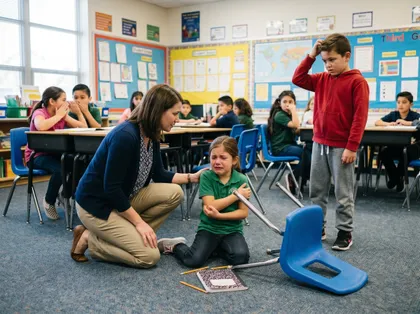
In California, a school injury may lead to a legal claim when the school or its staff fails to use reasonable care, and that failure contributes to a child’s injury.
Common issues include inadequate supervision, unsafe property conditions, known dangers that were not addressed, and failures to follow applicable safety procedures.
Poor Supervision
Schools have a duty to supervise students reasonably.
Education Code section 44807 addresses teachers’ responsibility for student conduct, including conduct during recess and on school playgrounds.
A school may face liability when staff fail to use reasonable care, and that failure helps cause a foreseeable injury.
For example, questions during the investigation may include:
- Were enough adults supervising the area?
- Were supervisors paying attention?
- Did staff leave children alone in a dangerous situation?
- Had the same unsafe behavior happened before?
- Did staff know one student was threatening another?
- Could staff reasonably have prevented the injury?
A teacher is not expected to stop every fall, collision, or sudden fight. The question is whether the school’s supervision was reasonable under the circumstances.
Unsafe School Property
The condition of the school property may also matter.
Possible hazards include:
- Broken playground equipment
- Damaged stairs
- Loose flooring
- Unsafe gates
- Poorly maintained sports equipment
- Dangerous walkways
- Other defective property
Government Code section 835 allows claims involving dangerous conditions of public property when specific requirements are met.
It is not enough to show that your child was injured on school property. Evidence may need to show that:
- A dangerous condition existed.
- The condition caused the injury.
- The danger created a foreseeable risk.
- The district created the condition or had enough notice to address it, depending on the circumstances.
Maintenance records, inspection reports, prior complaints, and photographs can be important.
Negligent Conduct By A School Employee
Under Government Code section 815.2, a public entity may be held responsible for certain acts or failures to act by employees acting within the scope of their employment.
A school district is not automatically liable just because someone was injured on its property. Liability against a government entity generally requires a specific legal basis, such as a dangerous condition of public property or an employee’s negligence within the scope of their job.
Exceptions, defenses, and government immunities may apply.
Injuries Caused By Another Student
If another student hurt your child, the school is not automatically responsible.
The main issue may be whether school staff:
- Knew about dangerous behavior
- Should reasonably have known about it
- Failed to supervise properly
- Ignored earlier threats or incidents
- Failed to take reasonable safety measures
For example, an unexpected shove with no warning may be very different from repeated violent behavior that staff already knew about.
Sports Injuries
Sports involve ordinary risks. Soccer players may collide with another player. Basketball players may fall. Football players may be tackled.
California’s assumption-of-risk rules can limit liability for dangers inherent to a sport.
However, schools and coaches are not automatically protected from every sports injury. Liability questions may arise when someone increases the danger beyond the risks normally involved in the activity.
Off-Campus School Injuries
California Education Code section 44808 generally limits a school district’s responsibility for students who are off school property.
Exceptions can apply when the district:
- Provides transportation
- Conducts a school-sponsored off-campus activity
- Specifically assumes responsibility for the student
- Falls within another exception under the law
This may matter for:
- Field trips
- Away games
- School buses
- School-sponsored events
- Other off-campus activities
Where the injury happened affects how you file. Private-school injury claims generally proceed under ordinary personal injury rules, while claims against public school districts are generally subject to the California Government Claims Act. Charter schools require separate analysis.
Who May Be Held Liable For A School Injury?
Who can be held liable for a school injury depends on what happened and where it occurred.
- School District or Private School: May be responsible for failing to supervise students properly or for ignoring a known hazard on campus.
- Teacher or Staff Member: May be responsible for inadequate supervision during class, recess, or an activity, though public school employees often have some legal protections that a lawyer can evaluate.
- Bus Company or Driver: May be responsible for an unsafe stop, a crash, or a failure to follow loading and unloading procedures.
- Coach or Athletic Program: May be responsible for unsafe drills, ignoring a known injury, or failing to follow return-to-play safety rules after a head injury.
- Another Student’s Parent: May be responsible in limited situations involving intentional harm by a minor, depending on the facts and applicable law.
- Equipment or Property Owner: May be responsible if defective playground equipment, sports gear, or a poorly maintained facility contributed to the injury.
- Third-Party Contractor: A third-party contractor may be responsible if a field trip vendor, after-school program, or maintenance contractor created an unsafe condition.
What Compensation May Be Available?
California law allows a person harmed by a wrongful act to seek compensation for the resulting losses.
Depending on the case, recoverable damages may include:
Economic Damages
- Emergency room care, ambulance rides, and hospitalization fees.
- Diagnostic testing, including X-rays, CT scans, and MRIs.
- Surgeries, prescription drugs, and medical equipment such as crutches and wheelchairs.
- Ongoing physical therapy, occupational therapy, and specialized care.
- Anticipated future medical treatments, surgeries, or mental health counseling.
Non-Economic Damages
- Physical pain and suffering endured by the child.
- Emotional distress, anxiety, depression, or fear of returning to school.
- Permanent scarring, physical disfigurement, or loss of mobility.
- Loss of enjoyment of life, including the inability to participate in sports or childhood activities.
There is no standard payout for a school injury. Every case is different, and not every injury leads to a legal claim. A child injury attorney can review the facts and explain what options, if any, may apply to your child’s situation.
The value of a claim depends on factors such as:
- How serious the injury is
- Whether the child fully recovers
- Whether future treatment is needed
- What caused the accident
- Who was responsible
- Available evidence
- Government immunities or other defenses
California Deadlines For School Injury Claims
How long you have to act depends on whether the school is public or private.
A government claim for personal injury generally must be presented within six months after the claim accrues. A personal injury lawsuit generally must be filed within two years, although California may pause the deadline for a minor’s own claim until adulthood.
Public School Claims
Before suing a California public school district for damages, you generally must present a written government claim under the Government Claims Act.
The claim should include:
- The claimant’s name and mailing address.
- When, where, and how the injury happened.
- A general description of the injury or loss.
- The names of involved public employees, if known.
- The amount claimed is under $10,000, or the required civil-case information if it exceeds $10,000.
The claim must be presented to the proper public entity, such as the district clerk, secretary, auditor, governing body, or another authorized recipient. Reporting the accident only to a teacher or principal may not satisfy this requirement.
If the district sends a proper written rejection, a lawsuit generally must be filed within six months after the rejection notice is mailed or delivered. If the required written notice is not given, a longer period may apply.
Private School Claims
For claims against a private school, California generally pauses certain statutes of limitations while the injured child is under 18.
That rule does not extend the initial six-month government-claim deadline for public-school cases. Parents should not assume they can wait until the child turns 18.
What If You Miss The Six-Month Deadline?
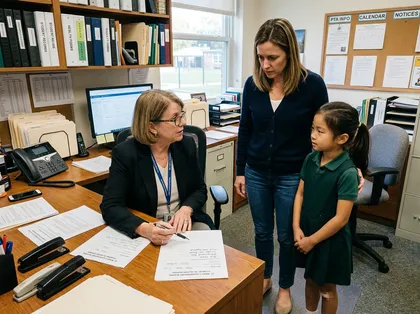
A late claim may still be possible.
Government Code section 911.4 allows a person, in certain circumstances, to apply for permission to present a late claim.
The application generally must be made:
- Within a reasonable time, and
- No later than one year after the claim accrued.
Minors receive added protection under Government Code section 911.6. If the child was a minor throughout the original six-month claim period, an otherwise timely late-claim application generally must be granted.
If that application is denied, the claimant may seek relief from the superior court. That petition must generally be filed within six months of the denial.
Because these deadlines are short, families should identify early whether the school is public or private and avoid waiting for the school’s investigation to finish before checking their filing deadline.
Other facts can also affect these deadlines. A child injury attorney can help clarify which deadline applies to your case.
Frequently Asked Questions
Parents navigating a school injury case have questions that go beyond the basics. Scenarios involving bullying, after-hours events, and legal costs each carry their own rules under California law. The answers below address those specific situations, covering who can be held liable, how filing requirements work, and what legal costs to expect.
What To Do If Another Student Hurts My Child At School?
It is generally advisable to notify the school promptly and request a written incident report. When a minor’s willful misconduct injures another pupil, California Education Code section 48904 provides for statutory parental or guardian liability, subject to an inflation-adjusted cap. The State Superintendent adjusts that limit annually. Other theories of liability may also apply depending on the facts. If inadequate school supervision contributed to the injury, the school or district may also potentially be liable.
Is A School Required To Notify A Child’s Parents When A Child Is Injured?
Yes, but failure to notify does not automatically establish actionable negligence against a public school district. Schools may have policies requiring notification to parents or guardians after a student injury, and California law imposes specific notification requirements in certain circumstances. Whether a particular injury required prompt notice depends on the applicable law, school or district policy, and the facts.
Are Public Schools Immune From Personal Injury Lawsuits?
Public schools have statutory immunities and defenses, but they are not completely immune from personal injury liability. Whether a claim can proceed depends on having a statutory basis for liability and complying with the Government Claims Act and its deadlines.
Can I Sue The School District For Bullying?
Potentially. A school district may face liability when legally actionable negligence by school personnel, such as a failure to take reasonable measures against foreseeable harm, causes a student’s injury. Liability depends on the applicable statutory basis, the facts, causation, available immunities, and compliance with Government Claims Act requirements.
To build your case, keep copies of all written complaints you submitted and note the dates of any verbal reports you made to school staff.
What If My Child Is Hurt After Or Before School Hours?
Education Code section 44808 generally limits a public school district’s responsibility for a student’s conduct or safety while the student is off school property, subject to statutory exceptions and case-specific limitations. It does not create blanket immunity merely because an injury occurs after school hours, and liability may still depend on where the alleged negligent conduct occurred.
The key exceptions are when the school provided transportation, when the school organized or supervised an off-campus school-sponsored activity, or when the school specifically assumed responsibility for the student during that time.
Reach Out To Arash Law To Know Your Legal Options
An injury at school can disrupt your child’s education, health, and emotional well-being. By taking prompt medical action, thoroughly documenting the incident, and adhering to California’s strict legal deadlines, you protect your family’s rights.
Our attorneys at Arash Law handle various serious injury claims, including incidents that may occur at school and other types of personal injury cases. These situations often involve injuries from falls, playground accidents, or other negligence cases involving contested liability and serious and fatal injuries.
- $11,250,000 — Our client fell four stories down an elevator shaft, suffering significant injuries. We secured an $11.25 million settlement, providing both a lump sum and monthly payments for life.
- $5,000,000 — A couple was injured when a work truck ran a red light and collided with their car. After two years of litigation, we achieved a $5 million settlement for them.
- $2,356,000 — Our client fell into an open elevator shaft at a construction site and lost consciousness. We negotiated a settlement of $2.356 million, which was significantly higher than the initial offer of $125,000.
Disclaimer: Past case results do not guarantee future outcomes, as each case varies based on unique circumstances.
Call Arash Law at (888) 488-1391 to schedule your free initial consultation. We take cases on a contingency basis, meaning you pay no attorney fees unless we secure compensation for your family. AK Law advocates for the rights of injured children and their families across California.