TL;DR: A venue or transportation company may face liability if its negligence caused the injury. A public school may have immunity under Education Code § 35330, depending on the trip and the facts. A claim against a public school district usually requires a government claim within six months. Missing that date can harm the case, but a limited late-claim process may still apply. The ordinary minor-tolling rule does not extend the six-month government claim deadline.
Highlights:
- Identify potentially liable parties, such as the school district, transportation company, or venue, since more than one may share responsibility.
- Submit a government claim with the public school district within six months of the injury, or lose the right to sue.
- Document the injury, scene, witnesses, and all medical records immediately while details are fresh.
- Distinguish private waivers from statutory immunity, and pursue separate claims against responsible third parties.
- Get medical attention right away, even for injuries that seem minor, since some harm, like concussions, may appear later.
- If a private party caused the injury, file a personal injury lawsuit within two years of the date of the field trip.
Tip: Even though a permission slip looks binding, a claim may still proceed if field-trip immunity does not apply or if a separate third party caused the injury.
Table of Contents
Many parents ask: Who is liable if my child gets hurt on a school field trip? The answer depends on what caused the injury and who failed to prevent it. Schools, third-party venues, transportation companies, and other parties may share responsibility when their negligence causes an injury.
Field trips should give children a fun and safe way to learn. They give children a chance to explore the world beyond the classroom. When your child comes home hurt instead of excited, that is something no parent should have to face.
California law does give schools some legal protections during field trips. Those protections, however, are not absolute. Outside businesses generally do not receive the school district’s protection merely because they participated in the trip. When a school, a bus company, a venue, a contractor, or another party acts carelessly, and a child is hurt, families may still be able to pursue a claim. Knowing which parties can be held legally responsible is essential for knowing your rights.
Parties That May Share Fault For A Field Trip Injury
Schools must exercise reasonable care when supervising students. However, California field-trip immunity may bar some claims against a public school. A venue or transportation company may also be liable if its careless conduct contributed to the injury.
Several parties may share fault for a field trip injury:
School Or District
A private school may face ordinary negligence liability if its conduct contributed to a child’s injury. California’s public entity liability rules govern a public school district’s liability and may depend on whether a statute allows the claim and whether any immunity applies.
Education Code § 35330 may block certain claims against a school district, charter school, or the State arising from a qualifying field trip or excursion. The law treats participants as having waived certain claims for injuries arising from or occurring during the trip.
This protection does not mean parents should assume they have no legal options. Whether the law applies depends on the type of activity, how the injury occurred, and whether the claim involves a protected party. Separate claims may still be available against outside venues, transportation companies, contractors, or other responsible parties that contributed to the injury.
Teachers, Employees, And Chaperones
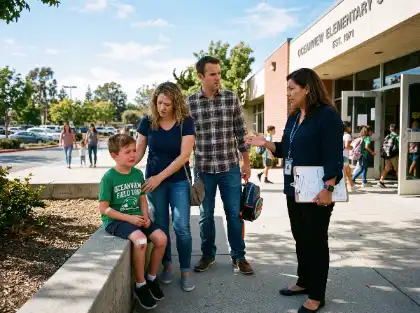 Teachers, school employees, and chaperones may be considered when determining who is responsible for a field trip injury.
California courts give field-trip immunity to district employees. This applies when they are working during qualifying trips. Different rules apply to parent volunteers, independent contractors, or anyone acting outside their roles.
Whether supervision was reasonable depends on factors such as:
- The child’s age and abilities.
- The activity’s risks.
- The number of supervisors.
- Known hazards.
- Whether the staff should have anticipated the danger.
A claim may involve situations in which a supervisor ignored a known risk, failed to provide proper supervision, failed to follow safety procedures, or failed to respond appropriately to an emergency.
Third-Party Venues
A venue may be found at fault if it failed to fix or warn about a dangerous condition, and that failure contributed to the injury. For example, a museum, zoo, amusement facility, farm, park, or camp may be responsible if your child was hurt by:
- Broken equipment.
- An unsafe walkway.
- Inadequate barriers.
- Poor crowd control.
- Another hazard the operator knew or should have known about.
Activity Operators And Other Contractors
Schools often work with outside businesses to help make field trips safe, fun, and educational. These activity operators and contractors provide services, equipment, or activities that support the trip. Before working with them, schools should make sure they meet safety and quality standards.
These companies may include:
- Tour operators.
- Camps and ropes course operators.
- Equipment rental companies.
- Caterers.
- Security contractors.
An outside contractor may be responsible for a child’s injury if it:
- Allowed a child to join an activity that was not safe for their age or ability.
- Failed to give clear safety instructions.
- Did not provide proper protective equipment.
- Used damaged or unsafe equipment.
- Failed to train or supervise its staff.
- Ignored known dangers at the activity site.
These claims may be especially important when the school relied on the contractor to manage the activity and keep students safe.
Transportation Companies
A transportation company may be liable if a child is injured while traveling to or from a field trip. Responsibility may depend on who owned, operated, and maintained the bus, van, or other vehicle. Traffic accidents involving children can be especially serious because young passengers may be more vulnerable to injury.
Possible safety failures may include:
- Distracted, speeding, or reckless driving.
- Poor driver training or supervision.
- Unsafe hiring practices.
- Improper vehicle maintenance.
- Missing or defective seat restraints.
- Failure to follow school transportation safety rules.
An investigation may review the driver’s actions, the vehicle’s condition, maintenance records, seat restraints, and the company’s safety policies.
Product Manufacturers And Sellers
A manufacturer, distributor, or seller may be liable if defective equipment caused or contributed to a child’s field trip injury. A product liability claim allows the family to sue the company that designed, manufactured, distributed, or sold the defective item. This is possible even if the school has field-trip immunity.
In field trip accidents in California, these may include:
- A failed safety harness.
- A defective ride restraint.
- An unstable climbing structure.
- Broken protective gear.
- Unsafe playground or activity equipment.
To pursue a claim, your family must show that the responsible party owed the child a duty of care, failed to meet that duty, caused the injury, and left the child with actual harm or losses.
A waiver or immunity defense should not prevent a family from investigating what happened. Child injury attorneys can review the trip and identify the parties that may be responsible. They can also help determine whether a claim may be available against the school, transportation provider, venue, contractor, or product company.
Understanding California’s Field Trip Immunity Law And Waivers
A permission slip and Education Code § 35330 may limit a claim in different ways. The result depends on whether the activity qualifies as a field trip and who caused the injury. A privately drafted waiver and the statutory immunity created by § 35330 are separate legal protections and should not be treated as interchangeable.
The California Education Code protects school districts from many claims tied to qualifying field trips or excursions. The law treats each participant as having waived claims against the district, the charter school, or the state for injuries that occur during or as a result of the trip.
Below are situations in which a waiver or statutory immunity may require closer review:
- Gross Negligence: Gross negligence means conduct that goes far beyond ordinary carelessness. It might impact how a private waiver is enforced. However, its effect on statutory field-trip immunity varies based on the claim, the defendant, and California law.
- Intentional Misconduct: A private release generally cannot excuse intentional wrongdoing. The outcome may still depend on who committed the act, the legal claim involved, and whether state or federal law applies.
- Third-Party Negligence: Field-trip immunity protects the school district, charter school, and the State from many claims arising from a qualifying trip. It does not automatically protect an outside bus company, museum, or venue.
- Required School Programs: A required part of the school curriculum may not qualify as a protected field trip. Courts may review the purpose, structure, and circumstances of the activity.
A signed waiver does not automatically decide the case. Its effect depends on the wording. It also relies on the alleged conduct and the defendant’s identity. Additionally, it matters if Education Code § 35330 or another legal protection applies.
Does Liability Differ For Public And Private School Field Trips?
Yes. Whether your child attends a public or private school can affect who may be held liable, what legal defenses apply, and what steps a parent must take after a field trip injury.
-
If Your Child Attends a Private School: Private schools are generally treated like private organizations. A parent or legal guardian may pursue a claim on behalf of an injured child without first filing a government claim.
However, the following may still affect the claim:
- Permission slips or liability waivers.
- Arbitration provisions.
- Insurance coverage.
- The deadline for filing a civil lawsuit.
- Whether the school, venue, or another party caused the injury.
-
If Your Child Attends a Public School: A public school district is a government entity. A parent or legal guardian may generally present a government claim on behalf of an injured child, but the claim must usually be submitted before filing a lawsuit.
For many personal injury claims, California Government Code § 911.2 requires the written claim to be presented within six months after the injury. A child’s age does not automatically extend this deadline.
The parent may need to file separate claims with every responsible public entity, such as:
- The public school district.
- A city-owned museum or recreation center.
- A county park.
- A public transportation agency.
Filing a claim only with the school district may not protect the child’s right to pursue another government entity involved in the trip.
If the six-month period has passed, a written application for permission to present a late claim may still be available. When the injured child was a minor throughout the original claim period, the public entity generally must grant a qualifying application. However, the application must be submitted within a reasonable time and usually no later than one year after the injury.
If a private school or another third party is responsible for a field trip accident in California, victims generally have two years from the date of the accident to file a claim. For minors, however, this two-year time limit usually does not start until they turn 18.
Child injury lawyers in California who handle these cases can review the parties involved, explain the applicable deadlines, and determine where each claim must be filed.
What Should You Do After Your Child Gets Hurt On A Field Trip?
Your child’s health comes first. Get appropriate medical care, then preserve evidence while the details are still fresh.
- Get medical attention. Seek emergency care for serious symptoms and prompt evaluation for a possible concussion. Follow up if pain, dizziness, fear, or other symptoms continue.
- Document the injury and scene. Take photos, gather witness contact information, and save medical bills and messages from the school.
- Record your child’s account. Write down what your child remembers in their own words without repeatedly questioning or coaching them.
- Request incident reports. Ask the school, venue, transportation provider, or law enforcement agency for any available report and note missing or inaccurate details.
- Preserve video and records. Promptly request preservation of surveillance footage, bus-camera recordings, electronic messages, inspection records, and maintenance documents.
- Keep all forms and trip materials. Save the permission slip, waiver, itinerary, safety instructions, emails, emergency plans, and activity information.
These records can help your family understand what happened, identify who may be responsible, and support any claim you decide to pursue.
What Damages May Your Child Recover After A Field Trip Injury?
 Your child may recover compensation if another party caused the injury. The amount depends on the injury, its effect on your child, and the available evidence.
A successful field trip injury claim may cover several types of harm, including:
- Emergency care, surgery, therapy, medication, and other medical treatment.
- Future medical care and rehabilitation.
- Physical pain and emotional suffering.
- Disruption to your child’s schooling and daily routine.
- Loss of mobility or the ability to enjoy hobbies and activities.
- Effects on friendships, sleep, and emotional well-being.
- Reduced future earning ability in serious cases.
Parents may also have claims for certain expenses they personally paid as a result of the injury. The available damages depend on who incurred the loss, the nature of the claim, and the evidence supporting it.
Keep records of medical care, school absences, activity limitations, behavioral changes, and other effects to help show the full impact of the injury beyond medical bills alone.
How Legal Representation Can Help Protect Your Child’s Right To Compensation
A field trip injury claim can involve several parties, strict deadlines, and legal defenses. An attorney can investigate what happened while your family focuses on your child’s medical care and recovery.
Legal representation may help by:
- Identifying all potentially liable parties.
- Preserving video, reports, and other evidence.
- Reviewing waivers and field-trip immunity issues.
- Filing government claims on time.
- Documenting current and future losses.
- Responding to disputes about fault or the seriousness of the injury.
While these results did not arise from school field trips, they show how legal representation and strong evidence can make a difference:
- $1,250,000: Our team used accident reconstruction to show that a crash involving a five-year-old child was avoidable and recovered the full available policy limits.
- $3,500,000: Our attorneys showed that inadequate lighting contributed to a fall and spinal injury, resulting in a $3.5 million recovery.
Past results do not guarantee a similar outcome. Every case depends on its facts, available evidence, insurance coverage, and applicable law.
Frequently Asked Questions About Field Trip Injuries
If your child gets hurt on a field trip, you may have many questions. Here are answers to the questions families most often ask after a field trip injury in California.
What If My Child Contributed To The Injury?
California follows pure comparative fault. Your child may still recover money even if the child shared some fault. A court judges the child’s actions based on the child’s age, intelligence, and experience. It then reduces the award by the child’s share of fault. For example, if the court finds the school 80% at fault and your child 20% at fault, your child may recover 80% of the damages. However, field-trip immunity may block some claims against a public school.
What If My Child’s Injury Is Not Discovered Until Later?
Some injuries, including concussions, emotional trauma, and certain orthopedic injuries, may not be obvious immediately. Seek medical care when symptoms appear and document when you first noticed them. Do not assume that a delayed diagnosis extends every legal deadline, especially the six-month government-claim deadline that may apply when a public entity is involved.
What Happens To The Settlement Money Awarded To A Child?
A California court generally must approve the settlement of a child’s disputed claim and the proposed method for safeguarding the child’s net proceeds. Depending on the amount and circumstances, the funds may be placed in a blocked account, structured settlement, trust, or another court-approved arrangement. These safeguards are intended to protect the child’s money.
Get Legal Help For Your Child’s Field Trip Injury In California
If your child was hurt at school or on a school trip, get legal help quickly. Acting fast protects your evidence and keeps your right to file a claim open.
Arash Law (also referred to as AK Law) handles school and premises injury cases across California. Our child injury attorneys understand the applicable deadlines. Claims against a public school district or another public entity generally require a timely government claim before suit, while claims against private parties follow different procedures.
A consultation gives you a clear picture of your rights and what to do next. When you feel like you need a personal injury lawyer who truly understands field trip accident cases, our team is ready to help. Call us at (888) 488-1391 to schedule a consultation and speak with a school injury attorney about your next steps.