TL;DR: If you’re in a mobility car accident, you may pursue compensation for injuries, lost wages, and property damage. Insurers may challenge your claim due to pre-existing medical conditions. Report the incident, gather medical records, and consult a lawyer to support your case.
Highlights:
- Pre-existing conditions may still allow you to pursue a claim if aggravated by the accident.
- Continue receiving medical care and attending follow-up appointments.
- If necessary, report the accident to the DMV within 10 days by filing an SR-1 form.
- Preserve evidence such as damaged assistive devices and your medical records.
- Consult with a lawyer to help navigate insurance challenges and build your case.
Tip: Stick to facts and avoid guessing when explaining the cause of your injuries.
Table of Contents
If you have an accident in a mobility car, you may get injured and incur hefty medical bills, lost wages, and property damage. You may be eligible to pursue compensation for these losses through a personal injury claim. To support your case, receive medical care, gather evidence, and consult a lawyer after a crash.
Under California law, if someone’s negligent actions cause harm, they can be responsible for the resulting injuries and losses. Their insurance will usually compensate victims. However, after a mobility car accident, claims adjusters will likely dispute your claim by arguing that you were injured by one of your pre-existing medical conditions, not the crash.
Knowing what may happen when you pursue compensation for these accidents can help you build your case and anticipate arguments that insurers may raise.
What Can You Do After A Mobility Car Accident?
After a crash, many people call 911 and exchange information with the other driver. They also take photos of the scene and get medical help if they can. However, if you are reading this later, you may be wondering what to do next. The steps below can support your physical recovery while simultaneously helping you build a compensation claim.
In the days following your mobility car accident, consider taking these steps:
Continue Receiving Medical Care
Keep attending follow-up appointments and follow your doctor’s advice to a tee. This step is crucial not just for your well-being, but also for your potential claim. The more you visit your doctor, the more comprehensive your medical records will be.
When you receive consistent medical care, you can tackle several common disputes insurers raise for mobility car claims. For instance:
- Since you won’t have any treatment gaps, adjusters can’t downplay the severity of your injuries.
- You’ll be able to justify the costs and necessity of any treatments you receive, such as chiropractic care or physical therapy.
- You can clearly link the harm you sustained to the accident.
To help with that, try to get treated by a doctor who’s already familiar with your medical history. They will likely already have records of your baseline, or the state of your health before the mobility car accident. That means they will be in a better position to document:
- Changes in your condition after the crash.
- New injuries caused by the accident.
- Worsening of any existing medical condition.
- Additional needs for care, equipment, medication, therapy, or assistance.
- Changes in mobility, ability to transfer, work, sleep, or perform daily activities.
Report The Incident
Generally, calling 911 can prompt a response from the authorities. However, in minor collisions, local law enforcement may not always respond. In some cases, people may not call them at all. If you haven’t notified law enforcement of the crash yet, consider doing so in the next few days. The law specifically requires you to do so under certain circumstances.
According to the California Vehicle Code Section 16000, you must report traffic accidents to the state’s Department of Motor Vehicles (DMV) within 10 days if:
- There were injuries or fatalities.
- The crash caused more than $1,000 in property damage.
This step involves filling out an SR-1 form. It is separate from a police report. The DMV requires you, your insurance agent, broker, or legal representative to complete and send it when the reporting rule applies.
Collect And Organize Evidence
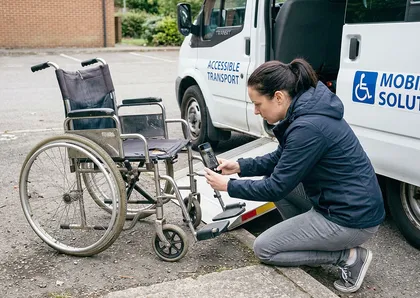
Early evidence-gathering and preservation are crucial because proof of a mobility car crash can quickly get lost. Vehicles can be repaired, camera footage may be erased, and damaged assistive equipment may be replaced.
Many victims take photos of the crash, exchange information with the other driver, and talk to police and witnesses while they’re still on the scene. However, you may not be in the position to do so yourself, especially if you had to be rushed to the ER after your mobility car accident.
Fortunately, there is still evidence you can gather a few days after the crash. Preserve the following if you can:
- Damaged Assistive Devices: Examples include wheelchairs and lifts. Don’t throw them away or have them repaired. They can serve as proof of the damage caused by the crash.
- Video Evidence: Save dashcam footage if available. Look for traffic or security cameras from nearby buildings or businesses that may have recorded the crash. Ask property owners for a copy of the footage. Car accident lawyers can also send preservation requests. These documents ask a person, business, insurer, or public agency to keep evidence that might otherwise be deleted or destroyed.
- Official Reports: Obtain reports from local police or the California Highway Patrol. These records provide an official account of the incident. They often serve as references for insurers reviewing claims.
- Medical & Treatment Records: Keep medical records showing your condition before and after the crash. These records can also demonstrate the expenses you incurred just to treat your injuries.
- Relevant Receipts: These records can substantiate other losses resulting from the crash. Save invoices, serial numbers, warranties, repair estimates, and replacement costs for:
- Vehicle modifications
- Assistive devices
- Prosthetics (if applicable)
Does California Law Treat Mobility Cars Differently From Other Vehicles?
No. Mobility cars are simply cars adapted for disabled drivers or passengers. One example is a wheelchair-accessible vehicle (WAV). It usually features ramps, lifts, hand controls, modified seating, wheelchair tie-downs, and other accommodations. As such, California law does not recognize “mobility car” as a separate legal category in crash claims. Instead, it imposes the same rules applicable to motor vehicles.
How Do Pre-Existing Disabilities Affect A Car Accident Claim?
A pre-existing disability does not prevent an injured person from bringing a car accident claim. California’s eggshell plaintiff rule protects these individuals. Under it, someone who causes a crash is responsible for the harm they cause. That’s true even if the injured person already had a disability or medical condition or used mobility equipment before the accident.
In other words, the at-fault party cannot reduce its responsibility just because the person was more vulnerable to injury. Instead, the key issue is what the crash newly caused or made worse. That does not mean the claim covers every condition the victim has. Instead, it will focus on crash-related harm, such as whether the accident:
- Caused a new injury.
- Exacerbated a pre-existing disability or medical condition.
- Created new limits on transfers, walking, driving, working, sleeping, or self-care.
- Increased the victim’s need for caregivers, therapy, equipment, or accessible transportation.
Strong documentation matters. Prioritize gathering medical records that document the difference between your baseline and your health after the accident.
Available Compensation For Mobility Car Accident Victims

Through a mobility car accident claim, you can pursue the same types of compensation available to victims of other car accidents. These generally cover economic (financial) and non-economic (personal) losses.
Compensation may include:
- Medical Care: Examples include emergency treatment, hospital bills, doctor visits, medication, therapy, and future medical or specialist care.
- Assistive Devices & Mobility Equipment: Economic damages typically cover the repair or replacement of damaged property. In your case, these can include:
- Wheelchairs
- Prosthetics
- Cushions
- Orthotics
- Walkers
- Communication devices
- Ramps
- Lifts
- Hand controls
- Modified seats
- Securement systems
- Transportation Needs: Accessible rental vehicles, paratransit services, rideshare costs, or medical transport.
- Care & Support Services: Extra help from attendants or caregivers, including assistance with transfers, bathing, and home health support.
- Income Loss: Lost wages, reduced earning ability, or missed work opportunities.
- Home & Vehicle Modifications: Changes needed at home or in a vehicle due to injuries from the crash.
- Intangible Losses: Pain and suffering, emotional distress, loss of independence, and reduced ability to perform daily activities.
Potentially Liable Parties In Mobility Car Accidents
California uses fault-based rules for car accident claims. In other words, the person or entity that caused the crash is liable for the harm they caused.
Fault may rest with the following parties:
- Negligent Driver: A driver who sped, ran a red light, drove distracted, or failed to yield.
- Commercial Driver or Employer: If the crash involved work-related driving or a company vehicle.
- Rideshare or Transport Company: Includes rideshare, delivery, shuttle, or medical transport services, depending on the situation.
- Vehicle Modifier or Repair Provider: If faulty installation or repairs to mobility equipment contributed to the crash or injury.
- Product Manufacturer: If a defective ramp, lift, restraint, or securement system failed.
- Government Agency: If a dangerous road condition or government-operated vehicle caused the crash.
California also follows a pure comparative fault system. Under it, multiple parties can share the blame for an accident, including the injured victim. In such a case, their share of fault reduces their recovery. Given these complexities, some victims seek free advice from a car accident lawyer to determine whom they may be able to sue and how much they could recover.
What Insurance Coverage Applies To A Mobility Car Crash?
In mobility car accidents in California, understanding insurance is important because these vehicles are often specially equipped for people with disabilities. After a crash, coverage may affect medical care, repairs, and financial support for victims. Different parties may be involved, so knowing how insurance applies helps protect your rights and supports proper handling of claims.
At-Fault Driver’s Liability Insurance
If another driver caused the crash, that driver’s liability insurance may cover injury losses and property damage. California’s minimum liability insurance requirements are as follows:
- $30,000 for injury or death to one person.
- $60,000 for injury or death to more than one person.
- $15,000 for property damage.
Those limits can be too low when a crash damages a wheelchair-accessible van, a power wheelchair, a lift, a ramp, or a custom seating system.
Your Own Collision Or Comprehensive Coverage
Basic liability insurance does not pay for damage to your vehicle. Collision or comprehensive coverage may apply to your mobility car, depending on your policy and the circumstances of the damage.
Uninsured Or Underinsured Motorist (UM/UIM) Coverage
UM coverage applies when the at-fault driver has no insurance. It may also apply to hit-and-run accidents. Meanwhile, UIM coverage kicks in when the at-fault driver has insurance but not enough to cover the victim’s damages.
Whether UM/UIM coverage applies depends on whether the injured person has it in their policy. That’s because it’s optional. Though insurers in California are required to offer it, drivers can waive it in writing when buying an auto policy. Coverage also depends on how well you can prove fault, damages, and policy limits.
Leased, Provided, Or Business-Owned Mobility Vehicles
In some cases, a mobility car is leased through a program provided by a business or owned by a business. If so, the lease or program agreement can affect who pays for repairs, deductibles, replacement vehicles, and interior damage. Keep the contract, insurance papers, repair records, and any letters from the owner or program administrator.
What Are The Deadlines For Filing Mobility Car Accident Cases In California?

In California, the deadlines for filing mobility car accident cases vary depending on the type of claim. Personal injury lawsuits must be filed within two years from the date of injury. Meanwhile, property damage cases have a three-year deadline. However, some exceptions can shorten or extend these time limits.
Notably, for government claims, victims must submit an administrative claim within 6 months under Government Code Section 911.2(a). Such claims may arise if the accident involved:
- A public bus.
- A public paratransit vehicle.
- A government driver.
- Poor road conditions.
Frequently Asked Questions About Mobility Car Accidents
It’s normal for victims to have concerns about their options after a mobility car accident. Below are answers to these common legal questions.
Do I Need A Lawyer To Handle My Mobility Car Accident Claim?
It depends on how complex the case is. Some cases can be resolved without a lawyer, especially if the damage is minor and liability is clear. However, other cases may require legal help when the claim becomes more complex. A victim often realizes, “I need a personal injury lawyer,” when the case involves:
- Severe injuries.
- Major financial losses.
- Disagreement about who is responsible.
Specifically, legal support can be helpful for mobility car accident cases because they typically involve pre-existing medical conditions. These can make it harder to show how the crash caused or worsened your injuries.
Can A Claim Include A Worsened Pre-Existing Disability?
Yes. A claim may include crash-related aggravation of a pre-existing disability or condition, as instructed by the Judicial Council of California. However, the injured person must show what changed as a result of the crash. Strong proof can include:
- Pre-crash medical records.
- Records showing new care needs.
- Device logs.
- Caregiver schedules.
- Post-crash imaging.
- A doctor’s or therapist’s notes.
- Functional testing.
How Much Does It Cost To Hire A Car Accident Lawyer?
The cost of hiring an attorney depends on how difficult the case is and whether it goes to trial. Cases involving multiple issues or disputes often require more time and resources, impacting overall costs.
However, if you’re asking, “Do lawyers only get paid if they win?”, know that many injury law firms in California, such as Arash Law, handle cases on a contingency fee basis. Under this arrangement, they receive the attorney’s fees only if they obtain compensation for their clients.
Do ADA Rights Apply During Medical Care After A Crash?
Yes. Medical providers covered by the Americans with Disabilities Act (ADA) must make medical services accessible to people with disabilities. ADA rights matter if you need transfer assistance, accessible exam equipment, communication help, or other reasonable access during emergency or follow-up care.
Get Legal Help After A Mobility Car Accident In California
If you get involved in a mobility car accident, document what happened, your injuries, and how the incident affected your life. Clear proof is important if the crash worsened your disability or left you without accessible transport.
Our car accident lawyers at AK Law can provide legal support. We can review fault, insurance coverage, losses, and the applicable legal deadlines. Call (888) 488-1391 for a free case review. Pay nothing up front.