TL;DR: When speaking to someone after a tragic accident, consider using warm and pressure-free statements like “I’m here for you,” while avoiding phrases that dismiss or invalidate their pain. Survivors and grieving families may face lasting emotional trauma, and careless comments or early apologies may do more harm than good.
Highlights:
- Open with a simple check-in and let them set the pace.
- Acknowledge the loss or trauma without trying to explain it away.
- Avoid comparisons and “silver lining” phrases that may invalidate their pain.
- Offer to do specific tasks, like babysitting or dog-walking.
- Encourage a medical visit and help track follow-up appointments.
- If you’re present in the first few hours, help the victim leave the scene safely.
- If negligence contributed to the accident, suggest that the survivor seek legal help.
Tip: Provide practical support for a claim by helping save texts, photos, bills, and notes related to the accident.
Table of Contents
The best thing you can say to someone after a tragic accident is something warm and free of pressure. What to say to someone in this situation does not need to be elaborate. The words that help most offer unconditional warmth without asking for anything in return.
An accident can happen in seconds. However, its emotional weight can stay with a survivor for weeks. When someone you care about goes through this, reaching out can feel paralyzing. Many people feel stuck and unable to find any words at all, not just worried about choosing the wrong ones.
Finding the right words can be challenging when you do not want to minimize what happened or overwhelm someone who is already carrying a lot. That tension is real, and it comes from caring. You do not need to fix anything or have the perfect thing to say. A few honest, gentle words are enough, and knowing that is the first step toward finding the right ones to say.
Helpful Things To Say To An Accident Survivor
For someone who survived a serious accident, keep your words warm, pressure-free, and reassuring. Let them know you are glad they are safe and that you are not going anywhere. Phrases that check in without asking too much include:
- “I’m glad you’re okay.”
- “I can’t imagine what you’re going through.”
- “Take all the time you need.”
If the survivor you know lost a loved one in an accident, the grief will most likely be deeper. Your words need to reflect that weight. Focus on presence and compassion rather than trying to fix or explain anything. Phrases that honor the loss without minimizing it include:
- “I am here for you.”
- “My condolences on your loved one’s passing.”
Emotional trauma from an accident can linger long after physical injuries have healed. Even a small, sincere word of support can help a survivor feel less alone during that recovery. Recognizing which phrases can cause unintentional harm matters just as much as knowing the right ones to use.
What Not To Say To Someone After A Serious Accident
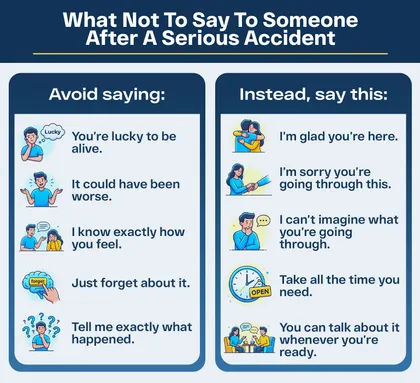
Common phrases that feel comforting can actually cause an accident survivor to think that you’re dismissing or invalidating their feelings, even if that is not your intention. That said, avoid saying any of the following:
- “You’re Lucky to Be Alive”: This phrase may sound kind, but it dismisses real suffering. A survivor may be dealing with pain, disability, or grief. Calling them “lucky” tells them they should feel grateful instead of hurt.
- “It Could Have Been Worse”: Even when said with care, this tells the survivor their injuries do not matter enough. You may end up minimizing their pain and invalidating their emotions.
- “I Know Exactly How You Feel”: Every accident is different. Every recovery is different. Saying this pulls the focus toward you and away from what they are going through.
- “Just Forget About It”: After an accident, a survivor’s physical and emotional recovery will take time. Telling someone to move on makes them feel they should not need time to heal.
- “I’m Sorry, This Was My Fault”: An urge to apologize at the scene, even when kind, can cause legal problems. Those close to the survivor should also be careful about what they say in those first moments.
- “Tell Me Exactly What Happened”: Asking for details about the accident can be upsetting. The survivor will share what they want to when they are ready.
When words feel inadequate, the most meaningful thing you can do is show up in a different way entirely.
How To Offer Practical Support Beyond Words
The best thing you can do is skip any open-ended offers and show up with something specific. “Let me know if you need anything,” and “I’m here for you” sound kind, but they don’t offer any tangible support to a survivor who is already exhausted and overwhelmed. Here are examples of practical support you can offer so the survivor does not have to decide what to ask for:
- Food and Meals: Drop off dinner, buy groceries using a list they text you, or set up a meal train so their meals are taken care of for the week.
- Transportation: Offer a ride to a doctor’s appointment or to bring their kids to and from school.
- Household Assistance: Do laundry, tidy up the house, watch the kids for a few hours, or walk the dog in the mornings.
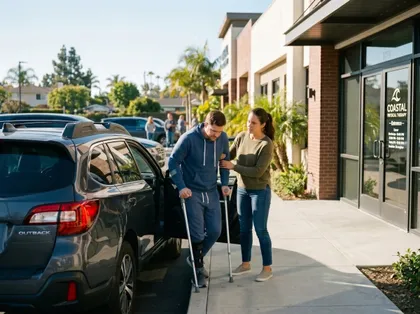
- Medical Follow-Through: Encourage them to see a doctor even if they feel fine, as some injuries may not surface for days. Offer to go with them to appointments, take notes, or help track discharge instructions and follow-up care.
- On-the-Scene or Early Support: If you’re with them shortly after the accident, offer to take photos, contact a family member, arrange transportation, keep track of their belongings, or write down important information they want to remember later. That way, they don’t have to manage those details while still shaken.
- Administrative Help: Offer to help with tasks such as reporting the accident to their insurer or sorting through paperwork like medical bills, repair estimates, and other documents that need to stay organized. After a fatal accident, these tasks can also include obtaining certified death certificates and notifying Social Security.
Showing up more than once matters more than a single gesture. Consistent help tells the survivor you are in it for the long term, not just the first few days. That kind of help can make a real difference during recovery, especially in the weeks after an accident when the practical and legal realities of what happened begin to set in.
When Should An Accident Survivor Speak To A Lawyer?
Tragic accidents can leave victims unsure of what to do next. If the person you’re talking to is in this situation and reaches out to you for advice, you may suggest specific steps, such as consulting a therapist to address the emotional aftermath of the incident. In a similar vein, you may wish to recommend that they get legal help if there’s reason to believe that someone else’s actions contributed to the accident.
In California, someone can file a personal injury claim if another’s carelessness or negligence resulted in their injuries and losses. For instance, a driver may be negligent if they speed through a red light and T-bone someone at an intersection. A grocery store may also be negligent if staff fail to clean or warn others about a spilled drink, causing someone to slip, fall, and break their hip.
An accident lawyer can assess whether the survivor may have a claim and explain their legal options. Suggesting a consultation may be especially helpful in the following scenarios:
- Serious or Ongoing Injuries: The survivor needs long-term care or faces lasting limits on daily life.
- Disputed Fault: Multiple parties may share blame, or the other side claims the survivor caused the accident.
- Insurance Problems: The insurer denies the claim, offers a quick, early payout, or requests a recorded statement.
- Government Involvement: A public entity’s actions or inaction contributed to the accident (such as poor road conditions causing a crash). An administrative claim must be filed within six months of the accident (Government Code § 911.2).
If possible, recommend that the survivor speak to a lawyer early on. State law sets firm limits on how long people have to take legal action: in most cases, they’ll have 2 years to file a personal injury lawsuit (Code of Civil Procedure § 335.1). This deadline starts running on the day of the accident and won’t pause during negotiations with the insurance company.
That means waiting to consult an attorney may limit an accident survivor’s legal options later on. The earlier a lawyer gets involved, the sooner they can begin preparing a claim.
Case Results: How A Legal Team Can Help After A Tragic Accident
These outcomes cannot undo what happened, but they show how legal support helped real families and survivors move forward after tragic accidents:
- $12,000,000: Our 74-year-old client was struck while crossing the street and faced a long recovery. We supported her every step of the way, and the case resolved on the courthouse steps just before trial.
- $6,750,000: Our client, a farm laborer, fell off the back of an ATV and down a cliff. He sustained a traumatic brain injury alongside other forms of serious harm. Our attorneys obtained a settlement that allowed him to continue receiving long-term assisted living services for his injuries.
- $1,500,000: A distracted driver caused a crash that took the life of our client, a beloved church volunteer. No settlement can undo that loss, but we secured the maximum policy limits and arranged a donation to her church in her memory.
Past results do not guarantee a similar outcome. Each result depends on the facts, evidence, injuries, insurance, law, and other circumstances.
Frequently Asked Questions About What To Do After Tragic Accidents
After a tragic accident, grief, fear, and uncertainty can all hit at once. Knowing what to say or how to help can feel impossible when someone else is hurting. The answers below may help you decide what kind of support you wish to provide to a survivor.
What To Write In A Sympathy Card After A Tragic Accident?
Keep your message simple and honest. Acknowledge the loss, express that you care, and offer support without trying to explain away the pain. Short, sincere words carry more weight than long explanations.
How Long Does It Take Someone To Recover From An Accident Mentally?
Recovery is different for everyone. A serious accident may cause fear, sadness, or sleep problems. These feelings often ease with time. However, if you’re supporting an accident survivor and notice that these feelings are worsening or disrupting their daily life, it may be worth suggesting that they have a mental health professional check for PTSD, depression, or another condition.
Should My Loved One Talk To The Other Party’s Insurance Company After An Accident?
Talking to the other party’s insurer without a lawyer carries real risk. Adjusters work for the insurance company, not your loved one. The insurance company may use what they say to shift blame, lower compensation, or deny a claim.
What Should I Do If My Loved One Says, “I Need A Personal Injury Lawyer”?
Help them find a qualified California personal injury attorney. A lawyer can handle insurer communications and protect their rights from day one so they can focus on healing.
With an attorney, your loved one doesn’t need to figure out the aftermath of their accident alone. A free consultation with a personal injury lawyer can help them determine where they stand and decide what to do next.
Our Firm Offers Experienced Legal Support After Tragic Accidents
Knowing what to say to someone after a tragic accident, much less offer advice, can be challenging. However, if they’re seeking practical support, it can be helpful to push them in the right direction. A legal case review may be beneficial if someone else’s negligence contributed to the accident.
The attorneys at Arash Law are focused on advocating for the rights of victims dealing with injuries or the loss of a loved one after a serious accident caused by another’s carelessness. During our case evaluations, we help them understand their rights and options. If they choose to work with us, we help them pursue the maximum compensation available under California law. Our clients owe no attorney’s fees unless we win or settle a case.
If someone you know is looking for legal guidance tailored to their situation, they can call AK Law at (888) 488-1391 to schedule a free case review and learn about the next steps available to them.