TL;DR: After a fatal accident in California, families may need to preserve evidence, handle insurance communications, review survivor benefits, gather financial records, and confirm legal deadlines. Depending on the circumstances, wrongful death, survival, workers’ compensation, insurance, or estate-related claims may apply.
Highlights:
- File most wrongful death lawsuits within two years. If a public entity may be at fault, file a government claim within 6 months of the claim’s accrual.
- Preserve evidence immediately. Request surveillance footage, truck black boxes, and the police collision report before they’re overwritten or lost.
- Know that only certain family members and dependents may file a wrongful death claim. California Code of Civil Procedure section 377.60 explains who qualifies.
- Know that a wrongful death claim covers family losses, such as lost support and funeral costs. A survival action usually covers losses the deceased person had before death, such as medical bills.
- Talk with an attorney before giving a recorded statement if you have questions about your rights. Insurance companies may use your statements when they evaluate your claim.
- Realize that criminal charges are not required to file a civil wrongful death lawsuit, and your family can still recover even if the at-fault driver is never convicted.
- Ask whether both a wrongful death claim and a survival action apply, so your family can seek all damages allowed by California law.
Tip: Don’t speak with insurance companies or give recorded statements until you’ve consulted with an attorney who can protect your family’s legal position and preserve evidence.
Table of Contents
Families should know that they do not have to handle every legal, financial, and administrative issue at once after a fatal accident. While grieving, they may also need to preserve evidence, obtain official records, review insurance and survivor benefits, confirm filing deadlines, and determine which claims may apply.
If another person, company, or public entity contributed to the death, eligible family members may be able to seek compensation for funeral expenses, lost financial support, household services, and the loss of companionship and care. Before signing releases or accepting an insurance settlement, families may benefit from understanding their rights and the full range of available claims.
What Families Should Do In The First Few Days
There is no expected timeline for grieving or handling the practical aftermath of a fatal accident. Families should focus first on their immediate emotional and personal needs. When they are ready, a trusted relative, friend, attorney, or other representative can help obtain essential information, locate personal belongings, and preserve evidence that may otherwise be lost.
Obtain Official Accident Information
Request the incident number and available preliminary information from the California Highway Patrol, local police department, fire department, workplace, property owner, or other agency that responded.
Record the investigating officer’s name, badge number, agency, and contact information. Ask how and when to request the complete collision or incident report.
The final report may not be available immediately. A fatal accident investigation may involve witness interviews, vehicle inspections, toxicology testing, electronic data, photographs, and accident reconstruction.
Locate And Document Personal Effects
Ask the investigating agency, medical facility, coroner or medical examiner, towing company, or property owner where your loved one’s belongings are being held.
Personal effects may include:
- A phone or other electronic device.
- A wallet, identification, and credit cards.
- Keys.
- Jewelry.
- Clothing.
- Medications.
- Documents or belongings removed from a vehicle.
Request a written inventory or property receipt when available. Keep a record of which person or agency has custody of each item.
A phone, dashcam, or other electronic device may contain photographs, communications, location information, or other relevant evidence. Avoid deleting, resetting, repairing, or altering the device before determining whether its contents should be preserved.
Preserve Accident Evidence
Important evidence may disappear quickly. Vehicles can be repaired or sold, surveillance recordings may be overwritten, physical conditions can change, and witnesses may become harder to locate.
Save any available photographs, videos, witness information, medical records, and media showing:
- Vehicle and property damage.
- Road or property conditions.
- Traffic signs and signals.
- Skid marks, debris, or damaged barriers.
- Weather, visibility, and lighting.
- Nearby homes, businesses, or vehicles with cameras.
If a vehicle was towed or impounded, send written instructions to the facility stating that the vehicle must not be cleaned, repaired, altered, sold, released, or destroyed before an inspection can occur.
If a commercial truck or work vehicle was involved, relevant evidence may include:
- Electronic control module or event data recorder information.
- Dashcam footage.
- Driver logs.
- Dispatch communications.
- Maintenance and inspection records.
- Employment and training documents.
- Cargo and loading records.
- Cellphone or telematics data.
An attorney may send formal preservation notices to the towing company, insurer, vehicle owner, employer, government agency, or other party controlling the evidence.
Do not authorize the destruction of a vehicle, defective product, machine, or other potentially important physical evidence before qualified parties have had an opportunity to inspect it.
Obtain Certified Death Certificates
Request certified copies of the death certificate through the funeral home, county office where the death was registered, or the California Department of Public Health.
The cause and manner of death appear on the death certificate. The cause may initially be listed as pending while a coroner or medical examiner completes the investigation. The record can later be amended when the investigation is finished.
The number of copies needed varies. Banks, insurers, government agencies, probate courts, and other institutions may have different requirements. Ask each organization whether it needs a certified copy or will accept another form of verification before ordering a large number.
Complete Any Required California DMV Report

When a California motor vehicle crash causes an injury, death, or more than $1,000 in property damage, an SR-1 report generally must be submitted to the DMV within 10 days.
The report may be completed by the driver or the driver’s insurance agent, broker, legal representative, or other authorized representative. The SR-1 is required in addition to reports filed with the police, the California Highway Patrol, or an insurance company.
If the deceased person was a driver, the family should ask the insurer or an attorney whether an authorized representative must submit the report.
Confirm That Social Security Has Been Notified
Funeral homes generally report deaths to the Social Security Administration. If no funeral home is involved or the death was not reported, the family should contact Social Security.
Certain spouses, children, divorced spouses, or dependent parents may qualify for monthly survivor benefits. A spouse or eligible child may also qualify for a one-time death payment. Reporting the death does not automatically complete an application for survivor benefits.
Be Careful With Insurance Communications
Insurance adjusters may contact family members shortly after the accident, sometimes before the investigation is complete or the family understands which claims and policies may apply. These conversations can affect how an insurer evaluates liability, damages, and coverage. A lawyer who handles car accident cases can communicate with adjusters and help the family avoid making statements or entering into agreements that could limit a claim.
Avoid:
- Speculating about how the accident happened.
- Guessing about your loved one’s conduct.
- Signing broad medical or employment authorizations.
- Signing releases.
- Accepting a settlement before identifying all available coverage.
- Giving a recorded statement without understanding whether it is required.
A statement can be incomplete or misunderstood when the family does not yet have the accident report or other evidence.
The duties owed to the family’s own insurer may differ from those owed to another party’s insurer. A lawyer who handles car accident cases can review the applicable insurance policies, communicate with adjusters, and explain what information the family may need to provide.
Insurance And Financial Benefits To Review
A fatal accident may trigger several types of insurance and benefit claims. These claims have different eligibility requirements and may be applied simultaneously.
Life And Accidental Death Insurance
Check for personal life insurance and accidental death and dismemberment policies.
Coverage may also exist through:
- An employer.
- A union.
- A retirement plan.
- A mortgage or other loan.
- A credit card.
- A professional association.
- A bank or financial account.
- A travel or membership program.
The insurer will usually request a claim form and proof of death. Review the policy before assuming that a particular exclusion or coverage limit applies.
Auto And Liability Insurance
When another driver, business, property owner, employer, manufacturer, or public entity may be responsible, that party’s liability insurance may provide compensation.
The deceased person’s own policies may also provide applicable coverage, including:
- Uninsured motorist coverage.
- Underinsured motorist coverage.
- Medical payments coverage.
- Accidental death benefits.
- An umbrella policy.
California medical payments coverage may pay reasonable expenses for necessary medical or funeral services, depending on the policy language and the deceased person’s insured status. This coverage is optional, so families should review the actual policy rather than assume it applies.
Finding an insurance policy does not automatically establish that the insurer must pay the claim. Liability, exclusions, insured status, policy limits, and other conditions may still be disputed.
Workers’ Compensation Death Benefits
If the death resulted from a work-related injury or illness, a spouse, child, or other qualifying dependent may be entitled to California workers’ compensation death benefits.
These benefits may include payments to qualifying dependents and reasonable burial expenses. For injuries occurring on or after January 1, 2013, California workers’ compensation burial benefits are limited to $10,000. The amount of other death benefits depends on the number and type of dependents.
Workers’ compensation death benefits do not require the family to prove that an outside party negligently caused the death.
A separate third-party wrongful death claim may also be possible if someone other than the employer contributed to the fatal accident. For example, a claim may arise against a negligent driver, an equipment manufacturer, a subcontractor, a property owner, or a maintenance company.
Workers’ compensation death claims have separate deadlines. Families should not assume that a civil lawsuit or insurance claim preserves their right to workers’ compensation benefits.
Social Security Survivor Benefits
Eligible family members may qualify for Social Security survivor benefits based on the deceased person’s work history.
Potential recipients include:
- Surviving spouses.
- Divorced spouses.
- Children.
- Adult children with qualifying disabilities.
- Dependent parents.
Eligibility depends on age, relationship, disability, caregiving responsibilities, and other factors. Families should contact Social Security to determine who needs to apply.
Auto and Liability Insurance
When another driver, business, property owner, employer, manufacturer, or public entity may be responsible, that party’s liability insurance may provide compensation.
The deceased person’s own policies may also provide applicable coverage, including:
- Uninsured motorist coverage.
- Underinsured motorist coverage.
- Medical payments coverage.
- Accidental death benefits.
- An umbrella policy.
California medical payments coverage may pay reasonable expenses for necessary medical or funeral services, depending on the policy language and the deceased person’s insured status. This coverage is optional, so families should review the actual policy rather than assume it applies.
Finding an insurance policy does not automatically establish that the insurer must pay the claim. Liability, exclusions, insured status, policy limits, and other conditions may still be disputed.
Workers’ Compensation Death Benefits
If the death resulted from a work-related injury or illness, a spouse, child, or other qualifying dependent may be entitled to California workers’ compensation death benefits.
These benefits may include payments to qualifying dependents and reasonable burial expenses. For injuries occurring on or after January 1, 2013, California workers’ compensation burial benefits are limited to $10,000. The amount of other death benefits depends on the number and type of dependents.
Workers’ compensation death benefits do not require the family to prove that an outside party negligently caused the death.
A separate third-party wrongful death claim may also be possible if someone other than the employer contributed to the fatal accident. For example, a claim may arise against a negligent driver, an equipment manufacturer, a subcontractor, a property owner, or a maintenance company.
Workers’ compensation death claims have separate deadlines. Families should not assume that a civil lawsuit or insurance claim preserves their right to workers’ compensation benefits.
Social Security Survivor Benefits
Eligible family members may qualify for Social Security survivor benefits based on the deceased person’s work history.
Potential recipients include:
- Surviving spouses.
- Divorced spouses.
- Children.
- Adult children with qualifying disabilities.
- Dependent parents.
Eligibility depends on age, relationship, disability, caregiving responsibilities, and other factors. Families should contact Social Security to determine who needs to apply.
Help With Funeral And Burial Expenses
Funeral and burial expenses may be covered by more than one source. Review:
- Life insurance.
- Final-expense insurance.
- Accidental death coverage.
- Employer or union benefits.
- Medical payments coverage.
- Workers’ compensation burial benefits.
- Veterans’ benefits.
- Crime-victim compensation.
When a death resulted from a qualifying crime, such as an impaired-driving offense or vehicular manslaughter, the California Victim Compensation Board may reimburse eligible funeral and burial expenses. It may also cover certain counseling and support-loss expenses.
CalVCB generally reimburses only expenses not covered by insurance, restitution, or other sources. Eligibility requirements and benefit limits apply.
Who Has The Right To File A Wrongful Death Claim In California?
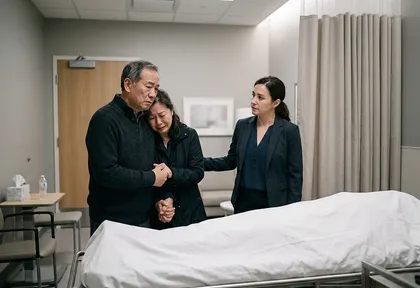
California Code of Civil Procedure section 377.60 limits who may bring a wrongful death claim. A claim may be asserted by specified family members or by the deceased person’s personal representative on their behalf.
People who may qualify include the following:
- Surviving Spouse or Registered Domestic Partner: A surviving spouse or registered domestic partner may bring a wrongful death claim.
- Children and Descendants of Deceased Children: The deceased person’s children may qualify. The children of a deceased child may also have the right to participate.
- Intestate Heirs When There Are No Surviving Descendants: If the deceased person left no surviving children or other descendants, the people who would inherit under California’s intestate succession laws may qualify.
Depending on the family structure, this group may include parents, siblings, or other relatives.
- Certain Financial Dependents: A dependent putative spouse, child of a putative spouse, stepchild, parent, or qualifying legal guardian may have standing.
A putative spouse is someone who believed in good faith that a marriage to the deceased person was legally valid, even though the marriage was void or voidable.
- Certain Dependent Minors: A minor may qualify if the minor:
- Lived in the deceased person’s household for the 180 days before the death.
- Depended on the deceased person for at least half of the minor’s financial support.
Family relationships alone do not guarantee eligibility. The answer may depend on marriages, adoptions, prior deaths, financial dependency, and the order of intestate succession.
California’s One-Action Rule
California generally treats a wrongful death claim as a single action in which all known eligible heirs should participate.
An eligible heir who does not wish to participate as a plaintiff may need to be joined as a defendant so that everyone with a potential claim is before the court. Failing to identify an heir can create procedural disputes and may affect that person’s rights.
Talking to a fatal accident lawyer can help a family determine who qualifies before a lawsuit is filed.
Understanding Wrongful Death vs. Survival Actions
California recognizes two distinct types of civil claims after a fatal accident. They cover different losses and may be brought by different parties.
-
Wrongful Death Claims: A wrongful death claim compensates eligible family members for losses they personally experience because of the death.
Recoverable damages may include:
- Lost financial support.
- Lost gifts or benefits the family reasonably expected to receive.
- Lost household services.
- Funeral and burial expenses.
- Loss of love, companionship, comfort, care, assistance, protection, affection, society, and moral support.
- Loss of a spouse’s enjoyment of intimacy.
- Loss of a parent’s training and guidance.
Wrongful death damages do not compensate the deceased person for injuries experienced before death.
California wrongful death damages also do not ordinarily include compensation for an heir’s grief, sorrow, or mental anguish as a separate category. The compensable non-economic losses focus on the relationship and the benefits the family lost.
-
Survival Actions: A survival action continues a legal claim the deceased person could have brought had they lived.
The deceased person’s personal representative may bring the action. If there is no personal representative, the deceased person’s successor in interest may be able to file it.
A survival action may seek compensation for losses the deceased person sustained before death, such as:
- Medical and emergency expenses.
- Lost earnings before death.
- Property damage.
- Damage to a vehicle.
- Other economic losses incurred before death.
- Penalties or punitive damages when legally available.
Medical expenses may include hospital, surgical, rehabilitation, or chiropractic costs when the deceased person actually received those services before death, and the expenses relate to the accident.
Pre-Death Pain And Suffering In Cases Filed In 2026
Under the current version of Code of Civil Procedure section 377.34, a survival action filed on or after January 1, 2026, cannot recover damages for the deceased person’s pre-death pain, suffering, or disfigurement.
California temporarily allowed those damages in qualifying actions filed on or after January 1, 2022, and before January 1, 2026. The filing date of the action, not merely the date of the accident or death, determines whether that temporary provision applies.
Punitive Damages
Punitive damages are generally unavailable through an ordinary wrongful death claim.
They may be pursued through a survival action when the deceased person could have recovered them, and clear and convincing evidence establishes malice, oppression, or fraud.
California Civil Code section 3294 also permits punitive damages in an action based on a death resulting from a homicide for which the defendant was convicted of a felony.
A family may pursue both a wrongful death claim and a survival action when the facts and legal requirements support both.
Estate Issues That May Affect A Fatal Accident Claim
Estate matters may affect who has the authority to pursue or settle certain claims after a fatal accident.
A will or trust does not determine who may file a California wrongful death claim. Eligibility is governed by Code of Civil Procedure section 377.60. However, a court-appointed personal representative or, in some cases, a successor-in-interest may be needed to bring a survival action on behalf of the deceased.
Families should locate documents that may help identify the proper claimants, available insurance, and recoverable losses, including:
- The will or trust.
- Insurance policies.
- Employment and income records.
- Medical and funeral bills.
- Any court documents appointing an estate representative.
Wrongful death compensation belongs to eligible family members and covers losses such as financial support, household services, funeral expenses, and companionship. A survival-action recovery generally belongs to the estate and may cover medical expenses, lost earnings before death, and property damage.
The absence of a will does not prevent a wrongful death or survival claim. However, the family may need to determine who has legal authority to sign settlement documents or act on behalf of the estate.
Surviving relatives should not assume they must personally pay the deceased person’s individual debts. Families should keep copies of bills, receipts, insurance correspondence, and settlement documents, and confirm whether an expense belongs to the estate or may be included in the fatal accident claim.
Important Deadlines And Liability Rules In California
Missing a legal deadline may prevent a family from recovering compensation, even when the underlying claim would otherwise be valid.
-
Wrongful Death Lawsuit Deadline: California Code of Civil Procedure section 335.1 generally provides two years to file an action for a person’s death caused by another party’s wrongful act or neglect.
In most wrongful death cases, the two-year period begins on the date of death.
Do not assume that the deadline is extended by:
- A criminal investigation.
- Pending criminal charges.
- An insurance investigation.
- Settlement negotiations.
- Probate proceedings.
- Delays in receiving the final accident report.
Limited exceptions may apply, but families should not rely on an exception without a case-specific legal review.
A survival action may have a different deadline calculation based on the deceased person’s underlying claim and other applicable laws.
-
Government Claim Deadline
When a California public entity or employee may be responsible, the family generally must present a written claim to the government before filing a lawsuit.
A claim involving death, personal injury, or damage to personal property generally must be presented within six months after the cause of action accrues.
A public entity may be involved in accidents concerning:
- A city, county, or state vehicle.
- A public bus or transit system.
- A government employee acting within the scope of employment.
- A dangerous roadway condition.
- Defective traffic signals.
- Public construction or maintenance work.
- Government-owned property.
Accrual can be fact-specific and is not necessarily determined only by the date of death in every case. A fatal car accident lawyer can evaluate when the government claim period began and which agency must receive the claim.
California’s Comparative Negligence Rule
California follows pure comparative negligence. A family may still recover damages when evidence shows that the deceased person shared some responsibility for the accident.
The family’s recovery may be reduced by the percentage of fault assigned to the deceased. California’s rule permits proportionate recovery even when the deceased person’s share of fault was equal to or greater than another party’s share.
A finding in a police report or insurance investigation does not automatically determine fault in the civil case. Liability may depend on physical evidence, witness testimony, electronic records, expert analysis, and applicable safety laws.
Getting Support After A Fatal Accident
Families should not have to manage grief, insurance calls, legal deadlines, and paperwork alone.
Support may come from:
- Trusted relatives or friends.
- Grief counselors or trauma therapists.
- Victim advocates.
- Faith-based or community organizations.
A fatal accident lawyer can help by:
- Preserving important evidence.
- Communicating with insurance companies.
- Identifying filing deadlines.
- Reviewing settlement offers and releases.
- Explaining which decisions require immediate attention.
This support can give the family more space to grieve without risking important legal rights.
If the accident involved an impaired driver, Mothers Against Drunk Driving offers free, 24-hour support for victims and survivors at 1-877-623-3435. Families affected by criminal conduct may also contact their county’s Victim/Witness Assistance Center for guidance and available resources.
Fatal Accident Representative Case Results
Arash Law has represented families in wrongful death and fatal accident cases. The following results illustrate how the facts, insurance coverage, and available evidence can affect a claim.
- $6,000,000 — Policy-Limits Recovery After a Drunk Driver Caused a Fatal Head-On Collision
A drunk driver crossed the double yellow lines and struck a vehicle carrying our client, his wife, and their son. The collision took the life of our client’s wife and the child’s mother.
The defense disputed both liability and insurance coverage. Our firm obtained the maximum available policy limits for the client.
- $1,500,000 — Policy-Limits Recovery After a Distracted Driver Killed a Church Volunteer
A distracted driver caused a fatal crash involving a church volunteer. Our firm recovered the at-fault driver’s maximum policy limits for the family.
The resolution also included a private donation to the client’s church.
Prior results do not guarantee a similar outcome. Every case depends on its facts, evidence, applicable law, available insurance or assets, and other circumstances.
Frequently Asked Questions About Fatal Car Accidents In California
After a fatal crash, families face confusing legal steps and procedures all at once. Insurance claims, law enforcement processes, and civil lawsuits each work differently. These answers address the specific questions that families most often ask.
Are Criminal Charges Required To File A Wrongful Death Lawsuit?
No. A wrongful death lawsuit is a civil case and is separate from a criminal prosecution.
The government decides whether to file criminal charges. Eligible family members or the deceased person’s representative pursue the civil claim.
A family may file a wrongful death lawsuit even when:
- Prosecutors do not file charges.
- The driver is not convicted.
- Criminal charges are reduced or dismissed.
- The accident did not involve criminal conduct.
The standards of proof also differ. A criminal conviction is not required to establish civil liability.
Does a Criminal Case Extend the Wrongful Death Deadline?
Not automatically.
A criminal investigation or prosecution does not ordinarily stop the civil statute of limitations. Families should track the civil deadline separately, even when a criminal case is pending.
How Is Next-Of-Kin Notification Handled After A Fatal Crash?
The process depends on the county and the agency handling the investigation.
A coroner, medical examiner, hospital, or law enforcement agency may notify the legal next of kin. Agencies may coordinate the notification when law enforcement needs to conduct interviews or when the identity of the deceased person has not been confirmed.
For example, the Los Angeles County Department of Medical Examiner identifies and notifies legal next of kin. However, an investigating law enforcement agency may make the notification in coordination with the department.
Families should avoid publicly disclosing a person’s identity before authorities have completed the notification process.
Can A Police Report Be Used As Direct Evidence In Court?
California Vehicle Code section 20013 generally provides that an accident report itself cannot be used as evidence in a civil or criminal trial arising from the accident.
The report can still be valuable because it may identify:
- Witnesses.
- Drivers and vehicle owners.
- Insurance information.
- Statements made at the scene.
- Photographs or diagrams.
- Physical evidence.
- Potential violations.
- Investigative leads.
An officer may also testify about admissible matters the officer personally observed. The court determines what testimony and evidence may be presented at trial.
A police report does not make the final legal determination about fault.
California Vehicle Code section 20013 generally provides that an accident report itself cannot be used as evidence in a civil or criminal trial arising from the accident.
The report can still be valuable because it may identify:
- Witnesses.
- Drivers and vehicle owners.
- Insurance information.
- Statements made at the scene.
- Photographs or diagrams.
- Physical evidence.
- Potential violations.
- Investigative leads.
An officer may also testify about admissible matters the officer personally observed. The court determines what testimony and evidence may be presented at trial.
A police report does not make the final legal determination about fault.
What Happens If The Cause Of Death Is Still Pending?
A death certificate may initially state that the cause or manner of death is pending while the coroner or medical examiner completes toxicology testing, medical review, or another investigation.
Once the investigation is complete, the death certifier may update the record. Families can ask the county or the funeral home how to obtain an amended certified copy.
A pending cause of death does not necessarily prevent the family from preserving evidence or investigating a potential civil claim.
Can The Family File Both A Wrongful Death Claim And A Survival Action?
Yes, when the facts support both claims.
The wrongful death claim compensates eligible family members for their losses. The survival action seeks damages for losses sustained by the deceased before death.
The appropriate plaintiffs and available damages differ, so both claims must be properly identified and filed.
Are Family Members Responsible For The Deceased Person’s Debts?
Not automatically.
The deceased person’s valid debts are generally handled through the estate. A surviving relative may have personal responsibility when the relative jointly owed, guaranteed, or co-signed the debt, or when another law creates liability.
Families should request written documentation and seek advice before paying debts from their personal funds.
Can A Family Recover If Their Loved One Was Partly At Fault?
Yes. California’s pure comparative negligence rule allows a family to recover reduced damages when the deceased person shared fault.
For example, if total damages were assessed at $1 million and the deceased person was found 30 percent responsible, the recoverable damages against the responsible defendant or defendants may be reduced by that percentage.
Get The Legal Help You Need Today
The days and weeks after a fatal accident can bring overwhelming legal, financial, and administrative demands. Families should have the opportunity to understand their options without being pressured into immediate decisions.
The attorneys at Arash Law can review the circumstances, identify potential claims, help preserve evidence, and explain which California deadlines may apply.
Contact Arash Law, also known as AK Law, at (888) 488-1391 for a free case evaluation.
Many families ask, “Do lawyers only get paid if they win?” At our firm, attorneys’ fees are based on a contingency fee arrangement. This means clients do not owe attorneys’ fees unless we recover compensation for them. The written fee agreement explains the applicable terms.
Speaking with an attorney does not obligate your family to file a lawsuit. It can provide clear information about your rights, responsibilities, and next steps while important evidence is still available.