TL;DR: Injuries at Orinda businesses, restaurants, and shopping areas can lead to premises liability claims when property owners fail to fix or warn about hazards like wet floors or broken stairs. Injured visitors may recover medical costs, lost income, and pain and suffering. Employees generally pursue workers’ compensation; if a third party is also liable, they may have a third-party claim.
Highlights:
- Report the incident to staff and request a written incident report before you leave.
- Photograph the hazard, any warning signs nearby, and the lighting conditions before anything changes.
- Ask the business in writing to preserve surveillance video — footage at many commercial properties is overwritten automatically within days, depending on the recording system.
- Get medical care promptly and save every bill and record.
- Track all lost income and out-of-pocket costs, and calendar two years to file a lawsuit, six months to file a government claim.
- Call Arash Law and ask: “Do lawyers only get paid if they win?”
Tip: Collect witness names and contact information at the scene. When you describe the incident to staff or an insurer, stick to facts — avoid guessing about what the owner knew or how long the hazard had been there.
Table of Contents

A fall at Orinda Theatre Square, a trip over an unmarked floor hazard inside a commercial corridor, or a slip on a wet restaurant entryway can leave you with broken bones, a head injury, or chronic back pain that disrupts your life for months. These injuries are not minor inconveniences — they can mean emergency room visits, weeks away from work, and ongoing treatment, including chiropractic care.
Orinda sits in the hills of Contra Costa County, where a compact but active commercial center draws residents and visitors to shops, restaurants, and services. California law holds property owners responsible for maintaining reasonably safe conditions, and when they fail to fix or warn about a hazard, injured customers and visitors have the right to seek compensation. Arash Law represents people hurt on commercial properties throughout Contra Costa County, and this page explains how those claims work.
California Civil Code section 1714 is the legal foundation for premises liability — the rule that property owners must use ordinary care to keep people safe. This is a negligence standard, not strict liability, which means your claim turns on what the owner knew or should have known, whether they acted reasonably, and whether that failure caused your injury.
How Falls And Commercial Property Hazards Injure Orinda Visitors
Injuries resulting from commercial property accidents in Orinda are not always obvious at the scene. You may walk away feeling sore but functional — then discover days later that you have a herniated disc, a fracture, or a concussion that worsens without treatment. Understanding what you may be dealing with guides the medical decisions and legal steps that follow.
The California Department of Public Health’s EpiCenter database provides county-level emergency department and hospitalization data for injuries, including unintentional falls. However, the database does not isolate incidents occurring at commercial properties or provide Orinda-specific figures, so it should not be used to estimate the number of business-related falls in Orinda.
Here are the injuries most commonly documented after commercial property accidents:
- Bone Fractures: Broken wrists, arms, ankles, and hips occur when someone reaches out to break a fall or lands on hard flooring. Older adults face elevated fracture risk. The hip fractures that often result from falls can require surgery and extended rehabilitation.
- Head and Brain Injuries: A fall that causes any head impact can produce a concussion or, in more severe cases, a traumatic brain injury, or TBI (a disruption of normal brain function from an outside force). TBIs can cause cognitive, emotional, and physical symptoms that persist long after the visible injury heals.
- Back and Spinal Injuries: A sudden fall can compress the spine, herniate a disc (rupture of the cushioning tissue between vertebrae), pinch spinal nerves, or cause chronic pain that requires ongoing chiropractic and medical management.
- Soft Tissue Injuries: Sprains, strains, and muscle and ligament tears happen when the body twists sharply to avoid or absorb a fall. These injuries often take weeks to months to heal and frequently require physical therapy and chiropractic treatment to restore the full range of motion.
- Joint Dislocations: Shoulders and knees can be forced out of their sockets during a hard fall. Dislocations are acutely painful and sometimes require manual realignment or surgical repair.
- Lacerations and Abrasions: Broken glass, sharp metal fixtures, and unfinished surfaces at a business can cause cuts that require stitches and carry an infection risk.
- Crush Injuries: Merchandise displays, warehouse shelving, or equipment that tips during an accident can crush hands, feet, or other body parts, causing deep tissue damage that takes months to resolve.
- Psychological Injury: A serious fall can produce anxiety about returning to similar spaces or post-traumatic stress symptoms, even when the physical injuries appear manageable.
A person may seek compensation for physical injuries and related emotional or psychological harm when those losses were caused by the accident and are supported by evidence.
What Makes Orinda’s Commercial Properties A Distinct Liability Setting
Orinda Theatre Square is the city’s primary commercial hub, hosting restaurants, retail shops, and service businesses within a shared complex that combines a historic theater with modern commercial tenants. The layout, a mix of indoor corridors, outdoor plazas, level changes, and shared parking, creates specific hazard patterns that differ from a single-occupancy retail box.
In a multi-tenant commercial center like Orinda Theatre Square, determining who controls a particular surface is not always obvious. The walkway leading to the restaurant entrance may be maintained by the center’s property management company, not the restaurant. A leaking pipe that causes a wet floor may be traced back to a contractor who recently performed work. These distinctions matter legally because California premises liability generally depends on ownership, occupation, control, creation of the condition, and the duties undertaken by each party. More than one owner, tenant, manager, or contractor may share responsibility for the same hazard.
HCAI lists Orinda Care Center at 11 Altarinda Road as an open, licensed skilled nursing facility. Skilled nursing facility licensing, inspections, and regulatory compliance are principally administered by the California Department of Public Health, while HCAI provides facility identification and other health care data.
Personal injury lawsuits arising from Orinda commercial property accidents are filed in the Contra Costa County Superior Court. The civil venue for these cases is the Wakefield Taylor Courthouse. If your case proceeds to litigation, that is the court where the complaint is filed, motions are heard, and any trial takes place.
Common Hazards That Cause Injuries In Orinda Commercial Settings
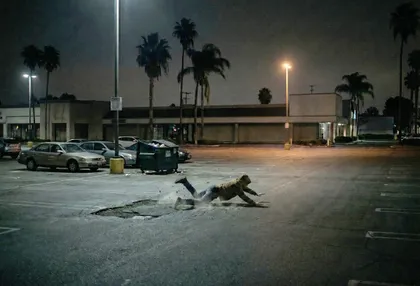
Property owners, tenants, managers, and contractors may be responsible for unsafe conditions when they controlled the affected area, created the hazard, knew or should have known about it, or undertook responsibility for correcting it. The specific hazards depend on the type of property, but commercial spaces in Orinda show consistent patterns.
In general, commercial and office buildings:
- Cracked or uneven exterior pavement and parking lot surfaces adjacent to the building
- Broken or damaged stairs, handrails, and threshold transitions at entrances
- Loose carpeting, curling floor mats, or abrupt changes in flooring surface that create tripping edges
- Inadequate lighting in stairwells, hallways, parking facilities, and building entrances
- Unmarked or unfixed maintenance defects that staff reported but the owner did not address
- Security failures in areas where foreseeable criminal activity creates a risk of harm to visitors
In restaurants and food service businesses:
- Wet or slippery floors from spilled drinks, food, grease, cleaning solutions, or rain tracked through an entrance
- Unsecured floor mats or uneven flooring in dining areas, restrooms, and kitchen entrances
- Walkways obstructed by chairs pushed out from tables, delivery equipment, or unsecured storage
- Outdoor dining areas with uneven decking, damaged pavement, or unstable furniture
- Failure to post a wet floor warning or cone off a recently mopped area before customers re-enter
In retail shopping areas:
- Merchandise, boxes, and inventory left in customer aisles without adequate clearance
- Spills or leaks that were not cleaned or marked for extended periods
- Crowded or poorly arranged displays that force customers into narrow walkways with tripping hazards
- Damaged sidewalks, potholes, and broken curbs in shared parking areas and outdoor common spaces
- Malfunctioning escalators, elevators, or automatic doors that create unexpected hazards for shoppers
- Inadequate lighting in parking lots, garages, and building entrances that obscures surface defects
When liability is difficult to determine, for example, when a hazard sits at the border between two tenants’ leased spaces, getting free advice from a premises liability attorney can help you understand what evidence you need before approaching the property owner or their insurer.
The Legal Framework: How California Premises Liability Law Applies To Your Claim
California Civil Code section 1714 requires every person who owns or controls property to use ordinary care to manage it in a way that does not injure others. This is a negligence standard, not strict liability, which means proving fault requires showing the owner or occupier fell below the standard of reasonable care.
The California Civil Jury Instructions (CACI Nos. 1000–1001) generally require proof that:
- The defendant owned, leased, occupied, or controlled the property and was negligent in its use or maintenance.
- The plaintiff was harmed, and that negligence was a substantial factor in causing the harm.
- When the claim concerns a condition the defendant did not create, the plaintiff generally must also show that the defendant knew or, through reasonable inspection, should have known about the condition in time to correct it or warn visitors.
Establishing what the property owner knew or should have known is often the most disputed part of an Orinda premises liability claim. A property owner who claims no knowledge of a hazard is not automatically off the hook. California law allows a court or jury to find liability when a dangerous condition existed long enough that a careful inspection would have discovered it. The duration the hazard has been present, its location (a high-traffic area warrants more frequent inspection), and whether staff documented prior complaints are all evidence bearing on this question.
California premises liability is negligence-based, which means the analysis looks at what was reasonable for the owner and for you. Your conduct at the time of the fall can be weighed by a jury under California’s comparative fault rules, addressed below.
Who May Be Legally Responsible For Your Injury
Thinking “I need a personal injury lawyer” and contacting Arash Law makes sense when a commercial property accident involves more than one business or landlord. In Orinda’s commercial settings, the party whose name is on the door is often not the only, or even the primary, party with legal responsibility.
California premises liability law assigns responsibility based on who had control over the dangerous condition, who had a duty to inspect and maintain it, and who failed to act. Depending on how the property is structured, one or more of the following parties may share liability:
- Property Owner: The individual or company that holds title to the property. An owner may be responsible for common areas or other conditions that remained under the owner’s control, as well as hazards for which the owner otherwise had a legal duty.
- Property Management Company: A third party hired to manage the building, handle maintenance, and respond to safety issues. When the management company controls day-to-day upkeep, its failure to address a known hazard can make it a proper defendant.
- Tenant or Leasing Business: The business occupying the space where you were hurt. Tenants control their own leased areas and can be liable for hazards within those spaces that they created, knew about, or should have identified.
- Maintenance or Cleaning Contractor: A company hired to repair, clean, or service the property. If a contractor created the dangerous condition, or failed to correct one it was paid to fix, it can be named as a defendant alongside the owner and tenant.
In practice, multiple parties may have overlapping liability, and each may carry separate insurance coverage. Coordinating claims across multiple defendants is one of the more complex aspects of commercial property litigation, and a skilled attorney from an Orinda injury law firm can manage that process on your behalf while you focus on recovery.
What Compensation Can You Recover After An Orinda Property Accident
California law divides recoverable losses into two categories: economic damages, which have a measurable dollar value, and non-economic damages, which cover real but harder-to-quantify harm. Both are available in Orinda premises liability claims, and both matter to the full value of your case.
Economic damages you may claim include:
- Emergency and ongoing medical costs: Hospital visits, imaging, surgery, specialist care, physical therapy, and chiropractic treatment. Emergency and ongoing medical costs: Hospital visits, imaging, surgery, specialist care, physical therapy, and reasonable and necessary chiropractic treatment related to the injury. Save every bill and treatment record.
- Lost income: Wages lost during recovery, and reduced future earning capacity if your injury affects your ability to work at the same level you did before the accident.
- Out-of-pocket costs: Transportation to medical appointments, prescription costs, medical equipment, and any home modification necessitated by your injury.
Non-economic damages you may claim include:
- Pain and suffering caused by the injury and its treatment
- Emotional distress, including anxiety and disruption to daily life
- Loss of enjoyment of activities you could do before the injury
- Disfigurement or permanent disability resulting from the accident
No fixed amount applies to any of these categories; what you may recover depends on the severity and duration of your injury, the strength of the liability evidence, and how the property owner or their insurer responds to your claim. Arash Law can evaluate your specific facts and give you an honest assessment of what your claim may be worth.
Deadlines That Control Your Right To Sue In Orinda
Missing a filing deadline can permanently cut off your right to recover compensation, regardless of how strong your underlying claim is. Two separate deadlines apply in Orinda premises liability cases, depending on whether the responsible party is a private business or a government entity.
Private business or property owner: California Code of Civil Procedure section 335.1 generally provides that a personal injury lawsuit must be filed within 2 years from the injury date, subject to exceptions and tolling rules.
Government-owned property: Claims against public entities are subject to different liability and filing rules. A dangerous-condition claim is commonly governed by California Government Code section 835. Under Government Code section 911.2, a written claim generally must be presented to the responsible agency within 6 months of its accrual. If the agency gives a proper written rejection notice, Government Code section 945.6 generally allows six months from that notice to file the lawsuit. Other deadlines or exceptions may apply.
Beyond legal deadlines, Orinda businesses typically record commercial surveillance footage on systems that overwrite automatically. Surveillance-retention periods vary by property and recording system. Send a prompt written preservation request to the business, property owner, and management company. A duty to preserve relevant evidence may arise when future litigation becomes reasonably foreseeable.
Medical records from any treating hospital, urgent care clinic, or specialist should also be requested promptly. Personal injury cases filed in Contra Costa County Superior Court are directed through the Wakefield Taylor Courthouse. An attorney can handle the formal filing process.
Evidence That Supports An Orinda Commercial Property Claim
The strength of a premises liability claim depends on what evidence exists to show the hazard, the owner’s knowledge, and the connection between the condition and your injury. Acting quickly after an accident at an Orinda business significantly affects what evidence remains available. If law enforcement responded to the incident, you may also need to know how to get a police report after an accident in Orinda.
| Evidence Type | What It Shows | Who Holds It |
|---|---|---|
| Surveillance video footage | This footage shows the hazard’s presence, how long it persisted, and what happened at the moment of injury. | The business or property management company holds this footage; request preservation in writing immediately. |
| Written incident report | This report shows the business’s acknowledgment of the accident. | The business keeps the incident report. Ask for a copy, report number, or written confirmation. |
| Photographs of the scene | These photographs show the condition of the floor, lighting, signage, and hazards at the time of the accident. | You or anyone present can take these and capture them before conditions change. |
| Medical records | These records show the nature and severity of your injuries, the timeline of treatment, and associated costs. | Treating hospitals, urgent care providers, and specialist offices hold these records. |
| Witness statements | These statements provide independent accounts of the hazard and the incident. | Witnesses at the scene hold this information and collect names and contact information immediately. |
| Maintenance and inspection logs | These logs show whether the owner knew about or had documented the condition before your accident. | The property owner, management company, or maintenance contractor holds these records obtained through discovery. |
| Facility licensing records (if injury occurred at a care facility) | These records document the facility’s regulatory inspection history and known deficiencies. | HCAI/CDPH holds these records; request them under the public records law. The HCAI facility profile for Orinda Care Center LLC (HCAI ID 206071029) is available at hcai.ca.gov. |
Legal basis: California premises liability duty to inspect and warn — California Civil Code § 1714. Evidence preservation — written litigation hold issued to the property owner and the management company.
Arash Law Case Results: Commercial Property Injuries in California
Past results do not guarantee future outcomes. Every case is different, and results depend on the specific facts, evidence, and available insurance coverage.
$3,500,000 — Premises Liability: Fall Caused by Inadequate Lighting. Our client suffered a spinal injury after inadequate lighting contributed to a fall. Arash Law secured a $3.5 million result on her behalf.
Frequently Asked Questions About Orinda Commercial Property Injuries
Arash Law attorneys address these questions from premises liability clients throughout Contra Costa County. If you were hurt at an Orinda business, restaurant, or shopping area, the answers below address what injured visitors ask most often about premises liability claims. Each answer stands on its own; you do not need to have read everything above to use these.
Do I Have To Prove The Owner Actually Knew About The Hazard Before I Can Recover?
Not necessarily. California premises liability law allows you to establish liability by showing the owner should have known about the dangerous condition through reasonable inspection — even if no one told them directly. If a spill sat unmarked on a restaurant floor for 45 minutes during a busy lunch service, a Contra Costa County jury could find that a reasonable owner would have discovered and addressed it. The key question is how long the hazard existed and how visible it was in a high-traffic area. You do not need a prior complaint or an admission from the owner to support your claim.
What If The Business Says The Hazard Was Open And Obvious?
An open and obvious hazard may eliminate a property owner’s duty to warn or correct the condition and can defeat a premises liability claim. However, liability may still exist when the owner should reasonably expect that people will encounter the hazard despite recognizing it, including when there is a practical need to do so.
What If I Have No Photos And There Were No Witnesses?
The absence of photos or witnesses does not eliminate your claim. Medical records documenting injuries consistent with the type of accident you describe, the written incident report filed with the business, and surveillance footage obtained through a litigation hold can establish what happened even without bystander accounts. The most important step is acting quickly — the longer you wait, the narrower the window for preserving evidence that still exists.
Can I Bring A Claim If My Child Was Hurt At An Orinda business?
California property owners owe a duty of care to prevent foreseeable harm to children, even if the child entered a space unexpectedly. When a commercial property hazard is likely to attract or be misunderstood by children, such as an unsecured display rack or an exposed mechanical component, the owner has a heightened obligation to address it.
California’s ordinary-care analysis considers that children may not recognize or avoid hazards as adults do. Whether an owner took reasonable precautions depends on the child’s age, the foreseeability of the child’s presence and conduct, the nature of the condition, and the surrounding circumstances.
A minor may bring a lawsuit through a court-appointed guardian ad litem, often a parent or guardian. For most private personal injury claims, Code of Civil Procedure section 352 excludes the period of minority when calculating the filing deadline, subject to important exceptions. This tolling rule does not apply to claims requiring presentation to a public entity.
A government claim generally must still be presented within six months. If that deadline is missed, an application for permission to present a late claim must be submitted within a reasonable time, not exceeding one year after accrual. Government Code section 911.6 requires the agency to grant the application when the statute’s requirements concerning minority are satisfied.
What Happens To My Compensation If I Was Partly At Fault For The Fall?
California uses a pure comparative fault system, meaning your compensation is reduced by your percentage of fault, but you can still recover even if you were partially responsible. If a Contra Costa County jury determines that you were 25% at fault for a fall at an Orinda shopping center, you recover 75% of your total damages. The defendant’s insurer will almost certainly raise comparative fault arguments. Having an attorney document what happened accurately and completely before those arguments develop is the most effective way to protect your recovery.
Does It Matter That My Injury Happened In A Shared Space Between A Restaurant And A Shopping Center’s Common Area?
Yes, and it makes the case more complex. When a hazard sits at the intersection of a tenant’s leased space and a common area managed by the property owner or management company, both parties may argue the other was responsible. California law does not let either party avoid liability simply by pointing to the other. An attorney can analyze the lease terms, maintenance contracts, and the physical location of the hazard to identify which parties had control and responsibility and can pursue both simultaneously if the facts support it.
Arash Law Represents Orinda Commercial Property Injury Victims
Arash Law handles premises liability claims for people hurt at businesses, restaurants, and shopping areas throughout Contra Costa County, including Orinda. If you were injured on commercial property and are wondering whether you have a claim worth pursuing, our attorneys can review the facts, identify the responsible parties, and explain your options without any upfront cost to you.
If your question is “Do lawyers only get paid if they win?” at AK Law, the answer is yes. Our attorneys work on a contingency fee basis under California Business and Professions Code section 6147, meaning you pay no attorney’s fees unless we recover compensation for you. You owe nothing if we do not win your case.
Arash Law’s attorneys handle premises liability claims filed in Contra Costa County Superior Court at the Wakefield Taylor Courthouse, the civil venue for Orinda injury cases. Our team understands the filing process, the local court rules, and the evidence custodians that matter when a Contra Costa commercial property claim moves toward litigation. Call (888) 488-1391 to schedule your free initial consultation. MAKE THEM PAY, CALL AK.
About This Page
This page was written to help Orinda residents and visitors understand their legal rights after being injured at a commercial business, restaurant, or shopping area in Contra Costa County. It draws on California Civil Code section 1714, California Code of Civil Procedure section 335.1, California Government Code section 911.2, and California Civil Jury Instructions (CACI Nos. 1000–1001) as its primary legal sources.
Local data is drawn from the California Department of Public Health’s EpiCenter injury database, which provides county-level unintentional injury emergency department visit data for Contra Costa County. Geographic and facility information for Orinda Theatre Square and Orinda Care Center LLC (HCAI ID 206071029, 11 Altarinda Road) was verified through official sources. Civil filing venue information is sourced from the Contra Costa County Superior Court’s official website. Case results and testimonials shown elsewhere on this site are representative of the firm’s work and are not a guarantee of outcome. Each case is unique.
Sources
- California Civil Code § 1714 — Duty of ordinary care for property owners. https://leginfo.legislature.ca.gov/faces/codes_displaySection.xhtml?lawCode=CIV§ionNum=1714.
- California Code of Civil Procedure § 335.1 — Two-year personal injury statute of limitations. https://leginfo.legislature.ca.gov/faces/codes_displaySection.xhtml?lawCode=CCP§ionNum=335.1
- California Government Code § 911.2 — Six-month government claim presentation deadline. https://leginfo.legislature.ca.gov/faces/codes_displaySection.xhtml?lawCode=GOV§ionNum=911.2
- California Civil Jury Instructions (CACI Nos. 1000–1001) — Premises liability duty and negligence standards. Judicial Council of California.
- California Department of Public Health EpiCenter — County-level injury emergency department data, Contra Costa County. https://epicenter.cdph.ca.gov/
- Contra Costa County Superior Court — Civil filing guidance and courthouse locations. https://contracosta.courts.ca.gov/forms-filing/where-file
- Contra Costa County Superior Court — Wakefield Taylor Courthouse. https://contracosta.courts.ca.gov/location/wakefield-taylor-courthouse
- Orinda Theatre Square — Commercial shopping and dining center, Orinda, CA. https://orindatheatresquare.com/
- California Health Care Access and Information (HCAI) — Orinda Care Center LLC facility profile, HCAI ID 206071029, 11 Altarinda Road, Orinda, CA 94563. https://hcai.ca.gov/facility-finder/
Disclaimer: The information on this page is for general educational purposes only and does not constitute legal advice. Reading this page does not create an attorney-client relationship with Arash Law or any of its attorneys. The outcome of any legal matter depends on its specific facts and applicable law. California law may change. Verify current rules with a licensed attorney. If you have been injured, consult a qualified attorney promptly to protect your rights and preserve your evidence.