TL;DR: Yes. A driver or insurer can still argue that you share fault even if you crossed with a green or WALK signal. Vehicle Code § 21950 requires drivers to yield to pedestrians in marked and unmarked crosswalks at intersections. If your actions contributed to the crash, California’s comparative fault rule may reduce your compensation. However, it won’t automatically eliminate your claim.
Yes. A driver or insurance company can still argue that you share fault even if you crossed with a green or WALK signal. However, having the right signal can be strong evidence that you were crossing lawfully.
In California, drivers must yield to pedestrians in both marked and unmarked crosswalks. Turning drivers must also yield to pedestrians when they have the right of way. Pedestrians must exercise reasonable care. They should not suddenly enter the roadway if a nearby vehicle cannot stop safely.
A driver may therefore claim that you entered too late, stepped suddenly into traffic, crossed outside the protected area, or were distracted. Whether any of those arguments actually reduces your claim depends on the evidence and whether the alleged conduct contributed to the crash.
Even if you share some responsibility, you may still recover compensation. California’s pure comparative fault rule generally reduces compensation based on your share of fault.
Key Facts About California Pedestrian Accident Claims
- The signal facing the pedestrian matters. If a pedestrian control signal is present, Vehicle Code § 21456 governs WALK, countdown, and DON’T WALK signals. Without one, § 21451(c) generally allows a pedestrian facing a circular green light to cross within a marked or unmarked crosswalk. The pedestrian must still yield to vehicles already in the intersection when the light turns green.
- Drivers must yield to pedestrians in marked and unmarked crosswalks. Vehicle Code § 21950 says drivers must yield to pedestrians crossing within these crosswalks. The statute also requires pedestrians to use due care.
- A driver turning on a green light must still yield. Under Vehicle Code § 21451(a), drivers with a green signal must yield to pedestrians lawfully within the intersection or an adjacent crosswalk.
- Shared fault does not automatically end a claim. California’s pure comparative negligence rule reduces compensation by the pedestrian’s share of fault. A pedestrian may still recover compensation even if partly responsible.
- Different filing deadlines may apply. Personal injury lawsuits against private parties generally must be filed within two years. A personal injury claim subject to California’s Government Claims Act generally must be presented to the public entity within six months after the claim accrues.
- Evidence should be identified early. Records and other evidence can clarify disputes about the signal, right-of-way, and each person’s actions.
Table of Contents

What California Law Says About Pedestrian & Driver Duties at a Green Light
A green signal does not automatically make either the driver or the pedestrian responsible for a crash. Drivers must yield when required. Pedestrians must also use reasonable care.
The applicable rule depends on the signal controlling the crossing. It also depends on whether the pedestrian is within a marked or unmarked crosswalk.
Driver and Pedestrian Duties in Crosswalks
Under California Vehicle Code § 21950, drivers must yield to pedestrians crossing within marked or unmarked crosswalks at intersections. Drivers approaching a pedestrian must also exercise due care. They should take reasonable steps to avoid a collision when necessary.
Section 21950(b) also requires pedestrians to use due care. A pedestrian must not suddenly move into the roadway when an approaching vehicle is so close that stopping safely may not be possible.
A pedestrian who crosses lawfully is not automatically at fault because a driver says the crash could have been avoided. The driver’s speed, attention, turning movement, and ability to yield may help determine responsibility.
Turning Left or Right on a Green Signal
A driver facing a circular green signal may proceed or turn as permitted, but must yield to pedestrians lawfully within the intersection or adjacent crosswalk under Vehicle Code § 21451(a).
The same basic pedestrian-yield requirement applies when a driver faces a green arrow. Section 21451(b) requires a driver facing a green arrow to yield to a pedestrian lawfully within the intersection or adjacent crosswalk.
This distinction matters in left-turn collisions. A driver may say the turn was permitted because the signal was green, but a permitted turn and the duty to yield are separate issues. Whether the driver had a circular green or a green arrow signal, the pedestrian’s signal and lawful position in the crosswalk remain important.
A driver who turns while a pedestrian is crossing the street must comply with the applicable right-of-way rules.
How These Rules Work Together
Sections 21950 and 21451 do not give pedestrians an unlimited right of way. Pedestrians must use due care, and drivers must yield when required.
If a pedestrian crosses lawfully and a driver strikes them while speeding, distracted, or failing to look before turning, those facts may support a finding that the driver was at fault.
Whether you can sue for getting hit in a crosswalk depends on the facts of the crash, including the right of way, injuries, and resulting losses.
Does California’s Freedom to Walk Act Change Fault Rules?
AB 2147, sometimes called the Freedom to Walk Act, changed the circumstances under which police may stop pedestrians for certain crossing violations. It did not eliminate a pedestrian’s duty to use reasonable care.
California law still requires both pedestrians and drivers to use due care. That means civil fault in an injury claim still depends on how the crash happened.
How Insurance Companies Evaluate Pedestrian Accident Claims
A driver may be liable for hitting a pedestrian if the driver failed to yield, was inattentive, was speeding, or otherwise did not use reasonable care. Even when those facts appear to support driver liability, an insurance company may still examine whether the pedestrian’s actions also contributed to the crash.
Common issues insurers may raise are the following:
- The driver had little or no time to react. An insurer may argue that the pedestrian entered the roadway suddenly. Whether that affects driver liability depends on the pedestrian’s position, the driver’s speed and attention, visibility, and the time available to stop or yield.
- The pedestrian was distracted. Adjusters may ask whether the pedestrian was looking at a phone or otherwise distracted. That does not automatically excuse a driver who failed to yield. The issue is whether the pedestrian’s distraction actually contributed to the collision.
- The pedestrian was difficult to see. An insurer may point to darkness, clothing, weather, or other visibility conditions. Drivers still have a duty to use reasonable care, but visibility and sightlines may affect whether the driver had a reasonable opportunity to see and avoid the pedestrian.
- The pedestrian crossed outside the expected area. A driver or insurer may question whether the pedestrian was within a marked or unmarked crosswalk. California recognizes unmarked crosswalks at intersections, so the absence of painted lines does not necessarily mean the pedestrian was crossing unlawfully.
- The pedestrian entered when the signal did not permit crossing. An insurer may review the WALK signal, countdown, signal timing, and the pedestrian’s entry into the roadway. These facts may affect comparative fault, but they do not automatically eliminate the driver’s duty to use reasonable care.
These arguments do not automatically remove driver liability. They may instead affect how fault is divided between the driver and the pedestrian. Signal records, video, witness statements, vehicle speed, visibility, and each person’s actions may help determine whether the driver failed to yield and whether the pedestrian shares any responsibility.
California’s pedestrian negligence standards allow responsibility to be divided when both the driver and pedestrian contributed to the collision.
The Evidence That May Support a Pedestrian Accident Case
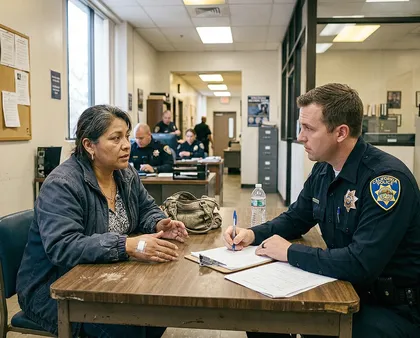
When the driver and pedestrian give different accounts, evidence may help clarify what happened. Signal records, video, witness statements, police reports, and vehicle data may provide information about the signal, each person’s position, and the driver’s ability to react.
- Traffic Signal Records: The city, county, or other agency that maintains the intersection may have signal timing plans, phase information, controller data, or maintenance records. These records may help explain how the pedestrian and vehicle signals operated around the time of the crash.
- Traffic and Red-Light Camera Footage: Some intersections have red-light enforcement cameras, traffic-management cameras, or other public video systems. Available footage may show the signal state, the pedestrian’s position, and the vehicle’s movement through the intersection.
- Dashcam and Private Surveillance Footage: The striking vehicle’s dashcam, nearby vehicles’ dashcams, and business security cameras at the intersection may have captured the collision from different angles. These recordings can show vehicle movement, pedestrian location, visibility, and signal conditions.
- Eyewitness Statements: Bystanders, other drivers who stopped at the intersection, or passengers in nearby vehicles may have observed the signal status, the pedestrian’s position, or the driver’s actions before impact.
- CHP Reports or Local Police Reports: The investigating officer may document observations, diagrams, vehicle positions, witness information, measurements, and citations issued at the scene. These details can help clarify what happened in the crash. However, a citation or an officer’s conclusion alone doesn’t determine civil fault. Eligible parties may request the collision report from the investigating agency.
- Accident Reconstruction: In serious-injury or wrongful-death cases, reconstruction experts may analyze vehicle speed, stopping distance, impact angle, airbag deployment data, and physical damage. This analysis may help evaluate whether the driver had enough time and distance to stop. It can show whether the physical evidence supports either party’s version of events.
- Cell Phone and App Records: If distraction is disputed, phone or app records may help show whether the driver was calling, texting, or using an app around the time of the collision. Access may require a subpoena or other legal process.
Early investigation may help preserve information relevant to a claim. Pedestrian accident lawyers may help gather and review that evidence.
Partial Fault Does Not End Your Claim
California follows pure comparative negligence as established in Li v. Yellow Cab Co., 13 Cal.3d 804 (1975). A pedestrian’s percentage of fault reduces their compensation. But partial responsibility does not automatically bar the claim. This rule applies even when the pedestrian is found more than 50% at fault.
For example, if the pedestrian is 20% responsible and the driver is 80% responsible, $150,000 in damages would be reduced to $120,000. If the percentages reverse, the pedestrian may still recover 20% of the proven damages.
This rule also affects settlement negotiations. An insurer may argue for a higher pedestrian-fault percentage to reduce the amount recoverable. The percentage of fault can affect the amount recovered.
California’s rules on who may be liable when a car hits a pedestrian depend on the facts of the collision.
What to Do If the Driver Blames You for the Crash
If the driver or insurer disputes how the crash happened, evidence about the signal, your position in the crosswalk, the driver’s movements, and your injuries may help support your claim. Knowing what to do after a pedestrian accident can also help you identify and preserve evidence you may need to support your claim.
- Preserve what you already have. Keep photos, videos, witness contact information, medical records, and any documents related to the crash.
- Request the collision report. Review it for details about the signal, vehicle positions, witnesses, and the officer’s observations. A citation or an officer’s conclusion does not, by itself, determine civil fault.
- Be accurate when describing what happened. If you do not remember a detail, avoid guessing. Statements about the signal, your location, or the moments before impact may later be compared with other evidence.
- Keep records of your injuries and treatment. Medical records can help document how the collision affected you if causation or the extent of your injuries is disputed.
- Review settlement documents carefully. If fault or injuries are still being evaluated, consider whether the evidence and your losses are clear before signing a release.
- Consider legal support. A pedestrian accident attorney may help review the available evidence, request additional records, and respond to arguments that you contributed to the crash.
These steps can help create a clearer record of the collision if the driver later disputes fault or the circumstances of the crash.
Get Help With a Disputed Pedestrian Accident Claim
Have questions about your case? Arash Law handles pedestrian accident claims throughout California. Our attorneys can review disputed fault issues and help evaluate your legal options after a crosswalk collision.
Arash Law handles pedestrian accident cases on a contingency-fee basis. Specific terms are discussed at the time of engagement.
Call (888) 488-1391, available 24 hours a day, or complete our “Do I Have A Case?” form for a free case evaluation.
Frequently Asked Questions About Green-Light Pedestrian Accidents in California
These questions address changing pedestrian signals, right turns on red, claims involving injured children, situations where the driver also had a green light, and hit-and-run crashes.
What Compensation May Be Available After a Pedestrian Accident?
A pedestrian accident claim may include compensation for reasonable medical expenses, lost income or earning capacity, pain and suffering, and other proven losses.
California’s comparative-fault rule can directly affect the amount recovered. For example, if total proven damages are $100,000 and the pedestrian is assigned 20% fault, the pedestrian’s recovery would generally be reduced to reflect that share of responsibility.
How Long Do I Have to File a Pedestrian Accident Claim in California?

The deadline depends on who may be responsible. For most personal injury claims against a private party, Code of Civil Procedure § 335.1 generally gives you two years from the date of injury to file a lawsuit.
If a city, county, state agency, or Caltrans may be responsible for a dangerous crosswalk, signal problem, or road condition, Government Code § 911.2 generally requires you to present a written government claim within six months after the claim accrues.
Different rules may apply to minors and other exceptions. Code of Civil Procedure § 352 may toll certain private personal injury claims while the injured person is under 18, but government claims generally follow separate deadlines.
Because the applicable deadline can depend on the defendant and the type of claim, it is important to identify potentially responsible parties early.
What If the WALK Signal Changes While I Am Still Crossing?
You can generally continue to the sidewalk or safety zone if you entered during the WALK signal. Vehicle Code § 21456 also allows a pedestrian to begin crossing during a flashing countdown if enough time remains to finish before it ends.
What If a Driver Hits Me While Making a Right Turn on Red?
Vehicle Code § 21453(b) requires a driver turning right on red to stop and yield to pedestrians lawfully in the crosswalk. If the driver failed to stop or yield, that violation may support a negligence claim. Video footage and witness statements can help establish what happened.
What If My Child Was Hit by a Car in a Crosswalk?
A parent or guardian may pursue a claim on behalf of an injured child. For many private personal injury claims, the filing period may be tolled while the child is under 18. Government claims and other specialized cases can follow different deadlines.
What if the Driver Did Not Get a Ticket?
You may still have a civil injury claim. A traffic citation and a personal injury claim involve different questions. Fault can be evaluated using witness accounts, photographs, video, signal information, vehicle evidence, and other records, even when the driver was not cited.
What If the Driver Leaves the Scene?
Report the hit-and-run to law enforcement and document any information you have about the vehicle or driver. Uninsured motorist coverage may apply if you qualify as an insured under a policy. California also imposes special notice requirements for certain hit-and-run uninsured motorist claims, including a police report within 24 hours and a sworn statement to the insurer within 30 days.
Talk to Arash Law About Your California Pedestrian Accident Claim
If a driver hit you while crossing on a green light or WALK signal and disputes fault, Arash Law can review your case and explain your legal options.
Call (888) 488-1391, available 24 hours a day, for a free case evaluation. We handle pedestrian accident cases on a contingency fee basis. Attorney’s fees depend on the written fee agreement.
Arash Law. Make Them Pay, Call AK.
Sources
- California Legislature, LegInfo — California Vehicle Code § 21950. Drivers must yield to pedestrians in both marked and unmarked crosswalks. Both drivers and pedestrians should also exercise due care. https://leginfo.legislature.ca.gov/faces/codes_displaySection.xhtml?sectionNum=21950.&lawCode=VEH
- California Legislature, LegInfo — California Vehicle Code § 21451. Drivers turning at intersections must yield to pedestrians crossing legally, even when the traffic signals are green. It also applies to pedestrians with a green signal unless a pedestrian control signal says otherwise. https://leginfo.legislature.ca.gov/faces/codes_displaySection.xhtml?sectionNum=21451.&lawCode=VEH.
- California Legislature, LegInfo — California Vehicle Code § 21453. Governs red traffic signals, including right turns on red and the duty to yield to pedestrians. https://leginfo.legislature.ca.gov/faces/codes_displaySection.xhtml?sectionNum=21453.&lawCode=VEH
- California Legislature, LegInfo — California Vehicle Code § 21456. Governs WALK, flashing countdown, and steady DON’T WALK pedestrian control signals. https://leginfo.legislature.ca.gov/faces/codes_displaySection.xhtml?sectionNum=21456.&lawCode=VEH
- California Legislature, LegInfo — AB 2147 (2022), Chapter 957, commonly known as the Freedom to Walk Act. Limits certain pedestrian stops unless there is an immediate danger of collision and preserves pedestrian and driver duties of due care. https://leginfo.legislature.ca.gov/faces/billNavClient.xhtml?bill_id=202120220AB2147
- California Legislature, LegInfo — Code of Civil Procedure § 335.1. Sets a two-year limit for personal injury claims due to someone else’s wrongful act or negligence. https://leginfo.legislature.ca.gov/faces/codes_displaySection.xhtml?sectionNum=335.1.&lawCode=CCP
- California Legislature, LegInfo — Code of Civil Procedure § 352. Tolls certain claims for minors but excludes qualifying public-entity claims from this rule. https://leginfo.legislature.ca.gov/faces/codes_displaySection.xhtml?sectionNum=352.&lawCode=CCP
- California Legislature, LegInfo — Government Code § 911.2. Generally requires personal injury claims subject to the Government Claims Act to be presented to the public entity within six months after the claim accrues. https://leginfo.legislature.ca.gov/faces/codes_displaySection.xhtml?sectionNum=911.2.&lawCode=GOV
- California Legislature, LegInfo — Insurance Code § 11580.2. Covers uninsured and underinsured motorist coverage. It includes rules for reporting and notifying about some hit-and-run claims. https://leginfo.legislature.ca.gov/faces/codes_displaySection.xhtml?sectionNum=11580.2.&lawCode=INS
- California Legislature, LegInfo — Business and Professions Code § 6147. Sets written-agreement requirements for contingency fee arrangements. https://leginfo.legislature.ca.gov/faces/codes_displaySection.xhtml?sectionNum=6147.&lawCode=BPC
- Victor E. Schwartz — “Li v. Yellow Cab Company: A Survey of California Practice under Comparative Negligence,” 7 Pacific Law Journal (1976). Discusses California’s adoption and early application of comparative negligence following Li v. Yellow Cab Co., 13 Cal.3d 804 (1975). https://scholarlycommons.pacific.edu/cgi/viewcontent.cgi?article=2458&context=mlr
Disclaimer
The information on this page is for general educational purposes and does not constitute legal advice. Reading or relying on this content does not create an attorney-client relationship. If you were injured, consult a licensed California personal injury attorney about your specific situation.