TL;DR: When a car hits a pedestrian in California, the driver is usually liable if they were speeding, distracted, or failed to yield. Pedestrians may share partial fault under California’s comparative negligence rule and still recover damages reduced by their percentage of fault. You generally have two years to file a personal injury lawsuit against a private party.
Highlights:
- California drivers must use reasonable care around pedestrians and yield when required by law, but fault depends on the facts of each crash.
- Pedestrians can recover even if partially at fault — California’s pure comparative negligence law reduces damages by your percentage of fault rather than eliminating recovery.
- Employers, government agencies, manufacturers, and property owners may also be liable if their negligence contributed to the crash, potentially expanding available compensation.
- Document the scene with photos, get the driver’s information, obtain a police report, and seek medical care promptly to preserve your claim.
- You typically have two years to file a lawsuit against a private driver, but only six months to file an administrative claim against a government entity.
- Avoid giving recorded statements to the other driver’s insurer before consulting an attorney, as these may be used to dispute liability.
- Traffic cameras, witness statements, and accident reports can challenge an insurer’s attempt to assign you undue fault.
Tip: Preserve evidence immediately by photographing the scene and gathering witness contact information, since surveillance footage may be overwritten and witness memories can fade over time.
Table of Contents
The driver is usually at fault for hitting a pedestrian in California if speeding, distraction, failure to yield, or another unsafe act caused the crash. However, legal responsibility, or liability, is not always that simple. Pedestrians can sometimes share fault. Employers, property owners, or government agencies can also be responsible in certain cases.
Fault often comes down to negligence. That means looking at who failed to act with reasonable care and how that failure caused the crash. Determining who is liable depends on the specific facts of a case.
Driver Liability In California Pedestrian Accidents
To establish a negligent driver’s liability, you generally must show that the driver owed you a duty, breached that duty, and caused you actual harm.
Because vehicles can seriously harm pedestrians, drivers must use reasonable care and follow California’s pedestrian right-of-way laws. A driver’s liability depends on the traffic laws, each party’s conduct, and the evidence showing what caused the crash.
Some common ways drivers breach this duty of care include:
- Distracted Driving: Using a cell phone or touchscreen while driving. At 55 mph, a vehicle travels about 403 feet in five seconds, which is farther than the full 360-foot length of a football field.
- Speeding: Going faster than road conditions allow. Drivers must slow down when conditions require it, even if they are traveling below the posted speed limit.
- Failure to Yield During Turns: A driver making a left or right turn may fail to see a pedestrian who is already in the crosswalk.
California Vehicle Code § 21950 requires drivers to yield to pedestrians in both marked and unmarked crosswalks. California law recognizes some unmarked crosswalks at intersections even when no lines are painted on the road. The lack of painted lines does not, by itself, remove a driver’s duty to yield to pedestrians.
Despite California’s pedestrian safety laws, pedestrian crashes remain a serious concern. According to UC Berkeley SafeTREC, 1,106 pedestrians were killed in motor vehicle accidents in California in 2023, accounting for 27% of all motor vehicle fatalities in the state that year.
Note: UC Berkeley SafeTREC data reflects the most recent finalized data available at publication and may be revised as SafeTREC updates its reporting; year-to-year fatality counts can fluctuate as new crash data is confirmed.
Can A Pedestrian Share Fault For An Accident?
In some cases, yes. If you were crossing outside a crosswalk or looking at your phone when a driver hit you, the other party may use that against you. Sharing fault does not end your case. California law may still allow you to seek compensation in a pedestrian accident claim.
California follows pure comparative negligence under Li v. Yellow Cab Co., with Civil Code § 1714 supplying the state’s general duty-of-care rule. It reduces your compensation by your share of fault — it does not cut off your right to recover. So if a court finds you 20% at fault, you can still pursue 80% of your total damages (the monetary value of your losses).
Insurers often point to specific traffic laws to support a fault argument:
- California Vehicle Code § 21954 requires a pedestrian crossing outside a marked or unmarked crosswalk to yield to vehicles that are close enough to create an immediate hazard.
- The Freedom to Walk Act (AB 2147) states that an officer generally may not stop a pedestrian for certain crossing violations unless a reasonably careful person would see an immediate risk of a collision. However, it does not change civil right-of-way rules or prevent insurers from arguing the crossing was dangerous.
These laws don’t automatically mean the crash was your fault. It just means insurers may try to use these arguments if you’re an injured pedestrian, and strong evidence can support your claim.
Insurers may also review the pedestrian’s actions when deciding fault and the value of a claim. Common issues they may consider include:
- Distracted Walking: Claiming you were on your phone or wearing headphones and missed oncoming traffic.
- Sudden Movement Into Traffic: Arguing you stepped off the curb without warning, giving the driver no time to react.
- Ignoring Pedestrian Signals: Alleging you crossed against a walk signal or before it was safe to go.
These factors may affect how fault is evaluated and should be considered together with all available evidence. Pedestrian accident lawyers can review the insurer’s position and gather evidence of the driver’s conduct. These include traffic camera footage, witness statements, and accident reports.
Can Anyone Else Be Held Liable In A Pedestrian Accident?
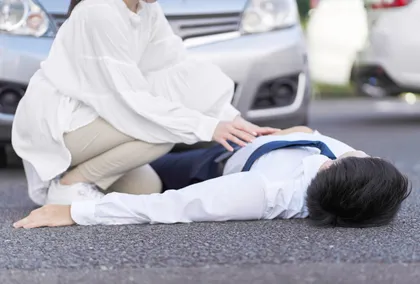
While the driver is the most obvious at-fault party, they are not always the only one. Employers, companies, and other parties may also be legally responsible if they contributed to the crash.
Liability may extend to other parties beyond the driver:
- Employer and Trucking Company Liability: If the driver was on the job at the time of the crash, the employer could be liable under the legal principle of respondeat superior. Under this rule, the employer is responsible if the driver was doing their job. For instance, a trucking company might also face liability for:
- Unsafe hiring practices
- Inadequate training
- Poor supervision
- Failure to maintain the truck
Commercial policies may offer more coverage than personal auto policies, but limits depend on the vehicle and specific terms.
- Vehicle or Parts Manufacturer: A manufacturer could be liable if a defect in the vehicle, part, or automated system caused the crash. These include issues like faulty brakes, steering defects, or sensor failures.
- Rideshare or Delivery Company: Rideshare or delivery companies may share liability based on the driver’s employment status, the level of control the company has, and the insurance in place at the time.
- Repair or Maintenance Shop: A mechanic or repair shop may be liable if their careless work caused the vehicle failure. This includes poor brake repairs or failing to address known safety issues.
- Road Contractor or Utility Company: A construction company, traffic-control contractor, or utility provider may share liability if its unsafe work practices contributed to the accident. Examples may include:
- Blocked signs
- Misplaced barriers
- Poor traffic control
- Inadequate warnings
- Debris left in the roadway.
- Government Liability: A public entity can be liable for a dangerous road condition. The claimant must prove specific elements from California Government Code § 835. This includes showing causation and that the entity created or knew about the hazard.
- Property Owner Liability: Property owners must keep their spaces safe. A parking-lot or garage owner can be liable if an unsafe condition they control, such as poor lighting or blocked views, caused the crash.
When another party is legally responsible, their insurance or assets can provide a means of recovery. Their policies can expand the ways you can be paid for your injuries. This goes beyond just the driver’s personal auto plan.
Cases with multiple liable parties are often complex. Some victims seek free advice from a pedestrian accident lawyer to understand their options. An attorney can help identify other potentially liable parties.
What Compensation Can You Recover?
If you were hurt as a pedestrian, you may seek economic and non-economic compensatory damages. In limited cases, punitive damages may also be available. To recover any of these, you must act before California’s filing deadlines expire.
- Economic Damages: These cover measurable financial losses. Examples include emergency medical bills, future rehabilitation, lost wages, and lost earning capacity.
- Non-Economic Damages: These cover losses that are difficult to measure, such as pain and suffering, loss of enjoyment of life, and emotional distress.
- Punitive Damages: These are meant to punish the wrongdoer, not to compensate the victim. Punitive damages are rarely awarded. Under Civil Code § 3294, punitive damages may be available when clear and convincing evidence shows malice, oppression, or fraud; some impaired-driving conduct may meet that standard.
How Long Do You Have To File A Lawsuit?
California law sets firm deadlines, and not knowing the deadline usually does not extend it. California Code of Civil Procedure (CCP) § 335.1 sets this deadline. You generally have two years from the accident date to file a personal injury lawsuit against a private driver or company.
If the injured pedestrian is under 18, California Code of Civil Procedure § 352 usually pauses (tolls) the two-year deadline until the child turns 18 — giving them until their 20th birthday to file. However, a parent or guardian doesn’t have to wait. They can file a lawsuit on the child’s behalf at any point before that tolling period ends.
Missing an applicable deadline can bar your claim, although limited tolling rules or other exceptions may apply.
A crash involving a negligent public employee or a qualifying dangerous condition of public property may trigger a government claim. Under Government Code § 911.2, you must file an administrative claim within six months of the accident. This claim is a formal written notice you send to the responsible government agency to request compensation.
Surveillance footage may be overwritten, and witnesses may become harder to locate or may remember fewer details over time. That’s why acting promptly may strengthen your claim. Knowing your deadline is one thing, but taking action now to document what happened and speaking with an attorney can keep your options open.
What To Do After Being Hit By A Car As A Pedestrian
Prioritize your health and document the scene. The steps you take after a pedestrian accident can affect both your recovery and any potential legal claim.
- Seek medical care right away. Stress following a crash can temporarily affect how you perceive pain, and some injuries may not become apparent right away. See a doctor as soon as you can. A prompt visit creates a medical record that can help link your injuries to the crash. If you need extended treatment, such as physical therapy or chiropractic care, follow your plan. This action helps your recovery and documents your injuries.
- Get an official report. A police report may identify the driver and document witness statements, citations, diagrams, officer observations, and other early crash details. Ask the agency that investigated the crash for a copy. Depending on where the collision occurred, that agency may be the California Highway Patrol (CHP), a local police department, or a county sheriff’s department.
- Gather evidence. Collect the driver’s name, contact details, and insurance information. If you’re unable to, ask a trusted person nearby to help. They can gather information and take photos of the scene and your injuries.
- Avoid providing recorded statements. An insurer may compare a recorded statement with later evidence and use inconsistencies to dispute fault or damages. However, continue to cooperate with law enforcement by answering questions truthfully and following any lawful instructions.
Many people find themselves thinking, “I need a personal injury lawyer,” after experiencing circumstances like these. A pedestrian accident attorney can review your options at no cost before you give any statement. Early legal guidance can help you identify available claims and the evidence needed to evaluate potential damages.
Frequently Asked Questions About Pedestrian Accidents
A pedestrian crash leaves you with more than physical injuries. It raises urgent questions about insurance, fault, and whether you need legal help. Knowing what steps to take and what to avoid can protect both your health and your right to fair compensation.
How Is Fault Determined If Multiple Parties Are Involved?
Investigators review police reports, cameras, witness accounts, and phone records to piece together what happened. Insurers, the parties, or a court may allocate fault percentages based on the evidence. That percentage determines how much money you may be able to recover.
What Happens If The Driver Who Hit Me Fled The Scene Or Has No Insurance?
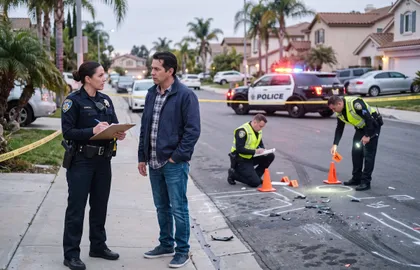
If the driver fled the scene or has no insurance, your own uninsured motorist (UM) coverage may cover your injuries as a pedestrian. California Vehicle Code § 20001 makes fleeing an injury or fatal crash a crime, and police investigation of a hit-and-run can turn up footage or witnesses to support your claim.
How Do I Pay My Medical Bills While My Claim Is Pending?
You do not need to wait for a settlement to get treatment. Health insurance, MedPay (if you carry it), or a letter of protection from a medical provider can cover care in the meantime. In some cases, a hospital or health insurer may place a lien on your eventual settlement to recoup what they paid. A pedestrian accident attorney can help negotiate liens down before disbursing your settlement, so more of the recovery reaches you.
Do Lawyers Only Get Paid If They Win A Pedestrian Accident Case?
Some lawyers do. Many personal injury attorneys in California work on a contingency fee basis. This means no upfront costs and no attorney’s fees unless they recover money for you. A lawyer can explain this fee arrangement during your consultation.
Should I Give A Recorded Statement To The Driver’s Insurance Company?
It is generally best to avoid giving a recorded statement to the other driver’s insurer before you speak with an attorney. Politely tell them to direct questions to your lawyer. Statements made without legal guidance may be used to reduce your claim.
What Happens If I Get Struck By A Car While Working?
If you were hit by a car while performing job duties (making a delivery, walking between work sites, or running an errand for your employer), you are generally entitled to workers’ compensation benefits regardless of who caused the crash.
You may also have the option of filing a third-party personal injury lawsuit against that negligent driver. While workers’ comp covers basic medical bills and partial lost wages, a third-party personal injury claim allows you to recover full lost wages and non-economic damages like pain and suffering.
What If A Pedestrian Accident Results In A Fatal Injury?
If a pedestrian accident results in a fatality, surviving family members may hold the at-fault driver or responsible parties accountable through a wrongful death lawsuit under California Code of Civil Procedure § 377.60.
In California, a victim’s surviving spouse, domestic partner, children, or dependent parents have the right to seek compensation. Available damages in a pedestrian wrongful death claim include:
- Funeral and burial expenses.
- Loss of financial support and future income that the deceased would have provided.
- Loss of love, companionship, comfort, and guidance.
Family members generally have two years from the date of the victim’s passing to file a wrongful death claim.
Arash Law’s Pedestrian Accident Case Results
Arash Law has represented pedestrian accident victims across California in cases involving driver negligence, comparative fault disputes, and third-party liability — the same issues covered in this article. The results below reflect a sample of the firm’s past pedestrian accident cases.
Note: Outcomes depend on the unique facts of each case, and past results do not guarantee similar results in any future case.
- $12,000,000 — Auto vs. Pedestrian Recovery
A 74-year-old client was violently struck while crossing the street, sustaining severe injuries that required extensive medical care. The case settled on the courthouse steps just as jury selection was set to begin. - $2,000,000 — Pedestrian Accident Recovery
A client was cited by police as the at-fault party after jaywalking at night. Despite the unfavorable police report, the firm recovered $2 million on the client’s behalf. - $1,750,000 — Auto vs. Pedestrian Recovery
A client was hit by an uninsured driver at a hazardous intersection. With limited recovery options against the driver, the firm pursued a claim against the city, uncovering a history of prior accidents at that location to support the case.
Contact Arash Law After A Pedestrian Accident In California
California law gives pedestrian accident victims two years to file a personal injury case, and your evidence is strongest early on. Arash Law takes pedestrian accident cases across California with no upfront costs. AK Law’s pedestrian accident lawyers work on a contingency fee basis, meaning you don’t pay attorney’s fees unless we win compensation for you.
Call (888) 488-1391 to schedule a free initial consultation. Tell us what happened, and our team will carefully review your case.