TL;DR: A cyclist who hits another cyclist can be held personally liable under California negligence law. Compensation may be available through the at-fault cyclist’s homeowners or renters insurance if the policy covers the incident, while auto insurance generally does not cover collisions involving only bicycles. You have 2 years from the crash date to file a personal injury lawsuit, but missing this deadline bars recovery entirely, even if the at-fault cyclist caused clear harm.
Highlights:
- File a written report within 24 hours if the crash results in injury or death.
- Collect the at-fault cyclist’s name, contact details, and homeowner’s or renter’s insurance information at the scene.
- Document everything with photos of both bikes, your injuries, the location, and the names and phone numbers of witnesses.
- Seek medical care right away to create a medical record linking your injuries directly to the crash.
- Understand that California’s comparative negligence rule lets you recover even if you share some fault, though your percentage of blame reduces your award.
- File a personal injury lawsuit within two years of the crash, or an administrative claim within six months if a government-maintained road or path was involved.
- Talk to a bicycle accident attorney before speaking with any insurance company about the crash.
Tip: Preserve clear facts about how the crash happened through photos, witness statements, and your own written account, because insurance adjusters will try to shift more blame onto you to reduce their payout.
Table of Contents
If a cyclist hits another cyclist, they may be held liable for the resulting injuries and losses. Most California bike-on-bike injury claims are evaluated under the principles of negligence. Applicable traffic statutes, the crash location, available defenses, and the insurance policy can also affect the outcome.
Compensation in these cases generally does not come from auto insurance. The at-fault cyclist’s homeowners or renters insurance may provide personal liability coverage if the cyclist is insured and the policy covers the crash. Coverage depends on the policy’s definitions, exclusions, limits, and endorsements. If no applicable insurance or other responsible party exists, the injured person may need to pursue the cyclist’s personal assets.
When a cyclist is involved in an accident that injures someone else, it’s important to understand how liability works.
Establish Fault And Determine Liability
If another cyclist’s careless riding injured you, they can be held legally liable for the harm they caused, just like any other at-fault road user. To have a valid claim against another cyclist in California, you generally must prove the four elements of negligence:
- Duty of Care: The defendant has a legal obligation to exercise reasonable caution. Under CVC §21200, a person riding a bicycle on a highway generally has the rights and duties of a vehicle driver. DMV guidance for bicyclists specifically notes that riders must obey traffic signals, use bike lanes where available, and follow specific steps when making left turns using traffic lanes or crosswalks.
-
Breach of Duty: The defendant failed to meet that obligation. Running a stop sign, riding against traffic where prohibited, or cycling under the influence may constitute a breach of the duty of care. A statutory violation may also support a rebuttable presumption of negligence when the requirements of Evidence Code § 669 are satisfied, including causation and the statute’s protected-harm requirements.
Notably, if the at-fault cyclist was intoxicated, you do not need to wait for a criminal conviction to pursue your civil injury claim; civil filing deadlines operate independently from criminal proceedings.
- Causation: The breach directly caused your injuries.
- Damage: You suffered legally recognized, quantifiable harm. This typically includes physical injuries, property damage, medical bills, lost wages, and pain and suffering, all of which can be compensated monetarily. Without actual, quantifiable harm, there is no claim for negligence, even if the other three elements are clearly met.
Bicycle accident lawyers can help you determine potentially liable parties and what compensation is available for your case.
Check Whether Another Party Shares Liability
The cyclist may not be the only potentially liable party. An employer or principal may share liability if the cyclist caused the crash while making a delivery or otherwise carrying out work or agency duties. A public entity may also be liable if a dangerous condition of a public road or path contributed to the collision and the required statutory elements are met. The fact that a crash occurred on government-maintained property does not, by itself, establish public-entity liability.
Identify Potential Sources Of Compensation: Insurance And Personal Assets
Standard personal auto liability insurance generally does not cover a cyclist’s liability for causing a bicycle-on-bicycle collision. California law defines a bicycle separately and defines a motor vehicle as a self-propelled vehicle. However, insurance coverage ultimately depends on the language, definitions, exclusions, and endorsements in the particular policy.
| Insurance Type | When It Applies | Key Limitation |
|---|---|---|
| Homeowners / Renters Insurance | May cover the at-fault cyclist’s liability for another person’s bodily injuries or property damage. | Coverage depends on the policy’s terms and exclusions. It generally does not cover the insured cyclist’s own injuries. |
| Health Insurance | May pay for covered medical treatment received by either injured cyclist, regardless of fault. | Subject to deductibles, copayments, coverage limits, and possible subrogation claims. |
| Auto Insurance | Generally, it does not cover liability arising from a collision involving only bicycles. Certain coverages may apply when a motor vehicle is involved, depending on the policy and circumstances. | Generally, it does not cover liability arising from a collision involving only bicycles. Certain coverages may apply when a motor vehicle is involved, depending on the policy and circumstances. |
| Personal Liability Umbrella Insurance | May provide additional liability coverage when a covered claim exceeds the applicable underlying homeowners, renters, or other liability limits. | It usually requires the insured to maintain specified underlying coverage and generally applies only after the required underlying limits or retained amount have been satisfied. |
When no applicable liability insurance exists, the injured person may pursue a claim directly against the at-fault cyclist.
Obtaining a judgment does not guarantee full payment. Collection may depend on whether the cyclist has wages, bank funds, real property, or other nonexempt assets. California judgment exemptions, bankruptcy protections, and a lack of collectible income or property can limit the amount actually recovered.
Understand How Shared Fault Affects Your Recovery In California
California follows a pure comparative negligence rule, established by the California Supreme Court in Li v. Yellow Cab Co. (1975) and grounded in the general duty of care under Civil Code § 1714. That means you may still be able to recover compensation even if you were partly responsible for the crash. Partial fault does not automatically bar recovery in California. Instead, damages are reduced in proportion to the injured person’s share of fault. A claimant found 100% responsible for the crash would recover nothing.
If a court determines an injured party sustained $100,000 in losses and was 30% at fault, their award would be reduced to $70,000.
California requires bicycle helmets for riders under 18 but does not impose a statewide helmet mandate on adult bicyclists. In an adult head-injury case, a defendant or their insurer may try to argue that helmet nonuse affected injury severity. Photos, witness information, notes, and preserved equipment can help support your account.
Immediate Steps To Protect Your Claim After A Crash
Taking certain steps after a bike-on-bike crash can help preserve evidence and protect your ability to seek compensation. They apply even if you have already left the scene.
- Make Any Required Written Report: If the collision occurred while you were riding on a highway and resulted in injury or death, California law generally requires the cyclist to make or arrange for a written report within 24 hours. Submit the report to the California Highway Patrol or, if the crash occurred within a city, either the CHP or the city police department.
- Preserve Physical And Digital Evidence: Keep the bicycle, helmet, damaged clothing, lights, cameras, and other equipment in their post-crash condition. Save GPS records, fitness-app data, route histories, messages, and photos. Ask nearby businesses, homeowners, or public agencies to preserve available video before it is deleted or overwritten.
- Get the Other Cyclist’s Information: Ask for their name, phone number, home address, and homeowner’s or renter’s insurance details.
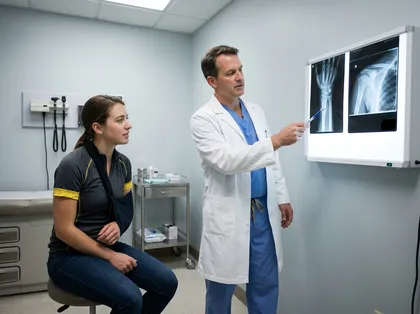
- Get Medical Care: See a doctor, go to an emergency room, or visit a chiropractor as soon as you can. Your medical records tie your injuries to the crash and can help in building your claim.
-
Talk to a Lawyer Before Talking to Insurers: If you are thinking, “I need a personal injury lawyer,” that instinct is worth acting on. A bicycle accident attorney can help you understand what to do after a bicycle accident and your legal options.
Our bicycle accident lawyers at Arash Law are dedicated to advocating for clients who have suffered serious injuries in accidents. Below are several successful case outcomes that reflect our commitment to justice.
- $3,500,000 — We secured a $3.5 million settlement for a 6-year-old boy who suffered a traumatic brain injury after being hit by a pickup truck while riding his bicycle. Despite the driver trying to blame the boy for riding in the street, we highlighted the driver’s distraction during the incident.
- $10,000,000 — Our client received $10 million after being seriously injured by a speeding vehicle. We not only secured a significant financial settlement but also ensured he received top-notch medical care to support his recovery.
- $5,000,000 — Initially, we faced challenges as our motorcycle client was deemed at fault for the accident and was uninsured. However, we successfully demonstrated that the truck driver acted dangerously, leading to a $5 million settlement.
Disclaimer: These case results do not guarantee or predict future outcomes in legal matters. The outcome of a case depends on the circumstances surrounding it.
Recoverable Damages And Important Filing Deadlines
Compensatory damages generally fall into two categories:
- Economic Damages: These are losses with a clear dollar amount. They include medical bills, the cost of fixing or replacing your bike, and wages you lost while you healed.
- Non-Economic Damages: These cover harm that is harder to quantify. Emotional distress and pain & suffering fall into this category. So does loss of enjoyment of life, such as cycling or other activities you can no longer pursue.
Under California Code of Civil Procedure (CCP) §335.1, you have two years from the crash date to file a lawsuit. If the facts support a claim against a California public entity, such as a properly supported dangerous-condition claim involving a public road or path, the injured person generally must present an administrative claim within six months after the claim accrues.
This claim-presentation requirement is separate from the later deadline to file a lawsuit, which is generally six months after a compliant written rejection. Limited late-claim procedures may be available in some cases, but they have additional deadlines and requirements.
California generally pauses the ordinary personal injury limitations period while the injured person is under 18. However, this tolling rule does not apply to claims against public entities or public employees that require presentation of a government claim. Families should not assume that every deadline waits until the child turns 18.
What If The Bicycle Collision Causes A Death?
If an injured cyclist dies because of the collision, certain people identified under California law may pursue a wrongful death claim for losses they personally suffer because of the death. Not every relative automatically qualifies.
A separate survival action may allow the decedent’s personal representative or successor in interest to pursue eligible losses the injured cyclist sustained before death. Wrongful death and survival actions are distinct claims, although they may arise from the same collision. The usual two-year limitations period and any applicable public-entity claim deadlines should be evaluated promptly.
CCP §377.60 identifies the people who may assert a wrongful death claim. CCP §377.34 governs damages available through a decedent’s survival action, while CCP §335.1 generally establishes a two-year period for injury or death caused by another’s wrongful act or neglect.
Frequently Asked Questions

Being hit by another cyclist can raise many questions about what to do next. These responses cover the most common concerns: insurance gaps, minors, and attorney fees. Each answer stands on its own, so you can go straight to what applies to you.
Do Bicycle Owners Have To Have Insurance In California?
No. California does not require cyclists to carry a dedicated bicycle insurance policy. If another cyclist is at fault, their homeowners or renters insurance may cover the claim through its personal liability provisions. Whether coverage applies depends on the cyclist’s insured status and the policy’s terms, limits, and exclusions.
What If The Other Cyclist Was A Child?
A minor’s conduct is generally measured against the care ordinarily expected from children of similar age, intelligence, maturity, and experience under similar circumstances. California treats children under five as incapable of negligence as a matter of law. A parent is not automatically liable for a child’s ordinary cycling negligence, although liability may arise from the parent’s own negligent supervision. Civil Code § 1714.1 also imposes limited, statutorily capped liability for a minor’s willful misconduct under specified circumstances.
What If The Cyclist Who Hit Me Has No Insurance?
You will likely have to rely on your own health insurance to cover medical bills, or pursue the cyclist’s personal assets through civil or small-claims court. Because standard auto uninsured motorist (UM) coverage strictly requires the at-fault party to be driving a motor vehicle, it will not cover a bike-on-bike crash.
Do Lawyers Only Get Paid If They Win?
In most personal injury cases, attorneys work on a contingency fee basis. You pay nothing up front, and you only owe a fee if your case ends in a settlement or court award. If there is no recovery, you owe nothing.
Reach Out For Legal Help In Your Bike Accident Claim
Bicycle accident cases can involve many parties, multiple insurance policies, and evidence that fades fast. If you were hurt on a California road, you need a legal team that knows these claims. They can help find all liable parties and identify coverage that may apply to your case.
Arash Law regularly handles complex bicycle accident cases, including those with multiple at-fault parties and hard-to-find insurance policies. At AK Law, we dig into every layer of a claim to find all available coverage and build a strong case on your behalf.
Call us for a free consultation at (888) 488-1391. If you contact us, we can review what happened and explain your legal options in plain language. We can evaluate the factors that may affect the potential value of your claim and explain the categories of compensation California law may permit.
We offer our services to injured cyclists throughout California, including Sacramento, Stanislaus, Alameda, Contra Costa, Santa Clara, Calaveras, Amador, and San Joaquin. If you’ve been involved in a bicycle accident in Stockton, our Stockton bicycle accident lawyers can help you navigate the legal process and help you pursue the available compensation under California law.