
TL;DR: Homeowners insurance may cover guest slip-and-fall injuries through Medical Payments (MedPay) for minor medical expenses, as well as liability coverage if the homeowner is found negligent. Evidence like photos or witness statements can help establish the hazard and the homeowner’s awareness of it.
Key Facts
- The California Department of Insurance warns that homeowners policies differ, may contain limitations and exclusions, and may change, so the actual policy controls what coverage is available.
- Code of Civil Procedure § 335.1 generally gives you two years from the date of your injury to file an injury lawsuit in California.
- Government Code § 911.2 imposes a six-month written claim requirement for claims involving government property.
- California Supreme Court case Li v. Yellow Cab Co. (1975) 13 Cal. 3d 804 established California’s pure comparative negligence rule, meaning your recovery can be reduced by your percentage of fault.
- California Civil Jury Instructions are cited for premises liability standards, including the requirement that the person who owns, leases, or controls the property must keep it reasonably safe and address hazards they knew about or should have discovered.
- Arash Law reports a $3,000,000 slip and fall spine injury settlement in November 2021 in which video evidence played a crucial role.
Table of Contents
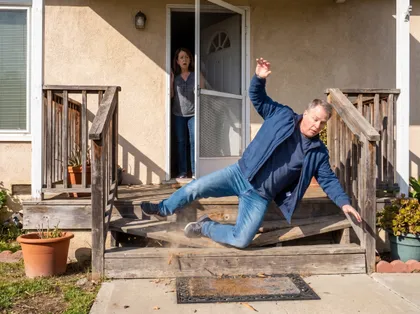
Standard homeowners insurance policies cover slip-and-fall injuries sustained by guests and visitors. Homeowners insurance can help cover claims when visitors are injured on the property due to unsafe conditions. Coverage is not automatic, though. It depends on the policy, how the fall happened, who was injured, and whether the homeowner may be legally responsible.
Most standard homeowners insurance policies include medical payments coverage, sometimes shortened to “med pay,” which may help with modest medical costs regardless of who was at fault.
Most standard homeowners policies also include personal liability coverage. It typically pays for a visitor’s medical bills, lost income, and pain & suffering if the homeowner is found responsible for the fall. Personal liability coverage applies if the homeowner was negligent, meaning they failed to keep the property safe.
What Parts Of Homeowners Insurance May Cover A Slip-And-Fall?
Most homeowners policies include two types of coverage that can apply when a visitor gets hurt on someone’s property. Medical payments coverage and personal liability coverage work very differently. Knowing which one applies affects what you may be able to recover.
Personal Liability Coverage
Personal liability coverage is usually the most important part of a homeowners policy when a visitor suffers a serious slip-and-fall injury.
If the homeowner is legally responsible and the claim is covered, liability insurance may apply to damages caused by the injury, subject to the policy terms and limits. Depending on the facts, damages in a personal injury claim may include:
- Medical expenses
- Lost income
- Pain and suffering
- Other losses caused by the injury
A homeowners policy may also require the insurance company to defend the homeowner against a covered lawsuit. The exact duty to defend and pay damages depends on the policy language.
Invited guests, visitors, delivery workers, contractors, tenants, roommates, and others may potentially pursue liability claims, but coverage depends on the circumstances and policy terms.
Medical Payments To Others (MedPay)

Medical Payments Coverage, commonly known as MedPay, may pay reasonable or necessary medical expenses resulting from a covered accident, subject to the policy’s limits, timing requirements, and exclusions.
For example, a guest who slips on a wet entryway and needs medical treatment may be able to seek medical payments benefits without first proving the homeowner was negligent. California law recognizes medical payments coverage that can pay certain expenses regardless of whether the insured is legally responsible.
Payment under this coverage does not mean the homeowner has admitted fault. Medical payments coverage should not be confused with full personal liability coverage. The policy will determine:
- Who qualifies for benefits
- Which medical expenses qualify
- How much coverage is available
- When expenses must be incurred or submitted
- What exclusions apply
The California Department of Insurance warns that policies differ, contain limitations and exclusions, and may change. The actual policy determines the available coverage.
What Homeowners Insurance Typically Does Not Cover
Insurance companies review claims carefully and may deny coverage under certain specific circumstances.
Injuries To The Homeowner Or Household Members
Personal liability coverage is designed to protect an insured from claims made by others, not to compensate an insured for their own bodily injuries. MedPay also generally does not cover the policyholder’s injuries or injuries of people who reside in the household. A homeowner who falls in their own home would usually need to rely on their health insurance instead.
Intentional Harm
If a policy contains an exclusion for injuries expected or intended by an insured, that exclusion may affect coverage.
Business-Related Injuries
If the fall happened in connection with a business run out of the home, such as a daycare or a short-term rental, a standard homeowners policy may exclude the claim, and a separate business policy could be required.
A standard owner-occupied homeowners policy may not provide the same coverage as insurance designed for a rental property. If the residence is rented to tenants, landlord or other rental-property insurance may need to be reviewed.
Certain High-Risk Features
Some homeowners policies restrict or exclude liability coverage for certain higher-risk features, such as trampolines, or require specific safety precautions before coverage applies. These restrictions vary by insurer and policy. Homeowners should review the actual policy for any feature-specific exclusions or conditions.
Trespassing In Some Circumstances
Trespassers generally do not qualify for MedPay when the policy requires that the person be on the property with permission. Personal liability is a separate question. California does not categorically eliminate a property owner’s potential duty merely because the injured person was a trespasser. Liability depends on the circumstances and applicable law.
The Claim Exceeds The Policy Limit
If a covered claim exceeds the available homeowners liability limit, the homeowners policy may not be enough to pay the entire claim. Other insurance, such as an umbrella liability policy, may sometimes provide additional coverage.
Because policies differ, a coverage exclusion should not be assumed without reading the actual contract.
When Is A California Homeowner Responsible For A Slip-And-Fall?
A homeowner is not automatically responsible simply because someone fell on the property.
Under California law, people generally have a duty to use ordinary care in managing their property. A person may be responsible for an injury caused by failing to exercise that level of care. The law also recognizes that the injured person’s own conduct can affect responsibility.
California Civil Jury Instructions address the legal standards that may apply to premises liability and dangerous property conditions.
- The person who owns, leases, or controls the home is responsible for keeping it reasonably safe.
- There was a hazard on the property, like an icy walkway, a loose rug, or an unattended spill.
- The owner was aware of the hazard, or a careful owner would have found it.
- The owner failed to fix the hazard or warn you, and that failure caused your injury.
To have a valid claim, an injured person typically needs to establish four things:
- The homeowner owed the injured person a duty of reasonable care under the circumstances.
- The homeowner breached that duty, for example, by ignoring a broken step or a slippery walkway.
- That breach was a substantial factor in causing the fall.
- The fall resulted in real damages, such as medical bills or lost wages.
If someone simply loses their footing without any unsafe condition, there may be no basis for a negligence-based personal liability claim. However, Medical Payments to Others coverage may still apply, depending on the policy. On the other hand, hazards such as a cracked walkway, a loose handrail, poor lighting on stairs, or an unaddressed spill can support a negligence claim.
Insurance adjusters often look closely at what actually caused the fall, since the cause can affect whether the homeowner had notice of the hazard. The more clearly the hazard can be linked to a condition the homeowner knew about or failed to address, the stronger the basis for a liability claim may be.
A slip and fall lawyer can help you gather the evidence needed to support your claim.
What Should You Do After A Slip-And-Fall Accident In Someone’s Home?
Knowing what to do after a slip-and-fall at someone’s home can shape your entire case. Acting quickly matters because evidence can disappear, and insurers will look for reasons to reduce your payout.
Take these steps as soon as you can:
- Seek Medical Care Right Away: Go to an emergency room, see your doctor, or visit a chiropractor. Do not wait to see if the pain goes away on its own. A medical record created shortly after the accident connects your injuries to the fall.
- Document the Scene: Photograph the exact hazard that caused your fall, such as a puddle, broken step, or torn rug, before it is cleaned up or repaired. A time-stamped photo makes it harder for anyone to dispute when the condition existed.
- Gather Witness Information: Record the names and phone numbers of anyone who saw the fall or noticed the hazard beforehand. Ask the homeowner if they have a doorbell or surveillance camera that may have captured the incident.
- Report the Fall to the Insurer Promptly: Ask the homeowner to notify their insurer immediately after the incident. Delayed notice can complicate a claim, although California law may limit an insurer’s ability to deny coverage based only on late notice.
- Do Not Give a Recorded Statement: Tell the adjuster you will not provide a statement until you have spoken with a lawyer.
The lawyers at Arash Law are experienced in how insurance companies handle these claims and can discuss how they may help you protect your rights. We handle various types of personal injury cases, including premises liability and slip-and-fall claims.
- $3,000,000 — In November 2021, a slip and fall incident resulted in a spine injury settlement of $3 million. A video evidence played a crucial role in achieving justice for our client.
- $1,500,000 — An unlicensed contractor lost three fingers when he lost control of a sanding tool that he was directed to use. This case concluded with a settlement of $1.5 million.
Disclaimer: Past case results do not guarantee or predict the same outcomes in future cases. Each case’s outcome depends on the surrounding circumstances.
Frequently Asked Questions About Homeowners Insurance And Slip-and-falls
Filing an insurance claim after a slip-and-fall at a friend’s or neighbor’s home can feel uncomfortable and confusing.
You may not know what the insurance covers, how fault is decided, or how long you have to act.
These answers cover the most common questions about fault, deadlines, and what to expect when you file a claim.
What If I Was Partially At Fault For My Own Injury?
California follows pure comparative negligence, a rule established by the California Supreme Court in Li v. Yellow Cab Co. (1975) 13 Cal. 3d 804. This means you may still be able to recover compensation, depending on the situation, even if you shared some blame. Your percentage of fault reduces your total payout. For example, if you were 45% at fault, any compensation you may recover would be reduced to 55% of the total amount.
How Long Do I Have To File A Slip And Fall Claim In California?
Under Code of Civil Procedure § 335.1, you generally have two years from the date of your injury to file an injury lawsuit. If you miss this deadline, you permanently lose the right to seek compensation. Different rules apply for government property, including the six-month written claim requirement under Government Code § 911.2, as well as for minors and other specialized claims.
That does not mean it is wise to wait until the end of the deadline period to act.
Over time:
- Property conditions may change.
- Surveillance footage may be deleted.
- Witnesses may become harder to find.
- Records may be lost.
- Memories may fade.
For that reason, an injured person should keep track of the legal deadline even while an insurance claim is under investigation or negotiation.
Do Lawyers Only Get Paid If They Win?
In cases where personal injury lawyers work on a contingency fee basis, attorney fees generally depend on obtaining a recovery. Clients should review the fee agreement separately to determine how litigation costs and expenses are handled, including whether any costs could be owed if there is no recovery.
What Happens If The Homeowner Has No Insurance Or Not Enough Coverage?
Not every homeowner carries insurance, and not every policy has high enough limits to cover a serious injury. In these situations, an injured person may need to:
- File a claim against the homeowner’s personal assets.
- Check whether the homeowner has an umbrella policy, which adds extra liability protection beyond a standard homeowners policy.
- Explore whether other insurance, such as a renter’s or business policy, may also apply.
These situations tend to be more complicated, since recovering money outside of insurance can depend on the homeowner’s actual assets.
Contact Arash Law About Your Slip-And-Fall Accident Today
If you slipped and fell at someone else’s home, you may have a claim against their homeowners insurance. These companies have adjusters and lawyers who protect their own interests. Reaching out to our team costs nothing and could give you a clear picture of your options.
Our attorneys can assess your situation and walk you through your legal options. We work on a contingency fee basis. That means you pay no attorney fees unless you win.
Call (888) 488-1391 to schedule your free case review.