TL;DR: In California, lying about an accident can hurt your credibility and lead an insurer to dispute or deny your injury claim. An honest mistake does not automatically mean you lose compensation. If the other driver lies, photos, witness accounts, and medical records can help support your claim. Correct genuine errors promptly and preserve evidence. Deliberate lies may also lead to insurance fraud charges.
If an insurance company discovers that you lied about an accident, it may dispute or deny your personal injury claim. False statements can weaken your credibility and make it harder to recover compensation for medical bills, lost income, and pain and suffering. Deliberate insurance fraud can also lead to criminal charges.
However, an honest mistake does not automatically mean you lose your claim. What matters is whether you knowingly gave false information, whether that information affects the claim, and what the evidence shows.
The same concern applies when the other driver lies. Their account does not decide who caused the crash. Photos, witness statements, medical records, and other evidence can help establish what happened.
Key Facts About Insurance Fraud in California
- An honest mistake is not automatically fraud. Criminal insurance fraud requires intentional deception, according to the California Department of Insurance.
- Important false statements can have serious consequences. Penal Code § 550 addresses fraudulent claims and certain false statements that matter to an insurance claim.
- Crash reports can help check conflicting accounts. Eligible parties can request a CHP crash report when that agency investigated the collision.
- A disputed account does not automatically extend your deadline. California generally allows two years to file a personal injury lawsuit, subject to exceptions. The California Courts explain the applicable filing deadlines.
- Being partly at fault does not automatically prevent compensation. Under California’s comparative fault rule, your share of responsibility generally reduces your recovery.
- A prior injury does not automatically defeat your claim. You may recover compensation if the crash worsened an existing condition. Be honest about earlier symptoms so your records can show what changed.
Table of Contents

How Lying About an Accident Can Hurt Your Injury Claim
False information can affect whether an insurer accepts your claim and how much it is willing to pay. The consequences depend on what you said and how it relates to the accident or your injuries.
An insurer may question:
- Who caused the crash. False statements about your speed, lane position, or actions before impact can affect the fault investigation.
- Whether the crash caused your injuries. Hiding a relevant prior injury may lead the insurer to question which symptoms came from the accident.
- How serious your injuries are. Exaggerating physical limitations can undermine otherwise valid claims about pain or disability.
- Your medical expenses. Claiming treatment you never received can put those expenses and your credibility in dispute.
- Your lost income. False information about missed work or earnings can undermine your request for wage compensation.
One incorrect detail does not necessarily erase an otherwise valid claim. But a deliberate lie about an important fact can make other parts of your account harder to believe.
Does It Matter Which Insurance Company You Speak To?
Yes. Your responsibilities differ depending on whether you are dealing with your own insurer or the other driver’s insurer.
Statements to Your Own Insurance Company
A first-party claim is a claim under your own policy. Your policy may require you to report the accident and cooperate with the investigation.
False information may affect payment. In some circumstances, your insurer may also seek to cancel or rescind the policy, meaning to treat it as though it never existed. California law limits when insurers can take these actions.
Statements to the Other Driver’s Insurance Company
A third-party claim seeks compensation through another person’s liability insurance. That insurer may ask about:
- How the collision happened.
- Your injuries and symptoms.
- Prior injuries involving the same body parts.
- Medical treatment and missed work.
- How the injuries affect your daily activities.
You generally do not have the same contractual duty to cooperate with that company that you have under your own policy. Its adjuster can dispute your claim, but the company cannot cancel your insurance policy.
Do not guess when answering questions. If you are unsure whether you should provide a recorded statement to another party’s insurer, California accident lawyers can explain your options before you respond.
Honest Mistakes Versus Deliberate Lies
An honest mistake happens when you give incorrect information without intending to mislead anyone. A deliberate lie involves knowingly giving false information.
An insurer may call a false statement “material.” This means the information matters to its investigation or decision about the claim. An innocent mistake can involve an important fact, but that alone does not make it criminal fraud.
| Honest Mistake | Deliberate Lie |
|---|---|
| Misremembering the date of a medical appointment. | Claiming an appointment or treatment that never happened. |
| Giving a good-faith speed estimate that later proves inaccurate. | Knowingly giving a false speed to shift blame. |
| Forgetting a prior injury and correcting the answer after reviewing records. | Denying a known, relevant prior injury to make the current claim appear larger. |
| Miscalculating missed work and correcting the total. | Creating false wage records or claiming days you actually worked. |
The Department of Insurance distinguishes intentional fraud from innocent errors. Correcting a genuine mistake can help explain the discrepancy. It does not automatically undo an intentionally fraudulent act.
Does a Previous Injury Prevent You From Filing a Claim?
A previous injury does not automatically prevent compensation for a new injury or for worsening an existing condition. However, you need to describe your medical history honestly.
Relevant medical records can help show:
- Your symptoms before the crash.
- Any new symptoms afterward.
- Changes in your physical abilities.
- Additional treatment you needed because of the accident.
Hiding the earlier condition can make it harder to separate the harm the crash caused from the symptoms you already had.
What to Do If You Gave Incorrect Information
If you realize that you gave an inaccurate account, address the problem without adding new guesses or explanations you cannot support.
- Identify the error. Review the statement and any records that help establish the correct information.
- Correct genuine mistakes promptly. Explain what was wrong and provide the accurate information. Keep a copy of your correction.
- Be clear about uncertainty. Say when you do not know or cannot remember something.
- Preserve the original evidence. Keep documents, messages, photographs, videos, and medical records. Do not alter or delete them.
- Get help with serious accusations. If the insurer accuses you of intentional fraud, speak with an attorney before giving a detailed response. Criminal allegations may require a criminal defense attorney as well as counsel handling your injury claim.
Knowing what to do when the insurance company calls can help you avoid guessing or giving incomplete answers.
What Happens After an Insurer Notices a Discrepancy
An SIU referral is not a conviction or criminal charge. A typical matter may progress through several separate stages:
- A discrepancy is identified. The insurer finds information that conflicts with a prior statement or claim submission.
- The insurer investigates. It may seek clarification or additional records.
- SIU review may begin. Claims meeting the insurer’s fraud-investigation criteria may receive additional scrutiny.
- A claim or coverage decision is made. Depending on the circumstances, the insurer may pay, reduce, dispute, or deny the claim, or address policy issues where applicable.
- A fraud referral may occur. Suspected fraud meeting California’s regulatory standards may be reported to government authorities.
- Government investigators and prosecutors make separate decisions. A referral does not, by itself, mean that charges will be filed, and a charge does not establish guilt.
How Insurers Check Statements About an Accident
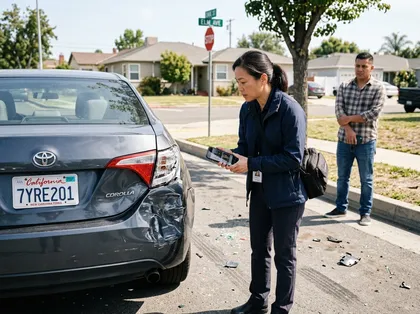
Insurers compare your account with records and other evidence. A discrepancy may prompt follow-up questions, but it does not automatically prove that someone lied.
Common sources include:
- Crash reports. These may contain diagrams, road conditions, vehicle positions, and statements from drivers or witnesses.
- Medical records. These help document symptoms, treatment, prior conditions, and changes after the crash.
- Photos and video. Dashcam recordings, surveillance footage, and scene photos may clarify how the collision happened.
- Witness accounts. Independent witnesses may support or contradict a driver’s description.
- Employment records. Pay records and employer information can help verify missed work and lost income.
- Social media. Public posts may raise questions about claimed limitations. Context matters; a photo showing physical activity does not, by itself, prove that someone is uninjured.
An insurer may request clarification or additional records before deciding whether to pay or deny a claim.
What If the Other Driver Lies About the Accident?
The other driver’s false account does not automatically prevent you from recovering compensation. Independent evidence can help establish fault even when the drivers disagree.
Useful steps include:
- Preserve photos and recordings. Keep images of vehicle damage, road markings, traffic signals, and the surrounding area.
- Save witness information. Names and contact details allow follow-up while memories remain fresh.
- Request the collision report. Review it for errors or missing information. A police report does not always settle the question of fault.
- Act quickly on possible footage. Nearby businesses or vehicles may have recorded the collision. Recordings can overwrite quickly.
- Keep records of your injuries and losses. Medical records, bills, and employment documents help support your claim regardless of the other driver’s account.
If a lawsuit becomes necessary, an attorney can use discovery, the formal exchange of evidence, to request relevant records and question witnesses under oath.
Talk to an Arash Law Attorney About Your Claim
If the other driver lied about your accident, or if your own claim involves a mistake you need to correct, an attorney can help you understand where you stand before the situation worsens. Arash Law offers free case evaluations with no obligation.
Call Arash Law at (888) 488-1391 for a free case evaluation.
Frequently Asked Questions About Auto Insurance Misrepresentation in California
Will One Wrong Answer Make Me Lose My Injury Claim?
Not automatically. The effect depends on what was wrong, whether you intended to mislead the insurer, and whether the information matters to the claim. A mistaken date may have very different consequences from fabricated medical bills.
Can I Still Recover Compensation If I Was Partly at Fault?
You may still recover compensation under California’s comparative fault rule. Your share of responsibility generally reduces your recovery. Giving an honest account allows the evidence to establish each party’s role; hiding facts can create additional problems.
Should I Say I Am Fine Before I Know Whether I Am Injured?

Describe what you actually know. If you have not received a medical evaluation or do not yet understand your symptoms, say so. Avoid making broad statements about your condition or guessing about how quickly you will recover.
If you already said you were fine and later developed symptoms, explain the timing accurately and document your medical care.
What If the Police Report Repeats the Other Driver’s False Story?
A report can contain incomplete or incorrect information. Photos, recordings, witness accounts, and other records may help challenge it. An attorney can assess the discrepancy and explain whether to seek a correction or present additional evidence.
How Long Do I Have to File a Lawsuit If the Other Driver Lied?
A false account does not, by itself, extend the filing deadline:
- Personal injury: Generally, two years from the injury.
- Vehicle or other property damage: Generally, three years from the damage.
- Claims against a California public entity: An injury or vehicle-damage claim generally must be filed with the proper entity within 6 months. After a legally sufficient written rejection, you generally have 6 months from the date of mailing or personal delivery to sue.
Exceptions may apply. These deadlines differ from police, DMV, and insurance reporting duties. Preserving evidence is also a separate concern because recordings may disappear long before a lawsuit is due.
Do I Have to Pay Upfront for Help With a Disputed Injury Claim?
Arash Law handles personal injury cases on a contingency fee basis. This means attorneys’ fees depend on recovering compensation. The written agreement explains the fee percentage and how case costs are handled.
The law generally requires a written contingency fee agreement signed by the attorney and client.
What Arash Law Has Recovered in Disputed and Contested Cases
The situations most relevant to this post (disputed liability, a lying opposing party, and an insurer contesting fault) are the situations where how the evidence is built determines the outcome. The results we have secured for clients illustrate what that looks like in practice.
$3,000,000 — Auto vs. Auto: Police Report Blamed Client, Black Box Data Proved Otherwise. The initial police report placed fault on our client for allegedly running a stop sign. Arash Law obtained data from the other vehicle’s black box showing that the other driver had been speeding. The team used that evidence, together with the crash analysis, to establish that the other vehicle’s speed caused the collision.
$3,500,000 — Bicyclist vs. Auto: Driver’s Denial Overturned Through Discovery and Deposition. A six-year-old boy suffered a traumatic brain injury after a pickup truck struck and ran over him while he was riding his bicycle across the street. The defense attempted to place responsibility on the child. During discovery and deposition testimony, Arash Law obtained an admission that the pickup driver had been distracted, resulting in a $3.5 million settlement.
Past results do not guarantee future outcomes. Every case is different, and results depend on the specific facts and evidence involved.
Contact Arash Law About Insurance Claim Disputes
If another driver gave a false account or an insurer questions your injuries, Arash Law can review the evidence and explain your legal options. Our accident lawyers can help address conflicting statements and document the losses you are claiming.
Call (888) 488-1391 for a free case evaluation. Arash Law handles personal injury cases on a contingency fee basis. Attorney’s fees are collected only if compensation is recovered.
Arash Law: Make Them Pay, Call AK.
Sources
- California Legislature. California Penal Code § 550 — False or Fraudulent Insurance Claims and Statements.
https://leginfo.legislature.ca.gov/faces/codes_displaySection.xhtml?lawCode=PEN§ionNum=550.- California Department of Insurance. What Is Insurance Fraud? Fraud Division.
https://www.insurance.ca.gov/0300-fraud/0100-fraud-division-overview/05-ins-fraud/- California Department of Insurance. SIU Compliance Office. Special Investigative Unit requirements under California Insurance Code §§ 1875.20–1875.24 and California Code of Regulations, Title 10, §§ 2698.30–2698.43.
https://www.insurance.ca.gov/0300-fraud/0100-fraud-division-overview/12-siu/- California Department of Insurance. Property & Casualty — Suspected Fraudulent Claim Reporting. Guidance on the reasonable-belief standard for suspected fraud referrals.
https://cdiapps.insurance.ca.gov/CRIMS/propertyandcasualty/- California Legislature. California Insurance Code § 661 — Grounds for Cancellation of Automobile Insurance Policies.
https://leginfo.legislature.ca.gov/faces/codes_displaySection.xhtml?lawCode=INS§ionNum=661.- California Legislature. California Insurance Code § 662 — Notice of Cancellation.
https://leginfo.legislature.ca.gov/faces/codes_displaySection.xhtml?lawCode=INS§ionNum=662.- California Highway Patrol. Request a Crash Report. CHP Crash Portal and CHP 190 request procedures.
https://www.chp.ca.gov/traffic/request-a-crash-report/- California Legislature. California Code of Civil Procedure § 335.1 — Two-Year Limitation Period for Personal Injury Actions.
https://leginfo.legislature.ca.gov/faces/codes_displaySection.xhtml?lawCode=CCP§ionNum=335.1- California Legislature. California Penal Code § 118 — Perjury.
https://leginfo.legislature.ca.gov/faces/codes_displaySection.xhtml?lawCode=PEN§ionNum=118.- California Legislature. California Business and Professions Code § 6147 — Contingency Fee Agreements.
https://leginfo.legislature.ca.gov/faces/codes_displaySection.xhtml?lawCode=BPC§ionNum=6147.- Arash Law. Case Results. Published results include the $5 million pedestrian accident, $3 million auto accident, and $3.5 million bicyclist accident discussed above.
https://arashlaw.com/case-results/Disclaimer
Past results do not guarantee future outcomes. Every case is different. The information on this page is for general educational purposes and does not constitute legal advice. No attorney-client relationship is formed by reading or relying on this content. If you were injured, consult a licensed California personal injury attorney about your specific situation.