TL;DR: Weather conditions in California can increase slip-and-fall risks, but property owners may be legally responsible for resulting injuries if they were negligent. You may need to prove that the owner knew about the danger or should have discovered it through reasonable inspections. You generally have two years to file a lawsuit for private property owners and only six months to file a government claim if a public entity was responsible.
Weather conditions can increase the risk of slip-and-fall accidents in California. Heavy rain, snow, morning fog, coastal mist, and even extreme heat can create or worsen hazardous walking surfaces. Although California is known for relatively mild weather, conditions vary substantially across the state. Property owners also have a legal duty to keep their property reasonably safe despite weather-related conditions.
Key Facts
- California Civil Code § 1714 requires property owners to keep their property reasonably safe for others, including during rain, fog, snow, and other weather events.
- The California Department of Public Health (CDPH) Falls Prevention Program tracks statewide fall-related deaths, hospitalizations, and emergency department visits. Falls are among the leading causes of serious injury for older Californians.
- To recover compensation, you may need to show that the owner had actual or constructive notice of the weather-created hazard and failed to act.
- On private property slips and falls, you generally have two years from the date of your fall to file a lawsuit under the California Code of Civil Procedure (CCP) § 335.1.
- On public property slips and falls, you generally must file a written government claim within six months under Government Code § 911.2 before you can file a lawsuit.
- California’s pure comparative fault rule means partial blame does not eliminate your right to recover compensation; it only reduces the amount recoverable.
Table of Contents

California Weather Conditions That Affect Slips And Falls
California’s varied geography means multiple types of weather (not just winter rain) create slip-and-fall hazards across the state. Rain is the most common trigger. However, snow, ice, fog, extreme heat, and strong winds each carry distinct risks depending on where in California you are.
- Rain and wet surfaces are the leading concern during California’s winter or rainy seasons. Rain tracks water into store lobbies, restaurant entryways, parking garages, and tiled shopping-center floors. Water pooling at entrances or spreading across interior floors without mats or warning signs can create dangerous conditions within minutes of a storm. This helps explain why slip-and-fall claims often spike during winter.
- Snow and ice affect mountain communities and higher elevations (including areas around Lake Tahoe, Mammoth Lakes, and the Sierra Nevada). In these areas, ice can form on sidewalks, stairs, driveways, and parking lots. That can make it easy to lose one’s footing.
- Fog and coastal moisture along the Central Coast and parts of Northern California can leave outdoor stairs, decks, and walkways damp and slippery. These often don’t leave visible water pooling, making them more dangerous for pedestrians.
- Extreme heat can indirectly create hazards. Irrigation systems, air-conditioning drain pipes, and commercial sprinklers may leave water on sidewalks or walking surfaces in the summer. Prolonged heat can also crack and heave pavement. These factors can create uneven surfaces that increase the risk of slip-and-fall accidents.
- Strong winds and debris storms, especially during Santa Ana wind events across Southern California, scatter leaves, branches, and sand across walkways. Wet leaves can significantly reduce surface traction and pose a hazard that property owners are expected to anticipate and address.
Weather alone does not automatically make a property owner liable for resulting injuries. A premises liability claim requires proof that connects the owner’s conduct, or failure to act, to the dangerous condition that caused your fall. Stronger cases usually focus on how long the hazard existed, whether the owner knew or should have known about it, and what reasonable steps were or were not taken.
What California Law Requires Of Property Owners In Bad Weather
For privately owned property, California Civil Code § 1714 generally requires property owners to use reasonable care to keep their property safe for others. That responsibility still applies when weather conditions are bad. Whether someone owns a store, an apartment complex, or a parking lot, they should take reasonable steps to identify and fix weather-related hazards as they arise.
Depending on the property and weather conditions, property owners are expected to:
- Keep entrances reasonably dry and safe by using mats, cleaning up tracked-in rainwater, and addressing slippery floors.
- Post clear warnings near known hazards when wet floors, ice, flooding, or other dangerous conditions cannot be immediately corrected.
- Inspect walking areas during severe weather because rain, snow, and changing conditions can create new hazards throughout the day.
- Address recurring drainage and flooding problems when owners know certain walkways, entrances, or parking areas collect water during storms.
- Clear snow and treat icy surfaces within a reasonable time when snow or freezing conditions make sidewalks, stairs, or entrances slippery.
- Maintain visibility around walking areas by providing reasonable lighting and addressing hard-to-see steps, curbs, or obstacles during heavy fog.
- Repair heat-damaged walking surfaces promptly when extreme temperatures cause pavement, asphalt, or other surfaces to crack, buckle, or become uneven.
- Secure property and remove wind hazards such as loose signs, outdoor furniture, fallen branches, or debris that could obstruct or endanger walking areas.
These are steps that may be reasonable. However, California law does not impose the same weather-response checklist on every property. A small apartment building, a supermarket, and a mountain resort may face very different hazards and have different practical opportunities to address them.
Property owners are not automatically responsible simply because bad weather caused a fall. For private property, liability generally depends on whether the owner created the dangerous condition, knew about it, or should have discovered it through reasonable care. It also depends on whether the owner then failed to take reasonable steps to address the danger or warn visitors.
Rules For Government-Owned And Controlled Properties
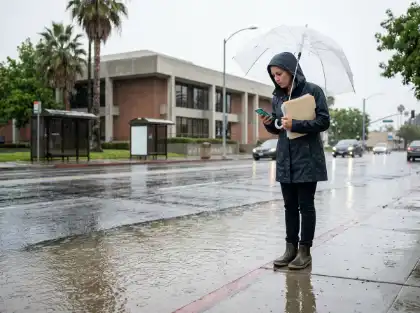 Different rules apply when a fall happens on property owned or controlled by a public entity. These entities include cities, counties, state agencies, public school districts, or other government bodies. Under California Government Code § 835, an injured person generally must show that:
- The public entity owned or controlled the property.
- The property was in a dangerous condition when the injury occurred.
- The dangerous condition caused the injury.
- The condition created a reasonably foreseeable risk of that kind of injury.
- Either a public employee’s negligent or wrongful act or omission created the condition, or the public entity had actual or constructive notice of the condition early enough to take protective measures.
A public entity is not automatically liable just because bad weather made an area slippery or unsafe. The condition must present more than a trivial risk. Factors such as how long it existed, whether the agency had a reasonable opportunity to discover it, and whether it had time to respond can matter.
Proving Notice Of A Weather-Related Hazard
To prove a property owner knew about a weather-created hazard, you may need to establish either actual or constructive notice. This requirement applies when the property owner or its employees did not create the dangerous condition.
Actual notice means they knew about the hazard. Constructive notice means the hazard existed long enough, or was obvious enough, that they reasonably should have discovered it. Here are example scenarios where different notices may apply:
| Property Type | Notice Type | Example |
|---|---|---|
| Private Property | Actual Notice | A grocery store employee sees melted snow and slush pooling inside the entrance. They do not clean it up or post a warning. |
| An apartment tenant reports that strong winds knocked branches onto a common walkway. Management leaves them there. | ||
| A hotel guest tells the front desk that morning fog and condensation have made an outdoor stairway slick. Hotel staff do not address it. | ||
| Constructive Notice | Ice has remained on a shopping-center walkway since early morning, long enough that routine inspections should have discovered it. | |
| Water from an air-conditioning drain has repeatedly collected on an apartment walkway during hot weather, creating a recurring slippery spot that management reasonably should have discovered. | ||
| Public Property | Actual Notice | A resident reports a flooded city-owned pedestrian walkway through the city’s service-request system. The condition remains unaddressed. |
| A county employee observes ice covering the steps of a county building. However, no warning, closure, or other protective measure is implemented. | ||
| Several residents reported to the responsible agency that a fallen tree branch blocked a public park walkway after strong winds. | ||
| Constructive Notice | A city-owned walkway repeatedly floods after storms. Standing water remains visible for days in an area routinely visited by maintenance crews. | |
| Wind-blown sand and debris repeatedly accumulate on a public pedestrian path over several days in a location that is regularly inspected or maintained by the responsible agency. However, the hazard is not addressed. |
The evidence types that most directly prove notice in weather-related cases include:
- Security Camera Footage: Can show when water or another hazard appeared, how long it remained, and what happened before the fall. Because some systems overwrite footage quickly, early preservation can be important.
- Official Weather Records: Can document when rain, snow, wind, or other weather conditions began and how severe they were near the accident location.
- Maintenance and Cleaning Logs: Can show whether the property had regular inspections, cleanup procedures, or weather-related safety checks in place.
- Prior Incident Reports: Can help show whether the property owner was already aware of a recurring hazard at the same location.
Arash Law sends spoliation letters immediately after a client retains the firm. These documents request that relevant records be preserved before they are overwritten or discarded. The storage time for surveillance camera footage, in particular, is short, making immediate action crucial.
What If You Share Some Of The Blame?
You may still be able to recover compensation even if you were partly at fault for your weather-related slip-and-fall. California follows a pure comparative fault rule. Under it, your share of fault reduces your damages. A jury that finds you 30% at fault for not watching where you were walking would reduce your recovery by 30. You could still recover the remaining 70%.
Insurance companies defending weather-related slip-and-fall claims may try to overstate your share of fault. They may argue that:
- You were distracted by your phone.
- Your footwear was not suitable for wet conditions.
- The hazard was “open and obvious,” and you should have avoided it.
The “open and obvious” argument deserves particular attention. Insurance companies are most likely to use it against you if your case involves adverse weather conditions. Under California premises liability law, an open and obvious hazard can still generate liability when it is reasonably foreseeable that someone may encounter the danger despite its obviousness.
Arash Law can help challenge open-and-obvious defenses by documenting the store layout, the location of signage, and the absence of a safe alternative route. This defense is only a starting position for insurers, not a barrier to recovery.
Injured in a weather-related slip-and-fall? Arash Law offers a free case evaluation. Call (888) 488-1391 to speak with a California slip-and-fall lawyer about your options today.
What To Do After A Weather-Related Slip-And-Fall
Get medical care right away, photograph the scene, and save the clothes and shoes you were wearing. These steps can strengthen your claim and protect your right to seek compensation.
- Get medical care immediately. See a doctor, visit urgent care, or go to an emergency room right away, even if you feel okay. Some injuries, including fractures, traumatic brain injuries (TBI), and soft-tissue damage, may not show symptoms for days. A prompt medical record connects your injuries to the fall. That may prevent the insurer from claiming the injury occurred elsewhere.
- Document the scene before it changes. Weather hazards dry up and get cleaned quickly. Take photos and video of the wet floor, any pooling water, the absence or position of warning signs, and the surrounding area.
- Report the fall to the property manager before you leave. Ask for a written copy of the incident report. If the manager refuses to provide one, write down their name, the time of your report, and any witnesses present.
- Preserve your clothing and footwear. Keep the shoes and clothing you were wearing without washing them. Wet footwear and soaked clothing can serve as physical evidence of the conditions you encountered. Insurance adjusters sometimes argue that inadequate footwear, rather than the property’s dangerous condition, caused the fall. Do not give them that opening.
- Avoid giving recorded statements. Politely decline the insurance adjuster’s request until you speak with an attorney. Adjusters are trained to elicit statements that can be used to reduce your recovery.
How Arash Law Recovered Compensation For Premises Liability Clients
Arash Law has recovered over $1 billion for injured clients across California, including in premises liability and property owner negligence cases. Our past case results show how unsafe property conditions can lead to significant claims.
In one case, Arash Law secured a $41,950,000 jury verdict for a husband and wife who were attacked inside a Walmart store by a homeless man using an unsecured baseball bat. The jury found Walmart 50% liable, with the judgment against the company exceeding $30 million. Our lawyers presented compelling testimony that the store’s negligence largely contributed to the attack. This case illustrates how a property owner’s duty can extend to hazards it knew or should have addressed.
In another premises liability case, Arash Law recovered $14,000,000 for a factory worker who suffered a head injury involving an industrial machine. Despite multiple defenses raised by the opposing parties, our skilled legal team ultimately secured the maximum recovery available for the client under the applicable policy limits.
Arash Law also secured $3,500,000 in a premises liability case involving inadequate lighting that led to a fall. The client suffered a spinal injury that significantly affected her life. This case shows how property conditions beyond wet floors, such as poor visibility, can be important in determining whether reasonable safety measures were taken.
The past case results mentioned here do not guarantee future outcomes. Every case is different. Results depend on the specific facts and evidence available.
Deadlines For Filing A California Slip-And-Fall Case
California law imposes different deadlines for slip-and-fall claims. The one that applies to your case depends on whether the property on which you were injured is privately or publicly owned. Claims involving public entities also have separate deadlines for presenting the government claim and, later, filing a lawsuit.
-
Private Property: 2 years (under CCP § 335.1).
If you slipped on the floor of a retail store, restaurant, apartment complex, or any other privately owned property, you generally have two years from the date of your fall to file a personal injury lawsuit. Missing this applicable deadline can permanently bar your right to seek compensation, regardless of how serious your injuries are.
-
Public Property: 6 months (under Government Code § 911.2).
If your fall occurred on property owned or maintained by a government entity, including a city sidewalk, a county park, a state-owned building, or a Caltrans-maintained area, a separate, much shorter deadline applies. You generally must file an administrative claim within six months of the incident. This is a prerequisite to filing suit. You cannot skip it.
Where you file a government claim depends on which public agency was responsible for the property. If your slip-and-fall claim involves property owned by the State of California, you may need to submit a government claim through the Department of General Services’ Government Claims Program. Claims against a city, county, or other local agency are generally filed directly with the public entity’s clerk.
Caltrans claims have special filing rules. For personal injury or property damage claims of $12,500 or less, you may file a claim directly with Caltrans. Meanwhile, claims over $12,500 generally go through the state’s Government Claims Program. Because the correct filing process depends on the amount and type of claim, it is important to identify the right agency before filing.
A public agency generally has 45 days to act on a government claim. If it does not act within that period, the claim may be treated as rejected. If this happens to you and you don’t receive a written rejection notice from the agency, you would have 2 years from the date of your slip-and-fall to sue. However, if the agency sends a proper written rejection notice, you generally have 6 months from that notice to file a lawsuit.
Some deadlines can also change depending on the injured person’s age or the type of case. For example, the rules for minors vary by claim type. Because missing a deadline can prevent you from recovering compensation, consider speaking with a slip-and-fall attorney as soon as possible.
Frequently Asked Questions About Weather-Related Slip-And-Fall Accidents In California
Does A Wet Floor Sign Automatically Protect A Business From Liability?
No. A wet floor sign may be evidence that a business took reasonable steps to warn visitors. However, it does not automatically eliminate or reduce liability for a weather-related slip-and-fall. A sign that is hidden behind a display, placed several feet from the actual hazard, or knocked over before you walk by, may be legally insufficient.
California premises liability law requires a warning that actually gives a visitor a meaningful opportunity to avoid the danger. A sign that fails that standard does not protect the property owner from a viable claim.
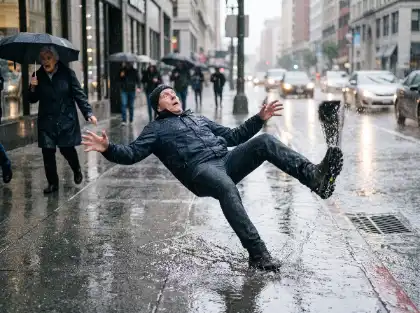
Can I Sue A City Or Public Agency If I Slipped On A Flooded Public Sidewalk?
You may be able to pursue a claim. However, government entities follow a different, and much shorter, process. Under Government Code § 911.2, a written government claim generally must be presented within 6 months of the incident before you can sue a public entity. See the Deadlines section above for routing details. If you are unsure whether the sidewalk or the property where you fell is publicly or privately owned, consider having an attorney review your case.
What If The Puddle Formed Just Moments Before I Slipped?
A property owner may not be liable if the hazard appeared so recently that a reasonable inspection program would not yet have discovered it. Timing is one of the central factual questions in these cases. However, when a storm has been underway for several hours, a business that cannot show any evidence of active inspections during that period may have difficulty claiming the hazard was too new to discover.
Can I Recover Compensation If I Was Partly Distracted At The Time Of The Fall?
Yes. Being distracted does not automatically bar your recovery. As explained in the pure comparative fault section above, California reduces (but does not eliminate) your award based on your share of responsibility. What matters most is maximizing the property owner’s share. Arash Law’s attorneys work to build the evidence that keeps that number as high as the facts support.
What Evidence Disappears Fastest After A Weather-Related Fall?
The physical scene at the location of your fall changes the fastest: wet floors dry, warning signs get repositioned, and drainage conditions normalize as soon as the property is cleaned or the weather passes. Once the property is cleaned or the weather changes, important evidence showing what made the area dangerous may disappear.
Get Legal Help For Your Weather-Related Slip-And-Fall Accident
Arash Law has recovered over $1 billion for injured Californians and has handled weather-related premises liability claims from Northern California to San Diego. If you were injured in a slip-and-fall caused by rain, fog, ice, or any other weather-related hazard, the firm offers a free case evaluation to help you understand your possible legal options.
Call Arash Law at (888) 488-1391 any time. Make them pay. Call AK.
Sources
California Department of Public Health (CDPH), Safe and Active Communities Branch, Falls Prevention Program. Statewide fall injury data and prevention information. https://cdph.ca.gov/programs/ccdphp/dcdic/sacb/pages/falls-prevention.aspx.
California Legislative Information, Civil Code § 1714 (General Duty of Care / Premises Liability). https://leginfo.legislature.ca.gov/faces/codes_displaySection.xhtml?sectionNum=1714.&lawCode=CIV
California Legislative Information, Code of Civil Procedure § 335.1 (Two-Year Statute of Limitations, Personal Injury). https://leginfo.legislature.ca.gov/faces/codes_displaySection.xhtml?sectionNum=335.1.&lawCode=CCP
California Legislative Information, Government Code § 911.2 (Six-Month Government Claim Presentation Deadline). https://leginfo.legislature.ca.gov/faces/codes_displaySection.xhtml?sectionNum=911.2.&lawCode=GOV
California Department of General Services / Office of Risk and Insurance Management (DGS/ORIM), Government Claims Program. https://dgs.ca.gov/orim/file-a-claim
Disclaimer
The information on this page is for general educational purposes only and does not constitute legal advice. Reading or relying on this content does not create an attorney-client relationship. If you were injured, consult a licensed California personal injury attorney about your specific situation. Arash Law: (888) 488-1391.