TL;DR: Car insurance covers bicycle accidents when a driver is at fault: their liability policy can pay medical bills, lost wages, and property damage up to their policy limits. If that driver is uninsured or underinsured, your own uninsured/underinsured motorist coverage (UM/UIM) may fill the gap. Because filing deadlines under California law can be short, confirm the applicable deadline with an attorney as soon as possible.
Car insurance does cover a bicycle accident when a driver causes the crash. Their liability policy is the primary source of compensation for your injuries, lost income, and damaged bicycle.
Many cyclists assume auto insurance is only for car-on-car collisions. Still, California law treats a motorist’s liability the same way whether the victim was in a car, on a bike, or on foot.
Under California Vehicle Code (CVC) § 21200, a bicycle rider on the roadway holds the same legal standing as a driver. That is why an at-fault driver’s policy should respond to your claim similarly to how it would respond to another motorist’s claim, subject to the policy terms.
Key Facts About Car Insurance And Bicycle Accidents In California
- SB 1107 raised minimum liability limits effective January 1, 2025. California significantly raised the floor that a driver’s policy must cover for your injuries.
- UM/UIM coverage applies to cyclists. UM/UIM coverage can extend to bicycle crash victims under their own auto policy when the at-fault driver is uninsured or underinsured.
- Act quickly on hit-and-run claims. Timely action is critical because California law imposes strict reporting and notice requirements that can affect your ability to recover UM benefits.
- California’s pure comparative negligence rule. Any percentage of fault assigned to you reduces your potential recovery by that same percentage.
- Filing deadlines are strict. If you need to sue for a bike accident, personal injury filing deadlines can vary, as they can include tolling rules for minors and significantly shorter windows for government entity claims. However, missing the one that applies to your case could bar you from pursuing compensation altogether.
Table of Contents

The At-Fault Driver’s Auto Liability Coverage
In California, the driver who caused your crash may be responsible for your losses. You may be able to seek compensation from their auto insurance for medical bills, emergency room visits and surgery, lost wages, pain and suffering, and property damage to your bicycle and gear. SB 1107 and the state’s financial responsibility requirements establish California’s mandatory minimum coverage amounts, effective January 1, 2025:
- Bodily Injury Per Person: $30,000
- Bodily Injury Per Crash: $60,000
- Property Damage: $15,000
When a driver carries only the minimum, and your losses exceed it, additional coverage may be available through an employer’s commercial policy when the driver was on the job. If a company van driver hits you, the employer’s commercial auto policy often carries far higher limits than a personal policy. The legal doctrine that holds employers responsible for their employees’ on-the-job actions, sometimes called respondeat superior, may bring the employer directly into the case.
Using Your Own Auto Policy: UM/UIM And MedPay
If the driver who struck you flees the scene or carries too little insurance to cover your injuries, your own auto policy may still provide a path to compensation. UM/UIM coverage can step in when the at-fault driver’s policy is insufficient or nonexistent. It can apply even when you are on a bicycle rather than in a car.
California Insurance Code (INS) § 11580.2 governs UM/UIM coverage on auto policies issued in this state. Whether your policy extends to a bicycle crash depends on your specific policy language. However, these are some key points to keep in mind:
- UIM coverage may only apply if the vehicle that hit you is actually “underinsured.” It is not enough that your losses simply exceed the at-fault driver’s liability limits. Under INS § 11580.2(p)(2), a vehicle is “underinsured” when its applicable insurance is less than your UM/UIM limits. For example, if both sides have $30,000 limits and you suffer $100,000 in damages, your UIM coverage generally does not become available merely because $30,000 is inadequate to cover the loss. The statute also offsets amounts paid by responsible parties against the UIM limit.
- UIM coverage also has an exhaustion requirement. Before UIM benefits become available, California law generally requires you to exhaust the applicable bodily injury liability limits of all insured vehicles causing the injury through settlement or judgment, and to submit proof of payment to the UIM insurer. Cyclists should therefore confirm their UIM requirements before finalizing a third-party settlement.
- UM coverage has requirements for hit-and-run crashes. For a bodily injury UM claim involving an unknown hit-and-run driver, INS § 11580.2 requires the necessary physical contact. You or your representative must also report the accident to the appropriate police department, sheriff, or CHP within 24 hours and file a statement under oath with your own insurer within 30 days thereafter. The sworn statement must explain that you have a claim against an unidentified person and set out the facts supporting that claim.
Aside from UM/UIM coverage, Medical Payments (MedPay) coverage is another optional add-on to your auto policy that may apply after a bike accident. It pays medical bills as they come in, including ambulance fees, emergency room co-pays, specialist visits, and physical therapy. It does so regardless of fault, and while insurers are still resolving your liability claim.
MedPay does not require you to prove who caused the crash. That makes it a helpful option when medical bills start to pile up before you settle.
What If No Car Was Involved In My Bicycle Accident?
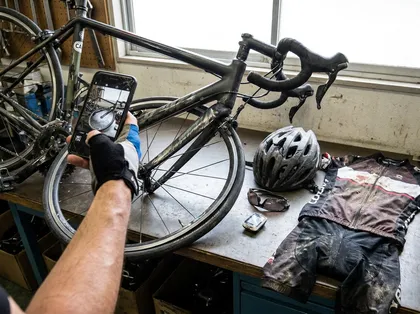
Your health insurance might cover medical bills from a bicycle crash, no matter who is at fault. This depends on your plan and provider. Such coverage is vital when liability claims take months to settle, and you need treatment right away. If you later settle with the at-fault driver, your health insurer can claim a subrogation lien. This means they have a legal right to part of your settlement for the medical costs they paid.
When no car was part of the crash, such as a pothole, a road defect, or a collision with another cyclist, auto liability insurance does not apply, and the path to compensation changes entirely. Homeowners or renters insurance may cover some property losses in those situations. If you have dedicated bicycle insurance, it may also apply.
However, if a road defect or government-maintained hazard caused your crash, you may have a claim against a public entity. To pursue compensation, you would have to present a written claim to the correct agency within six months of your bike accident, as established by Government Code § 911.2.
How Do I Seek Compensation For A Bike Crash From Car Insurance?
If a driver caused your bicycle crash, you can generally make a liability claim against that driver’s auto insurer. Insurance does not automatically pay simply because a collision occurred. You normally need evidence showing that the insurer’s client, the at-fault driver, was legally responsible for causing your injuries and losses.
Most bicycle-versus-car claims are based on negligence. In general, that means showing:
- Duty: The driver had a legal duty to drive safely under Civil Code § 1714, which requires everyone to use reasonable care to prevent harm.
- Breach: The driver failed to exercise reasonable care. Examples include speeding, failing to yield, and distracted driving.
- Causation: The driver’s conduct was a substantial factor in causing the crash and your injuries.
- Damages: You suffered losses, such as medical expenses, lost income, pain and suffering, or bicycle damage.
If you are also seeking benefits under your own auto policy, such as UM/UIM or MedPay, you generally need to notify your insurer and submit the documents required by your policy:
- For UM/UIM, that may include information about the at-fault driver’s insurance, proof of your injuries and damages, and compliance with any statutory or policy deadlines. Your insurer may investigate the claim and dispute issues such as coverage, fault, causation, or the value of your losses.
- For MedPay, the process is usually more direct. You typically submit covered medical bills and related documentation to your insurer for reimbursement up to the policy limit, without having to prove the other driver was at fault.
If another driver’s insurer argues that you also contributed to the crash, California’s comparative negligence rule becomes important. That rule determines how sharing fault for a bike accident can affect the amount you may recover.
How Comparative Negligence Affects Your Bicycle Accident Claim
California’s pure comparative negligence rule means that any percentage of fault assigned to you reduces your potential recovery by that same percentage. The California Supreme Court established this rule in Li v. Yellow Cab Co., 13 Cal. 3d 804 (1975). If you are 25% at fault and your total damages are $200,000, you could only recover $150,000, not the full amount. You can still recover something even if you were mostly at fault, but every percentage point counts.
Insurance adjusters know these rules. After a bicycle crash, one of their most common tactics is to build a file arguing that a bicyclist is partly to blame for the traffic accident. Some actions that give rise to these arguments include riding without lights at night, wearing dark clothes, failing to signal when appropriate, and not using bike lanes when they’re available. These claims may exaggerate the amount of fault you actually share for a crash, especially if there is insufficient evidence to back them.
If a driver hits you while you’re on your bike, Arash Law’s bicycle accident lawyers can check your coverage options. They can also challenge the insurer’s fault claims based on the available evidence and identify every possible avenue for recovery in your situation.
Essential Steps To Protect Your Bicycle Accident Insurance Claim
The actions you take in the hours and days after a bicycle crash directly affect what coverage you can access and how strong your claim will be. Insurers look for gaps, such as missing reports, delayed treatment, or repaired evidence, to justify reducing or denying a claim. Each step below corresponds to a specific coverage or evidentiary requirement under California law.
- File a Police Report Within 24 Hours.
Report the crash to law enforcement as soon as possible. In a hit-and-run, a timely police report is critical to validate a UM claim. For details on the reporting requirement and why it matters, see the UM/UIM section above. You can obtain the report later by requesting a copy from the law enforcement agency that investigated the crash.
- Confirm That the Required SR-1 Report Is Filed With the DMV.
If a driver is involved in a bike crash that caused injury, death, or more than $1,000 in property damage, they must file an SR-1 with the state Department of Motor Vehicles (DMV) within 10 days (CVC § 16000). This rule doesn’t apply to you as the cyclist. However, an SR-1 form can serve as further official documentation of the accident. If a motor vehicle caused the collision, you can check whether the driver filed the SR-1 form and ask for a copy through the DMV’s online records request portal.
- Seek Medical Care the Same Day or Next Morning.
A medical record links your symptoms to the crash date. Delayed treatment allows insurers to argue that the crash didn’t cause your injuries. Emergency room records, doctor notes, and physical therapy records are key evidence in a damages case. California healthcare providers must keep medical records as required by state law. Request your records quickly after the crash.
- Preserve Your Bicycle and Gear Without Repairs.
Do not repair your bicycle, helmet, cycling computer, or any damaged gear until an attorney reviews it. Physical evidence can get worse or even disappear once repairs start. Your damaged bike clearly shows the impact force. Estimates from a bike shop for repairs or replacements document the property damage for your claim.
- Document the Scene and Collect Witness Information.
Photograph the crash site, your injuries, the vehicle involved, and any road conditions that played a role in the crash. Get names and contact information from witnesses while they are still there. Nearby properties may have security cameras that recorded the crash, but their systems might quickly overwrite the relevant footage. Car accident lawyers can send a preservation letter to stop that from happening.
Frequently Asked Questions About Bicycle Accidents In California
Can An Insurance Company Deny My Bicycle Accident Claim?
Yes, an insurer can deny your claim for missing documents, lack of proof in a hit-and-run, or if their insured isn’t at fault. Whether that denial can support a bad-faith claim depends on whose insurer denied the claim and what duties that insurer owed you.
An injured cyclist usually can’t file a bad-faith claim. This is true even if the at-fault driver’s insurer denied or delayed a third-party claim. For example, suppose you face unfair treatment when seeking benefits from your own auto policy, such as UM/UIM coverage. Evidence of that treatment could support a bad-faith claim against the insurer.
How Long Do I Have To File A Bicycle Accident Lawsuit In California?
California Code of Civil Procedure § 335.1 allows two years from the crash date to file a personal injury lawsuit, while § 338 generally gives you three years to sue for property damage. UM claims have a separate two-year preservation requirement. Under INS § 11580.2, an insured must take certain actions within two years of the accident.
This involves:
- Filing a bodily injury lawsuit against the uninsured motorist.
- Agreeing on the policy amount.
- Starting arbitration with a written notice.
Exceptions may apply, so cyclists shouldn’t assume that the usual personal injury lawsuit deadline applies to their case.
Do I Need To File An SR-1 Report With The DMV If I Was On A Bicycle?
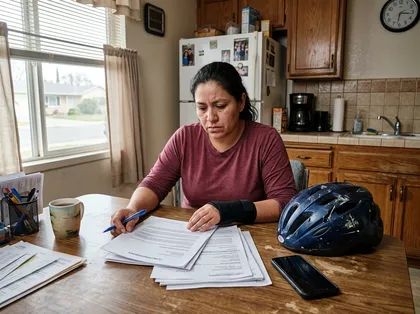
No. This requirement does not apply solely because you were riding a bicycle. CVC § 16000 places the 10-day SR-1 reporting duty on the driver of a motor vehicle involved in a qualifying crash. If a motor vehicle was part of the crash, confirm the required SR-1’s filing status.
Does My Auto Insurance Cover Me If I Were Riding An E-Bike?
E-bike coverage under auto insurance is policy- and fact-specific. Many standard auto liability policies do not extend to e-bike incidents. Still, coverage depends on how your policy classifies the e-bike under California law, which an attorney can confirm for your situation. If you were injured while riding an e-bike, the at-fault driver’s liability policy may still cover your injuries. Still, your auto policy’s UM/UIM and MedPay provisions may or may not apply to e-bike crashes, depending on the specific language in your policy.
Can I Get UM/UIM Coverage If I Don’t Have My Own Auto Policy?
Yes, potentially. California UM/UIM coverage can extend beyond the named policyholder to a spouse and certain relatives who live in the same household (INS § 11580.2). If you were injured while riding a bicycle and do not have your own auto policy, check whether coverage may be available through a spouse’s, parent’s, or other household relative’s auto policy.
What Happens If A Pothole Or Road Defect Caused My Crash?
The government agency responsible for maintaining that road may be liable. For state highways, the responsible agency is often Caltrans. For local roads, it’s usually a city’s or county’s public works department. According to GOV § 911.2, you must submit your claim against the correct agency in writing within six months of the incident. If you miss this deadline, you can lose your right to pursue compensation for your bike crash.
Can I Recover Property Damage For My Helmet And Cycling Gear?
Yes. The at-fault driver’s property damage liability can pay for repairs. It can also cover the cost of replacing your bicycle, helmet, cycling computer, lights, and clothing damaged in the crash. It’s important to get repair estimates and photos of the damage right after the crash. Insurers need this documentation to assess your property damage claim. Keep all damaged equipment as it is until your attorney confirms it has been documented.
Bring Your Bicycle Accident Claim To Arash Law
Pursuing compensation for a bicycle accident can be particularly challenging because cyclists are known as vulnerable road users. Like pedestrians and motorcyclists, they lack physical protection from impact during a crash. That means they’re more likely to sustain serious injuries and losses. These are the kinds of losses that insurers are more likely to dispute. That’s where Arash Law can step in to help.
If another driver’s car insurance adjusters question your timeline, look for gaps in your evidence, or argue against the severity of your injuries, Arash Law’s bicycle accident attorneys can respond on your behalf. They can check the CHP collision report, dispute unfair fault assignments, and pursue all coverage layers allowed by California law.
Our team has previously obtained favorable case results for cyclists and other vulnerable road users, and we can bring that experience to your case:
$1,750,000 — Pedestrian Vs. Uninsured Driver: An uninsured driver hit our client while they were crossing a particularly dangerous intersection. Since we could not seek compensation from the driver, we successfully pursued a claim against the city for the hazards present at the intersection.
$1,700,000 — Pedestrian Vs. Hit-and-Run Driver: Our client, a 79-year-old woman, was crossing at a crosswalk when a driver hit her and fled the scene. We achieved this result on her behalf, despite the defense’s attempts to argue that she was crossing the street while distracted.
Past results do not guarantee future outcomes. Every case is different, and results depend on the specific facts and evidence involved.
Arash Law — Make ‘em pay. Call AK.
You owe no attorney’s fees unless we win your case. Call (888) 488-1391 for a free case evaluation. Our team is available 24 hours a day.
Sources
UC Berkeley SafeTREC, 2025 SafeTREC Traffic Safety Facts: Bicycle Safety. Covers U.S. and California bicycle fatality and injury trends 2019–2023; 1,166 bicyclists killed in U.S. traffic crashes in 2023. safetrec.berkeley.edu
California Office of Traffic Safety (OTS), Traffic Safety Quick Stats. California traffic fatalities decreased by approximately 11%, from 4,539 in 2022 to 4,061 in 2023; the 2023 Mileage Death Rate was 1.26, down 6% from 1.34 in 2022. ots.ca.gov
California DMV, Insurance Requirements. SB 1107 minimum liability limits $30,000/$60,000/$15,000 effective January 1, 2025; SR-1 10-day filing requirement. dmv.ca.gov
California Legislative Information, California Code of Civil Procedure § 335.1. Two-year statute of limitations for personal injury claims. leginfo.legislature.ca.gov
California Legislative Information, Government Code § 911.2. Deadline to present a written claim (generally within six months for injury, death, or property damage claims) before suing a public entity. leginfo.legislature.ca.gov
California Legislative Information, California Insurance Code § 11580.2. UM/UIM coverage requirements, hit-and-run reporting. leginfo.legislature.ca.gov
California Legislative Information, California Vehicle Code § 21200. Bicycle riders’ rights and duties on the roadway. leginfo.legislature.ca.gov
Li v. Yellow Cab Co., 13 Cal. 3d 804 (1975). The California Supreme Court established a pure comparative negligence rule — official California Reports (Cal. Supreme Court).
Arash Law, Case Results. arashlaw.com
Disclaimer
The information on this page is for general educational purposes and does not constitute legal advice. Reading or relying on this content does not create an attorney-client relationship. If you were injured, consult a licensed California personal injury attorney about your specific situation. Arash Law: (888) 488-1391.