TL;DR: Document a truck accident scene by photographing vehicle damage, road conditions, injuries, debris, and skid marks. Then collect the truck driver’s information, carrier name, insurance details, USDOT number, witness contacts, and the police report number.
Highlights:
- Move away from traffic before documenting anything.
- Call 911, then ask the responding officer for the report number.
- Photograph final vehicle positions before tow trucks arrive.
- Capture skid marks, debris, cargo spills, lighting, and road conditions.
- Record the carrier name, USDOT number, and MC number.
- Get witness names, phone numbers, and brief factual statements.
- File an SR-1 within 10 days if the accident resulted in injury, death, or property damage over $1,000.
Tip: Stick to facts when describing the crash, and save time-stamped photos, notes, and records before details are lost.
Table of Contents
To document a truck accident scene, call 911. Photograph the vehicles involved and capture current road conditions. Before leaving the scene, record the commercial driver’s information, the carrier name, and the company details. Additionally, notify the authorities if the crash resulted in injury or death.
These accidents involve large trucks that often have multiple points of impact, making the scenes more difficult to handle than regular crashes. You may be injured and unsure what to do next. Truck accident evidence can disappear quickly. Knowing how to capture the scene can help preserve details about the vehicles, road conditions, drivers, and carriers involved.
Immediate Steps To Secure A California Truck Accident Scene
Your priority is getting yourself out of harm’s way. Once you are safe, calling 911 is the most time-sensitive action you can take. Law enforcement officers can create an official record of the accident before evidence is lost. Emergency responders can also help you get immediate medical care.
Here are some steps to consider:
- Move to Safety: If you can walk, get away from moving traffic immediately. Stay close enough to see the scene but far enough to avoid other potential accidents.
- Call 911: Report the crash right away. This action brings law enforcement and emergency responders to the scene. Authorities may document the conditions, the vehicles involved, and their initial assessment of who was at fault. Local police, the sheriff’s department, or the California Highway Patrol (CHP) may respond, depending on where the incident happens.
- Get the Report Number: Before you leave, ask the responding officer for the traffic collision report number. You will need this number to retrieve the official report later.
A police report is a third-party record of what the officer observed and what people reported at the scene. It typically captures the:
- Date and time of the accident.
- Location of the crash.
- Involved parties, such as the truck driver, other motorists, and possible witnesses.
- Officer’s observations and conclusions.
If the officer notes a traffic violation, that information becomes part of the official accident record. The officer’s report is different from the California DMV’s requirements. The DMV requires SR-1 reporting for accidents involving injury, death, or property damage of over $1,000. Involved parties have 10 days to submit this report.
What Photographic Evidence To Capture Immediately
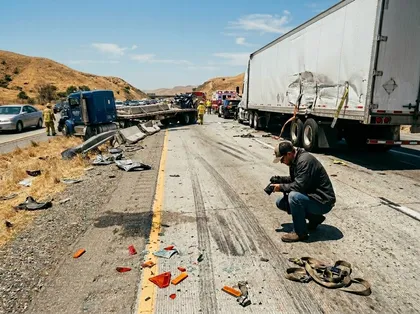
Look around you and capture details of the crash scene that may not last long. Examples include crumpled metal, scattered cargo, and tire tracks burned into the asphalt. All of it can provide insight into how the crash happened. Tow trucks can arrive within minutes, and once they move the vehicles, that physical record is gone.
If you can, take photos of the following:
- The Vehicles Involved in the Crash: Photograph both vehicles from multiple angles. Take wide shots showing where each vehicle stopped, and close-up shots of every point of damage.
- Visible Injuries: If you have visible injuries, take photos if you can do so safely. However, your health comes first. Seek immediate medical attention or wait for emergency responders before attempting to document anything. Examples include bruises, cuts, swelling, bleeding, or visible fractures.
- Debris and Scattered Pieces: If cargo spills or vehicle parts scatter on the road, take photos of their exact positions as they are. Avoid moving anything.
- Road Conditions: Capture skid marks, wet pavement, ice, standing water, lighting levels, and any nearby signs or signals. These factors influence braking distances and vehicle control, making it important to record the road conditions at the time of the crash.
After you document the scene, gather contact details. These elements form the basis of your claim. Identifying witnesses and the driver is just as important as recording the physical damage. Truck accident lawyers often rely on these pieces of evidence to establish liability in these cases.
Gathering Driver And Witness Details
Get the names and contact information of the driver and any bystanders at the scene. Witnesses can leave before you finish exchanging information with the driver, taking their contact details with them. Identifying the correct trucking company is equally urgent. Insurance claims involving commercial carriers often require identifying the carrier, not just the driver.
Collect the following details at the crash scene if available:
- Driver’s Name and Phone Number: Write down the driver’s name and phone number exactly as the driver provides them.
- Commercial Driver’s License (CDL) Number: A CDL is required to operate commercial vehicles, depending on the vehicle’s weight and type (CDL classes vary). This number connects to the driver’s professional driving record.
- Insurance Details: Ask for the insurance carrier name and policy number.
- Trucking Company Name and USDOT Number: Look on the cab door or the side of the trailer for the company name and the U.S. Department of Transportation (DOT) number. If you see a Motor Carrier (MC) number, take a clear photo of it as well. These numbers identify the carrier in federal records.
For witnesses, act before anyone walks away. Get each person’s full name and phone number. If a witness saw what happened, ask them to describe it briefly and note it down. The information you collect at the scene helps your truck accident attorney identify which records to ask for from relevant parties.

Frequently Asked Questions About Documenting Truck Crashes
Truck accident victims often have many concerns after a crash. Below are answers about preserving evidence, documenting the scene, and protecting a potential claim.
How Do You Describe A California Truck Accident Scene In Writing?
Stick strictly to objective facts. Write down the date, time, and exact location of the crash. Note your direction of travel and the sequence of events leading to impact. Avoid speculating about what caused the crash. Do not admit fault in writing or out loud.
How Long Do I Have To Gather Truck Accident Evidence In California?
You should begin gathering truck accident evidence immediately after the crash. While California generally gives you two years from the accident date to file a personal injury claim, important trucking evidence may disappear much sooner.
Some critical evidence can be overwritten or deleted within days or weeks. These may include:
- Black box data.
- Electronic logging device (ELD) records.
- Dashcam footage.
- Maintenance records.
Your truck accident lawyer can send a preservation demand as soon as possible after the accident.
What Evidence Should I Collect If California Highway Patrol Is Already Investigating?
Collect your own photos of vehicle damage, road conditions, skid marks, and the surrounding area. CHP reports can be helpful, but they may not capture every detail needed for a civil injury claim. Your personal documentation may capture hazards, equipment failures, or visibility issues that the official report misses. Some victims seek free advice from a truck accident lawyer to determine whether the evidence they personally collected can support their claim.
How Do California Laws Affect What Evidence I Can Get From The Trucking Company?
California’s discovery and spoliation rules may affect what evidence you can obtain from a trucking company after a crash. Under the California Code of Civil Procedure, courts can impose sanctions when a party destroys, withholds, or fails to preserve relevant evidence during litigation or anticipated litigation.
Why Is The Truck Driver’s Commercial License Number Important To Document?
The commercial driver’s license number helps identify the driver, but it only becomes useful when combined with the vehicle registration and carrier information. Together, those three pieces of data connect the driver to the corporate entity responsible for the truck and the insurance policies tied to the carrier.
Can I Still Document The Scene If I Am Severely Injured?
If your injuries prevent you from moving, focus entirely on your medical care. Ask a passenger, witness, or family member to take photos and get contact details on your behalf. A passenger’s time-stamped phone photos can establish road conditions at the moment of impact.
When severe injuries prevent you from gathering evidence on your own, it’s normal to think, “I need a personal injury lawyer to help me.” They can collect evidence such as surveillance footage from nearby businesses and incident reports from authorities.
What Evidence Should I Still Collect Days After The Accident?
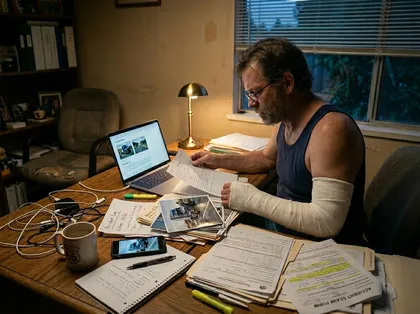
Save your medical records to show that the truck accident caused your injuries. This step will still be important to do days after an accident because truck accidents can cause hidden injuries that don’t show up right away. Include records from doctors, hospitals, physical therapists, and chiropractors. To document property damage, keep all repair receipts, invoices, and written repair estimates for your vehicle. These records can help you demonstrate the losses caused by the crash and justify the amount of compensation you’re seeking from the other party.
Arash Law Can Help Protect Evidence After A Truck Accident In California
Knowing how to document a truck accident scene can help you gather proof for your injury claim. However, when critical truck accident evidence is at risk, an attorney can act while you focus on recovering from your injuries. Our truck accident lawyers at AK Law can send spoliation letters to request the preservation of available evidence.
However, if finances are a concern after your accident, you may be wondering, “Do lawyers only get paid if they win?” The answer at our firm is yes. We operate on a contingency fee basis. Under this arrangement, you only pay the attorney’s fees if we win your case or secure a settlement. To discuss your case and our fee structure, call us at (888) 488-1391 today.