Alameda is an island, and that fact shapes nearly everything about how injury cases work here. Most of the main island’s traffic — vehicles, buses, and pedestrians — funnels through a small number of bridges, tubes, and corridors connecting to Oakland and the East Bay. Bay Farm Island connects separately through Doolittle Drive and the Bay Farm Island Bridge. The civil courthouse that hears most Alameda County personal injury cases sits across the estuary in Oakland. This guide reflects verified 2023 traffic-safety data from the California Office of Traffic Safety and was reviewed by a California personal injury attorney. Arash Law has recovered over $1 billion for injury clients across California. 24-Hour Hotline: (888) 488-1391 — $0 fees unless we win!
Five Things That Actually Matter When Choosing an Alameda Injury Lawyer
Most pages tell you to “verify credentials” and “schedule a consultation.” Those steps matter — but they are not what separates a strong Alameda case from a weak one. These five do:
- Your case will file in Oakland. If your case goes to court, it will most likely file at the René C. Davidson Courthouse in Oakland (1225 Fallon Street) — not in Alameda itself. Ask any lawyer you interview how often they actually appear there.
- Pedestrian injury is Alameda’s standout risk signal. In 2023, Alameda ranked 9th out of 103 similarly sized California cities for pedestrian victims under 15 in the California Office of Traffic Safety data. Children and seniors bear a disproportionate share of the city’s pedestrian-injury exposure. If a pedestrian was hit, you want a lawyer who has actually tried pedestrian cases in this venue.
- Government claims are due in six months, not two years. If the City of Alameda, Alameda County, or AC Transit is potentially involved (city vehicle, sidewalk defect, dangerous intersection, AC Transit bus, county road), you have only 6 months to file a written government claim — not 2 years. The deadline runs from the date of injury, not the date you hired a lawyer. Filing with the wrong entity does not satisfy the deadline.
- Evidence at the chokepoints disappears fast. The Alameda island geography concentrates pedestrians and traffic at five chokepoints: the Posey Tube, the Webster Street Tube, the Park Street Bridge, the High Street Bridge, and the Fruitvale Bridge. Surveillance, signal timing, and dashcam footage from these locations is time-sensitive — preservation letters need to go out within days, not weeks.
- Hire a trial-ready firm. Avoid high-volume, settlement-only operations. The difference shows up in the case value when an insurance carrier decides what to offer.
Table of Contents

Why Choosing a Personal Injury Lawyer in Alameda Is Different
Alameda is not a generic California city, and the legal terrain reflects that. The court venue is in Oakland. The opposing insurance defense bar runs East Bay-wide. The standout local risk signal in the verified 2023 traffic data is pedestrian injury, not DUI, not freeway. Filing a claim against the City of Alameda requires a different procedure than filing a claim against the County, and AC Transit is a separate public entity. A lawyer who treats Alameda like a routine PI venue will miss things that matter.
Where Your Case Will Actually File
Most Alameda County civil personal injury lawsuits are filed at the Civil Division of the Superior Court of California, County of Alameda — based primarily at the René C. Davidson Courthouse in downtown Oakland. The City of Alameda has no separate civil PI courthouse. If you read on a competitor’s site that your case will be heard in Alameda itself, that is not accurate.
| Case path | Where it actually files |
|---|---|
| Civil personal injury lawsuit (auto, premises, pedestrian, dog bite, wrongful death) | Alameda County Superior Court, Civil Division. Primary courthouse: René C. Davidson Courthouse, 1225 Fallon Street, Oakland, CA 94612. |
| Claim against the City of Alameda (city vehicle, sidewalk defect, City Public Works, Police, Parks) | Written government claim filed with the City Clerk before any lawsuit. Procedure detailed below. |
| Claim against Alameda County (county roads, county facilities, Sheriff’s Department) | Written claim filed with the Alameda County Clerk of the Board / Risk Management process. Filing with the City does NOT satisfy this. |
| Claim against AC Transit (bus, AC Transit property or operations) | Claim for Damages Form filed with the AC Transit District Secretary’s Office, 1600 Franklin Street, Oakland. AC Transit is a separate public entity. |
| Claim against the State of California or Caltrans (state highway, state employee) | Government Claim Form filed with the California Government Claims Program, Department of General Services. $25 filing fee or fee-waiver request required. |
↳ Source: Superior Court of California, County of Alameda — alameda.courts.ca.gov/divisions/civil
Why this matters when interviewing a lawyer: a firm that handles San Francisco or San Jose cases but rarely appears at the René C. Davidson Courthouse is not a local Alameda firm in any meaningful sense. Ask how often they actually appear there. Ask which civil departments they’ve drawn on prior cases. A real Alameda County practice will know.
What the Local Data Says About Alameda Crashes
Alameda’s overall fatal-and-injury victim count is lower than many comparable California cities. Where the city stands out is who gets hurt. The verified 2023 data from the California Office of Traffic Safety tells a specific story: pedestrians, and especially children, bear a disproportionate share of the serious-injury exposure.
| Victim category | Victims killed & injured (2023) | OTS ranking (lower = worse) |
|---|---|---|
| Total fatal and injury | 198 | 71 / 103 |
| Pedestrians | 29 | 20 / 103 |
| Pedestrians under 15 | 5 | 9 / 103 — standout signal |
| Pedestrians 65 and older | 6 | 15 / 103 |
| Bicyclists | 23 | 24 / 103 |
| Alcohol involved | 20 | 70 / 103 |
| DUI arrests | 67 | 20 / 103 |
↳ Source: California Office of Traffic Safety, Crash Rankings 2023 — ots.ca.gov/rankings/alameda-2023
Two numbers to read carefully. First, the total fatal and injury at 71/103 means Alameda has FEWER fatal and injury victims than most comparable cities of its size. Second, pedestrians under 15 at 9/103 means the child-pedestrian victim count is disproportionately high relative to that lower overall victim profile.
In our experience, this pattern reflects the geography. Alameda is an island. The five chokepoints connecting it to the mainland — the Posey Tube, the Webster Street Tube, the Park Street Bridge, the High Street Bridge, and the Fruitvale Bridge — concentrate pedestrian and vehicle traffic at the same approach points. The 2023 City of Alameda Pedestrian Safety HSIP grant identified four high-priority problem intersections by name: Santa Clara Avenue at Grand Street, Otis Drive at Willow Street, Otis Drive at Park Street, and Fernside Boulevard at San Jose Avenue. Those are the City’s own danger flags.
If a pedestrian was hit, your lawyer should know which of those chokepoints or named intersections were involved, what surveillance camera coverage exists at each one, and how quickly to send preservation letters before that footage overwrites.
How the Local Practice Market Operates
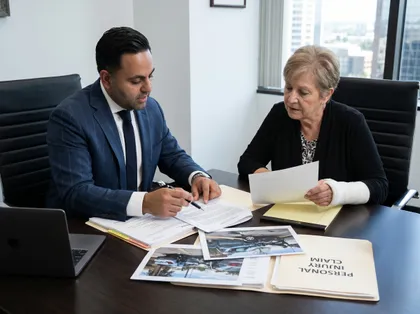 In our experience, Alameda County personal injury cases require clear evidence of liability, careful documentation of damages, and early preservation of evidence. Defense counsel commonly raises comparative fault, causation, and damages arguments in pedestrian, premises, and disputed liability cases. The East Bay insurance defense bar handles cases across multiple counties; a lawyer who appears regularly at the René C. Davidson Courthouse will know which defense firms handle which types of claims and how each negotiates.
Lawyers who try cases in this venue know the civil departments, the opposing counsel patterns, and how local cases tend to be scheduled. That familiarity affects strategy and settlement value in ways that show up at the negotiating table.
Free Consultation. We Come to You. Call (888) 488-1391. No fee unless we win!
Trial Experience and Pedestrian-Injury Results
Most personal injury cases settle without ever going to trial. The difference between a settlement that covers your medical bills and a settlement that covers your full damages often comes down to which firm the insurance carrier is dealing with. A firm that prepares every case as if it will need to be tried — and has actually taken cases through trial preparation — has different leverage in settlement negotiations than a firm that only settles.
Three representative examples of Arash Law’s pedestrian-injury results and trial-prepared case work, chosen to mirror Alameda’s specific risk profile (senior pedestrian, general pedestrian, child pedestrian):
$10,000,000 — Pedestrian Accident. Our client suffered serious injuries after he was run over by a speeding vehicle. We secured both monetary recovery and the best medical care available. (General pedestrian — maps to Alameda’s 20/103 pedestrian ranking.)
$6,100,000 — Pedestrian Accident. Settlement for a 6-year-old client involved in a pedestrian accident. (Child pedestrian — maps to Alameda’s 9/103 child pedestrian standout signal.)
These are representative California personal injury results from Arash Law’s practice. Some are settlements and some involve trial or trial-preparation posture; none are Alameda cases, and none guarantee any outcome. Every case depends on its own facts, evidence, injuries, insurance, venue, and liability issues. Across its practice, Arash Law has recovered over $1 billion for injury clients, with 1,050+ verified Google reviews and a 4.9 average rating.
Talk to an Alameda-Region Attorney Today. Call (888) 488-1391. Free case review!
Warning Signs to Watch for in an Alameda Injury Firm
There are honest trial firms practicing in the East Bay, and there are high-volume operations that settle every case at the first reasonable offer. The page you are reading right now is supposed to help you tell them apart. Specific behaviors to watch for:
- The firm cannot name the courthouse where civil PI cases file (René C. Davidson Courthouse, 1225 Fallon Street).
- The intake person promises a settlement range before reviewing your records — anyone giving you specific numbers in the first phone call is selling, not lawyering.
- The firm asks you to sign a fee agreement before you’ve met an attorney.
- Aggressive television-style branding without a single named, verifiable verdict on the website.
- Pressure tactics around “limited time” or “act now” framing on injury cases that have a 2-year statute of limitations.
- No clear written answer about how case costs (filing fees, expert witnesses, deposition transcripts) are handled separately from attorney fees.
- The firm tries to discourage you from getting a second opinion.
Signs of a real trial-ready firm:
- Named, verifiable verdicts with case details — not just dollar amounts in a marquee.
- Written contingency fee agreement provided BEFORE you sign anything.
- Clear explanation of how case costs work, separate from attorney fees.
- Willingness to refer you elsewhere if your case is not a fit.
- Specific knowledge of Alameda County venue, opposing defense firms, and local jury tendencies.
How To Verify a Lawyer’s Actual Track Record
 Three steps, each free, that protect you from the most common hiring mistakes.
Step 1 — Check Their California Bar License
Go to apps.calbar.ca.gov/attorney/LicenseeSearch/QuickSearch. Search the attorney by name. Confirm: (a) license is active, (b) no disciplinary history, (c) the year they were admitted matches what they tell you. The State Bar of California’s database is the only authoritative source — anything else is secondary.
Step 2 — Search Public Court Records
The Alameda County Superior Court eCourt Public Portal (eportal.alameda.courts.ca.gov) lets you search public filings by attorney name. If a lawyer claims frequent experience in Alameda County civil litigation, the portal may show recent civil filings, appearances, or case records associated with that attorney or their firm. Public dockets are not perfect — some attorneys settle pre-filing, caption data varies, and associated counsel sometimes appear under firm names rather than individual attorney names — but they are a useful cross-check against vague marketing claims.
Step 3 — Ask Local-Only Questions
A lawyer who only handles Alameda County cases occasionally cannot answer questions a real local practitioner can:
- Which civil departments at the René C. Davidson Courthouse have you appeared in?
- Who represents AC Transit’s insurance on injury claims?
- How do you preserve surveillance footage from a private business along Webster Street or in South Shore Center?
- If my case involves a pedestrian crash near the Posey Tube approach, what signal-timing data would you subpoena from the City of Alameda Public Works Department?
- How does the Alameda County Bar Association referral service compare to your firm’s intake process?
- Have you ever taken a case against the City of Alameda, the County of Alameda, or AC Transit through a written claim under Government Code §911.2?
If the answers are vague, generic, or routed through marketing language, that tells you something about how local their practice really is.
Common Alameda Injury Scenarios
Personal injury is not one practice. The lawyer best suited to a child-pedestrian case is not the same as the lawyer best suited to a slip-and-fall at a Webster Street business or a freeway crash on the I-880 approach. Based on Alameda’s actual incident patterns:
Pedestrian Crash at a Chokepoint or Major Intersection
Given Alameda’s 20/103 pedestrian-victim ranking and the City’s own 2023 Pedestrian Safety HSIP grant identifying Santa Clara/Grand, Otis/Willow, Otis/Park, and Fernside/San Jose as priority problem intersections, pedestrian injury is one of the most important serious-injury scenarios reflected in the city’s traffic data. You need a lawyer who handles pedestrian liability while preserving signal-timing data, surveillance footage, and any prior-complaint records about the intersection.
Ask: have you litigated pedestrian crashes at a named City intersection where the City had prior notice of a safety issue? How quickly do you send preservation letters to the City Public Works Department for signal timing and prior complaints?
Child Pedestrian or Bicyclist Hit
The 2023 OTS data ranks Alameda 9th out of 103 comparable cities for pedestrian victims under 15 — a signal substantially worse than the city’s overall fatal-and-injury victim profile. Defense counsel will often argue comparative fault, contributory supervision, or sudden darting into the roadway. The strongest evidence in a child case is typically driver speed, driver distraction, sight-distance analysis, and the design of the intersection or roadway approach.
California’s pure comparative fault doctrine means a child plaintiff’s recovery is reduced by their percentage of fault but not eliminated — Li v. Yellow Cab Co. (1975) 13 Cal. 3d 804. Ask the lawyer how they handle comparative fault arguments in a child case, and how they preserve school-zone or playground-area evidence within days.
Senior Pedestrian Hit
Pedestrians 65 and older in Alameda ranked 15/103 in 2023, also above the city’s overall profile. Senior pedestrian cases often involve pre-existing medical conditions that defense counsel will attempt to use to limit damages. Howell v. Hamilton Meats & Provisions, Inc. (2011) 52 Cal.4th 541 controls medical damages calculations in California, and senior cases require careful expert testimony to separate accident-caused injury from pre-existing conditions.
Hit-and-Run (Driver Fled the Scene)
Alameda’s hit-and-run ranking in 2023 was 53/103 — about middle of the pack. If the at-fault driver is unidentified or uninsured, your own uninsured/underinsured motorist (UM/UIM) coverage becomes critical. California requires auto insurers to provide UM coverage in bodily injury liability policies unless the insured rejects or modifies that coverage in writing (Insurance Code §11580.2). If you carry UM, that is your primary source of recovery.
Your lawyer can also file a John Doe lawsuit to preserve the 2-year statute of limitations while the investigation continues. Surveillance footage along Webster Street, Park Street, the ferry terminal lots, and the South Shore Center area is time-sensitive — most retail surveillance footage is overwritten within 7 to 30 days.
Slip-and-Fall at a Retail or Commercial Location
Common Alameda retail and premises cases involve South Shore Center, Alameda Landing, the West Alameda Business District, and the heavily trafficked Alameda Waterfront. In these multi-tenant environments, control of any given hazard is often split between the property owner, the anchor tenant, individual stores, and a janitorial or maintenance contractor. Critical evidence includes the incident report, surveillance footage, sweep logs, prior-complaint records, and any photos of the hazard before it was cleaned up. California’s pure comparative fault rule applies — a plaintiff’s percentage of responsibility reduces but does not eliminate recovery. Ask: how many parties do you typically include in a premises preservation letter?
Industrial and Construction Injuries (Alameda Point)
Alameda’s working waterfront, maritime-adjacent businesses, and the ongoing redevelopment of the former Naval Air Station at Alameda Point create significant exposure for construction and industrial accidents. While your employer provides workers’ compensation, third-party personal injury claims frequently arise when a defective product, an outside contractor, or a separate property owner causes your injury. These cases require a lawyer who understands the intersection of California workers’ compensation liens (Labor Code §3852 et seq.) and third-party civil liability. Ask things like: “How do you coordinate third-party civil discovery when a related Cal/OSHA investigation is ongoing?”
AC Transit, City Vehicle, or City Property Injury
If your injury involved an AC Transit bus, a City of Alameda vehicle (Public Works, Parks, Police), or a defective sidewalk, traffic signal, or roadway maintained by the City of Alameda, you have only 6 months to file a written government claim under Government Code §911.2 — not 2 years. Filing with the wrong entity does not satisfy the deadline. Public-entity cases also require Tort Claims Act-compliant claim forms. We cover the City of Alameda filing procedure in detail below.
Free Consultation. Free Police Report Review. Call (888) 488-1391 · No obligation.
Alameda Evidence Map — What to Preserve and Who Controls It
Each common Alameda claim type has a different set of time-sensitive evidence and a different custodian. The first 7 to 30 days are often decisive. A lawyer who knows the local landscape can send the right preservation letters to the right parties before evidence is overwritten or destroyed.
| Claim type | Evidence to preserve | Who may control it |
|---|---|---|
| Pedestrian crash at a City-controlled intersection | Signal-timing logs, prior-complaint records, intersection-design documents, surveillance footage from nearby businesses, and dashcam from passing vehicles | City of Alameda Public Works · CHP / Alameda PD · private business owners · California Public Records Act (PRA) request response |
| Child pedestrian hit near a school or playground | School-zone signage records, crossing-guard schedules, school surveillance footage if available, witness contact info, driver phone records (via subpoena) | Alameda Unified School District · City Public Works · Alameda PD · driver’s wireless carrier |
| Hit-and-run (driver fled) | Retail and ferry-terminal surveillance, witness IDs, vehicle-debris evidence, and your own UM/UIM policy documents | Private businesses · San Francisco Bay Ferry · your own auto insurer · Alameda PD |
| Sidewalk fall (city property) | Photos with measurements, prior complaints about the defect, repair records, City of Alameda government claim form, California Public Records Act (PRA) request response | City of Alameda Public Works · City Clerk’s Office (for PRA) · adjacent property owner |
| Retail premises fall (e.g., South Shore Center, Alameda Landing) | Incident report, surveillance footage, store sweep logs, prior-complaint records, photos of the hazard before cleanup | Property manager · store corporate office · third-party janitorial vendors |
| AC Transit bus crash | Bus dashcam (interior and exterior), driver schedule, route history, AC Transit incident report, passenger witness contact info, prior driver complaints | AC Transit Risk Management · AC Transit’s third-party claims administrator |
| Industrial / construction injury (Alameda Point or maritime-adjacent) | Cal/OSHA inspection records, employer incident report, third-party contractor agreements, defective-product chain of custody, site safety plans, workers’ compensation file (for lien analysis) | Employer · third-party contractors · property owner (often City of Alameda or Alameda Point redevelopment entity) · Cal/OSHA · workers’ comp carrier |
In every category, the first 7 to 30 days after the incident are often decisive. Surveillance footage overwrites on rolling schedules. Witness memories fade. Defendants begin moving evidence through corporate channels. A lawyer who sends preservation letters early — to the right parties — protects evidence that would otherwise be lost before any lawsuit gets filed.
Filing Deadlines That Apply to Alameda Cases
California’s statutes of limitations apply to all Alameda injury cases. The deadlines depend on who you are suing.
- Private party (driver, business owner, dog owner): 2 years from the date of injury — Code of Civil Procedure §335.1.
- City of Alameda (city vehicle, sidewalk defect, City employee negligence): 6-month written claim deadline — Government Code §911.2. Lawsuit deadline runs from claim disposition.
- Alameda County (county property, sheriff’s department, county vehicle): 6-month written claim deadline — Government Code §911.2.
- State of California (Caltrans, state highway, state employee): 6-month written claim deadline — Government Code §911.2. Filed with the California Department of General Services.
- AC Transit (bus or rail-related injury): 6-month written claim deadline — Government Code §911.2. AC Transit is a public entity, not a private bus company.
- Minors: tolling rules differ between private and government cases. For private cases, the 2-year clock generally starts at age 18 — Code of Civil Procedure §352(a). For government claims, do NOT assume tolling applies; the 6-month deadline is technical, with limited late-claim relief under Government Code §911.4. Talk to a lawyer immediately if a child is the injured party.
- Wrongful death: 2 years for private defendants; 6 months for government defendants. Eligible survivors defined by Code of Civil Procedure §377.60 et seq.
After a public entity receives a properly-filed claim, it has 45 days to respond. What happens next depends on what the agency does:
If the agency denies the claim in writing, the lawsuit deadline is generally 6 months from the date the rejection notice is mailed or personally delivered — Government Code §945.6. If the agency does NOT respond within 45 days, the lawsuit deadline may be extended — often by up to 2 years from the injury date.
These rules are technical, so do not calculate a public-entity deadline without legal guidance. Filing with the wrong government entity does not satisfy the deadline either. Multiple potential government defendants (City of Alameda, AC Transit plus State of California, for example) require separate claims, each filed within 6 months.
How To File a Claim Against the City of Alameda
Alameda’s separate municipal status — its own City Council, Public Works Department, Police Department, and City Clerk — means claims against the City of Alameda are filed with the City of Alameda, not with Alameda County, the City of Oakland, or any other public entity. The deadlines are short and the filing rules are strict.
- Personal injury, wrongful death, or property damage claims must be filed with the City of Alameda no later than six months after the incident date — Government Code §911.2.
- Other causes of action have a one-year filing deadline with the City.
- Failing to file a timely claim bars a lawsuit against the City — Government Code §945.4.
- The City of Alameda does NOT accept claims for: Alameda County, the Alameda Housing Authority, the Alameda Unified School District, the Alameda Sheriff’s Department, Alameda Hospital, AC Transit, or the California Highway Patrol. Each of those agencies has its own claim process.
- Upon receipt, the claim is evaluated by the City Risk Manager and forwarded to a Third-Party Administrator (TPA) for investigation. The claimant receives a written notice from the TPA acknowledging receipt and requesting any additional information.
Filing procedure and contact for the City of Alameda claim form:
| Item | Detail |
|---|---|
| Filing location (in person or by mail) | Office of the City Clerk, City of Alameda, 2263 Santa Clara Avenue, Suite 380, Alameda, CA 94501. In-person filing is accepted Monday through Thursday during posted office hours; verify current hours on the City Clerk page before hand-delivering. |
| Phone for claim-form questions | (510) 747-4750 — City Attorney’s Office. This is the number the City’s official “File a Claim” page lists for claim-form questions. |
| Claim form | Downloadable PDF on the City’s “File a Claim” page. All fields are mandatory; failure to complete any field or provide vague responses may lead to a delay or denial. Sign and attach supporting documents before submitting. |
↳ Source: City of Alameda “File a Claim” — alamedaca.gov/ONLINE-SERVICES/File-a-Claim
During the City’s investigation window, preserve every piece of evidence relevant to your claim: photos, medical records, witness contact info, police report. The City or the TPA may request additional information; respond promptly to avoid delay. You may also file a California Public Records Act (PRA) request to obtain City records (prior complaints, maintenance records, signal-timing data) that may support your claim.
For incidents involving Alameda County property — county roads, county-operated facilities, the Alameda County Sheriff’s Office — claims are filed separately with the County. The Alameda County form (“Claim Against the County of Alameda”) is filed with the Clerk of the Board of Supervisors at 1221 Oak Street, Room 536, Oakland, CA 94612, phone (510) 208-4949. The County uses a third-party administrator (George Hills Company) to handle claim investigation.
How To File a Claim Against AC Transit
AC Transit (Alameda-Contra Costa Transit District) is a separate public entity from the City of Alameda and Alameda County. If an injury involved an AC Transit bus, AC Transit property, or AC Transit operations, the claim must be filed through AC Transit’s own claims process — not the City and not the County. The City of Alameda’s own page specifically states it does not accept claims on AC Transit’s behalf.
- Injury and property-damage claims generally must be filed within six months of the incident date — Government Code §911.2.
- File a Claim for Damages Form with the AC Transit District Secretary’s Office. The form is available in English, Spanish, and Chinese on the AC Transit Claims page.
- Original signed claim form plus one copy must be personally delivered or mailed with any supporting documents.
- Claims sent by fax or email are NOT accepted and will be returned without being processed.
- Unsigned forms, fax copies, or other non-original documents will also be returned.
- Provide a self-addressed stamped envelope for return of the file-stamped copy.
- Mailing and in-person filing address: AC Transit District Secretary, 1600 Franklin Street, Oakland, California 94612.
- Upon receipt, the District Secretary transmits the claim to AC Transit Risk Management. A Tort Claims Investigator is assigned and will contact the claimant. The investigation concludes with a written notice of claim status — accepted, allowed in part, or rejected.
↳ Source: AC Transit Claims — actransit.org/government-tort-claims
How Personal Injury Lawyers Get Paid (Contingency Fees Explained)
Most California personal injury lawyers, including Arash Law, work on a contingency basis. That means:
- No fee unless we recover money for you.
- Free initial consultation and case review.
- Fee calculated as a percentage of the gross recovery. Some contingency agreements use tiered percentages depending on whether the case resolves before litigation, after a lawsuit is filed, or at trial or appeal. The exact percentage must be stated in the written fee agreement before representation begins.
- Case costs (filing fees, expert witnesses, deposition transcripts, medical record retrieval, court reporter fees) are handled separately from attorney fees. Some firms advance these costs and recover them from the settlement; some require you to pay as the case progresses. Get this in writing before signing.
- California Business & Professions Code §6147 requires contingency fee agreements to be in writing and signed, with a copy provided to the client. California Rule of Professional Conduct 1.5 separately prohibits unconscionable or illegal fees. If a lawyer cannot explain the fee percentage, case costs, and how costs affect your recovery before you sign, that is a warning sign.
If a firm cannot or will not explain in writing how their fees and case costs work — before you sign — that is not the right firm.
What To Bring to Your Free Consultation
A free initial consultation is your chance to evaluate the lawyer, not just for them to evaluate your case. A well-prepared meeting helps you decide if this lawyer is the right fit. Be completely honest so the lawyer can accurately assess your situation. Bring whatever you have:
- Accident or incident report — Alameda Police Department, Alameda County Sheriff’s Office (for unincorporated areas), or California Highway Patrol (for freeway crashes on I-880 or the bridges/tubes).
- Medical records and bills — from Alameda Hospital, your primary care doctor, any specialists, physical therapists, chiropractors, or imaging facilities.
- Photos of the scene, your injuries, any property damage, and the surrounding conditions (signage, signal timing, weather, lighting).
- Insurance information — your own auto and health policies, and any information about the other party’s insurer.
- Witness contact information.
- Any correspondence with the other party’s insurance adjuster — especially if you were asked to give a recorded statement (do not give one before talking to a lawyer).
A note on recorded statements: insurance adjusters for the at-fault party often contact victims within days of an incident asking for a “recorded statement to help process the claim.” You are not required to give one. Anything you say in that recording can be used against you later, including to argue comparative fault or to dispute the severity of your injuries. Decline politely, and talk to a lawyer first.
Free Consultation. No Pressure. Call (888) 488-1391. We will walk you through what to expect.
Frequently Asked Questions About Finding an Alameda Injury Lawyer
Should I hire a lawyer who is based in Alameda, or is a larger California firm with Alameda County experience acceptable?
Either can work — what matters is the lawyer’s actual practice in the venue, not their office address. A firm based in Los Angeles or San Francisco with a documented record of trying cases at the René C. Davidson Courthouse is more useful to you than a small office on Park Street that primarily handles family law. Ask any firm to name the civil departments they’ve appeared in, the opposing defense counsel they’ve worked against, and which Alameda County judges have ruled on their cases.
My case involves a child pedestrian. Is that really different from other Alameda PI cases?
Yes, significantly. California’s pure comparative fault rule applies — Li v. Yellow Cab Co. (1975) 13 Cal. 3d 804 — and defense counsel will often argue contributory supervision or sudden darting into the roadway. The 9/103 OTS ranking for pedestrians under 15 in Alameda reflects a real local risk, and a lawyer experienced in child-pedestrian cases will know how to preserve school-zone evidence, signal-timing data, and any prior-complaint records about the intersection. They will also handle the special procedures California requires when a minor is the plaintiff, including court approval of any settlement.
If the City of Alameda is at fault — sidewalk defect, dangerous intersection, City vehicle — how is that different from a regular injury case?
The deadline. Under Government Code §911.2, you have only 6 months to file a written claim with the City of Alameda — not 2 years. The claim goes to the City Clerk’s Office at 2263 Santa Clara Avenue, Suite 380. The City then has 45 days to respond. If the City denies the claim in writing, you have 6 months from the rejection date to file a lawsuit. If the City does not respond within 45 days, the lawsuit deadline may differ. These rules are technical — Government Code §911.4 provides limited late-claim relief in narrow circumstances, but do not assume it applies. Talk to a lawyer immediately if the City or any other government entity is potentially involved.
I was hit by a hit-and-run driver on the Webster Tube approach. The driver is unknown. Do I have any case?
Yes, potentially. California requires auto insurers to provide uninsured motorist (UM) coverage in bodily injury liability policies unless the insured rejects or modifies that coverage in writing (Insurance Code §11580.2). If you carry UM, that is your primary source of recovery against an unidentified at-fault driver.
Your lawyer can file a UM claim against your own carrier and pursue it through arbitration if needed. You can also file a John Doe lawsuit to preserve the 2-year statute while the investigation continues.
Surveillance footage and witness identification are time-sensitive. Most retail surveillance footage is overwritten within 7 to 30 days, and tube-and-bridge approach footage from the City or Caltrans is also subject to retention limits. Move fast.
How long does an Alameda County personal injury case typically take?
It depends entirely on facts, severity of injury, and whether the case settles or goes to trial. A clear-liability case with documented injuries may settle within 6 to 12 months. A contested liability case involving serious injuries can take 18 months to 3 years, especially if a public entity is involved. Cases at the René C. Davidson Courthouse currently have civil trial scheduling that varies by department and caseload. A lawyer who practices regularly in this venue can give you a realistic timeline once they review your file.
Can I switch lawyers if I’m not happy with my current one?
Yes. California law gives you the right to change attorneys at any point. Timing and any signed fee agreement may affect the financial transition between your old and new lawyer — typically the prior firm has a lien for the value of work performed up to that point. A new attorney will handle the transition with your prior counsel. If your current lawyer is not communicating, not preserving evidence, not pursuing investigation, or pushing you to accept a low settlement, you can and should get a second opinion.
Are online lawyer directories reliable for finding an Alameda lawyer?
Some directories are useful starting points; many are pay-to-play. Many platforms allow attorneys to pay for higher placement, which means the top results may not be the best fit for your case. Always cross-check any attorney you find online against the State Bar of California Attorney Search tool to confirm they are licensed, currently active, and in good standing.
What is the Alameda County Bar Association Lawyer Referral Service?
The Alameda County Bar Association (ACBA) Lawyer Referral Service is a State Bar-certified, non-profit service that connects injury victims with pre-screened local attorneys who carry active malpractice insurance and meet specific experience requirements. It is a reliable, objective starting point if you are unsure where to find a qualified attorney in the East Bay, and it provides a clear alternative to pay-to-play online marketing directories. The ACBA is itself a 501(c)(3) non-profit bar association; the Lawyer Referral Service is regulated under the State Bar of California’s Lawyer Referral Service certification program. You can reach the service through acbanet.org.
Are consultations with an Alameda personal injury lawyer really free, and is what I say confidential?
Yes to both. Reputable Alameda PI firms, including Arash Law, offer free initial consultations with no obligation to retain. The State Bar of California also provides confidentiality protection for prospective-client communications under California Rules of Professional Conduct, Rule 1.18 — meaning the lawyer is required to keep sensitive information shared during the consultation confidential, even if you do not end up hiring them. Be completely honest about prior injuries, past accidents, and all the facts of your case. Hiding details can hurt you later if the other side discovers them.
Get Legal Support From Arash Law For Your Personal Injury Claim in Alameda
Whether it’s a pedestrian crash near the Park Street Bridge, a child-pedestrian case at one of the City’s identified high-risk intersections, a slip-and-fall at South Shore Center, or an AC Transit incident on the Webster Tube approach, Arash Law is ready to help. We can evaluate your case, gather evidence, send preservation letters within days, and handle the City of Alameda government-claim filing if your case requires it.
Arash Law represents personal injury clients throughout California, including Alameda County and the East Bay, and handles San Francisco Bay Area litigation when cases require filing. We can handle different types of cases, including:
- Pedestrian and child-pedestrian accidents
- Auto and rideshare collisions
- Bicycle accidents
- Slip-and-fall and premises liability
- Dog bite cases
- Truck and commercial-vehicle collisions
- AC Transit and public-entity claims
- Wrongful death and catastrophic injury
Free consultations are no-obligation. We work on contingency — no attorney fee unless we win your case. Case costs may apply, and we will walk through every line of the fee agreement before you sign anything. Call (888) 488-1391 and tell us what happened. We will walk you through your options.
Free Consultation. 24-Hour Hotline. Call (888) 488-1391. $1B+ recovered.
About This Guide
This guide applies California personal injury law to Alameda County cases, using verified local data from the California Office of Traffic Safety, the City of Alameda “File a Claim” page, the Alameda County Superior Court, the Alameda County Risk Management Unit, and the AC Transit Government Tort Claims process. It was reviewed by a California personal injury attorney for accuracy. The information here is general and is not legal advice for any specific case. Reading this guide does not create an attorney-client relationship with Arash Law.
Sources
- California Office of Traffic Safety, Crash Rankings 2023 — ots.ca.gov/rankings/alameda-2023
- Superior Court of California, County of Alameda — alameda.courts.ca.gov
- City of Alameda “File a Claim” page — alamedaca.gov/ONLINE-SERVICES/File-a-Claim
- Alameda County Clerk of the Board / Risk Management — acgov.org/cao/rmu/programs/claims
- AC Transit Government Tort Claims — actransit.org/government-tort-claims
- California State Bar Attorney Search — apps.calbar.ca.gov/attorney/LicenseeSearch
- Alameda County Bar Association Lawyer Referral Service — acbanet.org
- California Code of Civil Procedure §335.1 (statute of limitations) and §352(a) (minor tolling)
- California Government Code §§911.2, 911.4, 945.4, 945.6 (government claim procedure)
- California Civil Code §1714 (general negligence)
- California Insurance Code §11580.2 (uninsured motorist coverage)
- California Business & Professions Code §6147 (contingency fee agreements in writing)
- California Rules of Professional Conduct, Rule 1.5 (prohibition on unconscionable or illegal fees) and Rule 1.18 (prospective-client confidentiality)
- California Pedestrian Safety HSIP Grant for Four Intersections (City of Alameda) — ceqanet.lci.ca.gov 2023080592
- San Francisco Bay Ferry terminal information — sanfranciscobayferry.com