TL;DR: Falling debris on the freeway may make the driver who lost the load liable. Caltrans or another public agency may also be liable if a dangerous road condition caused the crash. If the debris source cannot be identified, your comprehensive or uninsured motorist coverage may apply. You have 2 years to sue a private driver, but only 6 months to file a claim against a government entity; missing either deadline may bar recovery.
Highlights:
- Identify whether debris came from a private vehicle, commercial truck, or maintenance failure, as each follows different liability rules and deadlines.
- Photograph debris, vehicle damage, and dashcam footage immediately; this evidence disappears fast and may strengthen your compensation claim.
- If Caltrans or a government agency caused the hazard, file a written claim within six months under the California Government Claims Act, not the standard two-year deadline.
- Check your auto insurance declarations page for Comprehensive or Uninsured Motorist coverage when the debris source cannot be identified.
- Pull over safely, call 911 or CHP, and get medical care right away to establish an official record and to prove the timing of the injury.
- For commercial trucks, multiple parties may share liability, such as the driver, trucking company, cargo loader, or another party that helped create the unsafe load.
Tip: Preserve all evidence within hours of the crash, because dashcam footage overwrites, witnesses disperse, and road debris gets cleared before you can gather what insurers and courts need to determine fault.
Table of Contents
The party responsible for a California freeway debris accident is usually the person, company, or agency that created the hazard. That may be a driver who failed to secure a load, a trucking company, a cargo loader, a roadwork contractor, or Caltrans if a dangerous road condition caused the crash.
If no one can identify the source of the debris, your own insurance may help cover some losses. Comprehensive coverage may apply when falling or flying debris hits your car. Collision coverage may apply when you hit debris already on the road. Uninsured motorist coverage may apply only in limited circumstances, such as those involving hit-and-run accidents.
Potential Liable Parties If Falling Debris Caused A Freeway Accident
If falling debris hits your car on a California freeway or highway, responsibility depends on where the debris came from. If it fell from another vehicle because the load was not properly secured, the driver, trucking company, or other responsible parties may be liable for your damages.
Poor highway maintenance may also contribute to the crash, giving you grounds to pursue a claim against Caltrans or another public agency. If you cannot identify the source of the debris, your own insurance coverage may help pay for your losses, depending on your policy.
A California car accident lawyer can investigate the crash, identify all potentially liable parties, and deal with their insurance companies. They can also help you seek compensation for medical bills, lost wages, vehicle damage, and pain and suffering.
Drivers
California Vehicle Code Section 23114 requires vehicles on highways to be built, covered, or loaded so their contents do not drop, sift, leak, blow, spill, or otherwise escape, with limited exceptions. If a driver violates this rule and debris causes a crash, that violation can support a claim that the driver acted carelessly.
Common items that drivers fail to secure include:
- Furniture: Couches, mattresses, chairs, or other items carried in an open truck bed without proper straps or covers.
- Lumber or Building Materials: Boards, plywood, tools, or hardware store supplies that shift at freeway speeds.
- Yard Waste: Bags, branches, leaves, or loose debris that can fall from a vehicle or trailer.
- Vehicle Parts: Tires, wheels, ladders, roof racks, trailer parts, or other parts that detach because they were not properly installed, secured, or maintained.
When drivers fail to secure these items, cargo can shift or fall into traffic. Falling debris can force other drivers to swerve, brake suddenly, or crash into nearby vehicles. Working with a falling-object injury lawyer can help identify which party or parties are responsible for the accident.
Truck Company
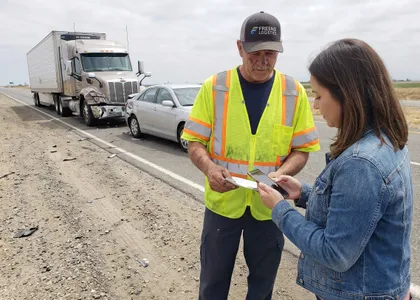
A trucking company may be held liable if its driver caused the accident while working. The company may also be held responsible for its own negligent hiring, training, supervision, maintenance, or safety practices.
According to the Code of Federal Regulations, “Parts and Accessories Necessary for Safe Operation” (49 CFR Part 393), commercial carriers must follow strict cargo securement rules. Commercial trucking companies must ensure their drivers:
- Inspect cargo.
- Follow cargo securement rules.
- Transport loads safely.
Violating these regulations may serve as evidence that the carrier failed to use reasonable care.
Driver inspection records, maintenance records, and company safety policies can help determine whether the trucking company contributed to the crash.
Cargo Loader
A cargo loader or warehouse may be liable if it improperly loaded or secured the cargo, and that unsafe loading caused debris to fall onto the roadway and contribute to the crash.
Cargo must be loaded so it remains stable during normal driving, braking, turning, and speed changes. Overloaded trailers, uneven weight distribution, or improperly secured cargo can increase the risk of debris falling onto the freeway.
Evidence such as loading records, shipping documents, inspection reports, and witness statements can help determine whether the cargo loader contributed to the accident.
Caltrans And Freeway Construction Zone Hazards
Caltrans or a private contractor may be held responsible if poor road maintenance or unsafe construction work caused your accident. Common hazards include:
- Fallen tree branches left on the roadway
- Loose construction materials
- Gravel or other loose materials left in travel lanes
- Damaged guardrails
- Debris that was tracked onto the freeway by construction equipment
A public agency is not automatically liable just because debris was on the freeway. Under California Government Code section 835, a claim usually requires proof that the road was dangerous, that the danger caused the injury, and that the agency either created the danger or had actual or constructive notice long enough to fix it.
Private contractors working on Caltrans projects may also be found liable if their work created the hazard. Depending on the circumstances, both the contractor and the public agency may share responsibility for your injuries.
What If You Can’t Identify The Source Of The Debris?
If you cannot identify the vehicle, driver, or company that caused the debris, your own auto insurance may help. Coverage depends on how the debris hit your vehicle and what coverage you bought.
Your policy may include:
- Comprehensive Coverage: This may apply if falling or flying debris hits your car. For example, this may include a tire tread, a branch, a ladder, or a loose object that strikes your vehicle while airborne.
- Collision Coverage: This may apply if your car hits debris that was already lying on the freeway.
- Uninsured Motorist Bodily Injury Coverage: This may help in some hit-and-run injury claims, but it is not automatic. California Insurance Code Section 11580.2 imposes strict rules for unknown-driver claims, including physical contact, a police report within 24 hours, and a sworn statement to the insurer within 30 days.
- Uninsured Motorist Property Damage Coverage: This has separate rules. It generally applies only when the at-fault uninsured driver is identified. California also limits how much this coverage can pay for vehicle damage.
After the crash, try to preserve evidence right away. Take photos of the debris, save the dashcam footage, note the details of nearby vehicles, and report the crash promptly. These steps can help support both your insurance claim and any liability claim against a later-identified responsible party.
Critical Steps To Protect Your Freeway Debris Claim
Evidence from a freeway debris crash can disappear fast. Debris gets cleared, dashcam footage may be overwritten, and witnesses can be hard to find. Act quickly to preserve what insurers and courts need to evaluate your claim. The following steps can help protect your claim after an accident.
- Get medical care as soon as possible. Keep records from the ER, urgent care, doctor, chiropractor, or any other provider who treats you.
- Save photos of the debris, your vehicle, the roadway, and your injuries. If you saw the vehicle from which the debris came, write down its license plate, company name, or USDOT number.
- Back up dashcam footage before it gets erased. Video can show whether the debris fell from a vehicle, was airborne, or was already on the road.
- Report the crash to your insurance company, but stick to the facts. Avoid guessing about who is at fault or the source of the debris.
- Keep all repair bills, medical bills, missed-work records, and letters from insurers. These records help prove your losses.
- Talk to a freeway accident attorney as soon as you can. An attorney can help identify who may be responsible, preserve important evidence, and deal with the insurance companies on your behalf.
How Lawyers Help Build Your Freeway Debris Accident Claim

Freeway debris crashes often involve difficult questions about fault. The driver who struck the debris is not always the person who caused the crash. The responsible party could be a private driver, a trucking company, a cargo loader, a maintenance contractor, or another party. A lawyer investigates what happened, preserves evidence before it disappears, and identifies everyone who may be liable.
Here’s why freeway accident lawyers matter:
- They collect crash reports, photos, videos, witness statements, and other evidence to determine the origin of the debris.
- They determine whether a driver, a trucking company, a cargo loader, a maintenance contractor, a vehicle manufacturer, or a government agency may be responsible.
- They act quickly to protect records, inspection reports, loading documents, and other important evidence.
- They document your medical bills, lost income, future care costs, property damage, and pain and suffering.
- They handle communications and negotiate for a fair settlement.
- They file a lawsuit and present your case if the insurance company refuses to make a fair offer.
The cases below didn’t involve falling debris. Still, they highlight why you need a lawyer with experience in serious freeway accidents and complex liability issues:
- Auto vs. Auto – $1,300,000: Recovered after a multi-vehicle freeway pileup that involved a burning vehicle. The case took more than three years to resolve.
- Truck Accident – $1,150,000: Recovered for a client injured after a large delivery truck rear-ended her on the freeway. The defense blamed her weight and pre-existing conditions, but the case settled before trial.
- Car Accident – $1,000,000: Recovered for a client whose parked vehicle on the I-10 Freeway was struck by a swerving tow truck. The crash caused serious head and body injuries.
Every case is different, and past results do not guarantee a similar outcome. These recoveries highlight the importance of having a freeway accident lawyer. A skilled lawyer knows how to investigate serious crashes, build strong claims, and seek fair compensation.
If falling debris caused your freeway crash, talking to a lawyer early helps protect your rights. It also improves the chances of preserving important evidence and building a strong compensation claim.
Frequently Asked Questions About Freeway Debris Accidents
The answers below address the most common concerns that arise after a debris crash on a California highway.
Is Hitting Road Debris Considered An At-Fault Accident?
It depends on how the debris ended up in your path. If cargo broke free from a truck and hit your car while still airborne, the driver may be at fault for failing to secure their load. If the debris was already on the road, insurers may treat the claim as a collision loss. Whether you are at fault depends on the circumstances, including whether you could reasonably have avoided the debris.
Will My Insurance Rates Go Up If I Hit Unidentified Freeway Debris?
Whether your insurance rates go up depends on your insurer, your policy, and the facts of the claim. If airborne debris from an unknown source strikes your vehicle, comprehensive insurance may cover the damage. If you hit stationary debris, your collision coverage usually handles the claim.
What Should I Do If Something Falls Off My Car On The Highway?
Pull over to the right shoulder, turn on your hazard lights, and report the hazard to the California Highway Patrol (CHP) or local law enforcement if appropriate. Do not return to active lanes to retrieve the object, as high-speed traffic makes the situation extremely dangerous.
How Long Do I Have To File An Injury Claim After A Debris Crash?
For a claim against a private party, you generally have two years from the crash date to file a personal injury lawsuit under California Code of Civil Procedure Section 335.1. If a government agency like Caltrans shares responsibility, the deadline is much shorter. You must file a written government claim within six months under the California Government Claims Act. Missing these deadlines may prevent you from seeking compensation.
If the agency formally rejects the claim, you have six months to file a lawsuit in civil court. If the agency does not respond within 45 days, the claim is deemed rejected by operation of law. In that case, you generally have up to two years from the accident date to sue.
Claims involving Caltrans or another public agency have much shorter deadlines. Gather maintenance records and other evidence as early as possible.
Can Dashcam Footage Prove Who Dropped Debris On The Freeway?
Dashcam footage can be powerful evidence. If it captures the debris falling, its path, or the license plate of the vehicle it came from, it may help identify the responsible party.
Consult A California Freeway Accident Attorney
Every accident on the freeway caused by falling debris raises questions specific to the facts of that crash. Speaking with an attorney can help you understand your options and what your situation may be worth.
Many people reach the point where they think, “I need a personal injury lawyer,” but worry about the cost. So, “Do lawyers only get paid if I win?” In personal injury cases handled by Arash Law, the answer is yes. AK Law works on a contingency fee basis, which means you owe no attorney’s fees unless your case results in a recovery.
Our attorneys handle claims against trucking companies, Caltrans, and drivers whose unsecured loads caused debris crashes, including hit-and-run drivers. We have handled these types of claims throughout California and know how to build a case against each of these parties. Each at-fault party follows different rules, carries different insurance, and faces different deadlines. We move fast to secure dashcam video, driver logs, and highway maintenance records before they disappear.
After a crash, many people look online for free advice from a falling object injury lawyer before deciding what to do next. Call us at (888) 488-1391 to schedule a free initial consultation.