TL;DR: Evidence that matters most in a DUI accident case includes police reports, video footage, eyewitness accounts, and chemical test results (BAC) showing impairment. Medical records can help prove your injuries and connect them to the crash. In California, you generally have two years to file a personal injury lawsuit, but some claims have shorter deadlines.
Highlights:
- Gather available BAC results, police reports, video footage, and eyewitness accounts.
- Request chemical test results (BAC) from the drunk driver’s arrest because they may provide important objective evidence of the driver’s alcohol level near the time of the crash.
- Seek medical care immediately and keep complete records from every provider to create an unbroken timeline linking your injuries to the crash.
- Document all gaps in treatment, as insurers use delayed visits or missing records to dispute compensation.
- Understand that a criminal conviction is not required; civil liability must still be proved by a preponderance of the evidence.
- Know your deadlines: you have 2 years to file a civil claim, or only 6 months if a government entity is involved.
- Avoid speaking directly with insurance adjusters without legal representation. Recorded or inconsistent statements may later be used to dispute fault, injuries, or damages.
Tip: Preserve all evidence immediately after the crash by photographing the scene, collecting witness contact information, and obtaining the police report number before insurers begin questioning your account.
Table of Contents
The evidence that matters most in a Driving Under the Influence (DUI) accident case includes police reports, chemical test results, video footage, eyewitness accounts, physical evidence from the scene, and medical records. Together, these records can show that the driver was impaired. These also explain how the crash happened, and connect your injuries and financial losses to the collision.
A DUI crash may leave you with serious injuries, medical bills, lost income, and emotional distress. To seek compensation, you must support those losses with clear evidence. Although the impaired driver may also face criminal charges, your civil claim is a separate process.
Evidence collected soon after the crash is especially valuable. The police investigation can note the driver’s actions, chemical test results, witness accounts, vehicle positions, and other details. These can help support your personal injury claim.
Evidence From The Crash Scene
Evidence from independent sources often carries significant weight in a DUI crash case. Police reports, video footage, and witness accounts can help show what happened without relying solely on either driver’s account. This type of third-party evidence may be more difficult for insurance adjusters to dispute.
These types of scene evidence can help build a strong foundation for your claim:
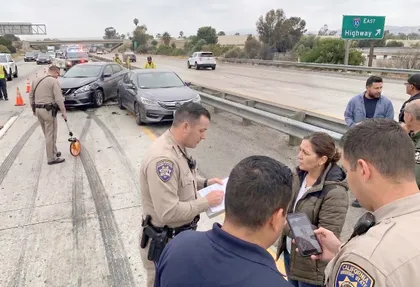
- Police Reports: Officers note where vehicles ended up, how each driver acted, and whether skid marks show any attempt to brake. That record becomes part of the crash file.
- Video Footage: Dashcams, body cameras, traffic cameras, and nearby surveillance footage may capture unsafe driving associated with DUI, such as:
- Weaving between lanes
- Drifting onto the shoulder
- Braking late
- Speeding
- Driving unusually slowly
- Running a red light
- Making a wide turn
- Reacting slowly to traffic
Video can provide useful objective evidence, although its value depends on the angle, clarity, and timing of the recording.
- Eyewitness Accounts: Independent witnesses can offer a different view of the crash. They may support or challenge the drivers’ statements.
Key evidence is often held by others, such as police, businesses, vehicle owners, or labs. Act quickly to identify items such as surveillance footage, dashcam videos, 911 calls, body-cam footage, vehicle data recorders, and lab or breathalyzer calibration records.
Sending written preservation requests early can stop this evidence from being deleted or altered. If it’s not handed over voluntarily, formal discovery or subpoenas may be needed later.
Chemical Testing And BAC Results
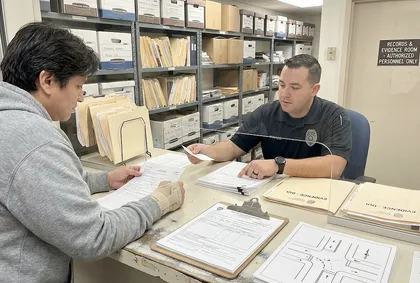
Breath and blood test results can provide important evidence in a California DUI accident case. They show the driver’s blood alcohol concentration, or BAC, at a specific testing time. Their weight may depend on when the sample was taken, how it was handled, and whether proper testing procedures were followed.
California Vehicle Code section 23152(b) prohibits driving with a BAC of 0.08% or higher. In a criminal DUI case, a test showing this level within three hours of driving may be used to presume the driver had the same BAC while driving. In a civil case, the result may help prove impairment, but it does not automatically prove fault or that the driver caused the crash.
California applies a 0.04% BAC limit to drivers of commercial motor vehicles. The same limit applies when a person drives a motor vehicle while a passenger for hire is in the vehicle. Drivers under age 21 and people on DUI probation are generally subject to a 0.01% rule. Additionally, DUI accidents are not limited to alcohol. Prescription medications, illegal drugs, and certain over-the-counter medications can also impair driving ability.
Key evidence may include:
- Breath Test Results: A breath-testing device estimates BAC by measuring alcohol in the driver’s breath. Records may also show the test time, device used, and whether multiple samples were taken.
- Blood Test Results: A laboratory test measures alcohol in a blood sample. Blood testing may also identify drugs when toxicology testing is performed.
- Time of Testing: The time between the crash, driving, and chemical test is important. BAC can change as the body absorbs and processes alcohol.
- Other Substances: Alcohol is not the only source of impairment. Toxicology results may show prescription drugs, illegal drugs, or a combination of alcohol and drugs.
- Testing Records: Calibration logs, maintenance records, lab reports, and chain-of-custody documents can help. Body-camera footage and officer notes also show if the test result is reliable.
A driver can still be impaired or responsible for a crash with a BAC below 0.08%. Officers consider many signs. These include unsafe driving, slurred speech, and balance problems. They also consider admissions, field sobriety tests, and witness reports.
NHTSA states that even small amounts of alcohol can affect judgment, coordination, vision, and reaction time. In 2024, 2,028 people died in crashes involving a driver with a BAC between 0.01% and 0.07%.
A BAC result can help prove intoxication or impairment, but it does not establish the entire civil case by itself. Injured victims and their DUI accident lawyers still need to connect the driver’s conduct to the crash and prove the injuries and financial losses the collision caused.
Expert Evidence in Disputed DUI Cases
When people disagree about what the evidence actually means, expert witnesses can help clarify things:
- A toxicologist can explain what the alcohol/drug test results mean and whether the timing of testing matters.
- An accident reconstruction expert can analyze vehicle damage, skid marks, speed, braking, and data recorder information to explain how the crash happened.
- Medical experts (treating doctors or hired specialists) can address whether the crash caused or worsened an injury, and whether future treatment is needed.
- Vocational or economic experts can assess how the injury affects the person’s ability to earn money, now and in the future.
Medical Records Related To The DUI Accident
Medical records show your injuries, when symptoms started, what treatment you got, and how the crash impacted your life. They don’t automatically prove causation. However, they can strongly support it when they match the collision and medical findings.
Important records may include:
- Emergency Care Records: Ambulance and emergency room records can document your condition, symptoms, pain level, and visible injuries soon after the crash.
- Doctor and Specialist Notes: Records from primary care doctors, orthopedists, neurologists, surgeons, physical therapists, chiropractors, and other providers may explain your diagnosis, restrictions, and treatment plan.
- Diagnostic Testing: X-rays, CT scans, MRIs, and other tests may identify fractures, bleeding, disc abnormalities, or other structural findings. A doctor must still determine whether those findings were caused or aggravated by the crash.
- Prior Medical Records: If you had an earlier injury or medical condition, records from before the crash may help show whether the DUI collision caused a new injury or made an existing condition worse.
- Treatment History: Consistent treatment can help document the progression of your condition. A treatment gap does not automatically defeat a claim, but an insurer may ask why care was delayed or interrupted.
- Prescriptions and Medical Equipment: Medication records, braces, mobility devices, and other prescribed items may support the type and severity of the injury.
- Work Restrictions: Medical notes limiting lifting, driving, standing, or working may support a claim for lost wages or reduced earning ability.
- Future Care Recommendations: A provider’s recommendations for surgery, therapy, injections, rehabilitation, or follow-up treatment may help establish future medical needs.
- Medical Bills: Bills and payment records help document treatment costs, although the amount recoverable may depend on California damages rules and the evidence presented.
Adrenaline and stress can temporarily mask pain after a violent collision. Symptoms such as stiffness, headaches, dizziness, or soreness may become more pronounced in the hours or days ahead. It is advisable to seek appropriate medical attention after a DUI crash. Consider these steps:
- Keep copies of your records.
- Follow reasonable medical instructions.
- Explain any delay or gap in treatment honestly.
A clear medical history can help connect your injuries and losses to the collision without overstating what any single record proves.
Medical records alone don’t prove every kind of loss from a DUI crash. Other documents fill in the gaps:
- For Lost Income: Pay stubs, tax records, employer statements, attendance records, and work schedules can show missed work and lost wages.
- For Property Damage And Expenses: Repair estimates, vehicle valuations, receipts, invoices, and records showing you paid for transportation or help around the house can support these costs.
- For Pain And How The Injury Affected Daily Life: Personal notes (kept accurately), photos, doctor-ordered activity restrictions, and statements from family, friends, or co-workers who noticed changes after the crash can all help.
One important caveat: all of this should match what the medical records actually say, not overstate or exaggerate the injuries.
How Criminal DUI Investigations Support Your Civil Claim
A DUI investigation can help your civil claim. It shows how police decided if impairment, unsafe driving, or other violations caused the crash. Although the criminal case and your civil claim are separate, they often develop in parallel and can inform one another.
California law makes it illegal to drive under the influence of alcohol or drugs. Here’s a simplified version:
If a driver broke a DUI law, that can help prove they were negligent “as a matter of law” (this is called “negligence per se”) under California Evidence Code section 669.
However, this presumption only kicks in if three things are true:
- The DUI violation actually caused the crash/injury
- The accident is the kind of harm the DUI law was meant to prevent
- The injured person is someone the law was meant to protect
Even if all three apply, the plaintiff still has to prove the other parts of their case; this presumption alone doesn’t win the lawsuit for them.
Drunk driving may reflect a conscious disregard for others’ safety. Under Civil Code 3294, that kind of behavior can, in some circumstances, qualify as malice, which may support a claim for punitive damages. These are additional damages that a court may award not to compensate you for your losses, but to punish particularly egregious conduct and deter similar behavior.
Records from the DUI investigation may be obtained during the civil case, but each report, test result, recording, or statement must still satisfy the applicable evidence rules. These documents, combined with the physical evidence gathered at the scene, form the foundation on which your claim is built.
Legal Deadlines After A DUI Injury Accident
Basic deadline: In California, you generally have 2 years from the date of injury to file a personal injury lawsuit (Code of Civil Procedure § 335.1).
If you’re suing a government agency or employee, different, shorter deadlines apply:
- You must first file an administrative claim with the government entity within 6 months of the injury (Government Code § 911.2); you can’t skip straight to a lawsuit.
- If the entity formally rejects your claim in writing, you then have 6 months from when that rejection was mailed or delivered to file your actual lawsuit (Government Code § 945.6).
Exceptions: There are some situations where these deadlines can be paused or extended, or where you can ask for permission to file a late claim, but those apply only in limited circumstances.
Frequently Asked Questions
Drunk driving crashes cause serious injuries every day in California. When an impaired driver gets behind the wheel, everyone on the road is at risk. If you were hurt in a DUI crash, you likely have questions about your rights, especially if your case has some complications.
Can I File A Civil Lawsuit If The Drunk Driver Wasn’t Convicted?
Yes. A criminal conviction is not required for a civil case. The plaintiff must prove by a preponderance of the evidence that the driver was negligent, that the plaintiff suffered harm, and that the driver’s negligence was a substantial factor in causing that harm. A decision not to file criminal charges or a criminal acquittal does not automatically prevent a separate civil claim.
Can I Still Sue If I Was Partially At Fault?
Yes. California follows pure comparative fault, which reduces your damages in proportion to your share of responsibility. For example, if you are found 20% at fault, you may recover 80% of your proven damages. A plaintiff assigned 100% of the fault would not recover damages from another party.
What Is The Hardest Injury To Prove After A Car Accident?
Mild traumatic brain injuries can be difficult to document because symptoms may be subtle, and routine brain imaging may appear normal. They may not always appear on a standard CT or MRI. From the outside, you may look fine, but you could be dealing with brain fog, memory problems, dizziness, and mood changes. Proving an mTBI may require detailed clinical records, cognitive testing, symptom history, and medical-expert testimony.
Do Lawyers Only Get Paid If They Win A DUI Injury Case?
Yes, if the personal injury lawyers work on a contingency fee basis. If there is no recovery, you don’t owe attorney’s fees. An experienced legal team can evaluate your DUI injury claim and, if they take your case, handle everything from gathering medical evidence to negotiating with insurers, all at no upfront cost to you. The right legal team works on your behalf from day one so that evidence is preserved, deadlines are met, and your focus stays on recovery.
Victim Of A DUI Accident? Arash Law Can Help
California law sets strict deadlines for personal injury lawsuits and government claims. Missing an applicable deadline may prevent you from pursuing the affected claim, although limited exceptions or late-claim procedures may apply.
Our DUI accident victim lawyers at Arash Law (also known as AK Law) offer a free initial consultation. During that call, our attorneys will review your case and explain your legal options. They can also help you understand what your claim may be worth. Our attorneys work on a contingency fee basis, meaning you pay no attorney’s fees unless they recover compensation for you. Call (888) 488-1391 to schedule your free case review and speak with our team.