TL;DR: A pedestrian can be held partly or fully at fault for a crash under California law if they jaywalked, crossed against a signal, were distracted, or darted into traffic. California’s pure comparative negligence rule may allow both pedestrians and drivers to recover compensation reduced by their percentage of fault, even if they share significant blame. You generally have 2 years to file a lawsuit, but evidence like video and witness statements can disappear within days.
Highlights:
- California’s pure comparative negligence rule lets victims recover partial damages even if they’re partly at fault.
- Jaywalking, crossing against signals, distracted walking, and darting into traffic can all shift fault to a pedestrian.
- Preserve evidence immediately, as camera footage, witness statements, and traffic signal data can disappear within days.
- Stick to facts when speaking to the police or insurers; avoid any language that sounds like you’re taking the blame.
- File a police report as soon as possible, even if you left the scene before officers arrived.
- Contact an attorney before giving recorded statements to the other party’s insurance company or accepting early settlement offers.
- You have two years to file a personal injury lawsuit and six months to file a claim if a government agency was involved.
Tip: Securing independent evidence like surveillance video and witness accounts is critical because police reports may be inadmissible in court and don’t include all the facts.
Table of Contents
A pedestrian can be entirely or partly at fault for getting hit under California law, depending on the facts of the accident. Determining fault is often more complicated than it first appears, especially when questions arise about whether the pedestrian’s actions contributed to the collision.
For pedestrians and drivers involved in these incidents, sharing partial fault does not automatically prevent recovery. California follows the doctrine of pure comparative negligence. Under this rule, a person’s percentage of fault reduces the compensation they may recover. That said, you may still recover damages even if you share responsibility for a pedestrian accident.
How fault is assigned can significantly affect the amount of compensation available. Understanding the actions that may shift responsibility to a pedestrian is an important part of analyzing a pedestrian accident claim.
When Can A Pedestrian Be At Fault For An Accident In California?
California Civil Code § 1714 requires people to exercise reasonable care to avoid harming others. The state’s Vehicle Code (CVC) also sets specific duties for drivers and pedestrians. That means pedestrians are expected to act with reasonable care, even when they have the right of way. When they violate that duty of care and cause or contribute to an accident, they may be found partially or fully at fault.
Several specific actions can shift fault to a pedestrian under California law:
- Jaywalking: California law requires pedestrians to yield to oncoming traffic when crossing outside a marked crosswalk or between intersections. If they fail to yield, part of the fault may shift to them.
- Crossing Against a “Don’t Walk” Signal: Pedestrians have a duty to obey crossing signals. Walking into a crosswalk against a “Don’t Walk” signal may shift part of the fault to them, even if the crossing is marked.
- Distracted Walking: Looking at the phone or wearing headphones while crossing reduces the pedestrian’s situational awareness. Walking into a vehicle’s path while distracted can contribute to an accident.
- Walking While Impaired: Alcohol or drugs affect a pedestrian’s judgment and reaction time. Stumbling into traffic or ignoring signals while impaired may add to their share of fault.
- Darting into the Street: Stepping off a curb without warning gives a driver little or no time to stop. California law does not excuse this behavior, even near an intersection.
- Walking on Freeways: Most freeways post signs prohibiting pedestrian access under the law. Pedestrians struck in these areas may bear a significant share of the fault.
Even so, another party may still share legal responsibility. If a motorist had time and space to stop but did not, that motorist may also share some of the fault. Ultimately, an injured victim can pursue compensation even if they were partly responsible for the accident.
California Pedestrian Right-Of-Way Laws And The Freedom To Walk Act
California law gives pedestrians the right of way in crosswalks. However, it also puts duties on them when they cross elsewhere. The Freedom to Walk Act changed how police handle jaywalking. It did not change who can be held liable after a crash.
Here are the key California laws that apply to pedestrian accidents:
| California Law | What It Covers | What It Means |
|---|---|---|
| CVC § 21950 | Right-of-Way in Crosswalks | Drivers must yield to pedestrians in marked and unmarked crosswalks at intersections. |
| CVC § 21954 | Crossing Outside a Crosswalk | Pedestrians crossing outside a crosswalk must yield to vehicles close enough to create a hazard. Drivers must still use reasonable care to avoid hitting pedestrians. |
| AB 2147 (Freedom to Walk Act) | Jaywalking Enforcement | The bill limits police stops for specified crossing violations unless a reasonably careful person would recognize an immediate danger of a collision. The law changed jaywalking enforcement. It did not allow careless crossing, remove a pedestrian’s duty to yield when required, or prevent a pedestrian from being held liable after a crash. |
These laws help determine who had the right of way and whether any party acted negligently. To prove a violation, you need evidence such as camera footage, witness statements, and police reports.
How Pure Comparative Negligence May Affect Fault Assessments
California’s pure comparative negligence rule means that fault can be divided between all parties responsible for a crash. If the person seeking compensation is partially at fault, their share of the blame won’t end their case. Instead, a court may reduce that share from their potential award.
Pure comparative negligence mainly affects how much you can seek for economic (financial) and non-economic (personal) damages, such as medical care, lost wages, property damage, and pain and suffering, after a pedestrian accident. To illustrate, imagine a pedestrian crossing mid-block when a speeding driver hits them.
If a jury finds a pedestrian 30% at fault for crossing mid-block, their damages (the total value of their injuries and losses) are reduced by that same 30%. They would recover only 70% of the total damages. California law permits an injured person to recover a portion of their damages even when they are up to 99% at fault.
How Comparative Fault Has Played Out In Real Pedestrian Cases
Comparative negligence isn’t just a legal theory — it shapes real outcomes for real pedestrian accident cases. Here’s how Arash Law attorneys have secured compensation for clients in these scenarios:
| Case | Amount Recovered | Summary |
|---|---|---|
| Jaywalking / Police Cited Client as At-Fault | $2,000,000 | Our client was struck while jaywalking at night and was cited by police as the at-fault party in the collision. Rather than accept that outcome, our attorneys built an independent case around the facts of the crash. We secured a $2 million settlement for our client, despite an unfavorable police report that worked against him from the start. |
| Distracted Walking Claim Rejected | $5,000,000 | Our client was lawfully walking across a marked crosswalk when a large truck struck him. The trucking company tried to shift blame by claiming he was distracted, looking at his phone instead of the road. We rejected that narrative, built the case around the driver’s own conduct, and secured a $5 million recovery for our client, who suffered a mild traumatic brain injury in the crash. |
| Child “Darting Into Traffic” | $1,250,000 | When a 5-year-old child ran into the street, the insurance company argued the collision was unavoidable and pinned responsibility on the child. Using expert accident reconstruction, our attorneys demonstrated that the driver could have avoided the crash. That evidence secured $1.25 million, the full policy limit available to the family. |
These results show why an initial police report, an insurer’s early argument, or an assumption about who was “at fault” doesn’t have to be the final word on your case. However, note that past results do not guarantee, warrant, or predict future outcomes. The result of your case will still depend on the available evidence and specific facts.
Crucial Evidence Used To Prove Who Caused A Pedestrian Accident
Police reports in pedestrian cases are often one-sided. An injured pedestrian is typically taken to the hospital before giving a statement. That leaves the officer with only one party’s version of events. Similarly, drivers may be initially found at fault because they have a greater duty of care to prevent such accidents. That is where independent evidence becomes essential.
Several types of independent evidence can fill the gaps left by one-sided police reports and initial fault assessments:
- Business Camera & Dashcam Video: Cameras at nearby businesses or buildings may have recorded the street, sidewalk, vehicle, or people involved in the crash.
- Witness Statements: Eyewitnesses can help clarify conflicting accounts of the collision.
- Traffic Signal Data: Traffic signal timing records can show whether the pedestrian had the right to cross when the crash occurred.
- Event Data Recorders (EDR): Many late-model vehicles have EDRs that may store speed, braking, steering, or other data for a brief period before and during a qualifying crash.
- Driver or Pedestrian Cell Phone Logs & App Records: Phone activity at the time of the crash may strongly suggest that a person involved in the collision was distracted.
- Sightline, Lighting, & Visibility Analyses: Photometric studies, weather logs, and street lighting evaluations may be relevant for showing how visible a pedestrian was to the driver at the time of the crash, especially if the incident occurred at night or in low-light conditions.
- Pedestrian Footwear & Personal Items Inspection: Shoe tread, damage to personal belongings, and final resting positions of thrown items can support accident reconstruction analyses.
An accident reconstruction expert reviews the crash scene and vehicle data to determine whether a person involved in the collision had time to avoid the impact. When the parties’ accounts conflict, reconstruction experts provide the jury with a clear factual basis to determine who is at fault.
Steps To Take After A Pedestrian Accident
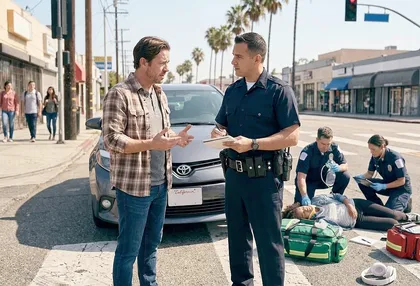
Calling 911 for emergency assistance, seeking immediate medical care, and documenting the scene are crucial steps to take after any accident, including pedestrian collisions. However, there are further actions you can take to guard against unfair fault assessments during the claims process:
- Do not apologize or admit fault at the scene. Simple phrases like “I’m sorry,” “I didn’t see you,” or “I was in a hurry” may be taken out of context as an admission of legal guilt. Stick strictly to basic facts when speaking to responding officers.
- Tell the police officer whether you were in an unmarked crosswalk. Police officers may assume a pedestrian was “jaywalking” simply because there were no painted lines on the road. If you were the pedestrian and were crossing at an unmarked crosswalk when the accident occurred, point out nearby intersections, street corners, or traffic signals that give you the legal right of way under California law.
- Preserve clothing and personal items. Keep everything in its post-crash condition. Do not wash, repair, or throw anything away.
- Decline to give a recorded statement to the other party’s insurance adjuster. Insurers represent the other party, not you. Recorded statements can be used to dispute liability or minimize injuries. State politely that your legal representative will handle all communications.
- Consult a personal injury attorney before accepting any liability. An initial police report blaming you for the crash is not the final word. A skilled attorney can deploy accident reconstruction experts, pull vehicle Event Data Recorders (EDR), and gather video footage to overturn an unfair police report and prove the driver shared or held full responsibility.
For pedestrians, these actions can help you address arguments that you were jaywalking, darting into traffic, or walking distracted. Meanwhile, if you were a driver and a pedestrian caused the accident, these steps can help you show that you were not solely responsible for the collision.
Deadlines For Filing A Pedestrian Injury Case
When pursuing an insurance claim after a pedestrian accident, suing the other party may be necessary if disputes over fault cause settlement negotiations to fail. However, California law limits how long you have to file a pedestrian injury lawsuit. The deadline depends on who caused the accident. Most civil cases against private parties are subject to a two-year deadline.
Here are the most common filing deadlines that apply to California pedestrian injury claims:
| Type of Claim | Deadline | What It Means |
|---|---|---|
| Personal Injury Lawsuit Against a Private Party | 2 years | An injured person generally has two years from the date of the accident to file a personal injury lawsuit. This deadline usually applies to cases against private parties. |
| Claim Against a Government Entity | 6 months | An injured person generally has six months from the date of the injury to file an administrative claim with the responsible government agency. This rule may apply if the accident involved:
The administrative claim generally must be filed before a lawsuit may proceed. If the entity sends a proper written rejection, the claimant usually has 6 months from the date of the rejection notice to file suit. Limited late-claim procedures may apply in some cases. |
| Claims Involving Minor Victims | 2 years | California law generally pauses, or “tolls,” the deadline while the injured person is under 18. In most cases, the two-year filing period begins on the child’s 18th birthday.
If the claim involves a government entity, the six-month deadline for government claims still applies. |
| Sources: Code of Civil Procedure §§ 335.1 and 352(a); Government Code §§ 911.2 and 911.4. | ||
Keeping these deadlines in mind is crucial because many of them start on the date of the accident and do not pause during the claims process. That means that any disputes over fault during settlement negotiations can impact your ability to file a lawsuit on time, if suing becomes necessary. The risk increases if you start preparing your claim late.
If you miss the applicable filing window, a government entity or court can bar your case, and you may lose your right to seek compensation. Speaking with an attorney promptly after an accident can help you understand your options and take action before any deadlines expire.
How A California Lawyer Can Help With A Pedestrian Accident Case
After a pedestrian accident, you may have to deal with medical treatment, missed work, insurance calls, and questions about who caused the crash. An experienced legal professional can handle the legal side on your behalf.
A California pedestrian accident lawyer can:
- Gather police reports, witness statements, photos, video footage, and other evidence that support the claim.
- Show who was responsible for the crash. If another party disputes liability, the attorney can use the evidence to challenge that claim and determine how California’s comparative negligence rules apply.
- Calculate all recoverable losses. That includes medical bills, lost wages, future treatment, and the pain and suffering the accident caused.
- Speak with the insurance company on the client’s behalf. They can handle recorded statement requests, settlement negotiations, and other communications that may affect the claim.
- File the claim on time. California law sets strict deadlines, and missing one can affect your right to recover compensation.
- Take the case to court if a fair settlement cannot be reached.
Cost is a common concern after a pedestrian accident. Many people wonder if they can afford an attorney. Some also ask, “Do lawyers only get paid if they win?” Many injury lawyers in California handle pedestrian accident cases on a contingency fee basis.
If you hire an attorney who uses this fee arrangement, you generally do not owe legal fees unless the attorney recovers compensation on the client’s behalf. The written contract should separately explain case costs and how they are paid.
Frequently Asked Questions About Fault In Pedestrian Accidents
Pedestrian accidents leave many people with unanswered questions about fault, available compensation, and the insurance process. Knowing the answers to these concerns can help you make informed decisions about your rights under California law.
Can A Child Be Found At Fault For A Pedestrian Accident?
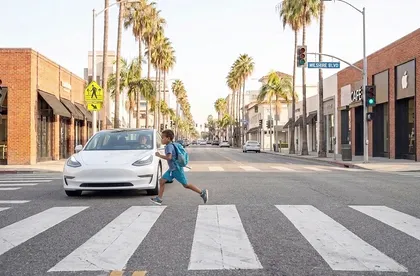
Rarely, and not in the same way an adult would be. California law judges a child’s actions against the standard of a reasonably careful child of similar age and experience, not an adult standard of care. Very young children may not be held legally capable of negligence at all. If you are a parent or legal guardian pursuing compensation on behalf of your child, an attorney can evaluate whether the standard was applied correctly to your case.
Are Drivers Automatically At Fault If They Hit A Pedestrian?
No. Drivers must take care to avoid hitting pedestrians, but California law does not automatically place all the blame on a driver. Fault depends on what actually happened. If a pedestrian stepped into traffic without warning and gave the driver no time to stop, that pedestrian may share fault or even be held mostly responsible.
What Happens If A Driver Swerves To Avoid A Pedestrian And Hits Another Car?
Fault depends on whether the driver’s evasive action was reasonable under the circumstances and whether the driver, pedestrian, or another party created the emergency. If a pedestrian’s careless actions, such as stepping off a curb into moving traffic, caused the swerve, the pedestrian may share fault for the damage and injuries. California law allows courts to split fault among all parties whose actions contributed.
Can I Use My Auto Insurance If I Am Hit By An Uninsured Driver While Walking?
In certain cases, you can. If your auto policy includes uninsured motorist (UM) coverage, that coverage may apply even when you’re not in a vehicle, depending on your policy terms. Some policies extend UM coverage to situations where you were on foot, but the answer depends on the specific policy language.
If a hit-and-run or uninsured driver hit you while you were walking, your policy may pay for medical costs, lost wages, and pain and suffering up to your policy limits. A lawyer can review your policy to determine what benefits may be available based on your legally recoverable damages and your policy limits.
Discuss Your Pedestrian Accident Case With A California Lawyer
Some surveillance systems keep footage for only a limited time. Insurance companies also begin investigating the crash early, often to protect their own interests. Speaking with an attorney as soon as possible can help preserve important evidence and protect your claim.
Arash Law, also known as AK Law, is ready to help with your pedestrian accident claim. If the fault is unclear, we can assess potential liability and explain your legal options. If you decide to work with us, we can also help you protect the necessary evidence and advocate for fair fault assessments on your behalf. Call (888) 488-1391 to schedule a free initial consultation.