TL;DR: After a semi-truck crash, get somewhere safe if you can, then call 911, get medical care, exchange information with the other driver, and preserve evidence. A police report may be required within 24 hours, and an SR-1 may be due within 10 days. Report the accident to your insurer, but avoid giving recorded statements without legal advice.
Highlights:
- Call 911, move to safety, and check on others before the scene clears.
- Promptly report an injury or fatality crash and confirm whether California’s 24-hour police report requirement applies.
- File an SR-1 with the DMV within 10 days when someone is injured or killed or when property damage exceeds $1,000.
- Take photos of vehicle positions and skid marks, note the truck, trailer, and USDOT identifiers, and collect witness contact information.
- Get a medical evaluation after the crash, even if you have no immediate symptoms, as some injuries may not be apparent right away.
- Request that your attorney send a preservation letter to the trucking company to protect black box data, electronic logging records, and other critical evidence.
Tip: Stick to brief, factual details when reporting the crash to your insurer, and avoid speculating about fault.
Table of Contents
After a semi-truck accident in California, prioritize your safety. Call 911, seek medical attention, and document the scene. Gather as much evidence as you can, such as witness statements, dashcam footage, and the other driver’s contact and insurance details.
A fully loaded tractor-trailer may weigh many times more than a passenger vehicle, increasing the risk of catastrophic injury.
These crashes also involve a more complex claims process. Federal or California trucking rules may apply depending on the carrier, vehicle, cargo, and whether the transportation is interstate or intrastate. Either way, large trucking companies have lawyers ready to protect their interests from the moment a crash happens.
Because of this, the steps you take at the scene and in the days that follow matter. Contact an experienced truck accident attorney before you speak with any insurance company.
Immediate Steps To Take After A Truck Accident
Your immediate priority after a semi-truck accident is physical safety and medical care. Stop in a safe location, check for injuries, and call 911 immediately. Exchange details with the other driver and assist anyone injured (only if you can). When responders arrive, cooperate without admitting fault or speculating about the cause of the crash.
Here are the steps that you should take while you’re still at the scene.
Call 911 And Get Out Of Danger
Call 911 immediately to report the crash and request police and medical response. If you notice smoke, fuel, fumes, or spilled cargo, keep your distance and inform the 911 dispatcher. If you can do so safely, move away from moving traffic. Semi-truck crashes often leave debris, fluid, or a jackknifed trailer blocking multiple lanes, which puts survivors at risk of a second collision.
Turn on your hazard lights. Use flares or reflective warning triangles only if you have them and can place them without entering traffic or exposing yourself to danger.
Do not move an injured person unless leaving them in place would expose them to an immediate threat, such as fire, leaking fuel, or approaching vehicles.
Get Medical Attention
Seek prompt medical evaluation if you have symptoms, struck your head, lost consciousness, experienced a significant impact, or are concerned that you may be injured. Adrenaline and shock can make pain or other symptoms less noticeable immediately after a crash. Some injuries, including concussions, may also not show noticeable symptoms immediately.
Seek emergency care for any alarming changes, including:
- Severe or worsening pain
- Confusion
- Loss of consciousness
- Weakness
- Numbness
- Difficulty breathing
- Significant abdominal pain
- Uncontrolled bleeding
Tell medical personnel about every symptom you are experiencing, even if it seems minor. Follow the recommendations and referrals of qualified healthcare professionals.
Remain At The Scene And Exchange Information
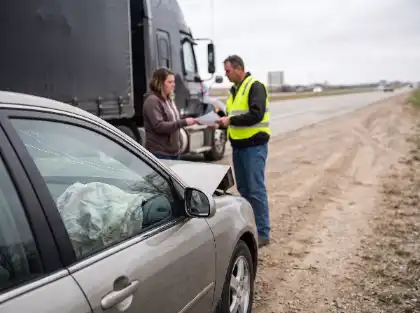 California law strictly requires drivers to stop at the scene of any vehicle accident they are involved in. Drivers must provide identifying information and render reasonable assistance. Leaving the scene before doing so can expose you to hit-and-run liability, even if the crash wasn’t your fault.
Exchange the following information with the other driver:
- Name and contact information.
- Current address.
- Insurance carrier and policy information.
- Vehicle registration number.
- Registered owner’s name and address.
- Tractor and trailer ownership information.
- Driver’s license or commercial driver’s license information, if voluntarily exchanged.
Keep the conversation brief and factual. Avoid arguing, apologizing, admitting fault, or speculating about what caused the accident.
A trucking company may send a representative or a privately retained rapid-response investigator to the scene. You generally do not have to provide that person with a statement. Do not sign documents you do not understand.
Cooperate With Responding Officers And Obtain Report Information
Give responding officers a clear, factual account of what you personally observed. Do not guess about the truck’s speed, stopping distance, driver behavior, or anything else you did not clearly see.
Provide the information officers request and ask for:
- The officer’s name and badge number.
- The responding agency.
- The incident or report number.
- Instructions for obtaining the collision report.
The local police department usually handles crashes within city limits. The California Highway Patrol may respond to accidents on state highways or in unincorporated areas.
Document The Scene, Vehicles, And Injuries
Before vehicles, debris, or cargo are removed, photograph and record the scene. Only do this if you are safe and medically able.
Document the following:
- The positions of the truck, trailer, and other vehicles.
- Damage to all involved vehicles.
- Skid marks, gouge marks, debris, and fluid spills.
- Traffic lights, signs, lane markings, and construction areas.
- Road, weather, lighting, and visibility conditions.
- The truck’s company markings, license plates, USDOT number, and MC number.
- Visible cargo damage, shifted loads, trailer doors, and securement equipment.
- Your visible injuries.
Photograph hazardous-material placards only from a safe distance. Do not put yourself at risk to obtain evidence.
Steps To Take Shortly After The Semi Truck Accident
Once you have left the scene and addressed any immediate medical needs, there are additional steps you should take to protect your health, preserve evidence, and meet important reporting and insurance requirements.
These steps include completing any required California accident reports, notifying your insurer, continuing medical care, preserving vehicle and trucking-company evidence, and avoiding actions that could weaken your claim.
Report The Collision To The Appropriate Law Enforcement Agency
California Vehicle Code § 20008 generally requires the driver of a non-common-carrier vehicle involved in a crash that involves any injury or fatality to make or cause a written report within 24 hours.
- If officers responded to the scene, get the officers’ names, badge numbers, and report numbers so you or your attorney can request copies later. Confirm that the required written report has been made.
- If no officer responded, make or cause a written report to the CHP or, if the crash occurred within a city, to either the CHP or that city’s police department within 24 hours.
For common-carrier vehicles involved in a crash resulting in injury or death, the owner or driver must make a similar report to the California Highway Patrol on or before the 10th day of the month following the accident.
File The SR-1 When Required
Separate from any police report, California requires an SR-1 form filed with the DMV within 10 days if the crash caused injury, death, or more than $1,000 in property damage. This applies regardless of who was at fault, although California law provides an exception for certain government-owned, leased, or directed vehicles.
A driver’s insurance agent, broker, attorney, or other designated representative may submit the form on the driver’s behalf.
Notify Your Insurer Without Speculating
Notify your own insurance company within the time required by your policy. Provide the basic facts, including when and where the crash occurred, which vehicles were involved, and whether law enforcement responded.
Avoid guessing about speed, distance, fault, or the extent of your injuries. Say when you do not know or do not remember something.
Your policy may require timely notice and reasonable cooperation. Before giving a recorded statement or signing a broad medical authorization, determine whether the request is required under your policy and what information it would permit the insurer to obtain.
The trucking company’s insurer is different from your own. It represents the interests of the trucking company, driver, or another insured party. You generally do not have the same contractual duty to cooperate with that insurer. If you must speak to them, only provide basic facts (your name and contact info). If they ask for a recorded statement, you can politely decline.
Continue Medical Treatment And Document Your Injuries
Attend recommended appointments and follow reasonable treatment instructions. Keep copies of:
- Medical records.
- Test results.
- Prescriptions.
- Referral paperwork.
- Medical bills.
- Mileage and transportation expenses.
- Work restrictions.
- Records of missed work or lost income.
Continue photographing visible injuries as bruising, swelling, or scarring develops.
If you cannot attend an appointment or follow a treatment recommendation, document the reason. Unexplained gaps in care may lead an insurer to question whether an injury was serious or connected to the collision.
Preserve Your Vehicle, Devices, And Trucking Company Evidence
Do not repair, sell, destroy, or dispose of your vehicle until it has been documented and, if needed, inspected. In addition to keeping what you can, it is important to protect evidence controlled by the trucking company and other parties involved.
Keep all personal and case-related evidence, including:
- Dashcam footage
- Cellphone photos and videos
- Vehicle data
- Damaged personal property
- Clothing worn during the crash
- Towing and storage records
- Medical records
- Repair estimates
- Receipts and out-of-pocket expenses
- Communications with insurers or trucking-company representatives
Back up electronic files as soon as possible to prevent loss or overwriting.
Semi-truck cases also usually involve evidence held by the driver, the trucking company, the cargo loader, the maintenance provider, or another third party. These may include:
- Engine-control-module data
- Electronic logging device (ELD) records
- Hours-of-service logs
- GPS and dispatch data
- Driver qualification and training files
- Inspection and maintenance records
- Dashcam or in-cab video
- Cargo loading and securement records
- Drug and alcohol testing records
- Carrier communications
Because these pieces of evidence can be overwritten or lost through routine operations or repairs, a preservation letter is often used to formally demand that they be retained. Acting quickly helps ensure key evidence is not destroyed before it can be reviewed.
Avoid Releases, Social-Media Posts, And Premature Settlements
Don’t sign any release, waiver, or settlement offer from an insurer before speaking with an attorney. An early offer may be made before the full extent of injuries, future care, lost income, or available insurance is known.
Be careful on social media, too. Insurers and defense attorneys routinely look for posts, photos, or check-ins that could be used to downplay your injuries or suggest a more active lifestyle than your claim reflects.
Get Legal Guidance Before Evidence Disappears Or Deadlines Expire
Evidence in a truck accident case has a shelf life. Some electronic vehicle data may be overwritten, lost, or altered through continued operation, repair, or return to service. Legal and reporting deadlines can also affect your rights, including deadlines for filing a lawsuit or pursuing certain claims.
Speaking with a lawyer early can help preserve time-sensitive evidence, identify potentially responsible parties, and handle communications with the trucking company and its insurer. Lawyers can also help in dealing with multiple parties in a truck accident, especially when several companies or individuals may share responsibility.
Contact a truck accident attorney promptly when:
- Anyone was hospitalized, seriously injured, or killed.
- The trucking company or its insurer contacts you.
- Fault is disputed.
- Multiple vehicles or companies are involved.
- The tractor, trailer, cargo, or driver is connected to different businesses.
- You may miss work or need continuing medical treatment.
- You are asked to sign a release or accept a settlement.
Additional or shorter deadlines may apply in certain cases, including claims involving a government vehicle or public entity. A local attorney can evaluate which deadlines apply and take appropriate steps before important evidence or legal rights are lost. Free or low-cost legal-help resources may also be available.
Who Is Liable In A California Semi-truck Accident?
In a California semi-truck crash, more than one party can be liable, or legally responsible for your losses. The driver may be at fault, but the trucking company, cargo loaders, and equipment makers can each share the blame.
- The Truck Driver: A driver can be liable for unsafe choices at the wheel. Speeding, drowsy driving, and distraction are all common causes.
- The Trucking Company: A trucking company may be responsible for a driver’s conduct when the driver was acting within the course and scope of qualifying work.
- Cargo Loaders: The crew that loaded the trailer can be held responsible if the freight was not secured. A shifting or falling load can cause a crash just as easily as driver error.
- Equipment Makers and Repair Crews: If a part failed or repairs were done poorly, the maker or repair crew may share the blame. Brake failure and tire blowouts are two examples.
Identifying every liable party is the groundwork for any claim you pursue. Semi-truck accident lawyers can investigate each party and help you build a complete case.
Deadlines To File A Truck Accident Claim In California
Under California Code of Civil Procedure § 335.1, California personal-injury lawsuits must generally be filed within two years, but exceptions and shorter deadlines may apply. Claims against a California public entity typically require filing a written government claim generally within six months. A separate deadline for filing suit may follow the agency’s response.
Missing a deadline can bar your case, though there are limited exceptions. Once the deadline passes, you may lose the right to recover compensation. If you have questions about how these deadlines apply to your situation, get those answers before the clock runs out.
Frequently Asked Questions About Semi-Truck Collisions
Commercial truck accident claims raise questions that regular car accident cases do not. These cases involve federal rules and multiple parties. Insurance claims are also more complex than in a standard car crash. These answers cover some common questions that arise in semi-truck crash cases.
Can I Still File A Claim If The Truck Driver Lives Out Of State?
Yes. You can file your claim in California if the accident happened here. When a crash occurs in California, state courts will often have jurisdiction over resulting claims, including claims against an out-of-state driver. The proper state and county depend on jurisdiction, venue, service, and the parties’ contacts. An attorney can help you decide which option fits your case.
What Additional Safety Rules Apply To Commercial Drivers In California?
Commercial drivers and motor carriers are subject to additional safety requirements. Depending on the vehicle and operation, commercial drivers and motor carriers may be subject to federal FMCSA regulations, California commercial-vehicle rules, or both. When a driver or carrier breaks these rules, that violation can serve as evidence of negligence in your claim.
Who Pays For My Medical Bills While My Truck Accident Case Is Pending?
Your own health insurance covers some treatment costs while your case is open. If you do not have health insurance, a medical provider may agree to a medical lien. That means they treat you now and get paid from any settlement or award you may recover later. Keep records of every bill, payment, and lien agreement.
Do I Need An Experienced Truck Accident Attorney, Or Can I Use A General Personal Injury Lawyer?
A personal injury attorney may evaluate a truck accident claim, but these cases often require experience with carrier records, trucking regulations, complex insurance issues, and multiple defendants. Not every personal injury attorney regularly handles federal trucking rules. These cases turn on Federal Motor Carrier Safety Administration (FMCSA) rules, electronic logging device (ELD) records, and driver files. An attorney who handles truck accident claims will know where to find these pieces of evidence.
Do Lawyers Only Get Paid If They Win?
Many truck accident lawyers use contingency-fee agreements, meaning attorney fees are paid from a recovery. If you win, the attorney takes a percentage of your settlement or award. If you do not recover, you owe no attorney fees.
Get A Free Consultation After A Semi-Truck Accident
Semi-truck accident cases are more complex than standard car crashes. These cases involve multiple insurers, federal rules, and the trucking company’s own defense team. Our lawyers have years of experience taking on similar cases. Here are some examples of semi-truck cases our lawyers have handled:
-
$1,000,000 — Overcoming an Unfavorable Police Report
A motorcyclist was initially listed as the at-fault party in the police report for a collision involving a truck. Through further investigation, Arash Law demonstrated that the truck driver was actually responsible for causing the crash and recovered the available policy limits for the client.
-
$5,000,000 — Trucking Company Attempted to Shift Blame
A client was struck by a large truck while walking within a marked crosswalk. The trucking company argued the client was distracted by his phone at the time of the crash. The client suffered a mild traumatic brain injury, and Arash Law secured $5,000,000 in compensation on his behalf.
-
$1,150,000 — Liability Dispute Over Pre-Existing Conditions
A large delivery trucking company’s driver rear-ended a client’s vehicle on the freeway, causing neck and back injuries. The defense attempted to attribute the injuries to the client’s weight and pre-existing conditions rather than the crash. The matter was resolved at mediation before trial.
Past results do not guarantee a similar outcome in any future case. Every case presents different facts and legal issues.
Our team focuses on identifying every liable party and gathering evidence to build a strong case.
Arash Law (also known as AK Law) handles every personal injury case on a contingency fee basis. That means you pay no attorney fees unless we win your case. Instead of searching for free advice online, talk to our semi-truck accident lawyers in a free consultation. Call (888) 488-1391 today. Early action helps protect the trucking records and crash data your case may need.