TL;DR: Dealing with multiple parties in truck accidents means negotiating with drivers, trucking companies, cargo loaders, repair shops, manufacturers, other drivers, and government agencies that share fault. Proving liability relies on preserving evidence and documenting each party’s role. California filing deadlines can also affect claims.
Highlights:
- Identify all parties that may share fault, including drivers and companies.
- Preserve key evidence quickly, such as ELDs, black box data, and photos.
- Document each party’s role with records, logs, and communications.
- File government claims within six months if a public entity is involved.
- Track insurance coverage limits for trucking, cargo, and maintenance policies.
- Understand that California comparative fault reduces damages by your percentage of fault.
Tip: Keep all records organized and date-stamped to support your claim.
Table of Contents
Dealing with many parties in truck accidents takes careful work. You must prove each party’s role in the crash. From here, you need to preserve key evidence as soon as possible. Then, you have to pursue a claim against every available insurance policy before legal deadlines pass.
Truck crashes are rarely simple. One collision can involve the driver, the trucking company, or a cargo loader. It can also involve a repair shop, a parts maker, another driver, or a government agency.
A truck driver may have caused the crash by speeding, driving tired, or looking at a phone. The trucking company may have added to the danger by hiring an unsafe driver, skipping training, or pushing a tight delivery schedule. A cargo company may have loaded freight poorly. A repair shop may have missed bad brakes or worn tires.
When several parties share fault, each insurer may try to shift the blame to someone else. The goal is to show who caused the crash, how they did so, and which insurance coverage may apply.
Who Can Be Held Liable In A California Truck Accident?
Several parties may share fault in a California truck accident. Liability depends on what each person or business did before the crash. The following parties may be held legally responsible:
- The Truck Driver: They may be liable for speeding, distraction, unsafe lane changes, impaired driving, or hours-of-service violations.
- The Trucking Company: They may be responsible for their drivers’ work-related negligence, or for unsafe schedules, poor hiring practices, inadequate training, ignored safety complaints, or failed inspections.
- The Truck Owner or Leasing Company: They may share fault if poor maintenance, unsafe equipment, or a known defect helped cause the crash.
- Cargo Loaders and Shippers: They may be liable if overweight, unbalanced, or unsecured cargo caused the crash.
- Maintenance and Repair Companies: They may be responsible if faulty brake, tire, steering, or inspection work contributed to the collision.
- Parts and Truck Manufacturers: A manufacturer may be liable if a defective tire, brake part, steering system, underride guard, or other component failed.
- Other Drivers: They may share fault if they cut off the truck, stop suddenly, drive impaired, or cause a pileup.
- Government Agencies or Contractors: They may be involved if unsafe roads, missing signs, broken signals, or dangerous work zones contributed to the crash.
Federal rules may limit how trucking companies avoid responsibility. In some cases, a carrier remains responsible for drivers operating under its authority, even if it classifies them as independent contractors. Truck accident lawyers can help identify all responsible parties and build a credible claim.
How Do You Prove Fault Against Multiple Parties?
 To establish the fault of multiple parties following a truck crash, you must prove what each one did wrong. From here, you must show that their conduct caused your injuries. It is not enough to say “everyone is at fault.” Each claim must connect a specific mistake to the crash.
A truck accident claim usually looks at four points:
- Duty: The party had a legal duty to act with reasonable care.
- Breach: The party failed to meet that duty.
- Causation: The failure contributed to the crash or worsened the injuries.
- Damages: The crash caused real losses, including medical bills, lost wages, pain, and future care needs.
For example, the driver may have driven too long without rest. The carrier may have allowed unsafe schedules. The cargo loader may have failed to secure the load. You must support each failure with evidence.
What Evidence Should You Preserve After A Truck Crash?
Truck accident evidence can disappear fast. Some of the most important records stay inside the trucking company’s systems. An attorney can send a litigation hold letter, also called a spoliation letter. It requires the company and other potential defendants to retain evidence related to the crash.
Key evidence may include:
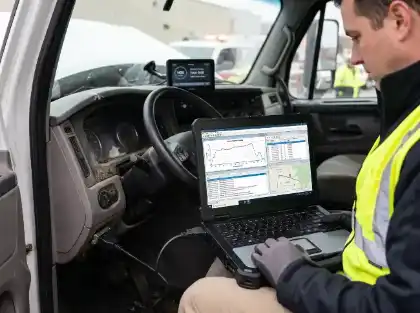
- Electronic Logging Device (ELD) Data: ELDs can show drive time, rest breaks, location, engine hours, and possible hours-of-service violations.
- Black Box Data: The truck’s event data recorder may show speed, braking, throttle use, and other details before impact.
- Driver Qualification Files: These records may show training, license status, medical clearance, prior violations, and safety history.
- Maintenance and Inspection Records: These documents can show whether the truck had brake, tire, steering, lighting, or other safety problems.
- Cargo and Loading Records: Bills of lading, weight tickets, loading diagrams, and seal records may show whether the cargo was overweight or unsecured.
- Dispatch and Company Communications: Texts, calls, emails, and dispatch notes may show pressure to meet deadlines, skip rest, or keep driving.
- Video and Photos: Dashcam, surveillance, and traffic camera footage, along with scene photos, may help show how the crash occurred.
If a company destroys evidence after receiving notice, a court may impose sanctions. Preserving evidence early gives your claim a stronger foundation.
How Does California’s Comparative Fault Rule Affect Your Claim?
California uses a pure comparative negligence system. It means you may still recover compensation even if you share some fault for the truck crash. Your percentage of fault reduces your compensation. For example, if your damages total $100,000 and you are 20% at fault, you may recover $80,000.
If several defendants share the rest of the blame, insurers or courts sort out each party’s percentage of fault. Claims adjusters often use comparative fault to lower payouts. One may blame you. Another may blame the truck driver or the cargo loader. Every fault percentage can change how much each insurer must pay.
Recoverable damages may include medical bills, lost income, reduced earning ability, pain and suffering, future treatment, and other crash-related losses. Getting free advice from commercial vehicle accident lawyers can help you understand how fault may affect your case. Strong evidence helps keep fault percentages tied to the facts rather than insurer pressure.
How Do Overlapping Commercial Insurance Policies Work?
Truck accident claims often involve several insurance policies, not just one. Determining the liable parties allows you to know which insurance policy applies to your case. Depending on the facts of the crash, coverage may come from multiple sources, including:
- The trucking company’s commercial auto policy.
- Excess or umbrella insurance policies.
- The truck owner’s insurance coverage.
- Cargo company or shipper insurance.
- Maintenance or repair company policies.
- Product liability coverage that parts or vehicle manufacturers carry.
- Insurance held by other at-fault drivers.
Federal rules require many commercial motor carriers to maintain minimum levels of financial responsibility. The required amount depends on the type of carrier, vehicle, and cargo. Some carriers must carry:
- $750,000 in coverage
- $1,000,000 in coverage
- $5,000,000 in coverage
While multiple policies can increase the funds available to compensate injured victims, they can also complicate the claims process. One key reason truck accidents differ from car accidents is that adjusters are more likely to push back on claims because the policy limits are higher. Insurers often dispute:
- The party responsible for the crash.
- The policy that applies first.
- How much each insurer should contribute toward a settlement or judgment.
If you are thinking, “I need a personal injury lawyer,” this is one reason why. An attorney can help you pursue compensation from multiple policies when the facts support it. To do that, they would:
- Identify all available insurance policies and review coverage limits and exclusions.
- File government claims first to meet shorter submission deadlines under the Government Claims Act.
- Pursue compensation from the primary at-fault party’s insurance policy.
- Seek damages from excess or umbrella policies that may apply if primary coverage is insufficient.
- Address claims against cargo companies, repair shops, and manufacturers next, if they’re available.
- Communicate with insurance adjusters and push back if carriers try to shift blame to one another.
- Coordinate settlements in a way that considers each party’s share of fault and the corresponding insurance coverage.
What Are The California Deadlines For Filing A Multi-party Claim?
 Multi-party claims take time. The attorney must identify all defendants and preserve records. They review insurance coverage and link each party to the crash. Waiting too long can weaken the case because California truck accident claims may involve several important deadlines:
- Personal Injury Lawsuit: Most injured people have two years from the date of injury to file a lawsuit.
- Government Claim: If a government agency is partly responsible, you usually need to file an administrative claim. You must do this within six months.
- Government Lawsuit: If the agency denies the claim, the personal injury lawsuit filing deadline applies.
Some limited exceptions may allow a deadline to be paused or changed, such as when the injured person is a minor. These exceptions are narrow and fact-specific.
Frequently Asked Questions About Multiple Parties In Truck Accidents
Pursuing compensation after a commercial truck crash involving multiple parties can be challenging. You likely have immediate questions about liability, commercial insurance, and how to seek damages. The answers below aim to clarify how these claims work.
Do Lawyers Only Get Paid If They Win A Truck Accident Case?
Yes, because many truck accident lawyers work on a contingency fee basis. They only get paid if they recover compensation for you. If the case ends in a settlement or court award, the attorney gets a pre-agreed percentage of the recovery. If there is no recovery, you generally do not owe attorney’s fees.
Can A Chiropractor Treat My Injuries After A Commercial Truck Crash?
Yes. A chiropractor may treat crash-related neck, back, and soft tissue injuries when medically appropriate. Your records should clearly connect your treatment to the truck crash. Gaps in care or unclear records can give insurers a reason to challenge the claim.
How Do Insurers Determine Who Was At Fault In A Chain-Reaction Pileup?
Insurers decide fault in a chain-reaction pileup by reviewing police reports, witness statements, and photos. They also review vehicle damage, skid marks, traffic camera footage, dashcam video, and truck data.
Insurers typically look at who caused the first crash. Then, they check if other drivers made the pileup worse by speeding, tailgating, or failing to brake in time. If a truck was involved, they may also review ELD records, black box data, driver logs, maintenance records, and cargo records. In some cases, they consult expert witnesses such as accident reconstructionists to assess each party’s role in the pileup.
Which Insurance Policy Pays For My Injuries First When Multiple Parties Are Liable?
The answer depends on the facts, policy language, and parties involved. Claims often start with the truck driver’s or carrier’s commercial auto policy. If losses exceed that coverage, other policies may apply.
What Happens If The Trucking Company And Cargo Loader Blame Each Other?
Evidence decides the issue. Driver logs, black box data, loading records, maintenance records, photos, and expert opinions can show who caused the crash. It may be the driver, the carrier, the cargo loader, or another party.
Can My Multi-Party Truck Accident Case Settle Without Going To Trial?
Yes. Many multi-party truck accident cases settle before trial. It’s often preferable to settle to avoid litigation costs. However, reaching an agreement during negotiations can be challenging because:
- Each party may dispute its share of fault.
- Insurance policies may have coverage limits that affect the amount that you can pursue from them.
- Settling too early with one insurer might reduce leverage against others.
A lawyer can help evaluate whether a settlement is fair, negotiate with each insurer, and explain whether a trial might produce a better outcome. Evidence and fault allocation play a key role in deciding whether to settle or proceed to court.
Does A Litigation Hold Letter Guarantee The Trucking Company Will Preserve Evidence?
No. A litigation hold letter creates a formal duty to preserve evidence. However, it does not prevent someone from physically deleting records. If a company destroys evidence after receiving notice, the court may impose consequences.
Schedule Your Free Initial Consultation With Arash Law Today
When your truck crash involves the actions of a trucking company, a cargo loader, or a maintenance contractor, you need a lawyer. Arash Law focuses on handling multiple parties and their insurers in truck accident cases. Our attorneys identify every potentially responsible party and preserve commercial evidence that could establish each party’s role.
The trucking company’s defense team is already working to protect its client. You deserve the same level of focus on your side. We can help you pursue the compensation you may be entitled to under California law.
Call AK Law at (888) 488-1391 to schedule your free initial consultation.