TL;DR: Yes, you can be sued if an accident was not your fault, but the opposing party generally must prove your conduct caused the claimed harm. Accident victims may face default risk if they miss response deadlines, while photos, witnesses, reports, and insurance records can help defeat unsupported claims.
Highlights:
- Calendar your response deadline – usually 30 days after personal service in California.
- Send the Summons and Complaint to your insurance company and your attorney as soon as possible.
- Notify your insurance company promptly and provide complete copies of all lawsuit papers.
- Write down how you were served, including date, time, and method.
- Preserve evidence now – photos, videos, dashcam, witnesses, reports, and medical records.
- Request surveillance or dashcam footage quickly before it is overwritten or deleted.
- Ask your lawyer whether you must file a cross-complaint to preserve your claim.
Tip: When speaking with insurers or counsel, stick to observable facts and save copies of every message, document, and file you share.
Table of Contents
An opposing party can sue you even if you believe the accident was not your fault. Filing a lawsuit does not prove liability. It only starts the legal process.
To succeed, the plaintiff generally must prove every required element of the claim by a preponderance of the evidence. That means showing that the claim is more likely true than not. They must present evidence connecting your conduct to the accident and to the injuries or other losses they are claiming. Simply filing a lawsuit is not enough.
Even so, you should not ignore a lawsuit. Once you are served with a Summons and Complaint, you must respond within the applicable deadline. Failing to respond can result in a default judgment.
The outcome depends on the facts and the available evidence. If the evidence does not support the plaintiff’s claims, the court may reject them. That is why gathering evidence and working with your attorney early in the process is important.
Why Someone Might Sue You Even If The Accident Wasn’t Your Fault
A person may initiate a lawsuit based on allegations without first proving those allegations at trial, but the filing must satisfy applicable procedural and legal requirements. A lawsuit is a legal accusation, not a legal verdict.
Someone may sue you for several reasons, including:
- They believe you were responsible for the accident.
- They disagree about what happened.
- They hope the evidence will support their claim.
- They want a court to decide who is legally responsible.
There is also a meaningful difference between being sued and being found legally liable:
- Being sued means the other party has made a formal legal accusation.
- Being found liable means a judge or jury reviewed the evidence and decided you were legally responsible for the harm.
Filing a lawsuit starts that process. It does not decide the outcome.
If the other party sues you, they have the burden of proving their case. They generally must show that you failed to use reasonable care and that your conduct was a substantial factor in causing their harm. Other claims may involve different rules, such as vehicle-owner, employer, premises, or product liability. If they cannot meet that burden, they cannot establish legal liability. An accusation alone is not enough to prove fault.
Being sued doesn’t automatically prevent you from pursuing your injury claim. However, California may require you to raise a related claim through a timely cross-complaint in the same case, or you could lose the right to bring it later. Strong evidence and experienced legal representation can help protect your rights and support your position.
Still, you should never ignore a lawsuit. A weak claim can still result in a default judgment if you fail to respond. An experienced accident lawyer can evaluate the allegations, respond on your behalf, and continue pursuing the compensation you may be entitled to recover.
What Should You Do If Someone Sues You After An Accident?
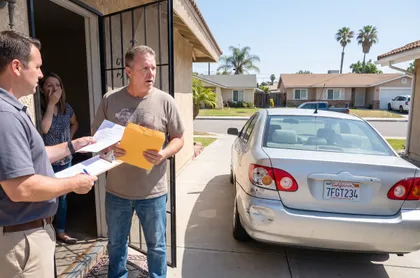
Although injured people often bring claims against an allegedly at-fault party, the other side may also sue you or file a cross-complaint in the same case.
If you receive a Summons and Complaint, do not ignore it. Responding to it helps protect both your legal rights and your ability to pursue compensation for your injuries.
If you are served with lawsuit papers:
- Do not ignore them. Failing to respond on time may result in a default judgment, which allows the other party to win the lawsuit without your side being heard.
- Contact your attorney immediately. If you have already hired an accident lawyer, send them the lawsuit papers as soon as possible.
- Notify your insurance company. Send complete copies of the lawsuit papers promptly to all your insurers who may provide coverage. Do not wait until you have decided for yourself whether the policy applies, or assume that only one policy applies.
- Record how you were served. Write down the date, time, and method of service. These details may affect your response deadline.
- Gather and preserve your evidence. Keep photos, videos, dashcam footage, medical records, police reports, witness contact information, and other documents related to the accident.
- Avoid discussing the lawsuit. Do not communicate with the other party about the case or post about it on social media unless your attorney advises otherwise.
- Work with your attorney and insurer. Respond promptly to requests for information so they can evaluate the claim and protect your interests.
California law sets deadlines for responding to a lawsuit. Failing to meet these time limits can hurt your case, so consider speaking with your attorney as soon as possible after receiving the lawsuit papers.
If someone sues you after a California accident, you will be notified by a Summons and Complaint, which will also trigger the deadline to respond. While being sued doesn’t mean you’re at fault, it does trigger strict deadlines. Personal service generally gives you 30 calendar days to respond. Substituted service and certain specialized cases may allow different timeframes. Missing your deadline can result in a default judgment.
Under California Code of Civil Procedure § 412.20, the summons must include, among other information, the court and parties’ names, a 30-day response direction, a default warning, a notice to seek an attorney’s advice, and an introductory legend in English and Spanish.
How California’s Comparative Negligence Rule Impacts Fault
Under California’s pure comparative negligence, fault may be divided among everyone whose conduct contributed to an accident. A court or jury assigns each party a percentage of responsibility, and their own percentage of fault reduces an injured person’s compensation. If you are found 20% at fault, you receive 20% less.
Civil Code § 1714 establishes California’s general duty to use ordinary care, which underlies most negligence claims. Even if you are named in a lawsuit, each party will be liable for their share of fault. Therefore, if the accident wasn’t your responsibility, the liable parties will have to cover compensation.
Fault percentages are typically decided by a judge or jury based on the evidence presented if the case goes to trial. If the case settles, the parties negotiate the settlement amount, generally through their insurers and attorneys. Unlike states that use a modified comparative negligence system, where recovery is barred entirely once a plaintiff’s fault reaches 50% or 51%, California allows recovery even if you are found 99% at fault.
Insurance adjusters may raise comparative fault arguments during settlement negotiations to justify lower offers. Understanding how this rule works matters well before a case ever reaches a courtroom.
To shift fault onto you, the other side may argue that your conduct contributed to the accident. Common examples include:
- Failing to exercise reasonable care.
- Ignoring a known hazard.
- Acting in a way that contributed to the accident.
To succeed on that argument, the evidence must address the legal elements of negligence:
- Duty: The defendant owed the plaintiff a legal duty of reasonable care.
- Breach: The defendant breached that duty.
- Causation: The breach was a substantial factor in causing the plaintiff’s injuries.
- Damages: The plaintiff suffered legally recognized losses as a result of the breach.
Because fault directly affects the amount of compensation available, the other side may seek evidence that shifts some responsibility to you. Building a strong case with photos, witness statements, medical records, and other evidence helps counter those arguments. An experienced accident lawyer can also present evidence that supports your position and protects the compensation you may be eligible to pursue.
If you’re facing a lawsuit while also pursuing your own injury claim, speak with an experienced accident attorney as soon as possible. They can protect your rights, respond to the suit, and preserve your ability to recover compensation.
Evidence That Helps Establish Fault, Causation, And Damages
In many accidents, you need evidence that another person failed to use reasonable care and caused your injuries. Without strong proof, insurers, opposing parties, or a jury may dispute fault or assign you a share of the blame. Evidence does more than support your compensation claim. It helps establish the other party’s liability and protect your right to recover damages.
The table below shows how each type of evidence can help establish the other party’s fault:
| Evidence | How It Helps Prove The Other Party Was At Fault |
|---|---|
| Photos & Videos | Show the accident scene, hazardous conditions, property damage, debris, warning signs, or other facts that help explain how the accident happened and who caused it. |
| Surveillance & Dashcam Footage | May capture some or all of the accident and show what the parties did before or during it. Request it quickly because footage may be deleted or overwritten. |
| Witness Statements | Provide independent accounts that support your version of events and help establish how the accident occurred. |
| Police or Incident Report | Identify witnesses and record scene observations, statements, or citations. Note that it does not decide civil fault, and some accident reports may be restricted from use as trial evidence. |
| Medical Records | Document your symptoms, diagnoses, treatment, and recovery. They may also help show whether the injuries are medically consistent with the accident. |
An accident attorney can use this evidence to establish the other party’s liability, challenge disputed fault, and pursue the compensation you may recover based on the facts of your case.
Frequently Asked Questions About Fault And Lawsuits
If you were injured in an accident, you may have questions about fault, lawsuits, and what happens next. These FAQs answer some of the most common concerns people have after an accident.
Can Someone Sue Me Even If I Wasn’t At Fault?
Yes. Someone may file a lawsuit alleging that you were responsible, even if they ultimately cannot prove the allegations. Being sued does not mean you are legally at fault. The other party must prove that your actions caused their injuries. If they cannot meet that burden, they cannot establish legal liability.
Do Most Personal Injury Cases Settle Or Go To Court?

Many personal injury claims are resolved through settlement, while others require a trial. Whether your case settles depends on factors such as the strength of the evidence, whether fault is disputed, and whether the parties can agree on fair compensation. If they cannot, a judge or jury may decide the outcome.
Can I Still Recover Compensation If I Was Partly At Fault?
You can. California follows a pure comparative negligence rule. You may still recover compensation even if you share some responsibility for the accident. However, your percentage of fault reduces the amount you recover. For example, if you are 20% at fault, you may recover 80% of your total damages.
Should I Hire A Lawyer If The Other Party Sues Me?
Yes, you should consider speaking with an accident lawyer if the other party sues you after an accident. A lawyer can evaluate the allegations, explain your legal options, gather and preserve evidence, respond to the lawsuit, and help protect your right to pursue compensation if you were injured in the accident.
Contact Arash Law For A Free Case Review
Not every personal injury lawsuit goes to trial. Still, careful preparation can help a lawyer respond if settlement discussions fail and a trial becomes necessary.
When the other side disputes fault or refuses to offer a fair settlement, you need a lawyer who knows how to build a strong case in court. That preparation can also encourage meaningful settlement discussions before trial becomes necessary.
Examples of Arash Law’s courtroom results include:
| Case Result | Representative Verdict |
|---|---|
| $41,950,000 | Walmart was found 50% liable and ordered to pay $30 million of the total verdict after a husband and wife were attacked with an unsecured baseball bat left on the sales floor. |
| $17,900,000 | Unanimous verdict against the County of Los Angeles despite efforts to shift the blame to the injured clients. |
IMPORTANT NOTE: Past results do not guarantee future outcomes. Every case depends on its own facts, evidence, and applicable law.
If someone blames you for an accident or files a lawsuit against you, do not assume you have lost your right to seek compensation. An experienced accident lawyer can review the facts, explain your legal options, and help protect your rights from the start.
AK Law handles personal injury cases on a contingency fee basis. That means you pay no upfront attorney’s fees, and you owe no legal fees unless we recover compensation for you.
Our legal team can:
- Review the evidence and determine who may be legally responsible.
- Challenge claims that unfairly place the blame on you.
- Gather additional evidence to strengthen your case.
- Negotiate with insurance companies and opposing parties.
- Represent you in court if a fair resolution cannot be reached.
Call (888) 488-1391 for a free case review. The sooner you speak with an attorney, the sooner you can understand your rights and take the next steps to protect your claim.