TL;DR: Traffic safety data for California counties is available through UC Berkeley SafeTREC, the California Highway Patrol, the California Office of Traffic Safety, and Caltrans. Transportation Injury Mapping System (TIMS), SWITRS Summary. Provides searchable California crash and injury data by county and city, with maps, tables, trends, and quarterly data updates.
California county traffic safety data is available through several state and university databases that track crashes, injuries, roadway conditions, and traffic trends. These sources can show where reported crashes occur, how serious they are, which road users are involved, and how crash patterns differ across counties.
No single database answers every traffic safety question. Some tools focus on individual crash records. Others compare counties, measure traffic exposure, or track trends in fatal and serious injuries. Check what each source measures before comparing its figures with another dataset.
Traffic data may also matter after an accident, but countywide statistics do not establish who caused a specific crash or what an injury claim is worth.
Key Facts About California Traffic Data Sources
- SWITRS is California’s statewide collision-record system. The California Highway Patrol (CHP) runs the Statewide Integrated Traffic Records System (SWITRS). It collects and processes data on reported collisions.
- TIMS maps and organizes SWITRS data. UC Berkeley’s Safe Transportation Research and Education Center (SafeTREC) developed the Transportation Injury Mapping System (TIMS). TIMS lets users search, filter, map, and summarize crash records from California.
- OTS Crash Rankings help compare counties. The California Office of Traffic Safety Crash Rankings employs an Empirical Bayesian method that considers observed crash data, population figures, and vehicle miles traveled. Counties receive statewide rankings, and cities generally rank within population groups.
- Caltrans provides state highway crash and traffic data. The California Department of Transportation shares annual collision data. This data covers crash counts, rates, fatalities, injuries, and travel measures for the State Highway System.
- Data years may differ. TIMS, OTS, CHP, and Caltrans do not always publish or finalize data on the same schedule. Before comparing sources, check the reporting year and whether the data is final or provisional.
Table of Contents

Where Can You Find California County Traffic Safety Data?
The best source depends on what you need to know. Different sources answer different traffic-safety questions:
| Source | Best Used For |
|---|---|
| SWITRS and California Crash Reporting System (CCRS) | Statewide crash data for reported collisions and raw crash files collected by CHP and allied agencies. CHP’s iSWITRS transition page directs public users to CCRS. |
| TIMS | Searching and mapping geocoded SWITRS data by county, city, roadway, crash type, injury severity, and other factors. |
| OTS Crash Rankings | Comparing county traffic safety rankings in categories such as alcohol involvement, speeding, pedestrians, bicyclists, and motorcycles. |
| Caltrans Annual Crash Data | Reviewing state-highway crash counts, crash rates, fatalities, injuries, and travel measures by county or district. |
| Strategic Highway Safety Plan (SHSP) Crash Data Dashboard | Studying fatal and serious injury crashes by location, crash cause, safety challenge area, and demographics. |
| California Active Transportation Safety Information Pages (CATSIP) | Finding pedestrian, bicycle, and other active transportation safety resources. |
Raw crash totals do not account for the amount of traffic a roadway carries. Caltrans traffic volume and travel data can help show whether a higher total number of crashes may partly reflect heavier roadway use.
Injured in a California traffic accident? Traffic data can provide context, but a claim depends on evidence from the specific crash. Call Arash Law at (888) 488-1391 for a free case evaluation.
SWITRS and TIMS: The Foundation of California Crash Records
TIMS gives researchers another way to work with SWITRS data. SafeTREC geocodes the records and provides tools for mapping and analysis. Users can view reported crashes by county or city, filter them by crash type or injury severity, and compare data at specific locations. This location-level crash data can also be used to compare the most dangerous intersections in California.
TIMS also has limits. Mapping tools display only crashes that have a geocoded location. Recent SWITRS data may be provisional. SafeTREC notes that CHP data entry can lag and that recent totals may increase as officials process and finalize records. Check the status of the data before comparing a recent year with older final data.
OTS Crash Rankings: Quick County Comparisons
OTS Crash Rankings help compare traffic safety across California counties. OTS uses an Empirical Bayesian ranking method that considers crash counts, population, and vehicle miles traveled.
- Counties receive statewide rankings.
- Cities are usually compared with one another within the same population group.
- Categories may include alcohol involvement, speeding, pedestrians, bicyclists, and motorcycles.
The rankings are useful for comparison, but they do not provide a complete measure of road safety. When comparing locations, check:
- The reporting year
- The ranking category
- The geographic area covered
- Whether the figure counts crashes or people killed and injured
OTS ranking tables usually show the number of people killed or injured. Other traffic databases often report crash events. Because one crash can involve several injured people, victim totals and crash totals are not the same.
Caltrans and the SHSP Dashboard: Highway and Traffic Exposure Data

Caltrans provides State Highway System data on traffic volume, vehicle travel, and crash rates.
The annual crash reports provide summaries for the state, districts, and counties. They include crash counts, rates for fatal and injury crashes, fatalities, travel measures, and other road data. A road with more crashes does not automatically have a higher crash rate if it also carries much more traffic.
For traffic counts, the Caltrans Traffic Census Program shares Annual Average Daily Traffic and other volume data for California highways. Caltrans notes that traffic counts for city and county streets should generally be obtained from local traffic engineering departments, public works departments, or similar agencies.
The SHSP Crash Data Dashboard focuses on fatal and serious-injury crashes. It uses finalized Fatality Analysis Reporting System (FARS) and SWITRS data. The dashboard also includes provisional data. Users can filter by county, city, Caltrans district, Metropolitan Planning Organization, crash cause, time, demographics, and SHSP Challenge Area.
How California Traffic Data May Help After an Accident
Traffic data may help show whether similar crashes have happened at the same location or whether a roadway has a history of safety problems. Past crash records may point to recurring issues involving road design, traffic signals, maintenance, or visibility.
Depending on the case, TIMS or SWITRS records may be reviewed alongside:
- Traffic studies
- Inspection and maintenance records
- Complaints about roadway conditions
- Traffic signal records
- Photographs
- Engineering documents
However, a history of crashes alone does not prove that a public entity is liable for an accident. Under California Government Code §835, a claimant generally must show that the property was in a dangerous condition, that the condition caused the injury, and that it created a reasonably foreseeable risk. The claimant must also generally show that a public employee created the condition through a negligent or wrongful act or omission, or that the public entity knew or should have known about it in time to take protective measures.
Filing Deadlines for Public-Entity and Private Claims
If traffic data points to a possible roadway issue, the deadlines for bringing a related claim still apply.
- Public-Entity Claim: According to Government Code §911.2, you must present most claims for injury, death, or property damage to the public entity within six months.
- After a Written Rejection: If the public entity issues a rejection notice under Government Code §913, Government Code §945.6 usually gives the claimant 6 months from the mailing or delivery date to file a lawsuit. If no qualifying written notice is given, the deadline is generally two years from when the claim arose.
- Personal Injury Claim: California Code of Civil Procedure §335.1 generally provides a two-year filing period for many injury claims against private parties.
- Private-Party Property Damage Claim: California Code of Civil Procedure §338 generally provides a three-year filing period for damage to a vehicle or other personal property.
Evidence can disappear long before these deadlines expire. Video footage may be overwritten, roadway conditions can change, and records may become harder to get.
What Arash Law Has Recovered for California Accident Clients
Arash Law has years of experience representing accident victims across California, including cases involving intersections, unsafe road conditions, and disputed crash evidence. The following case results highlight the recoveries our attorneys have secured for clients in these types of cases:
$3,000,000 — Auto vs. Auto: A police report incorrectly blamed our client for running a stop sign. Black-box data from the other vehicle showed that the other driver was speeding. A physics analysis helped establish that the driver’s speed caused the crash. Our attorneys recovered the full policy limits for our client and their family.
$2,100,000 — Car Accident: Our client stopped at a two-way stop sign. A police cruiser hit their vehicle while traveling at 70 mph. The crash seriously injured our client. After several years of litigation, our attorneys secured a $2.1 million recovery.
Past results do not guarantee future outcomes. Every case depends on its own facts, injuries, evidence, insurance coverage, and applicable law.
Frequently Asked Questions About California Traffic Safety Data
California traffic safety data can be confusing because different sources update on different schedules, count crashes differently, and cover different types of roads and collisions. These FAQs explain how often the data is updated, why numbers may vary between sources, where to find local traffic counts and pedestrian or bicycle data, and whether minor property-damage-only crashes are included.
How Often Is California’s Traffic Crash Data Updated?
California traffic databases do not follow one schedule. TIMS updates its SWITRS Summary quarterly. OTS updates its rankings yearly, after data reporters submit their information. Caltrans releases its highway crash data on a different schedule. Check the reporting year and data status before comparing sources.
Why Do California Traffic Data Sources Sometimes Show Different Numbers?
Different sources may count different things or cover different geographic areas and time periods. One report may count crashes, while another counts people killed or injured. A source may also use final data, while another includes provisional records. Compare the year, geography, definitions, and unit of measurement before treating two figures as equivalent.
Where Can I Find Traffic Counts for Local County Roads?
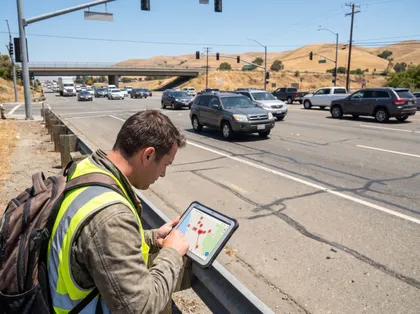
For state highways, use the Caltrans Traffic Census Program. For city or county streets, Caltrans directs users to the local traffic engineering, public works, or similar agency responsible for that roadway.
Does California Have a Resource for Pedestrian and Bicycle Crash Data?
Yes. UC Berkeley SafeTREC runs the California Active Transportation Safety Information Pages (CATSIP). CATSIP provides resources for pedestrian, bicycle, and other active transportation safety. TIMS also lets users filter and map SWITRS data involving pedestrians and bicyclists.
Are Minor Property-Damage-Only Crashes Included In California Traffic Data?
Not always. SWITRS may include property-damage-only crashes reported by law enforcement, but TIMS excludes them and focuses on fatal and injury crashes. As a result, TIMS may not reflect every collision that occurred at a specific location.
Talk to Arash Law About Your California Traffic Accident Claim
Traffic statistics can show broader patterns, but an injury claim depends on the facts and evidence from the specific collision.
Arash Law represents people injured in California car accidents. Depending on the case, our attorneys may review collision reports, traffic data, roadway studies, maintenance records, witness statements, vehicle data, and other evidence when investigating liability.
Arash Law handles personal injury cases on a contingency-fee basis. Attorneys’ fees are collected only if there is a recovery. Case costs may apply, and the fee arrangement and potential costs are explained during the consultation.
Call Arash Law at (888) 488-1391 for a free case evaluation. The firm’s accident hotline is available 24 hours a day.
Arash Law. Make them pay. Call AK.
Sources
California Highway Patrol (CHP) — Statewide Integrated Traffic Records System (SWITRS). Explains California’s statewide system for collecting and processing traffic collision data. https://www.chp.ca.gov/programs-services/services-information/switrs-statewide-integrated-traffic-records-system/
California Highway Patrol (CHP) — iSWITRS Transition to the California Crash Reporting System (CCRS). States that public iSWITRS access ended January 8, 2025, and directs users to CCRS for raw crash files. https://www.chp.ca.gov/iswtrs/
UC Berkeley Safe Transportation Research and Education Center (SafeTREC) — Transportation Injury Mapping System (TIMS). Explains how TIMS provides searchable and mapped access to geocoded SWITRS crash data. https://safetrec.berkeley.edu/tools/transportation-injury-mapping-system-tims
UC Berkeley SafeTREC — Transportation Injury Mapping System (TIMS), SWITRS Summary. Provides searchable California crash and injury data by county and city, with maps, tables, trends, and quarterly data updates. https://tims.berkeley.edu/tools/summary/
California Office of Traffic Safety (OTS) — OTS Crash Rankings. Explains the ranking methodology, geographic scope, and annual update process for city and county traffic-safety rankings. https://www.ots.ca.gov/media-and-research/crash-rankings/
California Department of Transportation (Caltrans) — Annual Crash Data on California State Highways. Provides annual crash counts, rates, fatalities, injuries, and travel information for the State Highway System. https://dot.ca.gov/programs/research-innovation-system-information/annual-collision-data
California Department of Transportation (Caltrans) — Traffic Census Program. Provides traffic-volume data for the State Highway System and guidance on obtaining local street counts. https://dot.ca.gov/programs/traffic-operations/census
California Department of Transportation (Caltrans) — Strategic Highway Safety Plan Crash Data Dashboard. Provides fatal and serious-injury crash data with filters for location, crash characteristics, and SHSP Challenge Areas. https://shsp.dot.ca.gov/
California Legislature, LegInfo — Code of Civil Procedure §338. Provides the general three-year limitations period for actions involving injury to personal property. https://leginfo.legislature.ca.gov/faces/codes_displaySection.xhtml?lawCode=CCP§ionNum=338.
California Legislature, LegInfo — Government Code §835. Sets the general requirements for public-entity liability based on a dangerous condition of public property. https://leginfo.legislature.ca.gov/faces/codes_displaySection.xhtml?lawCode=GOV§ionNum=835.
California Legislature, LegInfo — Government Code §911.2. Provides the general six-month claim-presentation deadline for certain injury, death, and personal-property claims against public entities. https://leginfo.legislature.ca.gov/faces/codes_displaySection.xhtml?lawCode=GOV§ionNum=911.2.
California Legislature, LegInfo — Government Code §913. Sets requirements for written notice when a government claim is rejected and includes the warning about the time to file a court action. https://leginfo.legislature.ca.gov/faces/codes_displaySection.xhtml?lawCode=GOV§ionNum=913.
California Legislature, LegInfo — Government Code §945.6. Addresses the time to file suit after a government claim is rejected and the period that may apply when no qualifying rejection notice is given. https://leginfo.legislature.ca.gov/faces/codes_displaySection.xhtml?lawCode=GOV§ionNum=945.6.
California Legislature, LegInfo — Code of Civil Procedure §335.1. Provides the general two-year limitations period for actions involving injury or death caused by another’s wrongful act or neglect. https://leginfo.legislature.ca.gov/faces/codes_displaySection.xhtml?lawCode=CCP§ionNum=335.1
UC Berkeley SafeTREC — California Active Transportation Safety Information Pages (CATSIP). Provides pedestrian, bicycle, and other active transportation safety resources. https://catsip.berkeley.edu/home
Disclaimer
The information on this page is for general informational purposes only and does not constitute legal advice. Reading this page does not create an attorney-client relationship. Past case results do not guarantee a similar outcome. Traffic data may change as agencies update or finalize their records. Consult a qualified California personal injury attorney about the deadlines and legal rules that apply to your situation. Arash Law, (888) 488-1391.