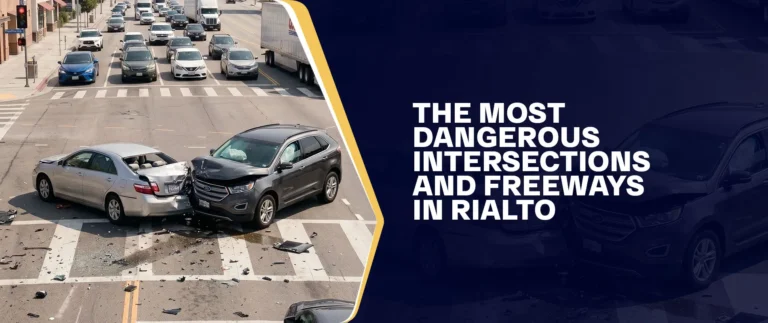
TL;DR: State Route 156 & State Route 25 in San Benito County had the most traffic accidents in the 2021–2025 statewide files reviewed from the California Crash Reporting System (CCRS). The records show 186 crashes, 84 reported injuries, and one fatality. An earlier 2020–August 2024 SWITRS/TIMS analysis ranked Newport Boulevard & 22nd Street/Victoria Street first because it used a different period and emphasized injury crash severity. California does not publish an official permanent statewide ranking.
California does not publish an official list naming one intersection as the most dangerous in the state. The answer depends on what is measured. An intersection could be ranked the most dangerous based on:
- Total traffic accidents.
- Injury crashes.
- People injured.
- Fatalities.
- Serious injuries.
- Pedestrian crashes.
- Crash rate (after traffic volume is considered).
The analysis from the CCRS 2021–2025 crash reports used for this article ranks intersections primarily by the number of reported traffic accidents. Injury totals were used to break ties. Because different dates, crash measures, and methods can produce different results, the ranking should not be treated as an official statewide designation.
For that reason, the most accurate answer is:
State Route 156 & State Route 25 in San Benito County ranked first in the 2021–2025 statewide crash analysis reviewed for this article. The intersection had 186 reported traffic accidents, 84 injuries, and one fatality. However, California does not officially designate it, or any other intersection, as the state’s most dangerous intersection.
Data Transparency Note: The primary analysis covers 2021 through 2025 and ranks intersections mainly by the number of unique reported traffic accidents in the reviewed crash records. Road names and reversed intersection listings were standardized to allow records for the same crossing to be combined. The analysis is not an official ranking by the California Highway Patrol (CHP), Caltrans, or the State of California. Different study periods, geographic filters, crash definitions, or ranking methods may produce different results.
Key Facts About Dangerous Intersections In California
- State Route 156 & State Route 25 ranked first in the 2021–2025 crash count analysis with 186 accidents, 84 injuries, and one fatality.
- Highway 111 & Washington Street in La Quinta ranked second with 85 crashes and 40 injuries.
- Firestone Boulevard & Lakewood Boulevard in Downey had 104 injuries, the highest injury total among the top 10.
- North Avenue & Temperance Avenue in Fresno County had four fatalities, the highest death total among the top 10.
- Five of the 10 intersections were in Los Angeles County, including three locations in Long Beach.
- Firestone Boulevard & Lakewood Boulevard and Valley Boulevard & La Cadena Drive were the only intersections that appeared in both the newer crash-count ranking and the earlier TIMS top 10.
Table of Contents

Which California Intersections Had The Most Traffic Accidents From 2021 Through 2025?
A review of statewide crash records from the CCRS from 2021 through 2025 produced a list of California’s busiest crash locations. This analysis ranked intersections primarily by the number of unique reported traffic accidents. The intersection with more reported injuries ranked higher when two intersections had the same number of crashes:
| Rank | Intersection | City Code | City Name | County | Traffic Accidents | Injuries | Fatalities |
|---|---|---|---|---|---|---|---|
| 1 | State Route 156 & State Route 25 | 3500 | Unincorporated | San Benito | 186 | 84 | 1 |
| 2 | Highway 111 & Washington Street | 3392 | La Quinta | Riverside | 85 | 40 | 0 |
| 3 | Firestone Boulevard & Lakewood Boulevard | 1920 | Downey | Los Angeles | 80 | 104 | 0 |
| 4 | Amargosa Road & Bear Valley Road | 3612 | Victorville | San Bernardino | 78 | 32 | 0 |
| 5 | La Cadena Drive & Valley Boulevard | 3603 | Colton | San Bernardino | 74 | 71 | 0 |
| 6 | Artesia Boulevard & Atlantic Avenue | 1941 | Long Beach | Los Angeles | 72 | 37 | 0 |
| 7 | Pacific Avenue & Willow Street | 1941 | Long Beach | Los Angeles | 71 | 80 | 0 |
| 8 | North Avenue & Temperance Avenue | 1000 | Unincorporated | Fresno | 70 | 96 | 4 |
| 9 | Anaheim Street & Redondo Avenue | 1941 | Long Beach | Los Angeles | 69 | 61 | 0 |
| 10 | Imperial Highway & Long Beach Boulevard | 1943 | Lynwood | Los Angeles | 69 | 36 | 0 |
State Route 156 & State Route 25 Had The Most Crashes
State Route 156 & State Route 25 in San Benito County ranked first with 186 reported traffic accidents. Those crashes resulted in 84 reported injuries and one fatality.
This intersection had more than twice as many crashes as the intersection at Highway 111 and Washington Street, which ranked second with 85 crashes. Most records placed the SR-156 and SR-25 intersection in unincorporated San Benito County under city code 3500, although a smaller number used Hollister’s city code.
However, it’s important to note that the intersection’s configuration changed during the analysis period. Caltrans completed a multi-lane turbo roundabout at SR-156 and SR-25 in early 2024 to reduce the number and severity of collisions. Because the 2021–2025 total includes crashes from before and after the redesign, the historical crash count should not be interpreted as a measure of the safety of the current roundabout configuration alone.
Firestone Boulevard & Lakewood Boulevard Had The Most Injuries
Firestone Boulevard & Lakewood Boulevard in Downey ranked third, with 80 reported crashes. However, those crashes resulted in 104 injuries, the highest injury total among the 10 intersections.
An intersection can have more injuries than crashes because one collision may injure several drivers, passengers, pedestrians, or cyclists. The injury count, therefore, measures the number of people reportedly injured, not the number of injury crashes.
North Avenue & Temperance Avenue Had The Most Fatalities
North Avenue & Temperance Avenue in Fresno County ranked eighth, with 70 reported crashes. It nevertheless had four fatalities, the highest death total among the 10 intersections.
This difference shows why accident frequency and crash severity should be considered separately. An intersection with fewer total crashes may still have more deaths or serious injuries than a location with a higher crash count.
Los Angeles County Had Five Intersections In The Top 10
Five of the 10 intersections were in Los Angeles County. Three were within Long Beach:
- Artesia Boulevard & Atlantic Avenue.
- Pacific Avenue & Willow Street.
- Anaheim Street & Redondo Avenue.
Firestone Boulevard and Lakewood Boulevard in Downey and Imperial Highway and Long Beach Boulevard in Lynwood were the other Los Angeles County locations.
The concentration does not automatically mean that Los Angeles County intersections have a higher crash rate. The analysis did not adjust for traffic volume, population, miles traveled, or the number of vehicles entering each intersection.
How The 2021–2025 Ranking Was Calculated
The analysis counted each unique collision ID once. Road names were standardized so that minor spelling differences, directional labels, and reversed road orders did not split records for the same intersection.
A crash was treated as occurring at an intersection when the record identified both a primary road and a secondary road and did not place the crash a stated distance away from the crossing. When records for the same location use more than one city code, the table uses the code and city name found in the most records.
The ranking is based primarily on the number of reported traffic accidents, not solely on injuries or deaths. It also includes records reporting no injuries or fatalities. It does not measure crashes per vehicle entering the intersection.
For those reasons, this is just an analysis of crash records, not an official state designation. California does not currently recognize a single intersection as the most dangerous in the state.
How Does The Newer Ranking Compare With The Earlier TIMS Analysis?
An earlier statewide analysis used SWITRS crash records cleaned and geocoded through UC Berkeley SafeTREC’s TIMS. That analysis covered 2020 through August 2024 and focused on injury crashes and their severity.
The newer 2021–2025 review shows which intersections had the highest total number of reported traffic accidents from the CCRS. Because the two analyses use different dates, crash types, and ranking methods, they should not be treated as direct measures of whether an intersection became safer or more dangerous.
| Earlier TIMS Rank | Intersection | City | County | Result in the Newer 2021–2025 Ranking |
|---|---|---|---|---|
| 1 | Newport Boulevard & 22nd Street/Victoria Street | Costa Mesa | Orange | Not in the newer top 10 |
| 2 | Route 232/Vineyard Avenue & Esplanade Drive | Oxnard | Ventura | Not in the newer top 10 |
| 3 | Lakewood Boulevard & Firestone Boulevard | Downey | Los Angeles | Ranked 3rd |
| 4 | Alamitos Avenue & Anaheim Street | Long Beach | Los Angeles | Not in the newer top 10 |
| 5 | Green Leaf Avenue/Shoemaker Avenue & Telegraph Road | Santa Fe Springs | Los Angeles | Not in the newer top 10 |
| 6 | Orange Avenue & Spring Street | Signal Hill | Los Angeles | Not in the newer top 10 |
| 7 | Valley Boulevard & La Cadena Drive | Colton | San Bernardino | Ranked 5th |
| 8 | Briggsmore Avenue & Carver Road | Modesto | Stanislaus | Not in the newer top 10 |
| 9 | Edinger Avenue & Ward Street | Fountain Valley | Orange | Not in the newer top 10 |
| 10 | Ninth Street & H Street | Modesto | Stanislaus | Not in the newer top 10 |
Only two intersections appeared in both top-10 lists:
- Lakewood Boulevard & Firestone Boulevard ranked third in both analyses. The earlier TIMS review identified 56 injury crashes and 87 reported injuries. The newer review counted 80 total crashes and 104 injuries.
- Valley Boulevard & La Cadena Drive moved from seventh in the earlier TIMS analysis to fifth in the newer crash-count ranking. The newer records show 74 crashes and 71 injuries.
Newport Boulevard and 22nd Street/Victoria Street ranked first in the earlier analysis but did not appear in the newer top 10. That does not necessarily show that the intersection became safer. The earlier ranking considered injury crash severity, whereas the newer ranking places the most weight on total accident frequency.
What The Earlier TIMS Records Showed
The earlier TIMS data also provided details about the violations and crash patterns associated with several intersections:
- Newport Boulevard & 22nd Street/Victoria Street: TIMS identified 36 injury crashes and 59 reported injuries. Twenty-eight crashes cited California’s red-light law, and 33 were broadside collisions.
- Route 232/Vineyard Avenue & Esplanade Drive: TIMS identified 64 crashes. Fifty-three cited red-light violations, and 48 were broadside crashes.
- Lakewood Boulevard & Firestone Boulevard: TIMS identified 56 crashes and 87 injuries. Twenty-nine cited left-turn violations, and 37 were broadside crashes.
- Valley Boulevard & La Cadena Drive: TIMS identified 44 directly coded intersection crashes, plus another record at the same mapped intersection point. Twenty-three of the directly coded crashes cited left-turn violations.
- Briggsmore Avenue & Carver Road: The main TIMS intersection point contained 38 crashes, 82 reported injuries, and three deaths. Thirty-five crashes cited red-light violations.
- Edinger Avenue & Ward Street: After repeated entries for the same fatal pedestrian crash were counted once, the TIMS file represented 14 distinct collisions. Nine cited left-turn violations.
- Ninth Street & H Street: TIMS identified 38 crashes and 64 injuries in the main intersection cluster. Twenty-five crashes cited red-light violations.
The earlier TIMS analysis remains useful because it examines injury crashes, severity, collision types, and reported violations. The newer analysis provides a broader and more recent comparison based primarily on total crash frequency. Together, the two reviews show why California’s “most dangerous” intersection can change depending on the period and measurement used.
What Do California’s Official Intersection Statistics Show?
Caltrans’ 2025-2029 Strategic Highway Safety Plan provides a broader picture of intersection danger across California. The agency reports that crashes at or within the influence of intersections account for 24% of California’s fatal and serious injury crashes, representing 38,811 crashes in the data used for the plan.
The leading fatal and serious injury intersection crash types were:
- Broadside crashes (51%).
- Vehicle/pedestrian accidents (18%).
- Head-on collisions (10%).
The leading primary crash factors were:
- Automobile right-of-way violations (26%).
- Traffic signal and sign violations (21%).
- Driving under the influence (11%).
Caltrans also reports that 86% of fatal and serious-injury intersection victims were on urban roads, while 84% were on local roads rather than state highways.
These official figures show that intersection danger is not limited to one location. Right-of-way conflicts, signals, pedestrians, and crossing traffic create serious risks at intersections throughout California.
Common Causes Of California Intersection Crashes
In California, the most frequent causes of intersection crashes include speeding, right-of-way violations, distracted driving, signal timing issues, and confusing lane layouts. Intersections present natural conflict points where drivers must quickly process signals and surrounding traffic, making them prone to preventable collisions. Side-impact, or T-bone, crashes are among the most common types of collisions at intersections and can be particularly dangerous due to limited protection for occupants.
Key factors increasing crash risk at intersections are:
- High Traffic Volume: Unexpected stops can lead to rear-end collisions that cause vehicles to collide with oncoming traffic.
- Confusing Lane Layouts: A lack of space to turn and limited sightlines hinder safe decision-making.
- Speeding: Higher speeds can decrease reaction time and increase impact force during a collision.
- Distracted Driving: Taking one’s eyes off the road for even two seconds can lead to missing signals or pedestrians.
- Signal Timing Failures: Poorly timed or malfunctioning traffic signals can create dangerous situations even when all drivers involved drive safely.
California Laws That Apply At Intersections
Several California Vehicle Code (CVC) rules are relevant at intersections. If a crash occurs here, proof of these traffic violations could help injured parties build a personal injury claim:
- Red Lights: CVC § 21453 generally requires a driver facing a steady red signal to stop at the marked limit line or, if there is none, before entering the crosswalk or intersection.
- Left Turns: CVC § 21801 generally requires a driver turning left or making a U-turn to yield to approaching traffic that is close enough to create a hazard during the turn.
- Crosswalks: CVC § 21950 generally requires drivers to yield to pedestrians crossing within marked crosswalks or unmarked crosswalks at intersections. Pedestrians must also use reasonable care.
- Safe Speed: CVC § 22350 prohibits driving faster than is reasonable or prudent considering traffic, visibility, weather, and the surface and width of the roadway, or at a speed that endangers persons or property.
CVC § 22500(n) also generally prohibits stopping, parking, or leaving a vehicle standing:
- Within 20 feet of the vehicle-approach side of a marked or unmarked crosswalk.
- Within 15 feet of a crosswalk, if a curb extension is present.
These rules are subject to statutory exceptions. Local authorities may also establish a different distance if they adopt an ordinance with the required traffic safety finding and mark the different distance with paint or a sign.
Who May Be Liable For An Intersection Crash?
If someone else’s careless actions cause an intersection accident, your injuries, and your losses, state law will typically allow you to pursue compensation from the liable party. Liability, or legal responsibility, depends on who caused a crash and how.
More than one person can share fault. California follows pure comparative negligence, which allows you to still pursue compensation if you contributed to an intersection accident. However, your percentage of fault will generally reduce your potential recovery.
That said, one or more of the following parties may be liable for an intersection crash in California:
Negligent Driver
A driver may be responsible for running a red light, failing to yield, speeding, driving while impaired, or otherwise failing to use reasonable care to prevent harm.
Vehicle Owner
Under CVC § 17150, an owner can be responsible for injuries caused by a person operating the vehicle with the owner’s express or implied permission. Statutory limits and exceptions may apply.
Employer Or Company
An employer or other principal may be responsible when a driver causes a crash while acting within the scope of employment or agency. This can arise when the driver is operating a delivery vehicle, a commercial truck, a company car, or another vehicle for work.
An employer may also face a separate negligence claim in appropriate cases, such as negligent hiring, supervision, retention, or entrustment.
Vehicle Or Parts Manufacturer
A vehicle or parts manufacturer, distributor, or seller may be liable if a defective product contributed to the crash or injuries. Examples include defective brakes, steering components, tires, or other vehicle systems.
The existence of a defect does not automatically establish liability. The defect must have contributed to the harm.
Repair Or Maintenance Provider
A mechanic, repair shop, or maintenance company may be responsible if negligent work contributed to the collision. For example, improperly repaired brakes or steering components could be relevant if the mechanical problem contributed to the crash.
Roadwork Or Traffic Control Contractor
A private contractor may share liability when negligent road construction, maintenance, temporary signs, lane closures, or traffic-control work contributes to an intersection crash.
Whether the contractor or a government entity is responsible depends on who controlled the work and what caused the dangerous condition.
Government Entity
A public entity, such as a city, county, or Caltrans, may also be responsible in some cases involving a dangerous condition of public property.
Under Government Code (GOV) § 835, a claimant generally must establish that:
- The property was in a dangerous condition.
- The condition caused the injury.
- The condition created a reasonably foreseeable risk of the type of injury suffered.
- Either a negligent or wrongful act or omission of a public employee within the scope of employment created the condition, or the public entity had actual or constructive notice of the condition with enough time to take protective measures.
A history of crashes may be relevant. However, it does not automatically prove that an intersection was legally dangerous or that a public agency had the notice required by law.
Public entities may also raise defenses. For example, GOV § 830.6 provides design immunity when its legal requirements are satisfied.
What Evidence May Matter In A Dangerous Intersection Claim?
An intersection case may require more than a police report. Depending on the facts, useful evidence can include:
- Photos and videos of the intersection.
- Witness statements.
- Dashcam or nearby surveillance footage.
- Traffic signal timing and maintenance records.
- Prior crash records.
- Roadway plans and engineering documents.
- Vehicle Event Data Recorder (EDR) information, when available.
- Medical records linking the injuries to the crash.
TIMS can also help researchers examine prior fatal and injury crashes. SafeTREC explains that SWITRS contains crashes reported to CHP by local and government agencies. It adds that roughly 97% of fatal and injury crashes are geocoded for mapping. TIMS itself excludes property damage-only crashes from its analysis tools.
If you were injured in an intersection collision and you are not sure whether a government agency may share fault, our intersection accident attorneys can help. We can evaluate the crash site, pull the relevant SWITRS records, and identify whether you have a claim under GOV § 835.
What To Do If You Are Injured At A Dangerous Intersection In California
Acting promptly after an intersection crash can help protect your health and legal rights. The following steps can help you do just that:
- Exchange contact and insurance information with other drivers involved. If it is safe, take photos of the scene and any vehicle damage and gather contact information from any available witnesses.
- See a doctor or other qualified medical provider promptly. Doing so can help identify and document injuries, some of which may not show up right away.
- File an SR-1 form with the California Department of Motor Vehicles (DMV) if the crash resulted in injury, death, or over $1,000 in property damage. You’ll usually have 10 days from the day of the intersection crash to do so. Submitting this form is separate from reporting the accident to law enforcement or your own insurer. Failure to do so may result in the suspension of your license.
- Be mindful of deadlines. Presenting a government claim is just the first of the deadlines you need to consider if a public entity contributed to the intersection accident. You only have a limited time to submit it compared to ordinary insurance claims against private parties.
- Consult a personal injury lawyer. If you need assistance understanding liability, insurance coverage, or filing deadlines, speaking with a personal injury attorney can be very helpful.
An intersection accident attorney can review the details of the crash and help identify potentially liable parties.
How Long Do You Have To Sue For A California Intersection Accident?
For most California personal injury lawsuits, Code of Civil Procedure § 335.1 provides a general two-year deadline from the date of the claim’s accrual (or the date the claim arose, which in this case will usually be the date of the intersection crash). If you’re only suing for property damage, you will instead have three years to do so (CCP § 338). Exceptions can change the duration of these filing windows.
Claims against Caltrans, a city, county, or another California government agency, can involve much shorter deadlines. A claim for personal injury, death, or personal property damage generally must be presented to the correct public entity within 6 months. Once it receives the claim, the at-fault agency generally has 45 days to act on it, although that period can be extended by written agreement.
If the agency gives a proper written rejection notice under GOV § 913, a lawsuit generally must be filed within six months after the notice is personally delivered or mailed. If proper § 913 notice is not given, and the public entity does not respond to the claim within 45 days, GOV § 945.6 generally gives you two years from the date of accrual to file suit, subject to its terms and exceptions.
Missing the applicable deadline can mean losing your right to seek compensation. Most claims are barred once the time limit passes, leaving you without legal recourse.
Acting quickly is also important because it helps preserve evidence, such as witness statements and medical records, which are crucial for your case. Any delays may weaken your position, as evidence can fade and become harder to obtain.
How Arash Law Investigates Intersection Accident Claims
When Arash Law investigates an intersection accident claim, its goal is to determine how the crash happened, who may be responsible, and what evidence supports the injured person’s damages. The investigation may include:
- Reviewing the Crash Details: The legal team examines where and how the collision happened, including traffic signals, right-of-way rules, vehicle movements, weather, visibility, and statements from the people involved.
- Collecting Crash Evidence: Attorneys may obtain the police or the CHP collision report, photographs, witness statements, dashcam footage, surveillance video, and other evidence showing what happened before and during the crash.
- Preserving Vehicle Data: When appropriate, preservation letters may be sent to prevent the destruction of vehicles or electronic evidence. EDR information can help show speed, braking, acceleration, or other vehicle activity before impact.
- Investigating the Intersection: The team may examine lane markings, traffic signals, signs, sight distance, road conditions, and intersection design. Prior crash records, including SWITRS data, may also help identify a history of similar collisions at the location.
- Identifying Potentially Liable Parties: Depending on the evidence, responsibility may involve another driver, an employer, a vehicle owner, a commercial carrier, a contractor, or a government entity responsible for the roadway.
- Investigating Possible Government Liability: If a dangerous roadway condition may have contributed to the crash, Arash Law may seek signal timing records, maintenance logs, prior complaints, engineering documents, and other public records. For state highways, this can include Caltrans project and design records. Proof of prior crashes at a specific intersection may also be relevant when assessing whether a public entity had notice of an alleged dangerous condition under GOV § 835.
- Documenting Injuries and Losses: Medical records, bills, employment information, and other evidence may be collected to document injuries, treatment, lost income, and other claimed damages.
Intersection accident investigations can vary widely. A simple red light collision may depend mainly on video, witness statements, and vehicle data, while a case involving a suspected roadway defect may require engineering records and government documents. Arash Law tailors the investigation to the facts of the crash and works to preserve time-sensitive evidence before it disappears.
What Arash Law Has Recovered For Intersection And Roadway Crash Victims
Arash Law has years of experience representing injured accident victims across California, including in cases involving intersection accidents. The following case results show the range of recoveries our attorneys have secured for our clients:
$3,000,000 — Auto vs. Auto: A police report initially blamed our client for running a stop sign. Arash Law obtained black box data from the other vehicle showing that the other driver was speeding, and that action caused the accident. As a result, our team was able to recover the full policy limits for our client.
$2,100,000 — Car Accident: A police vehicle traveling at 70 mph struck our client, who was stopped at a two-way stop sign. After several years of litigation involving the police department, the case settled for $2.1 million.
Disclaimer: Past results do not guarantee future outcomes. Every case is different, and results depend on the specific facts and evidence involved.
Schedule Your Free Intersection Accident Case Review With Arash Law
Have questions about your intersection crash claim? Our car accident lawyers handle California auto accident claims involving both private drivers and government entities. Call (888) 488-1391 for a free case evaluation. We are available 24 hours a day, 7 days a week.
Frequently Asked Questions About Dangerous Intersections In California
Intersection crashes involve fact-specific questions about signals, right-of-way, lane configurations, and multi-defendant liability. The answers below address the questions people most often ask after a collision at a California intersection.
What If My Vehicle Was Rear-Ended At A California Intersection?
The rear driver may be at fault because CVC § 21703 requires drivers to keep a reasonable and safe distance based on speed, traffic, and road conditions. However, that finding is not automatic. For instance, you may be found partially at fault for braking suddenly at an intersection without warning and without a legally acceptable reason to do so (such as to avoid a sudden crash hazard).
In some cases, more than one driver may share responsibility. One example scenario is a multi-vehicle pileup at an intersection, with your vehicle between the front and rear drivers.
How Does A Stale Green Light Affect My Legal Case?
A “stale green light” is a traffic safety term for a light that has been green for some time and may soon change. Though it is not a separate rule under California law, it may affect your legal case if the timing of the signal contributed to the crash. However, it does not automatically determine fault.
CVC § 21451 generally allows a driver facing a green light to proceed. The driver must still yield to traffic and pedestrians who are lawfully within the intersection or crosswalk. If a crash happens as a signal changes, the fault depends on each driver’s actions before the crash. Evidence such as traffic signal records, surveillance camera footage, witness statements, and EDR information may help show what happened.
Does It Matter If My Crash Happened Near But Not Inside The Intersection?
Yes. The exact crash location can affect the investigation, but the point of impact does not always determine whether the intersection played a role.
For example, traffic signals, lane design, sight distance, or a backed-up turn lane may be relevant even when the vehicles collide just outside the intersection. Investigators may need to examine the entire roadway area and the conditions that led to the crash.
What Type Of Lawyers Handle Intersection Accident Cases?
Intersection accident cases are usually handled by personal injury lawyers, especially attorneys who handle car, motorcycle, bicycle, and pedestrian crashes.
Some cases are more complex. If poor road design, traffic signals, or other roadway conditions may have contributed to the crash, the lawyer may also need experience handling claims involving government entities and dangerous roadways. Cases involving commercial vehicles may require experience with trucking or employer liability issues. The right lawyer for your case depends on what caused the crash and which parties may be responsible.
Talk To Arash Law About Your California Intersection Claim
Intersection crashes can involve disputed signals, right-of-way questions, pedestrians, multiple vehicles, or possible roadway conditions. The facts of the individual crash determine who may be responsible.
Video and signal footage at crash scenes can disappear quickly. SWITRS records are durable, but signal timing logs are not. Arash Law’s attorneys act immediately after you call. We offer a free case evaluation for people seeking information about California personal injury claims. You pay no attorneys’ fees unless we recover compensation on your behalf.
Call Arash Law at (888) 488-1391 for your free initial consultation.
Arash Law. Make ‘Em Pay, Call AK.
Sources
California Highway Patrol — California Crash Reporting System (CCRS). California statewide crash records used for the primary 2021–2025 intersection analysis. The analysis used the annual Crashes_2021, Crashes_2022, Crashes_2023, Crashes_2024, and Crashes_2025 CSV files published through California Open Data.
https://data.ca.gov/dataset/ccrsSan Benito Council of Governments — Transportation Updates. Provides project information on the SR-156/SR-25 turbo roundabout, including its early 2024 completion and its purpose of reducing the number and severity of collisions.
https://sanbenitocog.org/transportation-updates/
UC Berkeley SafeTREC — Transportation Injury Mapping System (TIMS). Used for the earlier 2020 through August 2024 intersection analysis, retained in this article for comparison.
https://tims.berkeley.edu/tools/gismap/UC Berkeley SafeTREC — SWITRS Overview. Explains the California Highway Patrol Statewide Integrated Traffic Records System and the crash data available through TIMS.
https://tims.berkeley.edu/help/crashdata/switrs.phpUC Berkeley SafeTREC — SWITRS Geocoding Overview. Explains how SafeTREC geocodes SWITRS collision records for use in TIMS.
https://tims.berkeley.edu/help/crashdata/switrs-geocoding.phpUC Berkeley SafeTREC — SWITRS Codebook. Used to interpret fields in the earlier TIMS analysis, including collision severity, primary collision factors, Vehicle Code violations, injuries, fatalities, intersection coding, and collision types.
https://tims.berkeley.edu/help/crashdata/switrs-codebook.phpCalifornia Legislature, LegInfo — Government Code § 835. Addresses public-entity liability for injuries caused by a dangerous condition of public property.
https://leginfo.legislature.ca.gov/faces/codes_displaySection.xhtml?sectionNum=835.&lawCode=GOVCalifornia Legislature, LegInfo — Government Code § 911.2. Provides the general six-month claim-presentation deadline for certain claims involving injury, death, or personal property against a California public entity.
https://leginfo.legislature.ca.gov/faces/codes_displaySection.xhtml?sectionNum=911.2.&lawCode=GOVCalifornia Legislature, LegInfo — Code of Civil Procedure § 335.1. Provides the general two-year statute of limitations for California personal injury and wrongful death actions.
https://leginfo.legislature.ca.gov/faces/codes_displaySection.xhtml?sectionNum=335.1.&lawCode=CCPCalifornia Supreme Court — Li v. Yellow Cab Co., 13 Cal. 3d 804 (1975). Established California’s pure comparative negligence rule.
https://scholarlycommons.pacific.edu/cgi/viewcontent.cgi?article=2458&context=mlrDisclaimer
The information on this page is for general educational purposes and does not constitute legal advice. No attorney-client relationship is formed by reading or relying on this content. If you were injured, consult a licensed California personal injury attorney about your specific situation. Arash Law — (888) 488-1391.